• Quick note - the problem with Youtube videos not embedding on the forum appears to have been fixed, thanks to ZiprHead. If you do still see problems let me know.

Merged Relativity+ / Farsight

The electron's field is part of what it is, so they're always "kissing". They aren't actually point particles, they're geometrical entities. The wrong inference was drawn from scattering experiments. It's like not finding a cannonball down to 1m when probing a whirlpool, then setting this as an upper bound for the size of the cannonball.
  1. See ben m's post about using the simple picture of atomic particles as spheres. We have all seen this simple approach and its dismal failures, e.g. treating the neutron as a "bound" electron and proton.
  2. According to your definition, electrons are always "kissing" regardless of their distance from each other beacuse they have electric fields (which extend to infinity).
  3. A point is a geometrical entity.
  4. You need to do more than just assert "The wrong inference was drawn from scattering experiments". What exactly is wrong with scattering electrons off each other and measuring the closest distance that they approach?
 
ben m: I'm not saying the electron is a sphere - the sphere comes in because the electron's field is isotropic. And there's ample evidence that nature works this way: the right hand rule, electric motiors, the dualism of the electromagnetic field, pair production, electron angular momentum and magnetic moment, the list goes on. Specialized knowledge typically causes this evidence to be dismissed, and people cling to misunderstanding. Let me demonstrate:

ben m said:
Nope! Still wrong. Let's take your column of electrons to be moving along the z-axis. This generates a B-field in the in the theta direction..
No it doesn't. The electron has an electromagnetic field. A moving electron doesn't generate a magnetic field. This is trivially revealed by the simple expedient of saying it's not the electron moving, but you. This is why relativity applies. That's why Minkowski talked of one field and two forces. Please get to grips with this. It's important.

ben m said:
..(orbiting the axis). Meanwhile, you're describing an electron orbiting the axis---a motion which can be produced only by a B-field in the z-direction. You're taking the electron motion we associate with a uniform z^ B field and mistakenly transposing it over to a situation with a 1/r theta^ B field.
I'm not describing an electron orbiting the Z axis. I'm describing an electron orbiting orthogonal to it. So what if the field isn't uniform and intensifies from left to right. All it means is that the circles are somewhat ovoid. Now stop naysaying and pay attention. Start by reading http://en.wikipedia.org/wiki/Electromagnetic_field#Dynamics_of_the_electromagnetic_field.
 
That is not the only problem with that idea
  1. Photons have no charge. Electrons do.
  2. Photons have no spin. Electrons do.
  3. Photons have no mass. Electrons do.
  4. Photons do not have a magnetic moment. Electrons do.
Then there is the question of what Farsight means by "self-trapped". Is the photon bouncing between tiny, wee mirrors :D ?

I hope we do not see the usual crank handwaving, e.g electrons = "self-trapped" photons so "self-trapping" must create charge, spin, mass and magnetic moment.
I hinted at the problem with photon being neutral in #56, where I mentioned the divergence of the E-field. This theory needs a hole for some lines of E to disappear down - but then what's to stop lines of B doing the same (giving magnetic monopoles)?
The mass I could just about swallow as being due to the energy of the circulating photon (that is, assuming you somehow manage to get a photon to cooperate), but the charge and magnetic moment seems to be a bit of a problem - to put it mildly.
Incidentally, I'm not quite sure what you mean when you say photons have no spin - they're spin-1 particles - but there is still a problem in getting a fermion out of a circulating boson. I think the "mobius strip topology" is intended to deal with this. Somehow.
 
Perhaps you should read what you cite:
In the past, electrically charged objects were thought to produce two types of field associated with their charge property. An electric field is produced when the charge is stationary with respect to an observer measuring the properties of the charge, and a magnetic field (as well as an electric field) is produced when the charge moves (creating an electric current) with respect to this observer. Over time, it was realized that the electric and magnetic fields are better thought of as two parts of a greater whole — the electromagnetic field.
This does not mean that there is no electric field or no magnetic field. It means that you can mathematically treat both fields as components of an electromagnetic field.

N.B. A magnetic field is always produced whenever an charged particle like an electron is moving with respect to the observer.
In your example ("I'm describing an electron orbiting orthogonal to it") the electron is moving in an orbit. There is a magnetic field generated. Of course if you transform to coordinates that are orbiting with the electron then you see no magnetic field from the electron's motion.
 
I'm not describing an electron orbiting the Z axis. I'm describing an electron orbiting orthogonal to it. So what if the field isn't uniform and intensifies from left to right. All it means is that the circles are somewhat ovoid. Now stop naysaying and pay attention. Start by reading http://en.wikipedia.org/wiki/Electromagnetic_field#Dynamics_of_the_electromagnetic_field.

Pointing out that your descriptions and diagrams were all in conflict with one another is not "naysaying".

As to the one field/two forces thing: yes, the relationship between E, B, and motion is standard mainstream E&M. You can think of it as an E field and a B field which both Lorentz transform, or as a single covariant stress-energy tensor, or whatever, or as QED scattering of one charge off of another via photon exchange.
 
Incidentally, I'm not quite sure what you mean when you say photons have no spin - they're spin-1 particles - but there is still a problem in getting a fermion out of a circulating boson. I think the "mobius strip topology" is intended to deal with this. Somehow.
You are right - I was thinking that a photon did not have a spin that could add up to the electron spin
If Farsight thinks that a "mobius strip topology" can account for this then he is greatly mistaken. As we know the spin of an electron is a quantum mechanical property of a particle and does not depend on any path that it takes. AFAIK, to change spin you need an interaction with another particle.
 
Here are some of the problems I can see so far:

How can a photon be self-trapped? I could understand how a photon might be trapped by a small-scale quirk in spatial geometry and topology, but in what sense can a photon be self-trapped?
I'll come on to the "how" of it once we've got past the electromagnetic field. Until then, look at the evidence of electron/positron pair production and annihilation. You typically achieve the former by splitting a +1022keV photon over a nucleus. The nucleus persists, but the photon has gone, and now you have an electron and a positron. When they annihilate, the typical result is two 511keV photons. The important thing to grasp is this: there's nothing else there.

Even if you get your photon moving in a spatially closed loop, and can get the topology just right in order to do this, notice that the E-field still has zero divergence - and hence there is no charge.
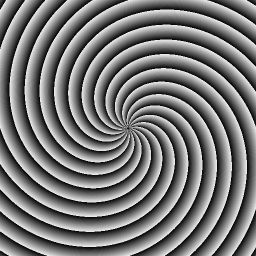
The E-field is because of the topology. Look at this picture again:

pinwheel.jpg


Why do you think we have gravitomagnetism? The electromagnetic field is the result of frame dragging.

And even if you can work the topology to get some lines of E disappearing down a hole (producing the illusion of charge), the same topology can have the same effect on lines of B - so assuming the electron is modelled correctly in the first place by this method, you'll also have magnetic monopoles in your theory with the same mass as the electron.
No, there are no monopoles. There's only one field there, the electric and magnetic field lines merely indicate the forces you observe on test particles, and you observe those forces because the electron is a dynamical "rotor".

I also note that in one of the papers you linked to in the other thread, that the photon moving in the "figure of eight" pattern always gave an electric vector pointing in the same sense relative to the "strip". There is no oscillation of E as you move round the photon's path - it has zero frequency, and so the "electron" has zero energy. Maybe your model is different in some essential way, which overcomes this fault?
ETA: Found the paper: http://www.cybsoc.org/electron.pdf
Williamson and van der Mark wrote that in 1991, and didn't have a dynamical-geometry picture at that time. To explain this I have to get across the way the electromagnetic field is a "twist" field that causes "turn" when in motion through it. Then I can talk about the sinusoidal electromagnetic field variation of a photon. It's an action, and there's a geometry to it.

If an electron is just a photon moving in an exotic path, how does electron-photon scattering occur?
The path changes. In very simple terms think of a motionless electron as a photon in a circular path. Find a roll of sellotape and hold it edge-on in your right hand, so it looks like this: | . Give the top of it a knock with your left forefinger, so now it's like this: / . Run your left forefinger up it, but when you get to the top keep going forwards. Now imagine the path is helical. Hence the electron moves. Some of the input photon action has been transferred.
 
Yet another question comes to mind (though this may be premature):
Let's suppose that you can trap a photon in some appropriately twisted bit of space, and get something that looks like a massive particle. The mass clearly depends on the photon's energy. So if the fundamental mode gives a particle of mass me, should we not expect to see a first excited state with a mass of around 2me?
 
This does not mean that there is no electric field or no magnetic field. It means that you can mathematically treat both fields as components of an electromagnetic field.
How many times do I have to say it, and how many quality references do I have to give before this very basic point sinks home? There is only one field.

A magnetic field is always produced whenever an charged particle like an electron is moving with respect to the observer.
No, it isn't produced. What's there is an electromagnetic field. When you're in motion through it you see it as a magnetic field.

In your example ("I'm describing an electron orbiting orthogonal to it") the electron is moving in an orbit. There is a magnetic field generated. Of course if you transform to coordinates that are orbiting with the electron then you see no magnetic field from the electron's motion.
It isn't generated. Read the wiki article at http://en.wikipedia.org/wiki/Electromagnetic_field, see where it says:

"In the past, electrically charged objects were thought to produce two types of field associated with their charge property. An electric field is produced when the charge is stationary with respect to an observer measuring the properties of the charge, and a magnetic field (as well as an electric field) is produced when the charge moves (creating an electric current) with respect to this observer. Over time, it was realized that the electric and magnetic fields are better thought of as two parts of a greater whole — the electromagnetic field."

Why don't you guys know this? And why are you so convinced you're right despite the evidence? This reminds me of the fun I had explaining evolution to YECs.
 
The E-field is because of the topology. Look at this picture again:

[qimg]http://www.jbum.com/pixmagic/pinwheel.jpg[/qimg]
Can you show how this model gives Maxwell's equations in the classical limit? It isn't clear from the diagrams.
No, there are no monopoles. There's only one field there, the electric and magnetic field lines merely indicate the forces you observe on test particles, and you observe those forces because the electron is a dynamical "rotor".
But whatever your model can do to produce electric monopoles, will work equally well for magnetic ones. Just change the phase of your photon. How can the model exclude this possibility?
If you're not happy with treating electric and magnetic fields separately, I can word this question differently - in terms of sources of the e/m tensor field Fab and its duel - but the physics will be the same.
The path changes. In very simple terms think of a motionless electron as a photon in a circular path. Find a roll of sellotape and hold it edge-on in your right hand, so it looks like this: | . Give the top of it a knock with your left forefinger, so now it's like this: / . Run your left forefinger up it, but when you get to the top keep going forwards. Now imagine the path is helical. Hence the electron moves. Some of the input photon action has been transferred.
Fundamentally what is happening here is scattering of photons by photons. This doesn't happen easily (it's a second-order process). Can you demonstrate that your model gives the correct scattering amplitudes for Compton scattering?
 
Yet another question comes to mind (though this may be premature): Let's suppose that you can trap a photon in some appropriately twisted bit of space...
The electromagnetic field is a twist/turn field. The photon exhibits an electromagnetic field variation. You make the photon travel through itself, and at one particular diameter it's travelling entirely through twisting turning space. It can never get out.

..and get something that looks like a massive particle. The mass clearly depends on the photon's energy. So if the fundamental mode gives a particle of mass me, should we not expect to see a first excited state with a mass of around 2me?
No. It's simpler than that. There's a symmetry between momentum and inertia. This is the relativity again. If it's the other thing moving you call it momentum. If it's you moving instead, you call it inertia. Instead of an action delivering a bump like in Compton scattering, it would feel as if it was a bump. It's like an ocean wave. If you're in a boat it passes on by and feels like a wave. But if you pace it in a helicopter it looks like a bump in the ocean - a particle rather than a wave. Trap a massless photon in a mirror-box, and the mass of that system is increased. The photon is still bouncing around at c, but it isn't going anywhere. The electron is a similar system, with a 2D rotational motion instead of a bouncing around. The photon is trapped in a "box" of its own making.
 
ben m: I'm not saying the electron is a sphere - the sphere comes in because the electron's field is isotropic. And there's ample evidence that nature works this way: the right hand rule, electric motiors, the dualism of the electromagnetic field, pair production, electron angular momentum and magnetic moment, the list goes on.

The electron's field is NOT isotropic; it's an (almost) isotropic monopole electric field and a (distinctly non-isotropic) dipole magnetic field. And an unmeasurably tiny but still there electric dipole moment.

None of the phenomena you mention have anything to do with the sphericalness or non-sphericalness of anything. Maybe you're hoping to show that they do, but you haven't done so yet.
 
How many times do I have to say it, and how many quality references do I have to give before this very basic point sinks home? There is only one field.
What is confusing you? I stated that there is only one field. That field is called the electromagnetic field. That field has 2 components. One component is called the electric field. The other component is called the magnetic field.
These can be treated as one in a tensor formulation where the separate components of each field appear are commonly written as the elements of a matrix.

No, it isn't produced. What's there is an electromagnetic field. When you're in motion through it you see it as a magnetic field.
No, it is produced. What there is an electromagnetic field from an electron. When there is no relative motion there is only an electric field (ignoring the electron's intrinsic magnetic moment). The magnetic field component is zero. When the electron has a motion relative to the observer then the magnetic field component becomes non-zero, i.e. is "produced".

It isn't generated. Read the wiki article at http://en.wikipedia.org/wiki/Electromagnetic_field, see where it says:
...
Why don't you guys know this? And why are you so convinced you're right despite the evidence? This reminds me of the fun I had explaining evolution to YECs.
It is generated by the relative motion of the observer. Read the wiki article at http://en.wikipedia.org/wiki/Electromagnetic_field, as I quoted to you before and you are quoting back at me.
In the past, electrically charged objects were thought to produce two types of field associated with their charge property. An electric field is produced when the charge is stationary with respect to an observer measuring the properties of the charge, and a magnetic field (as well as an electric field) is produced when the charge moves (creating an electric current) with respect to this observer. Over time, it was realized that the electric and magnetic fields are better thought of as two parts of a greater whole — the electromagnetic field.
What part of "produced when the charge moves" is hard to understand?
What part of "two parts of a greater whole" is hard to understand?

The mathematical treatment of the electromagnetic field as two parts of a greater whole is better described using tensors in the Electromagnetic tensor article.
 
Last edited:
Trap a massless photon in a mirror-box, and the mass of that system is increased. The photon is still bouncing around at c, but it isn't going anywhere. The electron is a similar system, with a 2D rotational motion instead of a bouncing around. The photon is trapped in a "box" of its own making.
But if you trap an electron, or e/m field, in a confined space you don't just have one possible frequency. There is a whole range of vibrational modes. How do you exclude the higher frequency modes?
And incidentally, I think you need to demonstrate how a photon can trap itself in this manner.
 
But if you trap an electron, or e/m field, in a confined space you don't just have one possible frequency.
This reminded me that the modern upper limit for the size of electrons is not derived from scattering experiments. It is rather from the movements of single electrons in Penning traps. The upper limit is quoted as 10-22 meters but this is from a 1988 paper so it may be smaller by now:
A Single Atomic Particle Forever Floating at Rest in Free Space: New Value for Electron Radius
 
This reminded me that the modern upper limit for the size of electrons is not derived from scattering experiments. It is rather from the movements of single electrons in Penning traps. The upper limit is quoted as 10-22 meters but this is from a 1988 paper so it may be smaller by now:
A Single Atomic Particle Forever Floating at Rest in Free Space: New Value for Electron Radius
That is spooky. I had just come across the same paper - via a reference in good old Wikipedia - and had copied the URL to link to in my next post.
For comparison, the Compton radius wavelength of the electron is of order 10-12m. This is the typical value used as the size of the "self-trapped photon" path in the papers I've read so far.
 
Last edited:
No. It's simpler than that. There's a symmetry between momentum and inertia. This is the relativity again. If it's the other thing moving you call it momentum. If it's you moving instead, you call it inertia.

That's not what inertia means. Inertia is basically the same thing as mass. Momentum is mass times velocity. Nobody would look at a moving object and say "it doesn't have inertia any more, now it has momentum".

Trap a massless photon in a mirror-box, and the mass of that system is increased.

Yep, that's totally standard physics. (Note that putting a photon into a box does not make the box electrically charged.)

The electron is a similar system, with a 2D rotational motion instead of a bouncing around. The photon is trapped in a "box" of its own making.

I'm sure you have a very visual mental picture of this, but I assure you there is no actual physics in that picture. You will not find any way to generate a photon-scattering-off-itself in Maxwell's Equations, nor in QED. You are inventing a new aspect of E&M, guessing (unconvincingly so far) that it gives you something that looks like an electron, and further perhaps you anticipate guessing that this new aspect of E&M is consistent with everything else we know.
 
Can you show how this model gives Maxwell's equations in the classical limit? It isn't clear from the diagrams.
No. It's like a whole different language. I can't even give you a decent mathematical description of the electron. The electron is a photon moving in totally-curved space. Then an electron moves in an electromagnetic field because there's another layer of curvature on top, plus maybe translation motion too. To be honest, I don't know where to start.

But whatever your model can do to produce electric monopoles, will work equally well for magnetic ones. Just change the phase of your photon. How can the model exclude this possibility?
Because they're electromagnetic monopoles. I feel like I'm jumping ahead here, but I'll say it anyway. Changing the phase of the photon doesn't do anything because it's just a pulse of stress-energy barrelling along at c. Think of stress-energy in literal terms. Stress is akin to pressure, so think pressure-pulse. It's electromagnetic, and I've been talking about twist and turn. So think in terms of a cubic lattice where the typical sinusoidal electric waveform is telling you how twisted space is. It's tracing the slope of erstwile horizontal lattice lines. Think of one wavelength. The degree of twist rises to a maximum a quarter-way along, goes to zero halfway, descends to a negative minimum three-quarters along, then goes back to zero. The sinusoidal magnetic waveform is telling you the turn rate of the lattice lines as the pulse goes by. This is describing a pulse of... spacewarp. It's in a bulk, so it seems to be something like the typical wavepacket outline, a "pointy lemon", see figure 2 in http://arxiv4.library.cornell.edu/abs/0803.2596?context=physics.optics. It's like a gravitational wave, but smaller. Relativity again.

If you're not happy with treating electric and magnetic fields separately, I can word this question differently - in terms of sources of the e/m tensor field Fab and its duel - but the physics will be the same.
Please do, but see above - where do I start? What I've been saying here takes us from vectors to geometry, from what it does to what it is.

Fundamentally what is happening here is scattering of photons by photons. This doesn't happen easily (it's a second-order process). Can you demonstrate that your model gives the correct scattering amplitudes for Compton scattering?
No. I haven't considered it all.
 
The electron's field is NOT isotropic; it's an (almost) isotropic monopole electric field and a (distinctly non-isotropic) dipole magnetic field. And an unmeasurably tiny but still there electric dipole moment.
Aaaargh! It's not an electric field! It's an electromagnetic field. And yes, it's not quite isotropic, but it's not something different to "the electron's magnetic field". Can somebody please teach this guy the basics of the electromagnetic field?

Who's Singularitarian? I'm not him. Let's see what he's been saying: Time is a universal invariant. Time is very much the same as space. It exists as an ''imaginary dimension of space'' - it's not unique, nor an extention of space itself, it is space itself. Wrong. Time is an emergent property of motion through space.
 
Last edited:

Back
Top Bottom