• Quick note - the problem with Youtube videos not embedding on the forum appears to have been fixed, thanks to ZiprHead. If you do still see problems let me know.

Merged Puzzling results from CERN

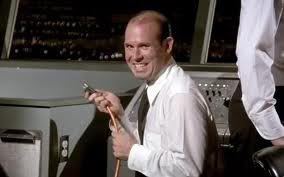
"Hello ... Tech Support ... What is your problem?

"Faster than light results? Just a second ....

"Is it plugged in? Is it turned on? Is the connection tight?

"Okay ... please, tighten the connector.

"It's working right, now?

"Great. Have a nice day. Bye"

Click.

-- Roger
 
BTW ... the initial "loose cable" reports cited "unnamed sources." But, the AP is quoting James Gillies, CERN's Head of Communication, as saying that
two separate issues were identified with the GPS system that was used to time the arrival of neutrinos.

One of the issues may have caused the speed to be overestimated while the other could have caused the speed to be underestimated.

"The bottom line is that we will not know until more measurements are done later this year."


-- Roger
 
A loose wire. Who'd a thunk it?

If true (and my money is on it being true), it wouldn't surprise me at all. When I was an undergraduate doing research work in a mass spectrometry lab, it took me and my lab mate a couple of days to figure out why the damn thing wasn't working properly. After almost two days of checking everything (every setting, every seal on the chamber, every line of code), what was the error?

Answer: a bad cable.

Nice to see the heavyweights have the same trouble :D
 
If true (and my money is on it being true), it wouldn't surprise me at all. When I was an undergraduate doing research work in a mass spectrometry lab, it took me and my lab mate a couple of days to figure out why the damn thing wasn't working properly. After almost two days of checking everything (every setting, every seal on the chamber, every line of code), what was the error?

Answer: a bad cable.

Nice to see the heavyweights have the same trouble :D

I've had the same problem and I think the reason it takes so long is because the cable is considered a continuous piece of metal from one end to the other. But a connector is different, it is countless times I've cured a glitch by unplugging and plugging back in.

My memory is in its usual state of low performance, but I thought they had repeated the distance measurement independently. Wouldn't this be affected by an incorrectly timed GPS signal?
 
I've had the same problem and I think the reason it takes so long is because the cable is considered a continuous piece of metal from one end to the other. But a connector is different, it is countless times I've cured a glitch by unplugging and plugging back in.
I've had the same problem and fixed it the same way
My memory is in its usual state of low performance, but I thought they had repeated the distance measurement independently. Wouldn't this be affected by an incorrectly timed GPS signal?
I was under the same impression.
Or did the same guys verify the results?
 
I'm glad a reasonable source for the discrepancy has been found.

Perhaps they shouldn't have been in such a rush to announce their 'discovery'.
 
If true (and my money is on it being true), it wouldn't surprise me at all. When I was an undergraduate doing research work in a mass spectrometry lab, it took me and my lab mate a couple of days to figure out why the damn thing wasn't working properly. After almost two days of checking everything (every setting, every seal on the chamber, every line of code), what was the error?

Answer: a bad cable.

Nice to see the heavyweights have the same trouble :D

3b874b70.jpg
 
I've had the same problem and I think the reason it takes so long is because the cable is considered a continuous piece of metal from one end to the other. But a connector is different, it is countless times I've cured a glitch by unplugging and plugging back in.

My memory is in its usual state of low performance, but I thought they had repeated the distance measurement independently. Wouldn't this be affected by an incorrectly timed GPS signal?

The people who verified the original result were the same research group just re-running their experiment. So if they were using all the same equipment, this glitch would account for both results.

My guess is that at least one completely separate research group will attempt to replicate the original work. And my guess is they will fail because, for obvious reasons, it seems the original "FTL" result was a screwup.
 
The BBC report on the story.

The team has now found two problems that may have affected their test in opposing ways: one in its timing gear and one in an optical fibre connection.

More tests from May will determine just how they affect measured speeds.

[...]

In a statement, the Opera collaboration said: "While continuing our investigations, in order to unambiguously quantify the effect on the observed result, the collaboration is looking forward to performing a new measurement of the neutrino velocity as soon as a new bunched beam will be available in 2012."

Meanwhile, the Borexino and Icarus experiments, also at Gran Sasso, the Minos experiment based at the US Fermilab, and the T2K facility in Japan are all working on their own neutrino speed measurements, with results expected in the next few months.
 
And Cat5e for sure. Just a little corrosion or a bent pin.

:)
But for finickiness you can't beat SCSI, especially with a few adaptors long the way; and 10B2, well so many bizarre problems......

Yeah. In my case in the mass spec lab it was a damned BNC cable.
Thankfully I don't work much with coax any more, just the occasional TV system setup.
 
So all this could have been avoided by phoning any half decent IT support person, bloody hell the first thing I check if something doesn't work is "Is it plugged in?".

:)
 

Back
Top Bottom