Slightly relevant story. I was at the opera with a friend, seeing
Le Nozze di Figaro. The mezzo-soprano singing Cherubino was very good, both as regards her voice, and her dramatic performance as a young man. The costume and make-up departments had done well, binder and all. When discussing her performance at the interval I inadvertently referred to her as "he", then burst out laughing, saying, see how good that performance was!
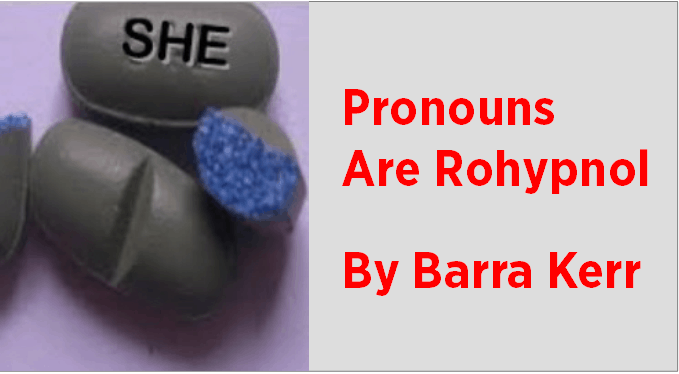
Our use of the third person singular pronoun appropriate to perceived (or known) sex is instinctive and hard-wired. Linguistically, it's the hardest thing of all to unlearn. If a learner is acquiring a language whose use of third person singular pronouns is different from their native language, it's extraordinarily difficult to force a change. I heard about a Hungarian woman (Hungarian has no sexed third person pronouns, it's as if everyone and everything is "it") who had moved to London, married an Englishman, and had several children. She became so fluent in English she hardly had an accent. But she still had a tendency to call her daughter "he" and her son "she", randomly.
Third person singular pronouns, when used by someone whose native language makes the distinction, reflect the
speaker's perception of the sex of the person being referred to. It takes a lot of effort on the speaker's part to over-ride this. An effort which I am not prepared to make.
There’s a lot of chat around about pronouns right now. Specifically, ‘preferred’ pronouns. By which is usually meant, the pronouns a person would prefer.

fairplayforwomen.com