
George Maschke
Scholar
- Joined
- Aug 15, 2001
- Messages
- 54
In this week's (26 Dec. 2003) newsletter, reader Shaun Bowen suggests that the FBI, CIA, and other U.S. government agencies might fully realize that the polygraph doesn't work for detecting lies, but use it instead as a kind of scarecrow for eliciting confessions.
As a co-founder of AntiPolygraph.org, I have been studying this question for some time. It is clear that governmental agencies in the U.S. do use the polygraph as an interrogational aid and promote belief in the polygraph (both amongst the public and their own employees).
However, it appears that those responsible for the U.S. government's reliance on the polygraph actually believe that it can detect lies. For example, shortly after the U.S. National Academy of Sciences (NAS) released its devastatingly critical report, The Polygraph and Lie Detection, Assistant Secretary of Defense John P. Stenbit circulated a memorandum to high-level Pentagon officials stating that the Department of Defense would continue to rely on the polygraph since it is "the best tool currently available to detect deception" (a characterization that Mr. Stenbit falsely attributed to the NAS, which said no such thing).
Indeed, the NAS warns at p. 221 of its report, "Federal officials need to be careful not to draw the wrong conclusions from negative [passing] polygraph test results. Our discussions with polygraph program and counterintelligence officials in several federal agencies suggest that there is a widespread belief in this community that someone who "passes" the polygraph is "cleared" of suspicion."
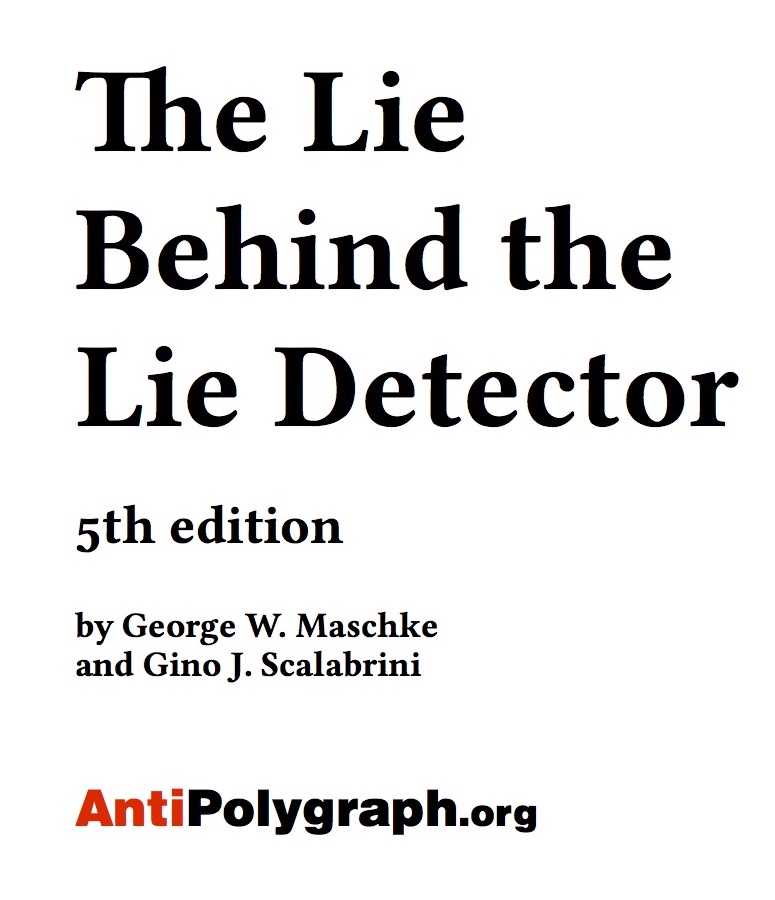
Randi is right when he states that the polygraph can be beaten. And you don't need the skills of a world class magician to beat the polygraph. You just need to understand the trickery on which the "test" is based. A brief explanation of how to beat the polygraph appears on the AntiPolygraph.org homepage, and a more detailed explanation is available in our e-book, The Lie Behind the Lie Detector (1 mb PDF). Like all information on AntiPolygraph.org, it's free:
As a co-founder of AntiPolygraph.org, I have been studying this question for some time. It is clear that governmental agencies in the U.S. do use the polygraph as an interrogational aid and promote belief in the polygraph (both amongst the public and their own employees).
However, it appears that those responsible for the U.S. government's reliance on the polygraph actually believe that it can detect lies. For example, shortly after the U.S. National Academy of Sciences (NAS) released its devastatingly critical report, The Polygraph and Lie Detection, Assistant Secretary of Defense John P. Stenbit circulated a memorandum to high-level Pentagon officials stating that the Department of Defense would continue to rely on the polygraph since it is "the best tool currently available to detect deception" (a characterization that Mr. Stenbit falsely attributed to the NAS, which said no such thing).
Indeed, the NAS warns at p. 221 of its report, "Federal officials need to be careful not to draw the wrong conclusions from negative [passing] polygraph test results. Our discussions with polygraph program and counterintelligence officials in several federal agencies suggest that there is a widespread belief in this community that someone who "passes" the polygraph is "cleared" of suspicion."
Randi is right when he states that the polygraph can be beaten. And you don't need the skills of a world class magician to beat the polygraph. You just need to understand the trickery on which the "test" is based. A brief explanation of how to beat the polygraph appears on the AntiPolygraph.org homepage, and a more detailed explanation is available in our e-book, The Lie Behind the Lie Detector (1 mb PDF). Like all information on AntiPolygraph.org, it's free:

