The Great Zaganza
Maledictorian

- Joined
- Aug 14, 2016
- Messages
- 32,905
the question, as always is whether speed is worth the extra fuel: if you have to accelerate and decelerate for longer, that means you have less room for payload.

How difficult would it be to send a laser to mars orbit to power a return flight?Well I am not sure that such a system is well suited for humans travelling to Mars since conventional rockets will still be needed for the return trip back to Earth.
However, perhaps this new propulsion system could work quite well for sending robotic explorers to Mars and/or sending supplies to humans who may be on Mars.

I'm still awaiting my Saturn Weekender.Boney M sang about a Night Flight to Venus.
But how about 45 days to Mars?
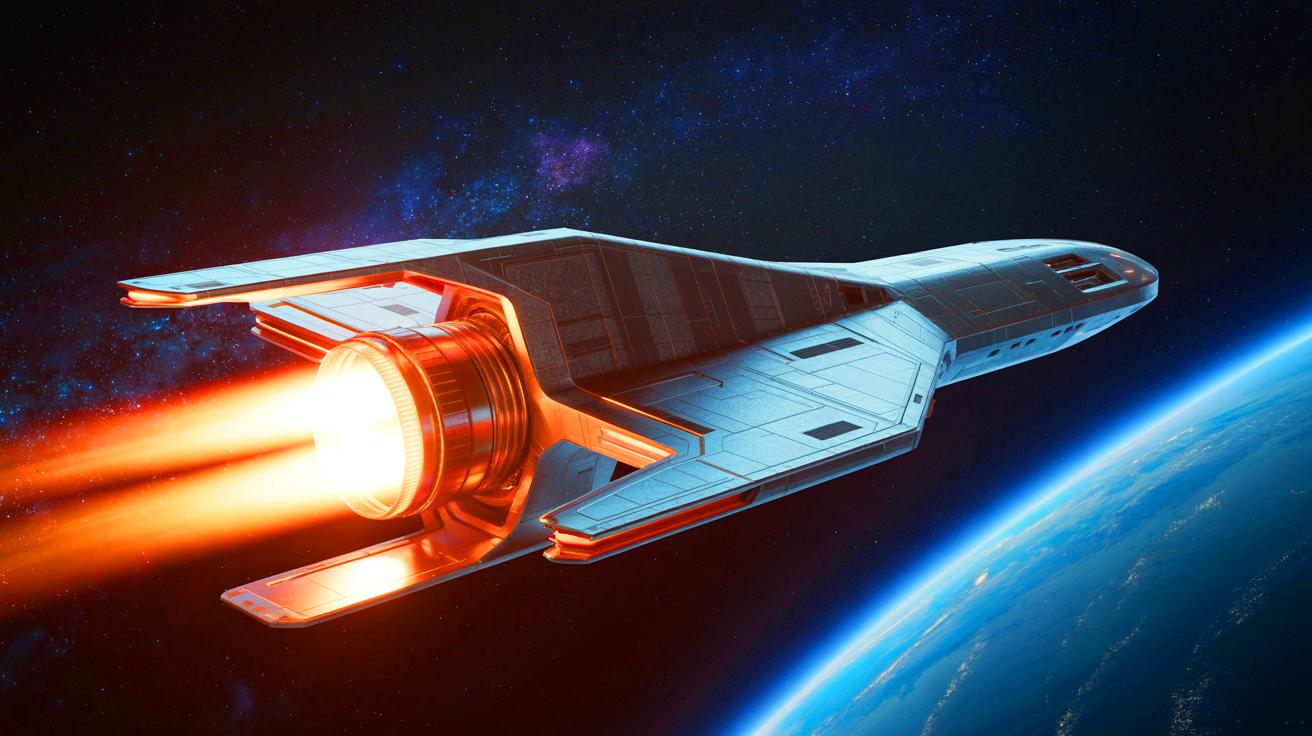
Lasers Could Send Missions to Mars in Only 45 Days
https://www.universetoday.com/154487/lasers-could-send-missions-to-mars-in-only-45-days/
All that's left is engineering folks. Is this actually more feasible than having astronauts spend months in low gravity?

What is the power source for the laser? It's hard to imagine this being a practical idea any time soon.How difficult would it be to send a laser to mars orbit to power a return flight?

 www.rudebaguette.com
Problem with the internet, it always feels like folks are responding with "No but..." even when they are yes anding.Consider it me agreeing with you. Or maybe I just skim-read the thread and commented where I felt like it.
Gonna evacuate 10 billions of people to the Moon and Mars then?That being said, I think we should be working on moon and mars colonization because of the problem of giant meteors, super volcanoes and such.
Nope, enough to ensure life continues or yes over 100s of years.Gonna evacuate 10 billions of people to the Moon and Mars then?
That can be achieved much more easily here on Earth. I know Dr Strangelove was comedy, but many deep mines could be constructed in a fraction of the time and at much less cost. Vast amounts of survival stuff would easily be placed down there, compared to the cost/time/difficulty of getting such to Mars.Nope, enough to ensure life continues or yes over 100s of years.
Logically there's no reason to rush. But I agree with making it a long-term plan. Robots first is probably the way to go. There's no reason to send humans immediately. Instead, send robots to establish bases first and only later send people once there's already a place for them to live reasonable lives.But its clearly a long term thing, we should be spending a small amount of resources and get there likely a few generations. I also think the engineering stuff is even now mostly a problem of spending enough money, the medical issues are currently a bigger stumbling block. Afterall, we have gotten physical objects to mars we really have no good way of getting people there that doesn't mean they will probably die there or even on the way.

Problem with the internet, it always feels like folks are responding with "No but..." even when they are yes anding.
That being said, I think we should be working on moon and mars colonization because of the problem of giant meteors, super volcanoes and such.

Sounds like a rich people lifeboat, and I'm not feeling it.Nope, enough to ensure life continues or yes over 100s of years.
The word 'robot' there is doing a lot of heavy lifting.Logically there's no reason to rush. But I agree with making it a long-term plan. Robots first is probably the way to go. There's no reason to send humans immediately. Instead, send robots to establish bases first and only later send people once there's already a place for them to live reasonable lives.

Nope, enough to ensure life continues or yes over 100s of years.
The word 'robot' there is doing a lot of heavy lifting.
Robots to fix the robots that break down? Or just plenty of spare robots?
Interesting to note that in 14 years of operation Opportunity Rover travelled 28 miles and did only very light work. A Mars colony, even the bare bones of one, will require digging and transport of ice, construction of habs for later human use and other forms of heavy work.
What will power all this? Solar panels? Well, a dust storm did for Opportunity so we'll need robots to clean away dust from them too.
These are all fair points. I don't know if we have the robot tech up to the level to enable this yet. But that's why I'm saying that there really is no hurry to send humans to Mars on a permanent basis. If the point of going to Mars is to have some sort of backup plan for humanity in case life on earth becomes impossible for some reason in the very long term, it could be centuries in the future, maybe even millennia.The word 'robot' there is doing a lot of heavy lifting.
Robots to fix the robots that break down? Or just plenty of spare robots?
Interesting to note that in 14 years of operation Opportunity Rover travelled 28 miles and did only very light work. A Mars colony, even the bare bones of one, will require digging and transport of ice, construction of habs for later human use and other forms of heavy work.
What will power all this? Solar panels? Well, a dust storm did for Opportunity so we'll need robots to clean away dust from them too.
Of the highlighted - are you picturing a self-sufficient colony? If so, it will need to be able to manufacture each and every essential item. Batteries, microprocessors, metals, plastics, fabrics ... and all from local materials.These are all fair points. I don't know if we have the robot tech up to the level to enable this yet. But that's why I'm saying that there really is no hurry to send humans to Mars on a permanent basis. If the point of going to Mars is to have some sort of backup plan for humanity in case life on earth becomes impossible for some reason in the very long term, it could be centuries in the future, maybe even millennia.
My reason for wanting to send robots first is so that there can be some sort of "there" there when we do finally send humans for any sort of
permanent settlement. Solar panels could be part of it. Maybe some sort of nuclear power source too. If you build a solar array, where the robots can come to charge their batteries when needed, maybe that's part of the basic infrastructure. Charge up and then go back to work building habitats and other necessary infrastructure. Maybe farms (probably inside some kind of greenhouse building(s)). The point is to have everything necessary for permanent settlement without needing more supplies from earth already prepared when the first humans arrive. And it could take a long time to reach that point.


