Nicola Bulley, missing persons case

Her alcohol and menopause issues would not have changed how the search was conducted.


Lancs Police bulletins paint a different story from the media version;

First bulletin, standard appeal for a missing person, no hypothesis;

https://www.lancashire.police.uk/news/2023/january/have-you-seen-missing-nicola/

Second bulletin, further appeal, open mind as to what happened and searches by drone, search dog, underwater team and detectives.

https://www.lancashire.police.uk/news/2023/january/efforts-continue-to-find-missing-nicola-bulley/

Third bulletin, mention of tracing a witness and now the Coastguard and Mountain Rescue are helping.

Suicidal or not, the main job is to check the river, as survivability in water is lower than on land. Why she went missing, is not important, since whether she slipped, jumped or was pushed into the water, the prime job is to find her. What happened usually only comes once a person has been found, though, when the person is found dead, that question may never be answered.


I suspect we will never know for sure why she ended up in the river, due to the lack of evidence.


They did follow other avenues, as there is no way to be sure til a body is found.

Her 'vulnerabilities' would have changed the search in that rampant speculations made their job harder. They wanted info from the public. They asked for the help to find her. The family sincerely appreciated the attention, -until the search went so long. They were misleading as to what 'could' have happened, especially as the family had described everything as a normal and routine day with no cause to think otherwise.


BTW... I did NOT use any 'media version' as you seem to think.

ALL of the quotes I gave about 'falling in' and 'gone in' were directly, and verbatim, from the the police (a sgt Sally Riley and the SIO Becky Smith) at their press conferences and from statements directly from police on the website. I listened to it and transcribed myself (the media reports often got things wrong)
 
Last edited:
In UK law a dog tag should give you an address, in my experience you're more likely to only have the dog's name & a phone number, this is increasingly likely to be a mobile number (quite sensibly if you think about it) so the odds are pretty good (as you say) that ringing the number would go straight through to the mobile they just found.

Also, there's no guarantee that the owner of the phone is the owner of the dog, though they are most likely connected in some way.
 
Also, there's no guarantee that the owner of the phone is the owner of the dog, though they are most likely connected in some way.

Well, I have 3D printed tags I clip to the collars of dogs that I let off, but that's in addition to the owner's tag... But after typing that I clicked what you mean & yes, true, but the chances of an unattended phone & an unattended dog turning up in the same place at the same time through coincidence seem remote.
 
Also, there's no guarantee that the owner of the phone is the owner of the dog, though they are most likely connected in some way.

Not sure whose # it was but...
The woman who found the dog initially did look at the tag. She didnt have a phone with her so she tried to memorize the number and tried it at home-- she got it wrong, and went on to her appointment.
When her daughter in law came to the dog about an hour later she knew whose dog it was and called the school.
 
It is still not clear where the caravan-owner woman tied up the dog and what happened to the string she supposedly used. If Willow was tied up, how come she was running loose, according to the dog walker, Ron?

In addition, why all the need for getting her daughter-in-law later identify the person in the phone lock screen and then to ring up the school receptionist, when Willow clearly has a dog tag, and surely the information needed is all on there?

I expect the ultimate fate of the string will remain an infinite mystery of the universe.
 
They did follow other avenues, as there is no way to be sure til a body is found.

Her 'vulnerabilities' would have changed the search in that rampant speculations made their job harder. They wanted info from the public. They asked for the help to find her. The family sincerely appreciated the attention, -until the search went so long. They were misleading as to what 'could' have happened, especially as the family had described everything as a normal and routine day with no cause to think otherwise.


BTW... I did NOT use any 'media version' as you seem to think.

ALL of the quotes I gave about 'falling in' and 'gone in' were directly, and verbatim, from the the police (a sgt Sally Riley and the SIO Becky Smith) at their press conferences and from statements directly from police on the website. I listened to it and transcribed myself (the media reports often got things wrong)

You are confusing what and where it happened with why it happened. Why it happened didn't change the possibilities and the police only explained where they were looking not why. In explaining the concentration on the river; fell in, slipped in, dived in waded in went in, gone in doesn't matter. They assumed she entered the water and therefore were concentrating the search there.
 
I really want to understand this. What story/stories did the press make up? You may cite the gutter press, Star, Sun, Daily Mail. I get that ITV and Sky breached the family's request for privacy but I am not seeing that the UK press made up stuff. Bear in mind, the claim that 'the body was not in the river' was a quote from a person who had combed it with sonar and was police-accredited and his expert opinion, rather than 'made up crap'.

The main made up crap was claims that she had been killed by her husband and that she had been abducted and that did not come from MSM, but the public and self credited news sources (the public playing at being journalists).

However, MSM did repeat some of the claims being made, whilst disassociating themselves from them. They reported on tic tokers and the activities of the public at the scene and how it got so bad, a dispersal order was made. MSM also ironically reported how the family and village as a whole were being pestered and even supposedly had to hire security guards.

MSM were not just competing with each other, but they were also competing with all those unofficial sources, each vying for the big scoop, to make money. In the end, this case became about money.
 
They did follow other avenues, as there is no way to be sure til a body is found.

Her 'vulnerabilities' would have changed the search in that rampant speculations made their job harder.

Making the search harder, is different from changing the search strategy. The only way the strategy being followed would have changed, is if there was a definite lead, such as a withdrawal on her bank card in Blackpool, or a friend being certain they had seen her in Fleetwood.

They wanted info from the public. They asked for the help to find her. The family sincerely appreciated the attention, -until the search went so long. They were misleading as to what 'could' have happened, especially as the family had described everything as a normal and routine day with no cause to think otherwise.

At various times abduction, the red van and her husband being responsible, gained traction. The police stuck with drowning as the most likely. That was due to the evidence, or lack thereof.

BTW... I did NOT use any 'media version' as you seem to think.

ALL of the quotes I gave about 'falling in' and 'gone in' were directly, and verbatim, from the the police (a sgt Sally Riley and the SIO Becky Smith) at their press conferences and from statements directly from police on the website. I listened to it and transcribed myself (the media reports often got things wrong)

I have explained why the river hypothesis remained the leading one, the lack of evidence for any other hypothesis.
 
Superintendent Sally Riley of Lancashire Police at two different police conferences, stated that the River Wyre was 'a complex river' and fast moving. She also said that police were working with River Wyre experts.

If that is not enough evidence, members of a nearby anglers club have stated that undercurrents can soon pull you away.

Faulding assuming the body would be within the area Ms Bulley fell in, doesn't seem to have listened to this.


Once again: no. The Wyre wasn't "complex" or fast-moving in the area near to that bench. It was complex and faster-moving in the area well downstream of that, beyond the weir, where it was also tidal in nature (and yes, tidal movements in rivers cause extremely complex undercurrents at certain points in the tide.... but not in the area anywhere near the bench).

If Bulley had "fallen" into the river close to that bench, and had drowned in that vicinity (remember, all the suppositions were about her slipping down the bank and hitting her head on something, etc), her body would have been within a dozen or so metres downstream of that point, lying on the river bed, and it would have been found by Faulding and/or the police.

The fact that her body was not found on the river bed anywhere close to the bench, and that it was eventually found at a point over a mile further downstream, necessarily implies that she couldn't have drowned anywhere near to that bench. It implies that either a) she entered the water near the bench then floated - alive - down the river to a point far closer to, or even beyond, the point where her body was found, at which point she either drowned or died from hypothermia, or b) she walked to a point much further downstream and entered the river at that downstream point, then either drowned or died from hypothermia.
 
Again, apologies for using the Daily Fail as a source - but again, I'm using direct attributed quotes, so it's no problem using the Mail as a medium.

Here's what Faulding said, after the body had been discovered (my bolding for emphasis):

Asked for his theory, he said: "I know absolutely 100 per cent she did not go in at the bench, because her body wouldn't move that quick around the weir.

"I think she's wandered off. I think she's wandered off further down the river and gone in down there.

"She could have gone in a lot further down and been washed back in again. No one knows.

"I think she could have been further down, and then got unlodged (sic) and released back up. She may have only just washed up there".

https://www.dailymail.co.uk/news/ar...icola-not-river-insists-didnt-rule-reeds.html


This tallies precisely with my own view. I have personal confidence/reassurance in the combination of my own knowledge/understanding/experience regarding drowning victims, plus the opinion of a national expert who does this for a living and who was part of the police search effort. I only differ very slightly from Faulding in that I think, in addition to the suggestion that Bulley walked downstream before entering the water, it's also a possibility that she entered the water near to the bench, then floated (alive) downstream until she passed over the weir and into the tidal section leading up to the estuary.
 
Once again: no. The Wyre wasn't "complex" or fast-moving in the area near to that bench....

The photos in the links are of the river at the bench

https://www.lancs.live/news/lancashire-news/nicola-bulley-laughing-joking-just-26135864

https://twitter.com/KatieWalderman/status/1623302884325466115

There is a slope from the bench down to a drop and the banks are high enough and there are some weeds, so it would be difficult to get back out. This link has a photo of a diver having to clamber down into the river (third photo)

https://twitter.com/KatieWalderman/status/1623302884325466115

One of the photos shows a dingy going past the bench, so the water is deep enough that anyone who goes in at the bench, then starts to swim to try and get back out, is going to end up in difficulty, because it appears from all sorts of images, including aerial photos, the river has banks high enough it would not be easy to get out as for much of it, you would have to try and get through reeds and then up a steep bank.

Not much attention has been paid to how even a good swimmer would get back out the river, without assistance. I think the answer is with great difficulty, if not possible at all.
 
This tallies precisely with my own view. I have personal confidence/reassurance in the combination of my own knowledge/understanding/experience regarding drowning victims, plus the opinion of a national expert who does this for a living and who was part of the police search effort. I only differ very slightly from Faulding in that I think, in addition to the suggestion that Bulley walked downstream before entering the water, it's also a possibility that she entered the water near to the bench, then floated (alive) downstream until she passed over the weir and into the tidal section leading up to the estuary.

She'd been missing for some 9 days before Faulding joined the search. That's enough time for putrefaction to set in and cause the body to float and move downstream on the current. So don't we have to allow for the possibility that her body was simply missed by police divers and later moved downstream to the reeds where Faulding's equipment failed to spot her?
 
The photos in the links are of the river at the bench

https://www.lancs.live/news/lancashire-news/nicola-bulley-laughing-joking-just-26135864

https://twitter.com/KatieWalderman/status/1623302884325466115

There is a slope from the bench down to a drop and the banks are high enough and there are some weeds, so it would be difficult to get back out. This link has a photo of a diver having to clamber down into the river (third photo)

https://twitter.com/KatieWalderman/status/1623302884325466115

One of the photos shows a dingy going past the bench, so the water is deep enough that anyone who goes in at the bench, then starts to swim to try and get back out, is going to end up in difficulty, because it appears from all sorts of images, including aerial photos, the river has banks high enough it would not be easy to get out as for much of it, you would have to try and get through reeds and then up a steep bank.

Not much attention has been paid to how even a good swimmer would get back out the river, without assistance. I think the answer is with great difficulty, if not possible at all.

It really depends on how deep that water is next to the edge of the bank. But if it is anything like about a meter and with a muddy bottom, I really would not like to end up in that river/stream as getting back, even in this mild wintertime, would be very hard. The only thing left to do at that point would be swimming downstream in the hopes of encountering a place easier to get out of the water.
How far away a possible place like that is as opposed to the limited time you have with your strength intact is the question.

How much of a killer is that weir by the way? Some weirs are traps for unfortunate swimmers, who enter the downstream turbulence.
 
Again, apologies for using the Daily Fail as a source - but again, I'm using direct attributed quotes, so it's no problem using the Mail as a medium.

Here's what Faulding said, after the body had been discovered (my bolding for emphasis):


https://www.dailymail.co.uk/news/ar...icola-not-river-insists-didnt-rule-reeds.html


This tallies precisely with my own view. I have personal confidence/reassurance in the combination of my own knowledge/understanding/experience regarding drowning victims, plus the opinion of a national expert who does this for a living and who was part of the police search effort. I only differ very slightly from Faulding in that I think, in addition to the suggestion that Bulley walked downstream before entering the water, it's also a possibility that she entered the water near to the bench, then floated (alive) downstream until she passed over the weir and into the tidal section leading up to the estuary.

All respect to Faulding but a few days ago he was certain that she was not in the river. Then she was found in the river. I think he needs to be a bit more qualified when stating his opinions (and, to an extent, you do too). He said she was not in the river when he meant she was not in the parts of the river that he was able to search.

Personally, I find your assertion and argument that, if she had drowned near the bench, she would have been found near the bench extremely persuasive but that doesn't mean it didn't happen.

I find Faulding's assertion that she must have walked further downstream less persuasive. I can't imagine walking a mile with my phone left behind on a bench. But then I'm falling into the same trap. She may simply have forgotten about it or there are other plausible scenarios.

If we assume that there are around 60-70 drownings in UK rivers each year, can you be certain that in 100% of cases the body will end up nearby where they actually drowned? If you are only 98% certain, one person each year does get carried further down stream. Maybe we are looking at that one person.
 
I bet Faulding is now very much wishing he'd kept his mouth shut, and referred all inquiries to the police liaison or spokesperson or whoever authority was coordinating and representing the search effort.
 
I bet Faulding is now very much wishing he'd kept his mouth shut, and referred all inquiries to the police liaison or spokesperson or whoever authority was coordinating and representing the search effort.

A lesson every "expert" employed in a specialist role should take to heart.
 
It really depends on how deep that water is next to the edge of the bank. But if it is anything like about a meter and with a muddy bottom, I really would not like to end up in that river/stream as getting back, even in this mild wintertime, would be very hard. The only thing left to do at that point would be swimming downstream in the hopes of encountering a place easier to get out of the water.
How far away a possible place like that is as opposed to the limited time you have with your strength intact is the question.

How much of a killer is that weir by the way? Some weirs are traps for unfortunate swimmers, who enter the downstream turbulence.

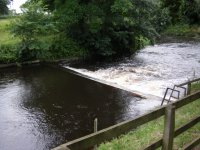
The weir is quite a meek one. A body could easily go over it. Whilst the tidal waters take their greatest effect between here and the sea, that doesn't mean the stretch by the bench has no movement at all.

One thought strikes me: walker Ron when interviewed by Sky News blurted out that when he saw the phone and dog on their own, he assumed the owner had just 'gone to toilet', which suggests dog walkers may have been in the habit of peeing behind a bush (he may have assumed it was a male). However, suppose Nicola nipped down to the bushes by the river side for a quick wee, lost her footing and then for some reason couldn't regain stability.
 

Attachments

  • 869245_8cc77b56.jpg
    869245_8cc77b56.jpg
    102.2 KB · Views: 2
I bet Faulding is now very much wishing he'd kept his mouth shut, and referred all inquiries to the police liaison or spokesperson or whoever authority was coordinating and representing the search effort.

A lesson every "expert" employed in a specialist role should take to heart.

I imagine it must have looked like free publicity for him and his firm, when the microphone and camera first appeared in front of his face.
 
All respect to Faulding but a few days ago he was certain that she was not in the river. ....

That is the problem with experts, especially those brought in, or allowed to assist. That they are experts means they have a very narrow mind set, in this case, sonar. They have the attitude of move over chaps, the expert is here, to solve what you cannot.

They then have their excuses for why they failed, but reeds in a river not being part of the river and the responsibility of the land search is utter drivel. To search the reeds, someone has to get into the river. Peering from the bank into the reeds is an OK method and in this case, it was how the body was found. But that is just luck. An inch either way and her body could still be there.
 

ISF - Join now!

Every member here is approved by hand. No bots, no spam, just people who care about evidence and honest debate.

Membership is free!

Create your free account

Back
Top Bottom