• Quick note - the problem with Youtube videos not embedding on the forum appears to have been fixed, thanks to ZiprHead. If you do still see problems let me know.

Mushroom Cloud and Pyroclastic Flow

I will ask again, for the umteenth time. How shall I attach the dust, and what sorts of dust, in order to have the best chance of replicating the effect seen so often on 9/11?

Anybody else want to chime in on the Drafting Drywall experiment?

Currently I think you are all scared to death of this experiment, because you all know perfectly well that it will look nothing like the 9/11 fizzies.


What we know perfectly well is that the scale of the 9/11 events is a factor you can't possibly reproduce - and it's that scale that's a big part of what made the collapses look so odd to some people.

What we also know is, any differences that appear between the results of your experiment and the videos of the collapses will be latched onto, and held up as "proof" of your theory, regardless of how the scale issues might have affected things.

Seriously - you want us to give you some recipe of dust and material to use, when in reality, the mixture was so complicated, that we simply can't know for sure what it was composed of at the time of collapse. We can't know exactly how much of it there was, and how much was attached to the steel, versus being suspended in the air, or how that mixture evolved over time. The mix at the start of the collapse would likely be different than the mix later on.

You're asking us to try and create an experiment with almost no idea what our parameters should be, and that isn't science.

If you're so keen to try something, why don't you just do it? Create a series of mixtures, of many different materials, with particle sizes ranging from dust up to blocks, and see what happens? You don't need our permission.
 
I'm not scared of your experiment Ace.

Why don't you buy a big bag of plain flour and empty it all over a short length of steel or even a piece of 2 X 4 wood. Then drop it from a balcony or a garage roof or something. Let us know what it looks like.

Instead of flour, you might try using a bag of cement mix or chalk dust. Make sure you have a long enough drop to be able to observe what happens.

If it doesn't look like those "Fizzies" you keep mentioning, I for one will be quite surprised.

If it does look exactly like what was observed at the WTC, what does it prove? Probably nothing to someone like you.

Oh and it might be good to not try it if it's raining.
 
I'm not scared of your experiment Ace.

Why don't you buy a big bag of plain flour and empty it all over a short length of steel or even a piece of 2 X 4 wood. Then drop it from a balcony or a garage roof or something. Let us know what it looks like.

Instead of flour, you might try using a bag of cement mix or chalk dust. Make sure you have a long enough drop to be able to observe what happens.

If it doesn't look like those "Fizzies" you keep mentioning, I for one will be quite surprised.

If it does look exactly like what was observed at the WTC, what does it prove? Probably nothing to someone like you.

Oh and it might be good to not try it if it's raining.

That's certainly doable. Unlike you, I will be surprised if it looks anything like the 9/11 fizzies.
 
That's certainly doable. Unlike you, I will be surprised if it looks anything like the 9/11 fizzies.

Ehr, what exactly do you suggest that the "9/11 fizzies" are? What we can all see is large, heavy structural elements, apparantly mainly steel members, falling freely, trailing something that looks like dust. Kindly explain:

1) Do you disagree with this description? If yes, explain what you think we are observing.

2) If you agree, then explain how this, in your opinion, is incompatible with a gravity collapse scenario.

...It is so much easier to discuss if we know what we are discussing.

Hans
 
TruthSeeker1234 said:
I'm not interested in entrainment per se. I'm interested in attempting to replicate the 9/11 effect which you, Greening, and several others say is easily explainable.

There should be an obvious reason to you why knowledgeable people think it's easily explanable and laypeople find it hard to understand.

What should be that reason, Seeker ?
 
Please observe the photos which ought to show the existence of the north wall of WTC1. It's not down in WTC6, it's not in Vessy street.

Photographic evidence trumps a spreadsheet, scientifically speaking.

This photo was posted by scooby in another thread. Down in the WTC6 hole, there are many pieces of WTC1's northern wall scattered around.

10252460001c617f1a.jpg
 
This photo was posted by scooby in another thread. Down in the WTC6 hole, there are many pieces of WTC1's northern wall scattered around.

http://www.internationalskeptics.com/forums/imagehosting/10252460001c617f1a.jpg


I'll answer this picture for ya TruthSeeker!:)

But the whole wall from WTC 1 isn't visible in that photo, therefore all of those wall pieces were planted just to give the image of the North wall causing that hole. The real wall was actually destroyed by a giant laser beam from outerspace. That's clearly the most logical explaination for the whole wall not being visible.
 
Fizzies

Ehr, what exactly do you suggest that the "9/11 fizzies" are? What we can all see is large, heavy structural elements, apparantly mainly steel members, falling freely, trailing something that looks like dust. Kindly explain:

1) Do you disagree with this description? If yes, explain what you think we are observing.

2) If you agree, then explain how this, in your opinion, is incompatible with a gravity collapse scenario.

...It is so much easier to discuss if we know what we are discussing.

Hans

Observations to replicate:

1. Quantity. Relative to the size of the piece, the falling steel emits huge quantities of opaque dust.
2. Continuity. The phenomenon continues for the entire drop.
3. Locality. The dust appears to come from specific locations, or a specific side, on the steel.
4. Fall Time. After leaving the steel, the dust falls rapidly down.
5. Overall appearance. The phenomenon bears a striking resemblance to the nuclear test in Nevada.

In the second photo below, note the many fizzies. I'd like to try to replicat the look of just one of those.

26_nuke1.jpg

27_mushroom_site1061.jpg
 
Observations to replicate:

1. Quantity. Relative to the size of the piece, the falling steel emits huge quantities of opaque dust.
2. Continuity. The phenomenon continues for the entire drop.
3. Locality. The dust appears to come from specific locations, or a specific side, on the steel.
4. Fall Time. After leaving the steel, the dust falls rapidly down.
5. Overall appearance. The phenomenon bears a striking resemblance to the nuclear test in Nevada.


And you want to do all of that on the scale of something that a person could "throw off a cliff"?

And you expect to get some sort of useful result from this?

Oh, yes, I forgot: useful to you. Because we all know, any discrepancies between your cliff adventures and your perceptions of the pictures of the collapses will be hailed as proof of your theories, regardless.
 
1. Quantity. Relative to the size of the piece, the falling steel emits huge quantities of opaque dust.

Yes, there was lots of stuff in the buildings.

2. Continuity. The phenomenon continues for the entire drop.

Yes, otherwise it WOULD be suspicious.

3. Locality. The dust appears to come from specific locations, or a specific side, on the steel.

Yes, steel had stuff on it.

4. Fall Time. After leaving the steel, the dust falls rapidly down.

Yes, we call it gravity.

5. Overall appearance. The phenomenon bears a striking resemblance to the nuclear test in Nevada.

Yes, things that go up, then down tend to do it pretty much in the same way.

In the second photo below, note the many fizzies. I'd like to try to replicat the look of just one of those.

Throw a bouncing ball on the ground.
 
Observations to replicate:

1. Quantity. Relative to the size of the piece, the falling steel emits huge quantities of opaque dust.
2. Continuity. The phenomenon continues for the entire drop.
3. Locality. The dust appears to come from specific locations, or a specific side, on the steel.
4. Fall Time. After leaving the steel, the dust falls rapidly down.
5. Overall appearance. The phenomenon bears a striking resemblance to the nuclear test in Nevada.

In the second photo below, note the many fizzies. I'd like to try to replicat the look of just one of those.

http://i18.photobucket.com/albums/b108/janedoe444/trouble/26_nuke1.jpg
http://i18.photobucket.com/albums/b108/janedoe444/trouble/27_mushroom_site1061.jpg

How much nuclear fallout came from the World Trade Centers?
 
Observations to replicate:

1. Quantity. Relative to the size of the piece, the falling steel emits huge quantities of opaque dust.
2. Continuity. The phenomenon continues for the entire drop.
3. Locality. The dust appears to come from specific locations, or a specific side, on the steel.
4. Fall Time. After leaving the steel, the dust falls rapidly down.
5. Overall appearance. The phenomenon bears a striking resemblance to the nuclear test in Nevada.

In the second photo below, note the many fizzies. I'd like to try to replicat the look of just one of those.


On item 3 - yes stuff would tend to come from one side of the metal :


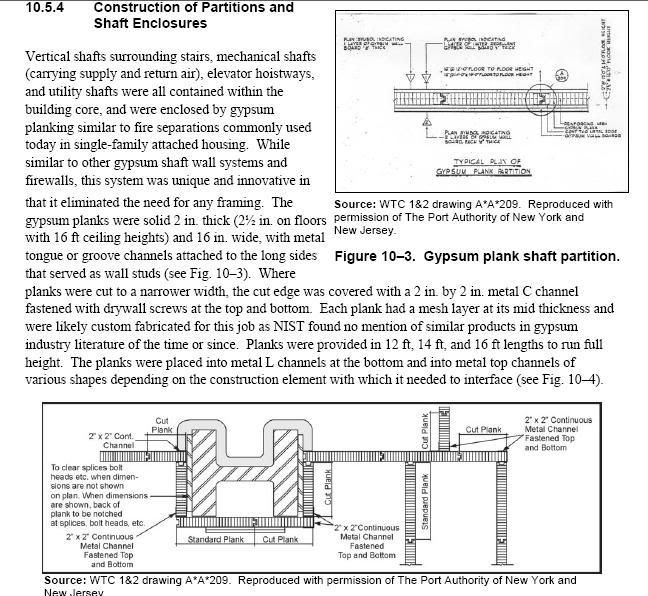
partitionwallsystem.jpg

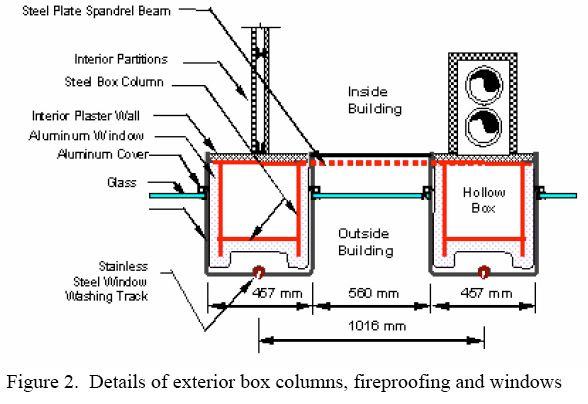
TTwallstructure.jpg


(both from NIST reports, sorry I don't have the exact link now)

Drywalling attached to one side of both exterior and interior columns. A section of smashed exterior wall - especially - could certainly be expected to be trailing a cloud of gypsum.
 
On item 3 - yes stuff would tend to come from one side of the metal :


http://i95.photobucket.com/albums/l131/Ignatz_CT/partitionwallsystem.jpg
http://i95.photobucket.com/albums/l131/Ignatz_CT/TTwallstructure.jpg


(both from NIST reports, sorry I don't have the exact link now)

Drywalling attached to one side of both exterior and interior columns. A section of smashed exterior wall - especially - could certainly be expected to be trailing a cloud of gypsum.


Yes, but would it look anything like the 9/11 fizzies? Do you think we can get a falling piece of steel with dust to look anything like the 9/11 fizzies?

Your input would be appreciated.
 
Yes, but would it look anything like the 9/11 fizzies? Do you think we can get a falling piece of steel with dust to look anything like the 9/11 fizzies?

Your input would be appreciated.

So what theory do you believe? Mini-nukes or the laser beam theories? Or are you still in the research phase, and deciding on which theory makes more sense, laser beams, or mini-nukes?

I found out some crazy evidence you might be interested in, TS. I was looking at some collapse photo's of the World Trade Centers, and I found some crazy similarities between the collapses and volcanic eruptions.

Look at this lava flow:
arenal-volcano-observatory-.jpg


fig9-75.jpg


Look similar?!
fig9-75.jpg


That's not thermite, or molten aluminum along with other materials in the building, it's lava. Just look at t3h pictures!

Also, I remember you always talking about the califlowering of the dust cloud, take a look at this:
information.jpg


Volcanoes destroyed the World Trade Centers, these photographs prove it. :jaw-dropp
 
Last edited:
Do you think we can get a falling piece of steel with dust to look anything like the 9/11 fizzies?

Your input would be appreciated.

If you can arrange to have many thousands of tons of plasterboard-lined steel building to get smashed to pieces in a massive collapse 1000' up, then I'm sure you'll get a similar effect.
 
Last edited:
Observations to replicate:

1. Quantity. Relative to the size of the piece, the falling steel emits huge quantities of opaque dust.
2. Continuity. The phenomenon continues for the entire drop.
3. Locality. The dust appears to come from specific locations, or a specific side, on the steel.
4. Fall Time. After leaving the steel, the dust falls rapidly down.
5. Overall appearance. The phenomenon bears a striking resemblance to the nuclear test in Nevada.

I see we have a new term here: Fizzies :rolleyes:.

1: Any reason it shouldn't? Seing the relative fall times, what would you suggest the weight of the dust is, compared to that of the steel?

2: Any reason it shouldn't? There is a certain amount of dust-generating sticking to the steel parts. It gets blown off by the airstream. As the part falls, there is less to blow off, but the airstream gets faster, tending to blow off more. If the fall was indefinite, it would stop at some point, of course.

3: You wouldn't expect it to blow against the airstream, would you? The airstream is strong at certain places in the falling beam.

4: So what? It falls according to its density. Which density do you think it should have?

5: No. At a certain time there is some superficial resemblance. As a sequence, the whole event looks nothing like a nuclear blast. Nothing at all.

You know, you are just shooting stuff out. We don't need to explain to you why things behave like they do, instead of how you think they should do. If you have a specific theory, state it. Along lines like this:

- Phenomenon X could be expected to behave like ______ for _____ reason.

- Instead it behaves like _____ , which indicates ________

Especially the second part is important: As long as you cannot provide an alternative thesis, the fact that we observe things happening in a certain way is evidence against your idea that they should happen in another way.

Hans
 
I see we have a new term here: Fizzies :rolleyes:.


Well, I will say this in TruthSeeker1234's defense, he has stopped using "mushroom cloud" and "pyroclastic flow". He has learned the proper meaning of these terms and is willing to let them go. I do not agree with him on pretty much anything else he has posted, but I do thank him for this much at least. Thank you TS!

Now if Scooby would just stop being condescending to me every time I offer information he has requested . . . *sigh*
 
Well, he stopped using them last time we had a similar discussion, too. Only to revive them later. But I don't mind the term fizzies. I just think they were better applied to other things in the CT world ;).

Hans
 

Back
Top Bottom