• Quick note - the problem with Youtube videos not embedding on the forum appears to have been fixed, thanks to ZiprHead. If you do still see problems let me know.

LED Bulbs

When first turned on LEDs are brighter than they will be after they have temp stabilized. CFs, OTOH, are much dimmer when first turned on and get brighter as they warm up.

LEDs generally have better color accuracy (CRI) than CFs which are quite spectrally spikey. Neither are as good as incandescents.

LEDs should be installed such that there is good ventilation around them or the life will be impacted as well as the output reduced.
 
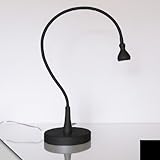
One thing to consider instead of bulbs is LED task lights.

41fjgulk2NL._SL160_.jpg


We have them all over the office/house and just leave them on. At 3 watts who cares and not one has had an issue except at the transformer end.

Provides direct illumination instead of the waste of bulbs which radiate into places light is often not needed.

Have had LED halogen replacements in place for a couple of years are well and again the light can be targeted and they are much cooler than the halogens.

I use the task lights for ambience as well - one illuminates a painting in the hall and acts as a night light - because you can rarely see the bulb your eyes are never stressed but we use them for close technical work on the computers and there is loads of power in them with no glare from a bulb.

I my view one should never see a bulb - only the reflected light from the surface you want illuminated.
 
Last edited:
I bought a 10W LED bulb for the kitchen from Ikea ( http://www.ikea.com/gb/en/catalog/products/20222552/ ) . We have 4 light in the ceiling (those fittings that are flush with the ceiling), each have 46W halagon reflector bulbs.

I then went a bit geeky, and borrowed a light meter from work. Unscrewing all but one bulb, I compared the light output of a halagon, and the 10W LED.

I was suprised that the halagon gave a reading of about 5-6 times the LED! I held the probe at arms length for each, and lower down, and both were about 5 times higher.

Caveat: The LED bulb is longer, and not a reflector. This means that unlike most LED bulbs, the light spread is much wider in the room, whereas the halagon is submerged in the fitting, giving a much more direct light from the fitting.

Meter measures in Lx, and halagon gave up to 1300, whereas LED was about 215

Its difficult to say how having all for lights as LED will compare, given the differing angle of light given off.

Assuming 2hrs daily use, payback would be about 3.1yrs. Given how long they last, and how long we plan to live here, it is very tempting. Although CFLs would be much cheaper, and payback for those would be about half that. Or if you know of a better performing LED like that, as a reasonable price, I'd be interested to know.
 
I then went a bit geeky, and borrowed a light meter from work. Unscrewing all but one bulb, I compared the light output of a halagon, and the 10W LED.

I was suprised that the halagon gave a reading of about 5-6 times the LED! I held the probe at arms length for each, and lower down, and both were about 5 times higher.


This may have nothing to do with it (just an idle thought), but the phosphor on the LED would most likely be emitting light in the frequencies that the human eye have the greatest responses to, while the halogen is also wasting light in frequencies that human eyes have little or no response to, such as between green and blue, as well as the near infrared and near ultraviolet.

Presumably the light-meter is also responding to this light that our eyes don't respond to, and so gives a higher reading for the halogen even when it's not giving out any more useful light.
 
I'm surprised their energy usage is that high. That's about the same as CFLs. I thought LEDs were another leap in efficiency--or is their advantage just longevity?

My memory wonked out. I got the numbers wrong. But, my subconscious still had stored the correct ones somewhere and alerted me that there was something amiss.

So I checked. The brighter ones (I think they're supposed to have similar light output to a 75W incan, but after the mess before I don't trust my memory anymore in that regard. It doesn't say on the bulb) draw 10W, not 15.

It's mighty bright.
 
Also, if you live in a place where there is significant A/C usage, remember that every watt-hour of heat you don't add to the house is one less that you need to pay to have the A/C remove.


Opposite side of this argument is that if your power bill is mainly for winter heat, running tungsten bulbs as heaters gives you both light and heat, so LEDs may not be such a boon as you expect.

They are expensive and at 58 years of age I'm less than 100% confident I need bulbs with a 20 year lifespan...

I tried to fit LEDs in our bathroom, but despite claims of compatibility from the manufacturer of the light fittings, they did not , in fact, fit. The bulbs have external ribs, presumably for cooling, though it's hard to see why that's necessary, - and the ribs would not fit the recessed downlighter fittings. So although advertised as GU10 bulbs, they did not fit all GU10 holders. I shifted them to my computer room, where the lights are on far longer anyway. They certainly give a bright light- not like the disastrous CFL crap the industry (and EU government) has been foisting on us.

The "savings" advertised do not always make sense though, unless you leave lights on most of the day- as in shops or offices. I reckon it will take nearly five years of use to recover the costs on LED bulbs (as I use them)- and if I drop just one and break it, that time goes way, way up.

If price comes down, they will take off, but we're not there yet.


ETA- One variable I'd like to know more about is decreased efficiency over time. I have no idea if this affects LEDs significantly or at all.
Some CFLs (even from good brands) dropped by 50% in output in as little as six months. I have the photos to prove it.
 
Last edited:
Just bought a pack of 4 downlight replacements for $25 for the lot, about $6 each. I bought one downlight, 10 Watts, about two years ago for about $65, that ran at about 10 watts so it had a little internal fan. These new ones are only 4.5 watts and can just use heatsinks. They are great, now I can have the kitchen lights on and know I'm only using 24 watts instead of 200.
 
I bought a 10W LED bulb for the kitchen from Ikea ( http://www.ikea.com/gb/en/catalog/products/20222552/ ) . We have 4 light in the ceiling (those fittings that are flush with the ceiling), each have 46W halagon reflector bulbs.

I then went a bit geeky, and borrowed a light meter from work. Unscrewing all but one bulb, I compared the light output of a halagon, and the 10W LED.

I was suprised that the halagon gave a reading of about 5-6 times the LED! I held the probe at arms length for each, and lower down, and both were about 5 times higher.

Caveat: The LED bulb is longer, and not a reflector. This means that unlike most LED bulbs, the light spread is much wider in the room, whereas the halagon is submerged in the fitting, giving a much more direct light from the fitting.

Meter measures in Lx, and halagon gave up to 1300, whereas LED was about 215

Its difficult to say how having all for lights as LED will compare, given the differing angle of light given off.

Assuming 2hrs daily use, payback would be about 3.1yrs. Given how long they last, and how long we plan to live here, it is very tempting. Although CFLs would be much cheaper, and payback for those would be about half that. Or if you know of a better performing LED like that, as a reasonable price, I'd be interested to know.

Measuring light output can be tricky. As you say, you measured lux. Which is a measure for the amount of light at one specific point.

Bulbs are rated in lumen, which is the total light output of the bulb in ALL directions (which is independent of distance. You cannot assign a lux number to a bulb; you have to define at which DISTANCE to measure the lux.)

Total light output is difficult to measure. Professionally it's done with an integrating sphere (a sphere specially coated on the inside to catch and reflect all light, and a bunch of lux meters at special points. The points are chosen based on known lighting geometry of the bulbs).

For humans, the total light output is pretty impossible to sense. We can only sense the brightness that reflects off an object (what you measured with the lux meter), and a difference in output geometry of the light source screws us up.

Another problem I see is the spectral calibration of the light meter. It's possible that it only measures a few wavelengths, which are chosen for an incan spectrum (black body radiation). It measures LEDs and FLs wrong, as they have significant light output in the blues, which the light meter might not measure.
 
Last edited:
Opposite side of this argument is that if your power bill is mainly for winter heat, running tungsten bulbs as heaters gives you both light and heat, so LEDs may not be such a boon as you expect.

They are expensive and at 58 years of age I'm less than 100% confident I need bulbs with a 20 year lifespan...

I tried to fit LEDs in our bathroom, but despite claims of compatibility from the manufacturer of the light fittings, they did not , in fact, fit. The bulbs have external ribs, presumably for cooling, though it's hard to see why that's necessary, - and the ribs would not fit the recessed downlighter fittings. So although advertised as GU10 bulbs, they did not fit all GU10 holders. I shifted them to my computer room, where the lights are on far longer anyway. They certainly give a bright light- not like the disastrous CFL crap the industry (and EU government) has been foisting on us.

The "savings" advertised do not always make sense though, unless you leave lights on most of the day- as in shops or offices. I reckon it will take nearly five years of use to recover the costs on LED bulbs (as I use them)- and if I drop just one and break it, that time goes way, way up.

If price comes down, they will take off, but we're not there yet.


ETA- One variable I'd like to know more about is decreased efficiency over time. I have no idea if this affects LEDs significantly or at all.
Some CFLs (even from good brands) dropped by 50% in output in as little as six months. I have the photos to prove it.

The rest of the bulbs in my house are CFL. The newer ones are much better technology than the first generation lights. I have no complaints about them at all. In fact, I can't remember the last time I had to change one. The need for having a stockpike of spare incandescent globes is over, as is having to continually change them.

Part of the return on the low power globes is the reduced infrastucture needed because power consumption has reduced. In Australia, infrastructure needs have been dramatically lower than expected partly due to the lower demand. (That didn't stop them building it using outdated projections, but what is there will last longer than anticipated).
 
I switched my cold water aquarium to Leds last year. They are great. I am considering a change on my heavy planted 'Aquascape' It has 3 T5 fourescants at the moment. They work well but they need tobe changed avery 18 months or so or you lose the intensity and the wavelengths change which effects plant growth.
Dedicated aquarist Led systems are quite expensive but I have been looking at waterproof hydroponics and greenhouse Led lamps, they are more or less the same thing and a fraction of the cost.
 
And after you switch out all your bulbs and open up your first utility bill prepare to be underwhelmed at the savings.

Lighting makes up a pretty small percentage of your electricity used. Think savings over the (very) long haul.

For more immediate savings convince your wife to chop off all of her hair and throw out the hair dryer.
 
Yes. But they don't work with timers.
Also, they don't dim as low as incandescents. At the lowest setting, in my fixtures at least, they're brighter than the standard bulbs were.

Eta: just saw TjW's reply. I didn't know some don't. I have Philips LEDs and haven't had a problem with dimming.
Why not?
A timer is just a fancy kind of switch isn't it?

As an aside. I've got my lamps in the house linked to a remote control switch.
Do they work with that?
 
I have two on the garage door opener. It vibrates enough that incandescent bulbs had a very short lifespan, and CFLs, for some reason, didn't work at all.

I should get one for my droplight. I have a CFL in there now, but when it breaks (usually from being dropped), an LED is going in there.
 
Why not?
A timer is just a fancy kind of switch isn't it?

As an aside. I've got my lamps in the house linked to a remote control switch.
Do they work with that?

I have a timer on my front porch lights which turns the light on at dusk and off at midnight. Now I don't know if I'm phrasing it right but I believe a timer switch always has a very low current going to the fixture. With an LED it causes the bulb to blink on and off repeatedly.

It's been a year since I installed them so maybe since then they've come out with new technology for timer switches.

As for the lamps hooked up to a remote...I have a basement with seven 6" in-ceiling bulbs. The remote switch wouldn't work with the LED bulbs until I switched one bulb with an incandescent. It had something to do with getting the load on the switch past 75 or so watts. When the bulbs were all LED they'd dim all the way up then all the way down repeatedly. Switching one bulb fixed that.
 
I suffer from the same effect as in the article -- I can't convince myself that I can afford to save the money when I see LED lights on the shelf.

If they made them in the "appliance bulb" size I'd buy a pair to replace the infrared heat globes inside my fridge, though.

You do know that those go out when you close the door, right?


At least, they're supposed to.
 
I have a timer on my front porch lights which turns the light on at dusk and off at midnight. Now I don't know if I'm phrasing it right but I believe a timer switch always has a very low current going to the fixture. With an LED it causes the bulb to blink on and off repeatedly.

It's been a year since I installed them so maybe since then they've come out with new technology for timer switches.

As for the lamps hooked up to a remote...I have a basement with seven 6" in-ceiling bulbs. The remote switch wouldn't work with the LED bulbs until I switched one bulb with an incandescent. It had something to do with getting the load on the switch past 75 or so watts. When the bulbs were all LED they'd dim all the way up then all the way down repeatedly. Switching one bulb fixed that.

Ah! Clear!
Thanks very much.
 
I use timers on my aquarium Ledsd, it is mechanical, a small motor turns the timer plate and pegs flip the switch. They are quite common. when it's off it's off.
 
I'm surprised their energy usage is that high. That's about the same as CFLs. I thought LEDs were another leap in efficiency--or is their advantage just longevity?

It depends on the actual complete LED lamp. The good ones have a real switchmode power supply in them, that generates the constant current required for the LED's. Cheap ones most often do not. They simply connect the LED's into a string or strings, and then add a simple resistor to limit the current. That means that the difference in voltage between what the LED's operate at (at the given current), and what the line voltage supplies, is simply converted into heat in that resistor.

To make things even worse, some of the really cheap LED lamps use rather short LED strings, requiring a rather high voltage drop across that current limiting resistor(s). I have seen some where basically half the power is converted into heat in those resistors.

Greetings,

Chris
 
I have a timer on my front porch lights which turns the light on at dusk and off at midnight. Now I don't know if I'm phrasing it right but I believe a timer switch always has a very low current going to the fixture. With an LED it causes the bulb to blink on and off repeatedly.

It's been a year since I installed them so maybe since then they've come out with new technology for timer switches.

As for the lamps hooked up to a remote...I have a basement with seven 6" in-ceiling bulbs. The remote switch wouldn't work with the LED bulbs until I switched one bulb with an incandescent. It had something to do with getting the load on the switch past 75 or so watts. When the bulbs were all LED they'd dim all the way up then all the way down repeatedly. Switching one bulb fixed that.

What you describe sounds like a fully electronic timer, where the switching is done electronically (usually with a TRIAC). Those require certain minimum currents through them to work reliably.

Bog standard timers, however, usually have a (electro-) mechanical switch that does not suffer from that particular problem, at least not to such an extent. (Yes, there are problems with high power rated switch/relay contacts when used with very low currents through them, but an LED bulb should require enough power to not trigger that problem).

Greetings,

Chris
 

Back
Top Bottom