• Quick note - the problem with Youtube videos not embedding on the forum appears to have been fixed, thanks to ZiprHead. If you do still see problems let me know.

kurious_kathy explain this.

Bri
Typing must be difficult with your foot constantly in your mouth.
Me thinks you speak of yourself.

My Lot comment was not the correctness or wrongness of rape. It was about the value placed on the women in his household verses two male strangers.

The second was a specific instance, not a general command.

Again I ask, 'Is English your first language, or do you just not pay attention?'

Ossai
 
Bri, Ossai's right. The two passages are not similar. The one in Numbers recounts a specific instance of God commanding Israel to exact vengeance on the people who wronged them at Peor (the Midianite women figured prominently in that). The one in Deuteronomy is a standing commandment for war in general.

The only similarity I mentioned was that they both concern captive women, and that the posters of both examples concluded from the passages that the Old Testimate condones rape. I don't see where either condone rape, regardless of their differences.

Ossai made the statement:

Yes, especially since David Swindler didn’t address either of the two examples I posted.

I simply pointed out that you had responded directly to his example concerning Lot, and had responded to another post concerning whether the Bible condones the rape of captive women.

-Bri
 
Last edited:
My Lot comment was not the correctness or wrongness of rape. It was about the value placed on the women in his household verses two male strangers.

I simply pointed out that David Swindler already replied to it despite your claim that he didn't address either of your examples.

Although I don't recall suggesting whether or not your Lot example concerned the correctness or wrongness of rape, the following post seems to indicate that not only had you read David Swindler's response to your example, but that you apparently also believed your Lot example somehow shows that the Bible condones rape:

David Swindler

Did I miss something, Ossai? Is every person mentioned in the Bible supposed to have sterling character? Lot was no saint. He chose to live in Sodom, for cryin' out loud.

No. I was correcting Bri’s statement of the bible not condoning rape.

-Bri
 
Last edited:
I simply pointed out that David Swindler already replied to it despite your claim that he didn't address either of your examples.

Although I don't recall suggesting whether or not your Lot example concerned the correctness or wrongness of rape, the following post seems to indicate that not only had you read David Swindler's response to your example, but that you apparently also believed your Lot example somehow shows that the Bible condones rape:


-Bri
Ok, ok...it's now irritating me. It's David Swidler...not Swindler. Please make a note of it.
 
Accepted. After thirty-plus years one becomes resigned to certain phenomena. Props to kmortis for the heads-up.
 
I know several people with the last name of "Swindler" so it stuck in my head (although "swindler" might have negative connotations, it was an honest mistake and was not meant as an insult in any way). Thank you kmortis for bringing my mistake to my attention.

-Bri
 
Accepted. After thirty-plus years one becomes resigned to certain phenomena. Props to kmortis for the heads-up.
No problem.

Of course, you chewed me out when I did it as a joke, and these guys have been doing it for a few posts now. But I'm not hurt....oh, no

rotten lil bastage...mumble

Bri said:
Although I don't recall suggesting whether or not your Lot example concerned the correctness or wrongness of rape, the following post seems to indicate that not only had you read David Swindler's response to your example, but that you apparently also believed your Lot example somehow shows that the Bible condones rape:

To the point, I think that Lot's example at least shows that a man concidered to be "decent" by God, would contemplate and act on the idea that it was right and proper to give up his daughters to a horny mob for the purposes of protecting two angels who could have very easily protected themselves.
 
To the point, I think that Lot's example at least shows that a man concidered to be "decent" by God, would contemplate and act on the idea that it was right and proper to give up his daughters to a horny mob for the purposes of protecting two angels who could have very easily protected themselves.
Maybe he was more concerned about protecting the mob, against the profanity they were about to commit?
 
To the point, I think that Lot's example at least shows that a man concidered to be "decent" by God, would contemplate and act on the idea that it was right and proper to give up his daughters to a horny mob for the purposes of protecting two angels who could have very easily protected themselves.

I'm sure someone can correct me if I'm wrong, but isn't the point of Lot's story to show that God didn't take the killing of the Sodomites lightly? As much of a bastard as Lot was, apparently even he didn't come close to the depravity of his fellow Sodomites.

My understanding was that Lot didn't know that his guests were angels, and although he showed utter lack of compassion for his daughters, he did show a spark of humanity by protecting his guests from being sodomised by the Sodomites. As bad as Lot was, he wasn't bad enough to be among those killed, so in comparison we must know that the Sodomites must have been really awful. Indeed, a few passages later Lot has incest with his own daughters who bear him children, so to say that he was "decent" would seem to be an overstatement!

-Bri
 
1 The two angels arrived at Sodom in the evening, and Lot was sitting in the gateway of the city. When he saw them, he got up to meet them and bowed down with his face to the ground. 2 "My lords," he said, "please turn aside to your servant's house. You can wash your feet and spend the night and then go on your way early in the morning."
"No," they answered, "we will spend the night in the square."

3 But he insisted so strongly that they did go with him and entered his house. He prepared a meal for them, baking bread without yeast, and they ate. 4 Before they had gone to bed, all the men from every part of the city of Sodom—both young and old—surrounded the house. 5 They called to Lot, "Where are the men who came to you tonight? Bring them out to us so that we can have sex with them."

I dunno, it kinda sound like to me he had an inkling.
 
Maybe I'm weird or something but does anyone else find it amusing that a debate is raging over a fairy tale?

I'm sure I'll soon see arguments about alice in Wonderland! :)
 
I dunno, it kinda sound like to me he had an inkling.

Maybe, but I don't see anything that necessarily indicates so. The same angels came to Abraham in the previous section in the guise of men, and I don't see an indication that they weren't still in the guise of men when they subsequently went to Sodom. Genesis 18:22 states that "[t]he men had turned from there and went to Sodom..." Also, Lot offered his guests a feast even though angels don't have to eat. I'm not a theologian or a Biblical scholar, so I certainly could be wrong.

Even if we assume that Lot knew that his guests were angels, it is clear that the Sodomites wanted to sodomise them and Lot attempted to dissuade them by offering his daughters to them. Clearly Lot isn't a great guy, so the fact that he was saved indicates that the Sodomites were apparently even worse. I don't see anything in the translation that necessarily indicates that Lot is considered a terrific guy or that condones all of his actions.

-Bri
 
Good points, although I still don't feel that entirely satisfies the issue (and it isn't, in any stretch of the imagination, a simple one..). What I based my comments on was primarily the obsolesence of classical mechanics, and factors acting on biological processes can be reduced to a point where they become less certain. It's a simple assumption to make that while almost all decision making could likely be determined taking into account external factors, you couldn't achieve 100% certainty. There could of course be some things I'm not considering here, but on the face of it, it seems irrational to say behavior of matter on a micro scale in the brain doesn't effect it or isn't even fundamental.

To quote this article on the Stanford University website:

"Unless there is a complete independence of mental events from physical events, then even for free decisions there has to be indeterminism of a specific sort at specific junctures in certain brain processes."

My initial response to this is simply that randomness isn't will. However, I feel I need to elaborate in a more cautious manner.

Before I start, I must say (perhaps needlessly) that true quantum randomness in a system can, in my humble opinion, be discounted as adding anything to the matter of freewill. Something which is truely random can hold no information and can thus make no decision. I will continue with the given that we are ignoring truely random elements such as certain quantum phenomenon.

In the light of this, I not think that, despite our limited knowledge of such matters, there will be found brain functions that cannot be predicted with accuracy. (Once again I need to point out that this does not include such things as radiation events, and the like). Thus, in some distant future, it is easily possible that humans understand perfectly all the factors that effect our choices. Therefore our choices become deterministic. Any deterministic process cannot allow for 'true' free will (although the illusion certainly exists).

In my opinion, the only way to have proper free will is to have some immaterial nature to cognitive functions, one that is not bound to physical laws and is thus not determanistic in nature. If this were the case, then I concede that free will could very well exist. However, I do not consider this to be the case.
 
Of course, quantum theory would disagree even without free will.

-Bri

As noted above, I cannot see how truly random quantum events could ever allow for free will. Randomness cannot contain information, therefore cannot facilitate functional will.
 
Bri
I simply pointed out that David Swindler already replied to it despite your claim that he didn't address either of your examples.
David Swindler commented on my posts. He did no address (as in deal with) them.

Iacchus
Maybe he was more concerned about protecting the mob, against the profanity they were about to commit?
You’re saying that the rape of a man is worse than the rape of a woman.

Ossai
 
As noted above, I cannot see how truly random quantum events could ever allow for free will. Randomness cannot contain information, therefore cannot facilitate functional will.

Randomness wouldn't account for free will, but would mean that given the exact same conditions, one might behave differently every time. Quantum theory essentially allows for uncaused events. Free will, if it exists, would be something other than randomness, but would still be uncaused (or perhaps caused by something that isn't material).

There have been previous threads concerning free will on this forum, and as kmortis pointed out, they are seldom pleasant or simple (and in this case possibly off-topic).

-Bri
 
As noted above, I cannot see how truly random quantum events could ever allow for free will. Randomness cannot contain information, therefore cannot facilitate functional will.
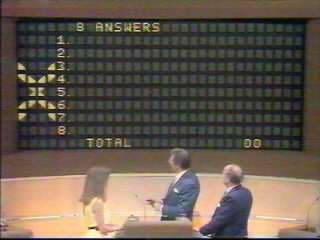
We asked a hundred people and our survey said...

bygraves_duhduhh.jpg


Here's the proof.
 
Maybe, but I don't see anything that necessarily indicates so. The same angels came to Abraham in the previous section in the guise of men, and I don't see an indication that they weren't still in the guise of men when they subsequently went to Sodom. Genesis 18:22 states that "[t]he men had turned from there and went to Sodom..." Also, Lot offered his guests a feast even though angels don't have to eat. I'm not a theologian or a Biblical scholar, so I certainly could be wrong.

Even if we assume that Lot knew that his guests were angels, it is clear that the Sodomites wanted to sodomise them and Lot attempted to dissuade them by offering his daughters to them. Clearly Lot isn't a great guy, so the fact that he was saved indicates that the Sodomites were apparently even worse. I don't see anything in the translation that necessarily indicates that Lot is considered a terrific guy or that condones all of his actions.

-Bri
Of course, the initial point is that God considers Lot to be a good enough man to hold off destroying Sodom until Lot can be extracated. So, God thinks he's ok. Or offering your daughters to be ravaged isn't a big deal to the Big Man.
 

Back
Top Bottom