
• Quick note - the problem with Youtube videos not embedding on the forum appears to have been fixed, thanks to ZiprHead. If you do still see problems let me know.

Johnny come lately?

the temperature was high enough to melt aluminum and make it glow but almost certainly not high enough to melt structural steel

Sigh....

Steel is soluble in aluminum. Many metals (and other materials) will dissolve in molten metal of a lower melting point. This is the basis for liquid phase epitaxial growth of semiconductor crystals.

Here is an Fe-Al phase diagram...

alfe_sei.jpg


What this diagram says is that if you mix iron and Aluminum at 1000 deg C, then the liquid phase will equlibrate to about 10% Fe content.

To put your statement another way:

"While it was hot enough to melt ice, it could not have melted table salt."

Table salt has a very high melting temperature. But to get a liquid solution of water and salt, I only need liquid water. The salt will dissolve in the water.

Same thing with Aluminum and Iron.
 
Last edited:
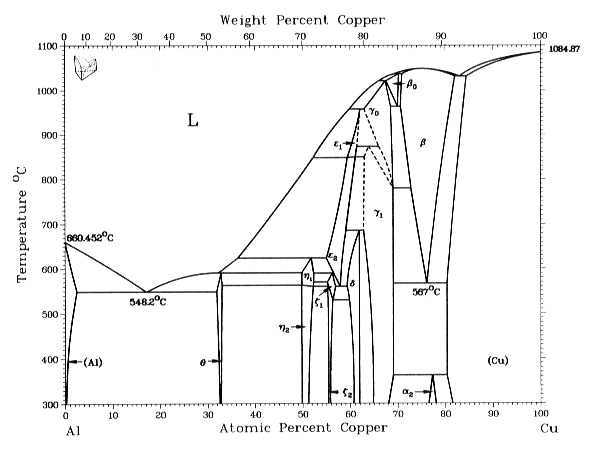
Same story for copper, btw, which would be present in significant quantities in the plumbing and electrical systems.

AlCu%20phase%20diagram.jpg


A Cu-Al complex, btw, can be maintained in a liquid state below the melting point of either Aluminum or Copper.

(which is a consideration in Al-Cu electrical interface when the Copper and Aluminum Oxide junction heats up from having to overcome the Schottky barrier)
 
Sigh....

Steel is soluble in aluminum. Many metals (and other materials) will dissolve in molten metal of a lower melting point. This is the basis for liquid phase epitaxial growth of semiconductor crystals.

Here is an Fe-Al phase diagram...

http://www.nims.go.jp/cmsc/pst/database/al-elem/alfe/alfe_sei.jpg

What this diagram says is that if you mix iron and Aluminum at 1000 deg C, then the liquid phase will equlibrate to about 10% Fe content.

To put your statement another way:

"While it was hot enough to melt ice, it could not have melted table salt."

Table salt has a very high melting temperature. But to get a liquid solution of water and salt, I only need liquid water. The salt will dissolve in the water.

Same thing with Aluminum and Iron.

You might as well get used to posting this - the truthers seem to be weak in the material sciences. It wouldn't be a bad idea to gloss a couple of the terms either (make them easy to cut and paste - saves the truthers time). For example, you could explain that Fcc and Bcc represent different lattice structures and correspond roughly to differing densities.
 
the truthers seem to be weak in the material sciences

...of course material science people are, in my experience, a bit nutty as well.

Anything that poured out of the WTC was a soup of anything that was in the WTC and the airplanes that hit the towers. There are lots of metals in an office building, and Aluminum turns out to be a good solvent. People just don't ordinarily think of molten metals as liquids like any other liquid, but they are fairly used to using, say, the same chemical to keep their radiator from freezing and from boiling over.

Then... there are the inane pictures of molten aluminum. Of course, if you are casting something out of aluminum, then you don't have a need or desire to heat the aluminum very far beyond its melting point, since the entire point is to simply get it into pourable condition. So, no, you don't find a whole lot of pictures of liquid aluminum much hotter than that in the first place.

The entire "what is this" argument over the hot material seen coming out of the tower is pointless. It's hot stuff coming out of the tower, and likely composed of anything and everything that might have been inside.

(It's even worse with folks from the UK, since they can neither spell nor pronounce "aluminum" correctly. A post-doc from Wales once corrected me and I pointed him to the periodic chart on the wall of the lab. After a moment he exclaimed, "My God, you've all spelt it wrong as well!")
 
Last edited:
Furthermore Dr. Jones claims that, it cannot be Aluminum, because it is not expected to ignite at normal fire temperatures…

dishonest authors of silly letter said:
We agree and congratulate NIST for including these observations of an “unusual flame... which is generating a plume of white smoke” 4 “followed by the flow of a glowing liquid” having “an orange glow” [3]. With regard to the “very bright flame… which is generating a plume of white smoke”, NIST effectively rules out burning aluminum, because “Aluminum is not expected to ignite at normal fire temperatures…”.3

Thank you for demonstrating so clearly the obvious intellectual dishonesty, intellectual shortcomings, and deliberate cherrypicking on the part of the authors of that silly little letter you cited.

What part of "Aluminum is not expected to ignite at normal fire temperatures and there is no visual indication that the material flowing from the tower was burning." did you not understand?
 
Last edited:

Back
Top Bottom