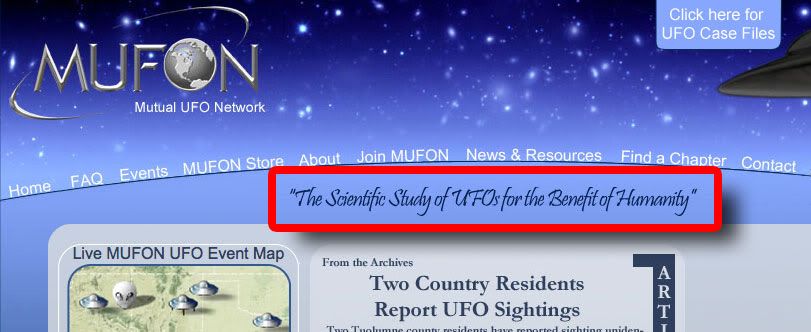
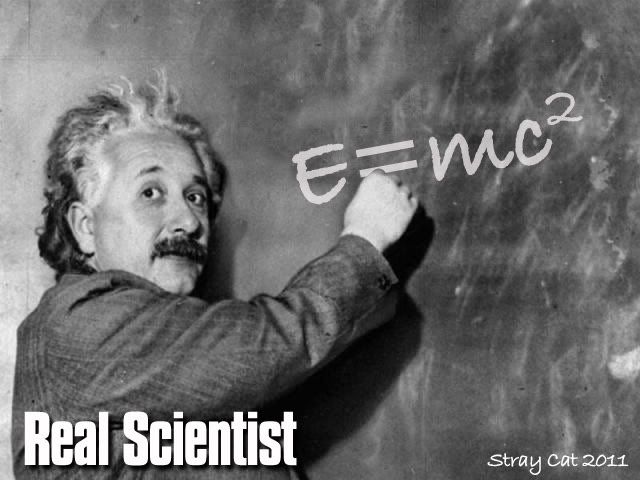
Non-scientific ( in the strictest sense ) pursuits can be taken seriously. Philosophy for example. There is also a whole spectrum of sciences that calls itself science that doesn't completely fit with the strictest definitions involving empirical evidence ( for example radio astrononomy ), for which "direct observation" isn't really possible.
This is wrong. Radio astronomy is the science of astronomy.
The fact that they use special equipment to make their observations along a different wavelength of the electromagnetic spectrum in no way diminishes the validity of their science.
Even with regular optical astronomy we are dealing with remote data, in some cases what is being observed doesn't even actually exist anymore ( the distance/light travel time issue ). Geologists do the same thing with seismographs. We don't get to "directly observe" the Earth's core or atomic nuclei. We merely extrapolate their existence.
Over the millennia, we resourceful humans have developed countless sophisticated tools and techniques to extend our powers of perception, measurement, and manipulation of the world around us. The fact that we use tools in no way diminishes our ability to conduct scientific study.
That "direct observation" argument is so weird, I can't even imagine where in the world you ever came up with that idea. If that were the case, modern physics, chemistry, biology, medicine, astronomy, oceanography, and a huge number of other sciences would be rendered invalid because they use instrumentation to make observations.
I think you really need to learn the definition and practice of science, before you can even begin to determine what constitutes a
pseudoscience.
Then we could say that although ufology itself isn't a "science", it offers genuine scientific data.
This is totally confused.
If you're using the trappings of science (such as collecting data, performing analyses, forming conclusions, etc.) but you don't follow proper scientific procedures (like observing strict standards for evidence and hypotheses, vetting your findings through a critical peer review process, verifying results by replicating experiments, etc.) then you're engaging in pseudoscience, regardless what specific claims your organization may make or not make about its work.
If you're publishing information and making authoritative claims based on the study of real world evidence, and you fail to use proper scientific procedures, then what you're doing is
pseudoscience. It's as simple as that.
In the mean time I think that critical thinking adds just as much credibility as science.
So you admit that this is all about applying a veneer of credibility to your admittedly unscientific methods of research?
Engaging in that kind of deception is not only pseudo-scientific, it's also
highly dishonest.
The bottom line is that we make a genuine honest effort not to decieve ourselves or others.
Good intentions do not ward off bad practices, and bad practices yield deceptive results. If you're really as honest as you're letting on, you need to learn the proper way to do research and conduct your business accordingly. Otherwise, it would be quite dishonest to stick the words "critical thinking" into your mission statement without the slightest understanding of what it entails.
For example a large portion of ufology is the history of ufology, which includes the contactee and abduction phenomena plus a whole array of social, political, arts and entertainment related topics. These things are what add the ice-cream topping to ufology, they make it fun. From the Far Side and Futurama to X-Files and the MIB, ufology has at it's core a genuine mystery, but if we were to discard the rest, I think we'd be losing something valuable from a humanities perspective.
I'm also a big fan of all those same comics, movies and TV shows, but remember that forgoing scientific procedure and critical analysis in favor of appealing to pop culture is going to throw up a bunch of big red flags that you're engaged in pseudoscience.