• Quick note - the problem with Youtube videos not embedding on the forum appears to have been fixed, thanks to ZiprHead. If you do still see problems let me know.

How many continents are there?

The definition of a continent is fairly arbitrary, but I can't help feel that there's a notable distinction between "connected by a tiny land-bridge" and "connected by a huge mass of solid land as wide as the whole thing." Which is why I have a hard time accepting that Europe and Asia are separate continents, but have no problem accepting that N. America, S. America, and Africa are all separate continents.

But at least there seems to be fairly universal agreement on Antarctica and Australia. :)
 
Not so, because a river has a source. It doesn't change the connectivity of the land around it.

Dave

I know of one exception, Two Ocean Pass, So I guess we could say that Atlantic and Pacific creeks and the Snake, Columbia, Yellowstone Missouri and Mississippi rivers divides North America into North North America and South North America.

ETA: It should perhaps be noted that Two Ocean, Atlantic and Pacific Creeks are very small streams. not navigable by any craft bigger than an inner tube (if that).
 
Last edited:
What about Mu and Atlantis?!

Anywho, alphabetically: Africa, America, Antarctica, Australia and Eurasia. 5 continents, one buffet.
 
Some may argue that Central America is also a continent, so the Americas are actually 3 continents together
 
Shall we confuse the issue even more and ask how many oceans there are? When I was in school we were taught there were four oceans, but now kids are taught that there are five oceans.

Steve S
 
Shall we confuse the issue even more and ask how many oceans there are? When I was in school we were taught there were four oceans, but now kids are taught that there are five oceans.

Steve S
Which five? I remember the Pacific, Atlantic, Indian, and Arctic.
 
From a plate tectonics point of view, the concept of continents make about as much cogent sense as constellations do in the heavens.
the continents in plate tectonics make infinite more sense than the constellations!
the constellations are completely arbitrary, but the tectonic plates are well defined.
North/South America is just as separate as Eurasia and Africa are (well marginally less since the Panama canal isn't actually at sea level like Suez is)
and Europe and Asia are clearly just one continent.
the continents: N. America, S. America, Eurasia, Antarctica, Africa, Australia.
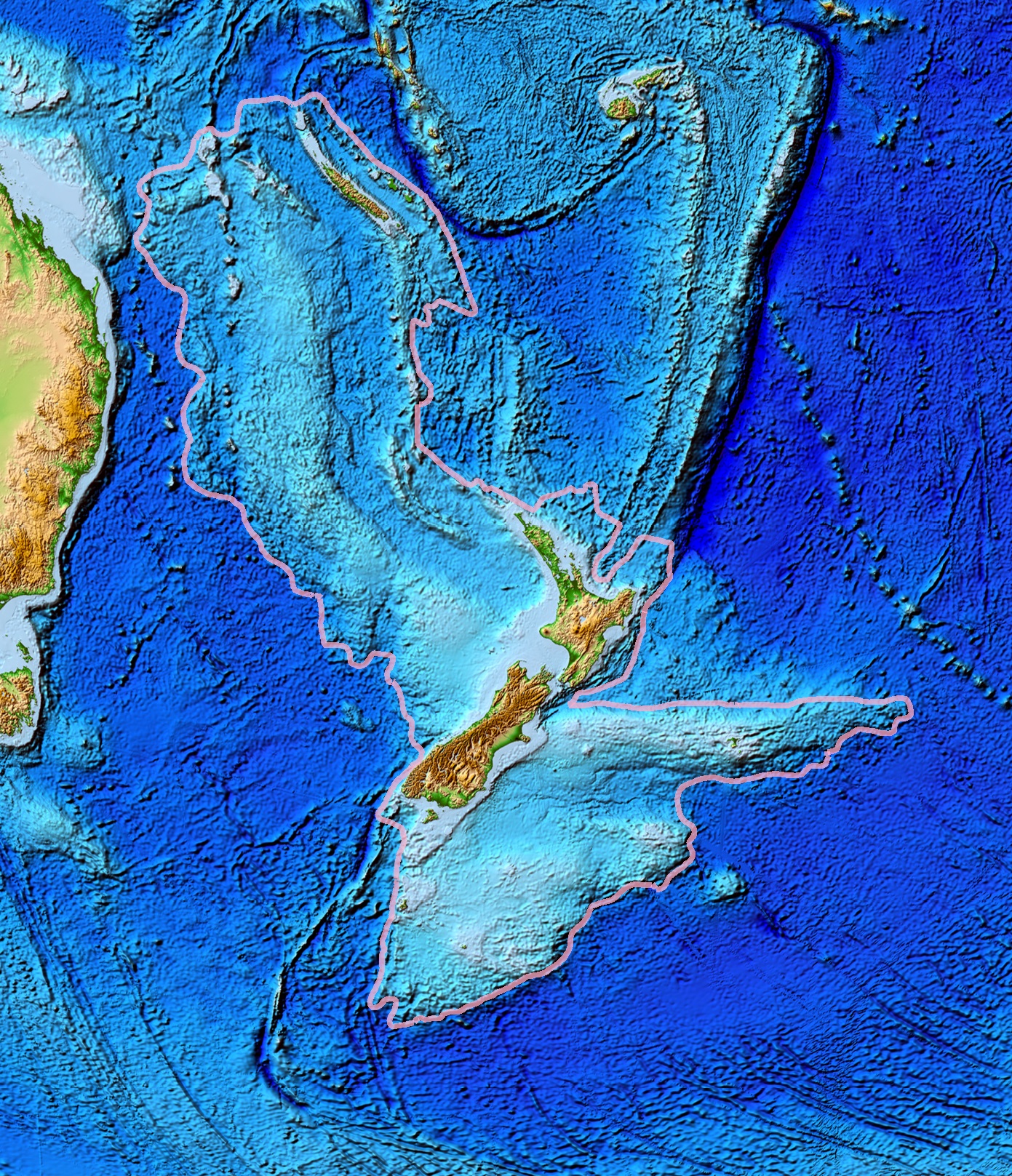
Arguably, NZ is a continent as well, just most is under water.:D
 
From a plate tectonics point of view, the concept of continents make about as much cogent sense as constellations do in the heavens. It's a useful generalization, but a difference without a distinction. Just look at the difference a few meters of sea level causes.

There's just one continent, Pangaea/Rhodinia/Gondwanaland; all the rest is just details.

You forgot Laurasia.
 
Which five? I remember the Pacific, Atlantic, Indian, and Arctic.

Southern, which according to Australia starts at our south coast and goes down to Antarctica from there, but according to wrong people (ie. everyone else) it starts at 60 degrees and goes south from there.
 
Arguably, NZ is a continent as well, just most is under water.:D

And what about India? Arabia? And wouldn't that make Hawaii and California part of the NZ continent as well? :)

Actually, this map suggests that only a small amount of NZ is on a separate plate from AU. It might be more appropriate to refer to the separate plate as Hawaii, since those islands are more-or-less dead center on the plate. But the Phillipines would be a separate continent, as would Central America. And, of course, we'd have to redefine the Russian regions of Chukotka and Kamchatka, and about half of Japan as being part of North America. :)
 
And what about India? Arabia? And wouldn't that make Hawaii and California part of the NZ continent as well? :)

Actually, this map suggests that only a small amount of NZ is on a separate plate from AU. It might be more appropriate to refer to the separate plate as Hawaii, since those islands are more-or-less dead center on the plate. But the Phillipines would be a separate continent, as would Central America. And, of course, we'd have to redefine the Russian regions of Chukotka and Kamchatka, and about half of Japan as being part of North America. :)

Surface New Zealand yes, but Zealandia is far bigger than that.
Zealandia_topography.jpg


All of that light blue is Zealandia (Other than the tiny bit of Australia on the Western edge), except for the ridge running north-east and south-west away from New Zealand, that's the mid ocean ridge where the Australian Plate meets the Pacific Plate.
 

Back
Top Bottom