• Quick note - the problem with Youtube videos not embedding on the forum appears to have been fixed, thanks to ZiprHead. If you do still see problems let me know.

Has consciousness been fully explained?

Status
Not open for further replies.
Ichneumonwasp said:
You make it sound as though this has all been accomplished already and that the option of building a fully conscious machine capable of making its own choices has been rejected because we want to remain in control.

I find that to be kind of a silly answer.


No, not at all. My point is that I don't think there is an absolute barrier to it.

We are far, far away from being able to do it ourselves. We are just too ignorant.


okay why did you say this earlier?

Well, we don't put things like that into our algorithms now because we use machines as tools and we want them to do very defined activities. We don't want to program them with anything, for want of a better term, fuzzy. We don't generally want a machine to decide which goal it should pursue -- we define the goal.


You sound there as if you don't really want to build a conscious machine.
 
I think you are confusing what is mere opinion with what is normative choice.

That the issue concerns personal preferences about breakfast cereal is a straw man.

Please correct me, then.

What is the archetypical example of a normative choice that you want to use for the purposes of this discussion, Frank?
 
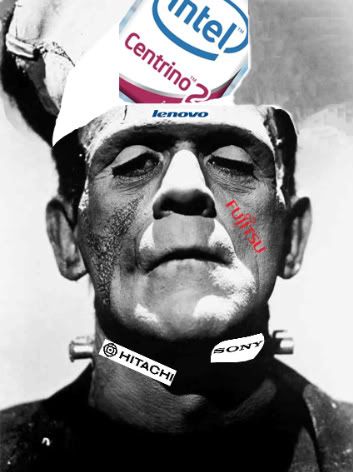
No, consciousness threads are like Hammer Dracula films. They just stop, then restart a few months later with exactly the same plot.

HAMMER Studios PRESENTS

frankenstein22_2.jpg


:frankenst:frankenst FrankenComputer!!! :frankenst:frankenst
-:trollface (The Perverse Engineering of Frankenstein) :trollface

:eek: some threads were never meant to be opened...

Starring

Turing MacSheen as Victor Frankenstein
Curtis Goadhell as his assistant, Igorithm
Constance Qualia as the neglected fiancee
Mr E. Rains as leader of the angry townsfolk

Special Appearance by

Dennett Chalmers (in the dual role of brain in the vat & ghost in the machine)

And Introducing

Srip Sturgess as "The Monster"

...coming to a forum near you
 
No, it is not in our imagination that it does this. It is the program, intentionally following an algorithm, that determines which logic gates open and close -- real actions controlled from the top-down with a real output. Manipulating symbolic numbers, where those symbols are given meaning by the person who programmed the machine, is still adding regardless of whether or not the output is viewed.

A dropped abacus does not intentionally follow an algorithm, so its output must be viewed by someone to constitute addition.

We build calculators (digital ones or abacuses) so that they do physical stuff which helps our brains imagine addition, subtraction, and stuff. They do not actually aggregate or disaggregate groups of things, and their physical actions don't resemble that.

Unless you know the symbol system, you have absolutely no way of knowing that an abacus or a digital calculator has "added" anything.

The "addition" is in your imagination when you look at the positions of the beads, or the pattern of ink on paper, or the pattern of lights on a screen.

If you say that a calculator really does "add" because you can look at a screen or printout and decipher the symbols there if you know how, you might as well say that my TV really does whatever is happening on the screen.
 
It is laughable that you think A.I. researchers "ignore the organic systems which do indeed cause consciousness."

And I know you think you are the resident expert on "actual brain research" but in fact I doubt an analysis of posting history would confirm that. On the contrary I would put money on Pixy and I both citing more varying "actual brain" research than you, even if informally. In particular, your entire repetoire seems to consist of Marvin (or whatever his name is) and a few other people with parts of their brain's missing. Have you brought up any research on vision? Have you brought up any research on neuron biology? Have you brought up any research on memory? Have you brought up any research on animals?

Do you even know what the EEGs and MRIs of the people in your precious research looked like? How can you accuse people of "ignoring" research when your own familiarity is limited to what you can read on a public access abstract?

Hey, anytime you do want to start discussing the brain, that would be great.

There are a few studies I bring up several times because they continue to be relevant and the discussion doesn't seem to get past them.

But no, I haven't seen you or Pixy diving into that area. I can't recall your having posted much on it.

Have I missed something?

Instead, we get a lot about simulations, math, Church-Turing, that sort of thing.

I would certainly welcome actual discussion of the brain on threads like these. Would you care to start?
 
We build calculators (digital ones or abacuses) so that they do physical stuff which helps our brains imagine addition, subtraction, and stuff. They do not actually aggregate or disaggregate groups of things, and their physical actions don't resemble that.

Unless you know the symbol system, you have absolutely no way of knowing that an abacus or a digital calculator has "added" anything.

The "addition" is in your imagination when you look at the positions of the beads, or the pattern of ink on paper, or the pattern of lights on a screen.

If you say that a calculator really does "add" because you can look at a screen or printout and decipher the symbols there if you know how, you might as well say that my TV really does whatever is happening on the screen.


No, I say that a calculator really does add because it is programmed to follow intentionally an algorithm that is 'addition'. It doesn't matter if I look at the screen or not. It still adds.

Yes, unless I know the symbol system I don't have any way of knowing that a computer or calculator has added, but that is a different issue -- that concerns my understanding of what it did. It still adds something if it is directed to do so.

The abacus doesn't do anything but fall. We have to look at it in order to impose the idea of addition on it because it did not do anything intentionally.

In both situations the meaning of addition is only evident when we look, but the computer followed the algorithm while the abacus did not. They are not the same situation.

Or, another way of expressing this is: both the abacus and the calculator display a number, an answer if we impose that meaning on it. Only one of them followed a set paradigm to get to that answer.

ETA:
Or, yet another -- if I perform addition in my head I am not moving rocks around in the real world. I follow an intentional paradigm. I don't have a meta-knowledge about what I am doing most of the time -- I just do it because I want an answer. I intentionally perform the actions in my head just as a computer intentionally performs its similar actions. The difference is that I do it for myself, but the computer only does it because someone else imposes the intentionality through programming. There is no intention involved with the abacus.
 
Last edited:
No, I say that a calculator really does add because it is programmed to follow intentionally an algorithm that is 'addition'. It doesn't matter if I look at the screen or not. It still adds.

Yes, unless I know the symbol system I don't have any way of knowing that a computer or calculator has added, but that is a different issue -- that concerns my understanding of what it did. It still adds something if it is directed to do so.

The abacus doesn't do anything but fall. We have to look at it in order to impose the idea of addition on it because it did not do anything intentionally.

In both situations the meaning of addition is only evident when we look, but the computer followed the algorithm while the abacus did not. They are not the same situation.

Or, another way of expressing this is: both the abacus and the calculator display a number, an answer if we impose that meaning on it. Only one of them followed a set paradigm to get to that answer.

I'm not talking about an abacus falling. I've never mentioned that. I'm talking about an abacus being used for what it's designed to do.

Both the abacus and the calculator are designed by human beings to do certain physical things which support symbolic interpretation. (Ditto for televisions.)

The physical things they do are real.

The symbolic stuff is, well, symbolic. If you don't understand the symbol system, you literally have no way of knowing that this is what they were supposed to have done, unless you assume that they have a symbolic purpose and work very hard to figure out what that might be.

Televisions are designed to be more easy to figure out, so that any human being can look at, say, a sitcom and immediately see that there are images of people and houses and such being displayed on the screen.

But what the TV is physically doing is not what is being symbolically represented on the screen.

By the same token, what the calculator or abacus is actually doing is not what is symbolically represented by the position of the beads or the pattern of ink dots on paper or pixels on a display.

The calculator does not add for the same reason that the TV does not get into wacky situations with zany neighbors.
 
I'm not talking about an abacus falling. I've never mentioned that. I'm talking about an abacus being used for what it's designed to do.

Both the abacus and the calculator are designed by human beings to do certain physical things which support symbolic interpretation. (Ditto for televisions.)

The physical things they do are real.

The symbolic stuff is, well, symbolic. If you don't understand the symbol system, you literally have no way of knowing that this is what they were supposed to have done, unless you assume that they have a symbolic purpose and work very hard to figure out what that might be.

Televisions are designed to be more easy to figure out, so that any human being can look at, say, a sitcom and immediately see that there are images of people and houses and such being displayed on the screen.

But what the TV is physically doing is not what is being symbolically represented on the screen.

By the same token, what the calculator or abacus is actually doing is not what is symbolically represented by the position of the beads or the pattern of ink dots on paper or pixels on a display.

The calculator does not add for the same reason that the TV does not get into wacky situations with zany neighbors.


What a TV does is transmit pictures. It doesn't create them. It translates the digital representation of those pictures back into a form that we can see. That is not like what a computer or calculator does. It doesn't manipulate any symbols.

A calculator or computer performs an action according to an algorithm. Yes, both TVs and computers display their output, and yes, we must understand the symbol system to know what it means, but computer and TVs do not do the same sort of thing. A computer is an active participant in doing something -- adding. It is not just a translator of already existing information into another form.

It still adds.
 
Your actual level of understanding is betrayed by the fact that you think the function of the brain and the function of the liver is analagous in any way.

I never said they were functionally analogous.

I've only said (correctly) that all of their behavior has a physical cause.

Now let's work through this here.

I wake up in the morning, and I notice that my body has started to do something that it wasn't doing a moment ago.

I don't know precisely what it is that my body is doing, but I can tell that it's doing something different because I can perceive the effects -- that is, I am now aware of myself and my surroundings, and I wasn't before, even though I can safely assume that I and my surroundings did not cease to exist while I was alseep and not dreaming.

I know that research reveals that the brain uses resources when it does this which it is not using when it does not do this.

I also know from research that my brain is capable of doing all sorts of things without affecting this process -- it can perceive the world, remember what it perceives, respond to it, even learn from it, all without the involvement of whatever is causing this phenomenon whose effects I'm observing by virtue of waking up. So it's something other than all of these.

[And no, I don't know this because I claim to be a brain scientist... I know it simply because I'm familiar with some widely disseminated research on the brain.]

Now, I ask myself, "What is causing this to happen?"

I can't say exactly, because I know of no one researching the brain who claims to be able to explain how it's done.

But I also know some basics of physics, so I know that any behavior which is directly observable or which has observable effects must have a physical cause.

And since I also know from research that the brain alone is responsible for what's going on when I wake up, I must conclude that the brain is doing something physically which has the effect of making me able to be consciously aware.

That's all very basic stuff.

Then I hear a different interpretation from some folks on this forum. They say, instead, that "information processing" is responsible.

Now, this might make some sense.

For instance, if I want to explain how my truck can accelerate, I deduce that the truck's engine is making it happen by doing something physically.

I could also say that "fuel processing" is making it happen.

But those two statements are equivalent, because fuel is a real physical thing (it has mass) and I can describe how "fuel processing" works to make the truck accelerate -- fuel is combined with air and combusted by means of a spark provided by the electrical system, which makes the pistons move, which sets off a physical chain reaction that results in the wheels turning.

So if "information processing" is simply another phrase for my brain doing something phsyical which leads to what I can observe, then that's no problem.

But this means that if I want to create a machine that does the same thing my brain does when I wake up -- in other words, a machine that can also "do consciousness" -- I have to have it do something physically/functionally equivalent.

I can create a model car that also accelerates, and I can use electricity instead of gasoline, but I still have to get those wheels turning. I can't "program" acceleration into my car with only enough physical activity to run the program and no more.

It has to be the same for my brain. Whatever is going on, I can't "program" that into the conscious machine with only enough physical activity to run the program and no more.

It doesn't take a whole lot of expertise to understand all of this.

On the other hand, if you want to claim that "information processing" is something other than shorthand for some phsyical process that must be functionally replicated in a conscious machine, if you want to claim that programming alone (with no physical activity left over) can do this, then you need to explain in some detail how this can happen.

I haven't seen any such explanation yet.

Until and unless I do, I have to say that it appears to violate known physical laws and the brain research I'm familiar with.

You can change my mind, however, if you can give me the blow-by-blow and explain how it's done.

 
Last edited:
What a TV does is transmit pictures. It doesn't create them. It translates the digital representation of those pictures back into a form that we can see. That is not like what a computer or calculator does. It doesn't manipulate any symbols.

A calculator or computer performs an action according to an algorithm. Yes, both TVs and computers display their output, and yes, we must understand the symbol system to know what it means, but computer and TVs do not do the same sort of thing. A computer is an active participant in doing something -- adding. It is not just a translator of already existing information into another form.

It still adds.

Well, you can play a DVD with the TV, let's suppose, in which case it does generate the images internally.

But at any rate, neither the calculator nor the abacus manipulates symbols. Nowhere in the parts list for either machine will you find symbols. It's all just parts. And in the case of the digital calculator, you've got electricity from the battery. Mass and energy -- no symbols.

Only when someone who knows what the abacus is for looks at it does it appear to hold "symbols". Ditto for the digital calculator.
 
rocketdodger said:
I think you are confusing what is mere opinion with what is normative choice.

That the issue concerns personal preferences about breakfast cereal is a straw man.

Please correct me, then.

What is the archetypical example of a normative choice that you want to use for the purposes of this discussion, Frank?


Assigning a higher value to a statement which has been verified because it's been verified (as corresponding with reality) would be a normative choice... ie that it ought to be true.

There is nothing that ought to be true (or false) about liking the poblano peppers stuffed with goat cheese, bacon, wild rice, fresh basil, and garlic cloves that I made my wife and I for dinner a little while ago. That is a personal preference.

I stress the normative aspect as descriptive forms of theorizing depend on making normative choices; for example finding value in what is capable of being verified (or falsified) by observation/experiment (definition of empirical) is an act expressive of belief in a norm.

I hope that makes sense.
 
Hey, anytime you do want to start discussing the brain, that would be great.

There are a few studies I bring up several times because they continue to be relevant and the discussion doesn't seem to get past them.

But no, I haven't seen you or Pixy diving into that area. I can't recall your having posted much on it.

Of course they have. They've regularly posted the FACT that all the professionals in the relevant field agree with them. What more do you want, detail?
 
Well, you can play a DVD with the TV, let's suppose, in which case it does generate the images internally.

But at any rate, neither the calculator nor the abacus manipulates symbols. Nowhere in the parts list for either machine will you find symbols. It's all just parts. And in the case of the digital calculator, you've got electricity from the battery. Mass and energy -- no symbols.

Only when someone who knows what the abacus is for looks at it does it appear to hold "symbols". Ditto for the digital calculator.


A TV or DVD player still does nothing to the DVD other than transmit the info it recieves. It doesn't change it; it translates and nothing more.

A computer works through code. It does work with symbols because it is designed in such a way that opening that gate and closing this one means 1. And opening that gate and this gate means 2. It has other functions that define adding numbers together.

So, yes, it not only manipulates symbols, but it does so physically. We don't think in terms of machine code, though, so most folks don't understand what it does at that level -- it's a different language. That is why the action that the computer peforms must be translated into another language that we understand. Both the control of what the computer does and the translation of its actions is controlled by programming.

I don't understand Mandarin, so if someone tell me to take a left turn in Mandarin I won't do it. That person has told me something if she speaks that information; the computer adds whether we understand the symbol system it uses or do not. It is designed to do that.

An abacus must be manipulated by somone. We could devise a machine that follows a set algorithm to add, and it could manipulate the abacus to demonstrate adding in front of our eyes. Someone who didn't know how an abacus worked wouldn't know what was going on, but that wouldn't stop the abacus from actually adding. The reason that it does add is that the machine manipulating it was designed intentionally to follow the rules that constitute addition. Understanding what it means is another issue.
 
Assigning a higher value to a statement which has been verified because it's been verified (as corresponding with reality) would be a normative choice... ie that it ought to be true.

There is nothing that ought to be true (or false) about liking the poblano peppers stuffed with goat cheese, bacon, wild rice, fresh basil, and garlic cloves that I made my wife and I for dinner a little while ago. That is a personal preference.

I stress the normative aspect as descriptive forms of theorizing depend on making normative choices; for example finding value in what is capable of being verified (or falsified) by observation/experiment (definition of empirical) is an act expressive of belief in a norm.

I hope that makes sense.

It doesn't really make sense -- can you just give me an example?
 
rocketdodger said:
Assigning a higher value to a statement which has been verified because it's been verified (as corresponding with reality) would be a normative choice... ie that it ought to be true.

There is nothing that ought to be true (or false) about liking the poblano peppers stuffed with goat cheese, bacon, wild rice, fresh basil, and garlic cloves that I made my wife and I for dinner a little while ago. That is a personal preference.

I stress the normative aspect as descriptive forms of theorizing depend on making normative choices; for example finding value in what is capable of being verified (or falsified) by observation/experiment (definition of empirical) is an act expressive of belief in a norm.

I hope that makes sense.

It doesn't really make sense -- can you just give me an example?


The establishment of a goal of to develop, for example, the world's first handheld device capable of repressings its emotions might be an example.

Establishing such a goal would be a normative act expressive of the belief that human intelligence can be so precisely described that it can be simulated by a machine.

Do you agree that it ought to be true this can be done?
 
A TV or DVD player still does nothing to the DVD other than transmit the info it recieves. It doesn't change it; it translates and nothing more.

A computer works through code. It does work with symbols because it is designed in such a way that opening that gate and closing this one means 1. And opening that gate and this gate means 2. It has other functions that define adding numbers together.

Actually, a computer doesn't work through code. Not on a physical level.

Sure, when you program, you're defining variables, assigning values, writing functions that change those values, and so forth.

But you do understand, I trust, that this only exists on a symbolic level because we've built the interface to allow us to interact with it that way.

The actual physical machine has no variables in it. Just machine parts.

You're discussing the workings of the machine on an abstract informational level, not a physical level. I'm discussing the operation of the machine on a physical level, which is all that is objectively real.

Our brains are built to engage in entification -- that's what allows us to do much of what we do. And if you're accustomed to regularly discussing the actions of certain machines in that way, it's easy to get into the mindset that this is what these machines objectively do. But that is an error.

So, yes, it not only manipulates symbols, but it does so physically. We don't think in terms of machine code, though, so most folks don't understand what it does at that level -- it's a different language. That is why the action that the computer peforms must be translated into another language that we understand. Both the control of what the computer does and the translation of its actions is controlled by programming.

If you look at what the machine is physically doing, and only that... just at the physical processes which form the dog's-body between you punching numbers on the keypad and a set of pixels lighting up on the screen... you'll find that there's nothing involved except matter, energy, and the laws of physics -- the same stuff that governs the behavior of everything else in the universe.

It's just that we've designed this machine so that we can "tell it what to do" by using an interface that we have designed so that it involves apparent actions such as defining variables, assigning values, and writing functions.

If the function of the machine actually did require the objective presence of symbols -- well, first of all, you'd be out of luck because that in itself is an impossibility, but if it did you'd be able to find those symbols in the physical machine. And of course they're not there.


I don't understand Mandarin, so if someone tell me to take a left turn in Mandarin I won't do it. That person has told me something if she speaks that information; the computer adds whether we understand the symbol system it uses or do not. It is designed to do that.

Actually, it's not. It's designed to have predictable electro-physical responses (such as lighting up certain arrays of pixels, or spraying patterns of ink on paper, or vibrating a speaker cone, or moving a mechanical arm) to certain electro-physical actions that are done to it, such as pressing keys.

There's nothing more than that happening. And as I understand the basic laws of physics, nothing more that possibly could be happening.

There are machines at my place of work which literally add. They take a certain number of things from one place and a certain number of things from another place and they put them all in the same place. That's what they physically do.

Calculators, however, do not add, except as far as we imagine them to.

The example of someone telling you to take a left turn is more complex, but in any case, all we can say is that their body has made noise. Your brain has evolved to have physical responses to that noise, and those responses depend on many variables, including your brain's history of exposure to language.

Even if you don't understand their language, then from their (subjective) point of view or from an abstract linguistic point of view, yes, they've said "Take a left turn" or some equivalent.

But if there's a calculator performing an addition routine repeatedly, and our time-bomb virus goes off and all life on earth dies, then it's impossible to say that this machine is somehow "adding" anything at all. It's just doing what it does physically, which does not involve adding anything to anything.

An abacus must be manipulated by somone. We could devise a machine that follows a set algorithm to add, and it could manipulate the abacus to demonstrate adding in front of our eyes. Someone who didn't know how an abacus worked wouldn't know what was going on, but that wouldn't stop the abacus from actually adding. The reason that it does add is that the machine manipulating it was designed intentionally to follow the rules that constitute addition. Understanding what it means is another issue.

You can't stop an abacus from adding because you can't start an abacus adding, at least when you're dealing with large numbers. You can only start it moving beads, and if no one understand the symbolism of that act, then addition has not even occurred on a symbolic level, which is the only level on which it can occur, unless you're physically taking things and aggregating them.
 
Status
Not open for further replies.

Back
Top Bottom