Global warming "truthers" would self-ignite; Permafrost Results

Nope. There is one came that would refute his prediction of cooling, not a camp that refutes that he predicted cooling.

There is most definitely a camp - including Tsonis - which contends that he did not predict cooling. There is another camp - precisely you - which contends otherwise.

Tsunis et al did and does not predict cooling.
 
Your response indicates one of two things. Please clarify.

1. Your are actively in denial of Tsonis 2007, in Science Daily, scientifically predictive of cooling trend (or ignoring contrary evidence such as Tsonis 2007 for other frivolous reasons). If so, you are Woo.

2. You have shifted the goalposts from my simple statement
We have scientific predictions of cooling from three groups using totally unrelated methods. Refute the scientific work, don't argue opinion.
​
To computer modeling. Again no big deal. Which is it?

As soon as we've finished agreeing that #1 that supports my assertion, obviously, we can move to #2 and then to #3.

Regarding Tsonis and your other sources:

You have claimed they incidate valid predictions of a cooling trend which we should take seriously as a competing hypothesis standing alongside the predictions of warming trends.

Others on this thread have said that you are misinterpreting your sources.

My question to you was, and still is: If you are right and they are wrong, why is no research and testing being done using such predictions?

You're not going to wiggle out by trying to get me to do what others on this thread are already doing in an attempt to get me to drop the question.

As an example, look at Alzheimer's research. We don't know exactly what's going on. Therefore, people are doing research and testing on many different models.

So why aren't scientists doing any work based on these cooling predictions you speak of?

A: Because the data from all our various sources clearly indicates a warming trend.

Now, let's look at a couple of the articles you posted above -- the ones from the most reliable sources -- and see if they actually indicate a cooling trend:

Coolest Winter Since 2001 For U.S., Globe, According To NOAA Data

Temperature extremes are part and parcel of the climate models which come out of the valid warming trend indicators. So this is not in any way a refutation, nor an indication of a general cooling trend.

Notice that the article doesn't mention any cooling trend. However, the articles I've cited about record temperatures do mention warming trend predictions.

Here's how the article ends:

February was 61st warmest in the contiguous U.S. and 15th warmest globally on record. For the U.S., the temperature was near average, 0.2°F (0.1°C) above the 20th century average of 34.7°F (1.5°C), which was 2.0°F (1.1°C) warmer than February 2007.

Globally, the February average temperature was 0.68°F/0.38°C above the 20th century mean of 53.8°F/12.1°C.

NOAA: U.S. Has 36th Coolest Spring on Record

No mention of any cooling trend.

If you search the NOAA site for climate change information, you find that they agree with the IPCC.

For example, the director's testimony before the US Senate begins with 3 broad conclusions:

1. "The natural 'greenhouse' effect is real, and is an essential component of the planet's climate process."

2. "Some greenhouse gases are increasing in the atmosphere because of human activities and increasingly trapping more heat."

3. "Some greenhouse gases are increasing in the atmosphere because of human activities and increasingly trapping more heat."

The NOAA does not agree with you.

Director Karl continues:

"As atmospheric concentrations of carbon dioxide and other greenhouse gases increase, the resulting increase in surface temperature leads to less sea ice and snow cover helping to raise temperatures even further."

"There is a growing set of observations that yields a collective picture of a warming world over the past century."

"There is new and stronger evidence that most of the warming observed over the last 50 years is attributable to human activities."

"Scenarios of future human activities indicate continued changes in atmospheric composition throughout the 21st century.... The corresponding projected increase in global sea level by the end of this century ranges from 9 to 88 centimeters (4 to 35 inches). "

That was 7 years ago. Improvements in data and modeling have only confirmed the warming trend, and our confidence in the human role in causing it.

If you go to the current NOAA FAQ page on climate change, predictions of cooling are non-existent. Here is their predicted range of temperature change:

"According to the range of possible forcing scenarios, and taking into account uncertainty in climate model performance, the IPCC projects a best estimate of global temperature increase of 1.8 - 4.0°C with a possible range of 1.1 - 6.4°C by 2100, depending on which emissions scenario is used."

As for the blogs you posted -- I don't care any more about bloggers than I do about Al Gore. They ain't scientists either.

And the Daily Telegraph? Please. I research health and consumer claims for a living, and I know what kind of sloppy reporting goes on in the popular press.

Bottom line: My question still stands -- if your interpretation of Tsonis and the others is correct, and those on this thread who interpret them differently are incorrect, then why is no one doing any research and testing using models which predict cooling?

 
I haven't payed attention to Tsonis ...

I checked him out when he first cropped up, some years ago, and from what I saw he's engaged in a long tradition of extracting cycles from weather noise. In the paper I read explicit allowance was made for medium-term AGW in order to bring out any underlying cycles.

(Of course, none of us would claim that there aren't natural climate cycles, nor that AGW will make them all go away.)

The numpties went wild on the cycle hitting a down-side. Solar Cycle 24 all over again. But that was years ago.

See, they are sure that any small downward change is the beginning of the cooling trend. In this they are just like the suckers in the stock market buying at every point of inflection hoping to get in at the bottom of the next bull market.
 
Originally Posted by mhaze Your response indicates one of two things. Please clarify.

1. Your are actively in denial of Tsonis 2007, in Science Daily, scientifically predictive of cooling trend (or ignoring contrary evidence such as Tsonis 2007 for other frivolous reasons). If so, you are Woo.

2. You have shifted the goalposts from my simple statement
We have scientific predictions of cooling from three groups using totally unrelated methods. Refute the scientific work, don't argue opinion.
​
To computer modeling. Again no big deal. Which is it?

As soon as we've finished agreeing that #1 that supports my assertion, obviously, we can move to #2 and then to #3.
​
Originally Posted by piggy
Regarding Tsonis and your other sources:

You have claimed they incidate valid predictions of a cooling trend which we should take seriously as a competing hypothesis standing alongside the predictions of warming trends.

Others on this thread have said that you are misinterpreting your sources.
......Bottom line: My question still stands -- if your interpretation of Tsonis and the others is correct, and those on this thread who interpret them differently are incorrect, then why is no one doing any research and testing using models which predict cooling?

Great-No obvious Woo on your side so far (hint: don't fall for the Hansen frightshow)

Re Tsonis, here is Motl on his article:

http://motls.blogspot.com/search?q=tsonis

Chaos theory and oceans may determine the climate A mechanism for major climate shifts

...Anastasios Tsonis and his collaborators offerin Geophysical Research Letters. The article, published on July 12th, has a special "editor's highlight". You may also see the abstract in yesterday's ScienceDaily.


Please note my key points:

  • scientific predictions of cooling
  • Refute the scientific work, don't argue opinion
As for what you said-

You have claimed they incidate valid predictions of a cooling trend which we should take seriously as a competing hypothesis standing alongside the predictions of warming trends.

You do not have to agree with published, peer reviewed science that predicts a cooling trend, but to deny it exists is certainly Woo. There is a great deal of Woo which, fleeing its former home, found a new warm home in...

Warm:hypnodisklogy.
 
Last edited:
NEWSMAX is a SOURCE?

You are a global warming "truther!"

Ah...a bit of levity was in order, alarmists are so drearily serious, you know... no hidden trap like in my note on the Rush transcript
 
Ah...a bit of levity was in order, alarmists are so drearily serious, you know... no hidden trap like in my note on the Rush transcript

You got caught in another lie. Don't try to spin that as some attempt at humor. You were trying to sandbag the subject with a bunch of bogus cites most of which refer to the same studies.
 
....The reason there's so much thin ice is that the top has melted off the perennial ice more quickly than it's been accumulated. That didn't happen overnight, it's been going on for decades; a lot of local energy has gone into that sink while you've been yacking on about things not happening......

The perennial-ice sink is pretty much exhausted, and a new feature emerges in the end-game : when the thickness hits zero at any point the albedo shifts. Just like that. Abruptly, and significantly. Thin (light) ice also moves around more easily, so is more likely to drift into over-warm climes. Don't expect any abrupt increase in perennial ice.

You appear to be wrong in your rendering of a fictional history loosely associated with facts. Perhaps you could support your hypotheses with satellite imagery records from 1340AD and 1880AD?:)

Fluctuating Arctic Sea Ice Thickness Changes Estimated by an In Situ Learned and Empirically Forced Neural Network Model

G. I. Belchansky, D. C. Douglas, N. G. Platonov
DOI: 10.1175/2007JCLI1787.1

Sea ice thickness (SIT) is a key parameter of scientific interest because understanding the natural spatiotemporal variability of ice thickness is critical for improving global climate models. In this paper, changes in Arctic SIT during 1982–2003 are examined using a neural network (NN) algorithm trained with in situ submarine ice draft and surface drilling data......Net ice volume change in the Arctic Ocean from 1982 to 2003 was negligible, indicating that cumulative ice growth had largely replaced the estimated 45 000 km3 of ice lost by cumulative export.

Above 65°N, total annual ice volume and interannual volume changes were correlated with the Arctic Oscillation (AO) at decadal and annual time scales, respectively. Late-summer ice thickness and total volume varied proportionally until the mid-1990s, but volume did not increase commensurate with the thickening during 1996–2002. The authors speculate that decoupling of the ice thickness–volume relationship resulted from two opposing mechanisms with different latitudinal expressions: a recent quasi-decadal shift in atmospheric circulation patterns associated with the AO’s neutral state facilitated ice thickening at high latitudes while anomalously warm thermal forcing thinned and melted the ice cap at its periphery.
​
Download preprint of article here.
 
Last edited:
So, somebody's ridiculous neural network says its so and you think that trumps observation??? :dl:

What a retarded clown you are. You came here posting an article whose methodology is :
To investigate this question, Lawrence and his colleagues analyzed climate change simulations generated by the NCAR-based Community Climate System Model. Previous analysis of these simulations suggested that a sustained period of rapid ice loss lasting roughly 5 to 10 years can occur when the ice thins enough. During such an event, the model revealed, the minimum sea-ice extent can drop by an area greater than the size of Alaska and Colorado combined.

and then have the nerve to accuse somebody else to trust a model?
 
Please note my key points:

  • scientific predictions of cooling
  • Refute the scientific work, don't argue opinion
As for what you said-

You have claimed they incidate valid predictions of a cooling trend which we should take seriously as a competing hypothesis standing alongside the predictions of warming trends.

You do not have to agree with published, peer reviewed science that predicts a cooling trend, but to deny it exists is certainly Woo.

I have noted your key points.

You have consistently ignored mine.

Your "key point" #1: You claim there are valid models predicting cooling. Others here say you're misinterpreting what you've read. I'm not ignoring your key point -- I'm asking you to explain why, if you're right and they're wrong, no one's doing any research using those models. So far, you've refused to deal with that question.

Your "key point" #2: It is not my opinion that no one's using any models which predict cooling trends in current climate research. I've searched and I don't see any, and you haven't provided any, which tells me you can't find it either.

So now it's up to you to explain why in the world -- if, as you say, your reading of the articles is correct and we do have valid models predicting cooling -- why they are being completely ignored by climate scientists.

So please, don't remind me of your "key points" again -- I'm aware of them -- and stop dodging the question. Explain why, if your reading of the articles you cite is correct, models which predict cooling are utterly absent in current research and testing.

As for denying the existence of the publications you cite... I don't.

The questions at hand are these:

1. Do they actually say what you claim they say?

2. If they do, are they currently accepted as accurate, productive models, or have they been discarded?

If they do say what you say, and they have been validated by others, and so we do indeed have current, valid science, which predicts a cooling trend, then why are these predictions not being incorporated into any current climate research?

Now stop dodging and give a plain answer, please.
 
Not really. I'd trust a neural network trained with real data over a falsified model in every way.

And they're falsified because they don't agree with you?

Or they're falsified because no one can prove to you that they're not?

Or why?

Do you really believe that competing scientists would let others get away with fraud like that, or that they're all in on it, or what?
 
Maybe you should explain to us all why you think the first is reliable and the second is not, rather than making slurs of other forum members.

Or maybe the "gatekeeper of the left" could explain that, since he is the one posting the first message of the therad and mocking the article from http://alaska.usgs.gov/science/biology/remote_sensing/sea_ice.html


But anyway that's why the first is not reliable:

14224486460913405e.png
 
And they're falsified because they don't agree with you?

Or they're falsified because no one can prove to you that they're not?

Or why?

Do you really believe that competing scientists would let others get away with fraud like that, or that they're all in on it, or what?

They are falsified because their prediction don't agree with any observational data, specifically about the temperature trends and the AGW fingerprint in the Tropical Thropospheric hotspots.

gmt_testnoextra.jpg
 
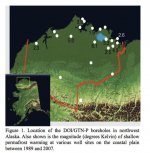
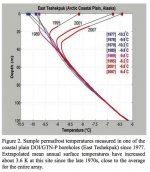
If that is true where is the ice? And if that is true, why do borehole readings of permafrost temperatures in upper Alaska all show marked warming trends as revealed in the papers from this week's Permafrost conference? Eh? Can't answer that one, can you?
 
Last edited:
Again, I direct readers to reality:

Rahmstorf et al 2007


A comparison of Hansen et al 1988 with the yearly temperature records (GISS)
 

ISF - Join now!

Every member here is approved by hand. No bots, no spam, just people who care about evidence and honest debate.

Membership is free!

Create your free account

Back
Top Bottom