• Quick note - the problem with Youtube videos not embedding on the forum appears to have been fixed, thanks to ZiprHead. If you do still see problems let me know.

Deeper than primes

Status
Not open for further replies.
jsfisher said:
You have at least two infinities going on
I have infinite infinites, which ate constructed according to the common <0,2> form, such that there is always an object that has the properties of a given infinite set (it obeys the construction rules of the given framework) but it is not in the range of that set (but can't be proved within this framework), exactly as Godel's first incompleteness theorem demonstrates.
 
I have infinite infinites, which ate constructed according to the common <0,2> form, such that there is always an object that has the properties of a given infinite set (it obeys the construction rules of the given framework) but it is not in the range of that set (but can't be proved within this framework), exactly as Godel's first incompleteness theorem demonstrates.

You, of course, completely missed the significance of my remark. You have simply assumed without foundation you can generalize the nonsense construction you insist on promoting into the realm of the infinite (the transfinite in your case).

That aside, you iterated appeal to Gödel merely demonstrates your inability to comprehend the result Kurt Gödel produced. That a set can be constructed from the elements of another set has nothing at all to do with Gödel-style incompleteness. You are, however, continually demonstrating your profound ability to conflate and equivocate.
 
jsfisher said:
That a set can be constructed from the elements of another set has nothing at all to do with Gödel-style incompleteness.
Yes it is.

We can use the common <0,2> form, such that there is always an object that has the properties of a given infinite set (it obeys the construction rules of the given framework) but it is not in the range of that set (but can't be proved within this framework), exactly as Godel's first incompleteness theorem demonstrates ( please see http://www.columbia.edu/~hg17/Inc07-chap0.pdf ).

Again we see your poor generalization abilities.
 
Last edited:
EDIT:
Wrong, I corrected my argument about X in http://www.internationalskeptics.com/forums/showpost.php?p=6732614&postcount=13822 (actually if n>2, then X=(n^2+n) can't be prime*2 and as a result X/2 can't be a prime number) but you simply ignore it.
I did take notice. You corrected your argument that, given your aspiration to change mathematics for good, you are not expected to make.
In general you deal here with Triangular numbers (http://en.wikipedia.org/wiki/Triangular_number).
I deal? You make it sound as if i didn't know what I was doing.

How is the following sequence of numbers called?

1, 3, 6, 10, 15, 21, 28, 36, . . .

Well, there seems to be only one prime number in the sequence, and if you prove that 3 is indeed the only prime in the infinite sequence, then 3 is the most unique number in it. Since triangle is a collection of 3 connected lines, the numbers of the sequence are therefore called Triangular numbers. (That's not what Wiki says, though. LOL.)

That triangular number 3 is the only prime and therefore doesn't have a prime successor. In that case, triangle is associated with letter F, coz that letter is a collection of three connected lines as well. It cannot be A or any other letter with the same property, coz F is the initial of Fullness -- your brain child that doesn't have a successor, the same way as that prime number 3 in the sequence does not.

The initial idea was: Suppose that Fullness, which doesn't have a successor, is an integer. Find it.


No, this is not the subject that I'm interested in. If you are familiar with algebra then there are many transformations to be found. As we manipulate nature, the nature could respond. Here is a model: If you highlight any number in the sequence except one number

1, 3, 6, 10, 15, 21, 28, 36, . . .

then the sequence progresses without bound. But if you highlight 3, then the sequence always stops at 21.

1, 3, 6, 10, 15, 21.

The data related to the phenomenon were gathered, organized and compared, but it proved very difficult to find any physical rationale behind the phenomenon. There were some who believed that some intelligence manipulated the physical aspects whenever we highlighted number 3. Assuming that the non-human intelligence interfered and stopped the sequence at 21, did it take a random choice or not? Could that be any justification for such a choice? If there is none or there is trivial one, then it is very likely another case of hard-to-solve natural phenomena.

There are no math formulas and rules that you could apply to solve the problem. You are on your own.

 
Last edited:
That a set can be constructed from the elements of another set has nothing at all to do with Gödel-style incompleteness.
Yes it is.

We can use the common <0,2> form, such that there is always an object that has the properties of a given infinite set (it obeys the construction rules of the given framework) but it is not in the range of that set (but can't be proved within this framework), exactly as Godel's first incompleteness theorem demonstrates ( please see http://www.columbia.edu/~hg17/Inc07-chap0.pdf ).

Again we see your poor generalization abilities.

Is this <0,2> different from the <0,1> previously promoted? No matter, here's an important part from my post you omitted:

You are, however, continually demonstrating your profound ability to conflate and equivocate.

You confuse terminology because you don't understand it, as everyone except you can see in the following:

The order of the distinct members has no influence on the result, which clearly demonstrates the incompleteness of any set w.r.t to its power set ad infinitum … , whether the set is finite or infinite.

The logic used here, although completely bogus gets you to one meaning of completeness. However, the text that immediately followed:

Godel's first incompleteness theorem demonstrates the validity of a thing according to the rules of a given framework, which can't be proved within the given framework.

...makes use of a completely different meaning of completeness. Unfettered by reality, you, Doron, then blend them together as if they are the same thing.


And not that anyone is taken in by your whole <0,1>^X nonsense, it is riddled with invalid assumptions and conclusions. It is a continual theme with you, Doron, that you are the master of making hidden assumptions, the very thing with which you have historically been so willing to fault everyone else.
 
Is this <0,2> different from the <0,1> previously promoted?
It is typo, has to be <0,1> .

You confuse terminology because you don't understand it,
...makes use of a completely different meaning of completeness.
jsfisher you simply ignore http://www.columbia.edu/~hg17/Inc07-chap0.pdf that starts by these words:
This short sketch of Gödel’s incompleteness proof shows how it arises naturally from Cantor’s diagonalization method [1891]. It renders Gödel’s proof and its relation to the semantic paradoxes transparent. Some historical details, which are often ignored, are pointed out. We also make some observations on circularity and draw brief comparisons with natural language. The sketch does not include the messy details of the arithmetization of the language, but the motives for it are made obvious. We suggest this as a more efficient way to teach the topic than what is found in the standard textbooks.

You also ignore this ( http://en.wikipedia.org/wiki/Diagonal_lemma ):
In mathematical logic, the diagonal lemma or fixed point theorem establishes the existence of self-referential sentences in formal theories of the natural numbers, if those theories are strong enough to represent all computable functions. Such sentences can be used to prove fundamental results such as Gödel's incompleteness theorems and Tarski's indefinability theorem.

The diagonal lemma is closely related to Kleene's recursion theorem in computability theory, and their respective proofs are similar.

The lemma is called "diagonal" because it bears some resemblance to Cantor's diagonal argument. The terms "diagonal lemma" or "fixed point" do not appear in Kurt Gödel's epochal 1931 article, or in Tarski (1936). Carnap (1934) was the first to prove that for any formula ψ in a theory T satisfying certain conditions, there exists a formula φ such that φ ↔ ψ(#(φ)) is provable in T. Carnap's work was phrased in alternate language, as the concept of computable functions was not yet developed in 1934. Mendelson (1997, p. 204) believes that Carnap was the first to state that something like the diagonal lemma was implicit in Gödel's reasoning. Gödel was aware of Carnap's work by 1937.

And according to your "tradition" you are probably going to ignore also http://en.wikipedia.org/wiki/Tarski's_undefinability_theorem .

And not that anyone is taken in by your whole <0,1>^X nonsense, it is riddled with invalid assumptions and conclusions.
I am not impressed form lazy minds like you that choose to simply ignore http://www.internationalskeptics.com/forums/showpost.php?p=6736887&postcount=13841 or any other thing that does not fit to their limited dogma.
 
Last edited:
I have infinite infinites, which ate constructed according to the common <0,2> form, such that there is always an object that has the properties of a given infinite set (it obeys the construction rules of the given framework) but it is not in the range of that set (but can't be proved within this framework), exactly as Godel's first incompleteness theorem demonstrates.

Is it a contradiction that you desire? Well, if it pleases your tandem-system, then you can have it:

"I have infinite infinites, which ate constructed according to the common <0,2> form, such that there is always an object that has the properties of a given infinite set (it obeys the construction rules of the given framework) but it is not in the range of that set (but can't be proved within this framework), exactly as Godel's first incompleteness theorem demonstrates."

Godel didn't eat. He was unlike Adam and Eve, and was fearful of the Serpent's poisonous bite, so he wouldn't get even close to that Prohibited Tree. He would rather die than take a bite from the Tree of Knowledge.

Gödel’s health was poor from 1960 on, and his depressions returned. He developed fears about being poisoned, and would not eat. He died in Princeton Hospital in 1978 of malnutrition.

So what made him so smart, if it wasn't the Tree of Knowledge, right?

I think that the Book of Geneses is incomplete. What do you think, Haldergard? You don't have the guts, dude, apart from starving folks to death. When the little angels blew the trumpets and played the Abort tune, you were standing there and said nothing. "We cut the fat out of it as we go." That's what He said. Everyone knew what that meant, but no one said anything, including you. Just don't tell me that you want to blow the whistle now.
:rolleyes:

Btw. You picked the wrong place for your "heroism." It's an atheist joint. LOL.
 
Last edited:
The axiom ( http://www.internationalskeptics.com/forums/showpost.php?p=6667634&postcount=13318 ) is total, no partial conditions like "prime successor" are given.
You know what "suppose" is good for?

The initial idea was: Suppose that Fullness, which doesn't have a successor, is an integer.

Your undefined Fullness in its "total" meaning can be any crap there is, so I made a specification related to math just to see if there was an object that actually doesn't have a successor.
 
You know what "suppose" is good for?


Your undefined Fullness in its "total" meaning can be any crap there is, so I made a specification related to math just to see if there was an object that actually doesn't have a successor.
Fullness is not a number exactly as Emptiness not a number.

But we can use numbers in order to measure their magnitude of existence.

In this case Emptiness has 0 magnitude of existence and Fullness has magnitude of existence.
 
Here are more papers:

( Haim Gaifman Naming and Diagonalization, from Cantor to Godel to Kleene Journal of the IGPL, October 2006 pp. 709 - 728 http://www.columbia.edu/~hg17/naming-diag.pdf )

( G. J. Chaitin http://www.cs.auckland.ac.nz/~chaitin/belgium.pdf RANDOMNESS AND GDDEL'S THEOREM Mondes en D'eveloppement, No. 54-55 (1986), pp. 125-128 )
Let us prove Godel's incompleteness theorem by making use of this
universal polynomial P and Cantor's famous diagonal method, which
Cantor originally used to prove that the real numbers are more numerous
than the integers.


Also see http://www.cs.cornell.edu/courses/cs4860/2009sp/lec-23.pdf
 
Last edited:
Fullness is not a number exactly as Emptiness not a number.

But we can use numbers in order to measure their magnitude of existence.

In this case Emptiness has 0 magnitude of existence and Fullness has magnitude of existence.
Yes, OM is well-known for measuring undefined objects . . .

As far as I remember, you said that Emptiness was a predecessor to point, which is a zero-dimensional object. Since -1 precedes 0, a -1 dimensional object has 0 magnitude. How did you come to this conclusion?

I tell you how. You attempted to draw negatively signed dimensional object, but NOTHING showed up. Hence ZERO magnitude.
 
You are in invited also to read http://www.scribd.com/doc/39020209/Cantor-and-Godel-Refuted , which claims that Hilbert's program can be achieved:
The fact that the concepts of denumerability and completeness, as defended in this article (Sections 4 and 7), have already been corroborated by a previous report on an elementary proof of Goodstein’s Theorem[55], should be perceived as tantalizing evidence that, after all, Hilbert’s goal can be achieved.

and a critique of this work http://scienceblogs.com/goodmath/2010/03/grandiose_crankery_cantor_gode.php
 
Last edited:
doronshadmi said:
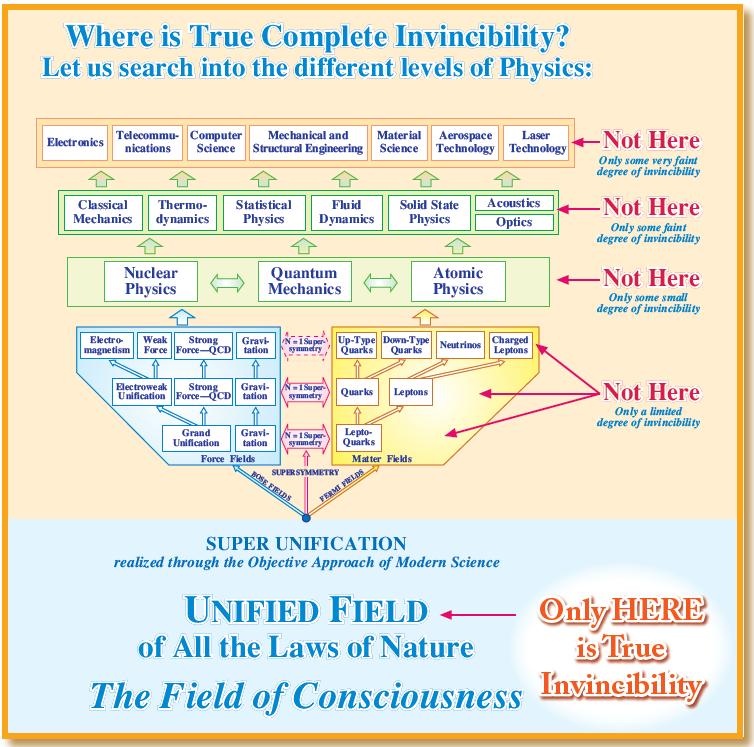
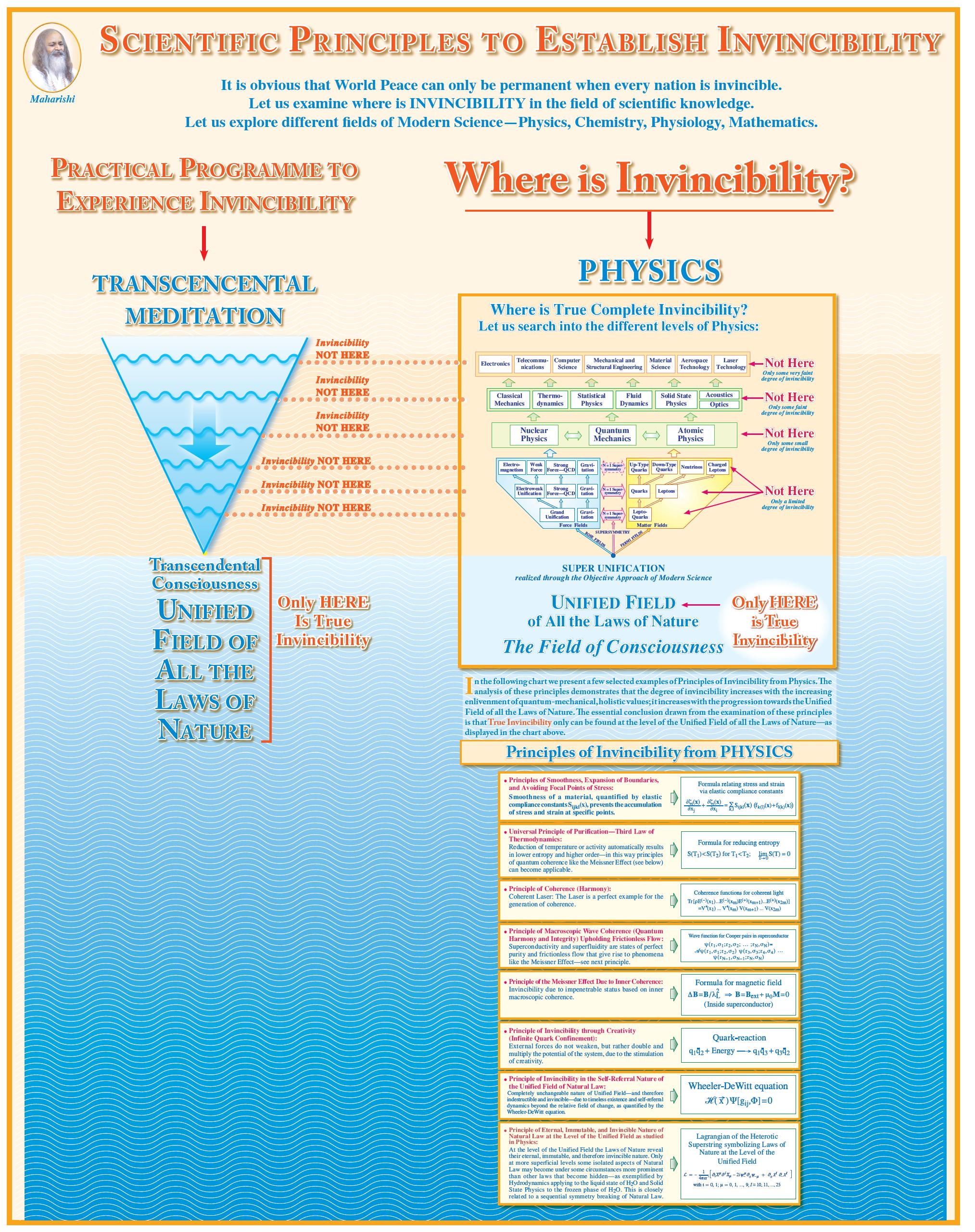
Ones brain is still the source of one's thoughts. By all means please show how ones brain or any "physical tool" is " born from the source of any expression" and what exactly you think that " source of any expression" might be.

i3-uf_theory.gif


physics1large.jpg


physics2large.jpg

Once again none of what you posted refutes one’s brain as the source of one’s thoughts nor specifically identifies what you consider to be your “source of any expression” or how any "physical tool" is " born from the source of any expression".


Graphics with vague references to a unified field theory (as well as nonsensical references to well understood physical phenomena) aren’t going to help you Doron, certainly not with claims of “Invincibility”. You should probably familiarize yourself with the concept of falsifiability.

Firstly a unified field theory is not a “source of any expression” (as your post seems to indicate that you might think it is) it is (or would be if we actually had one) only an expression itself, specifically of how some field theories could be, well, unified. That is why it is called a unified field theory, in case you haven’t guessed.

Secondly in order to be considered a viable theory it needs to be falsifiable (at least in principle) which rules out the claims of “Invincibility” (as well as the other nonsensical claims) noted in your post.

Please get back to us when you have some practical applications from your “Direct Perception” and/or “OM”, not simply some nonsensical cut and paste graphics from a website that is evidently run by people who quite possibly know even less about science and physics than you.
 
jsfisher you simply ignore http://www.columbia.edu/~hg17/Inc07-chap0.pdf that starts by these words:

I didn't ignore it at all. Many proofs in Mathematics employ the diagonal method. This, however, has nothing to do with my point and everything to do with your reading comprehension issue.

Yes, there is an approach to establish an incompleteness theorem involving the diagonal method. So what? That has nothing to do with your continued confused equivocation of Gödel incompleteness with Doron incompleteness.
 
Once again none of what you posted refutes one’s brain as the source of one’s thoughts nor specifically identifies what you consider to be your “source of any expression” or how any "physical tool" is " born from the source of any expression".
Yes it is.

Both Bozonic and Fermionic fields are derived form the unified field which is the common source of both physical brain and your thoughts.

You are :boxedin: thinker The Man.
 
Last edited:
Here are more papers:

( Haim Gaifman Naming and Diagonalization, from Cantor to Godel to Kleene Journal of the IGPL, October 2006 pp. 709 - 728 http://www.columbia.edu/~hg17/naming-diag.pdf )

( G. J. Chaitin http://www.cs.auckland.ac.nz/~chaitin/belgium.pdf RANDOMNESS AND GDDEL'S THEOREM Mondes en D'eveloppement, No. 54-55 (1986), pp. 125-128 )


Also see http://www.cs.cornell.edu/courses/cs4860/2009sp/lec-23.pdf


What, exactly, do you find in these papers interesting and applicable to the current discussion, Doron? Do they address some point of contention you'd like to raise, and if so, what, or are you just throwing them out there as another example of things you didn't understand when you read them?

Use your words, Doron, not your hands to respond, please.
 
Fullness is not a number exactly as Emptiness not a number.

But we can use numbers in order to measure their magnitude of existence.

In this case Emptiness has 0 magnitude of existence and Fullness has magnitude of existence.

Once again how do you specifically quantify or "measure their magnitude of existence"? Without that they are just arbitrary ascriptions on your part. Again, why do you not consider negative values of “existence”? Is it just so you can claim your “Emptiness” has no “predecessor”?
 
Status
Not open for further replies.

Back
Top Bottom