Deeper than primes - Continuation

Status
Not open for further replies.
What units do you measure pi in? Are you familiar with what a ratio is?
It does not matter, pi is the invariant result of circumference/diameter, where circumference and diameter sizes are > 0 AND < ∞, no matter what measurement unit is used (except that the unit is some distance on the real-line w.r.t distance 1, Where Distance can be considered as a physical concept).
 
Last edited:
It does not matter, pi is the invariant result of circumference/diameter, where circumference and diameter sizes are > 0 AND < ∞, no matter what measurement unit is used (except that the unit is some distance on the real-line w.r.t distance 1).


Then why did you spout this nonsense?
Pi has a physical size as distance along the real line
 
This nonsense (truncated further to make it clearer):


What does 'physical' mean in Doronetics?
Distance can be considered also as physical size (no matter what unit is used).

Pi is an invariant distance of the form circumference*unit/diameter*unit, where unit,circumference and diameter are values > 0 AND < ∞


Let us take the Wiki definition ( http://en.wikipedia.org/wiki/Dimensionless_quantity ) :

"In dimensional analysis, a dimensionless quantity or quantity of dimension one is a quantity without an associated physical dimension."

It is wrong since the unit can be 1mm , 1m , 1mile , 1nanometer , etc. ... ad infinitum.
 
Last edited:
Originally Posted by epix
If pi is a dimensionless quantity, then what is number pi?

I guess it has to be a dimensionless number.

And what is a dimensionless number?

A “quantity of dimension one”
Actually I would avoid the circular reference and go ahead again with the definition of dimensional number; that is,
A number representing a property of a physical system, but not measured on a scale of physical units (as of time, mass, or distance). Drag coefficients and stress, for example, are measured as dimensionless numbers.
I think I would delete the example part, coz the unit of stress is Pascal, to let the broad concept to reach the novice in the cleanest and briefest state possible, hoping that there is no SI unit for ratio, for example. ;)

Doron sometimes consults Wikipedia and the result is known. On the other hand, it's hard to ask the Wiki writers for such a high degree of anticipation. Some writers can manage to squeeze the essence out of a subject into the first couple of paragraphs, but some clearly struggle and their style requires reading through and branching to other links in order to come up with the essentials.

Now I'm not sure if my example pi miles/hour was a good idea. I guess not.
 
It does not matter, pi is the invariant result of circumference/diameter, where circumference and diameter sizes are > 0 AND < ∞, no matter what measurement unit is used.
If you think you have just discovered that pi is a ratio between the circumference and the diameter of a circle where 0<d<∞, then be advised that there were others before you who noticed that. If you think that someone disagrees with your statement, then you are invoking ghosts to argue with just for the sake of arguing something.

You should distinguish between accepting the correctness of formal logic and its rejection upon application. Here is an example.

INSIDE is to RAW as OUTSIDE is to NOT RAW

That is an example based on the axiom of mutual exclusivity. But its application in the particular case is in most cases the subject of rejection.

W A I T E R ! ! ! !
 
Distance can be considered also as physical size (no matter what unit is used).

So far so good, just remember that the same quantity of different units of length (distance), gives you different distances and “physical size”.

Pi is an invariant distance of the form circumference*unit/diameter*unit, where unit,circumference and diameter are values > 0 AND <

Pi is not a distance, invariant or otherwise. Pi is a quantity (technically a ratio of distances). A distance is a quantity with units of, well, distance, Pi has no such units.

Let us take the Wiki definition ( http://en.wikipedia.org/wiki/Dimensionless_quantity ) :

"In dimensional analysis, a dimensionless quantity or quantity of dimension one is a quantity without an associated physical dimension."

It is wrong since the unit can be 1mm , 1m , 1mile , 1nanometer , etc. ... ad infinitum.

That you simply want to ascribe not just some units of distance to Pi but evidently every unit of distance “ad infinitum”, doesn’t make the pervious quote wrong it just makes you wrong and blatantly so.

Above you have claimed “Pi is an invariant distance” and “unit can be 1mm , 1m , 1mile”. So let’s give that a shot.


3.14 Milimeter
3.14 Meter
3.14 Mile

So much for your “invariant distance”, which part (if not all) of your self-contradicting claims is wrong Doron?
 
Actually I would avoid the circular reference and go ahead again with the definition of dimensional number; that is,

I think I would delete the example part, coz the unit of stress is Pascal, to let the broad concept to reach the novice in the cleanest and briefest state possible, hoping that there is no SI unit for ratio, for example. ;)

Doron sometimes consults Wikipedia and the result is known. On the other hand, it's hard to ask the Wiki writers for such a high degree of anticipation. Some writers can manage to squeeze the essence out of a subject into the first couple of paragraphs, but some clearly struggle and their style requires reading through and branching to other links in order to come up with the essentials.

Now I'm not sure if my example pi miles/hour was a good idea. I guess not.

Well, miles/light hour might have been a better example.
 
Pi is an invariant distance along the real line, which is determined by the ratio between two distances, which is not impacted by any unit measurement (as long as unit > 0 AND < ∞) exactly as shown by the expression circumference*unit/diameter*unit (where also abs(circumference) and abs(diameter) > 0 AND < ∞).

3.1410 < pi, and the distance of pi along the real line is not changed by the measurement unit.

It does not mean that the result of pi*unit is invariant as pi.

On the contrary, the result of pi*unit is based on the invariant distance of pi along the real line and the variant property of the unit, such that we get infinitely many distances that are derived form pi as an invariant distance along the real line, for example:

... pi*1nanometer < pi*1mm < pi*1cm < pi*1m < pi*1km ... etc. ... ad infinitum.

By understanding invariant values like pi (which are > 0 AND < ∞) one easily understands why distances that are derived from ∞ curvature do not belong to the class of objects that are based on pi as an invariant distance along the real line.

Furthermore, no amount of elements that are derived from ∞ curvature can fully cover the invariant distance of pi along the real line.

Let's do a further step and define the absolute unit measurement as the distance of elements that are derived from ∞ curvature.

By using Traditional Math I wish to see how some amount of such units define an invariant distance like pi along the real line (be aware of the fact that pi*0unit = 0 distance, or in other words, the invariant distance of pi along the real line is eliminated by 0unit, which is the absolute unit measurement that is derived from ∞ curvature.
 
Last edited:
By using Traditional Math I wish to see how some amount of such units define an invariant distance like pi along the real line (be aware of the fact that pi*0unit = 0 distance, or in other words, the invariant distance of pi along the real line is eliminated by 0unit, which is the absolute unit measurement that is derived from ∞ curvature.
"Traditional math" can only answer questions who are structurally sound, so you can wish indefinitely.

You should brush up on the difference between global absence and local absence. If fruit called apples doesn't exist, then apples won't appear in the basket; if they do exist, it doesn't mean that they will be placed in some particular basket.

You've been clearly struggling with something that comes to most folks naturally. So even if traditional math makes some attempt to repair your question so it could be considered, you won't be able to see the change that has been made. If you fail to understand that length, volume, area, pressure, energy, charge and so on have a unit of measurement, but ratio doesn't
then

pi = circumference/diameter = "dimensionless quantity"

You misapplied the term in your scheme, coz the initial subject never called for bringing dimensionless quantities into the picture. The subject was your previous claim that 1-dim object, such as circle, cannot be reduced to a 0-dim object, which is point. Now you vehemently argue that when radius=0, circle becomes point. Since you don't have the type of writing instrument that math uses all the time, you won't be able to prove either case through comprehensive presentation apart from the usual verbal declarations studded with phantasmagorical syntax.

You used once the implicit equation for unit circle; that is

y2 + x2 = 1

but you never understood its meaning, otherwise you would be able to trace the case when r is reduced to 0 and prove the result.

How do we call the folks who take incessantly an issue with a subject without being able to understand it?
(doron s. with a single replacement.)

Since the devil has so much on his mind, then you keep going . . .

 
Last edited:
A person that does not understand the concept of class, says something like:

"If fruit called apples doesn't exist, then apples won't appear in the basket; if they do exist, it doesn't mean that they will be placed in some particular basket."

A person that does understand the concept of class naturally knows that it is an association between the global (invariant and cross-contexts) and the local (the variant and context-dependent).

Pi is an invariant distance along the real-line that is used as cross-contexts property among infinitely many context-dependent properties of curvature's degrees, and as a result we get the class of all circles.

By using only verbal_symbolic skills, one by mistake defines X2 + Y2 = R2 as a circle even if R = 0 or ∞.

By using also visual_spatial skills one naturally knows that no circle exists if X2 + Y2 = 0 or X2 + Y2 = ∞.

The verbal_symbolic-only skill(er) can't comprehend this simple fact, he has no struggle with the mistake that X2 + Y2 = 0 or X2 + Y2 = ∞ are not circles.

"structurally sound" holds only if not less than verbal_symbolic ("sound") AND visual_spatial ("structure") skills are used.

This is defiantly not the case of Traditional Math, which gets only the verbal_symbolic aspect of an expression like X2 + Y2 = R2
Because of these limited used skills, for example, 0.999...10 = 1
 
Last edited:
This is defiantly not the case of Traditional Math, which gets only the verbal_symbolic aspect of an expression like X2 + Y2 = R2
Really? Unlike Doronetics, traditional math notices that X2 + Y2 = R2 is identical to the Pythagorean Theorem, which is easy to visualize.

pic-pythagorasT.gif


pythag_squares.gif


Traditional math can also see what what Doronetics can't - something that is not drawn in the first picture but easily can be.

CircleEquation.GIF


If you convert the implicit equation to its "explicit" or function form, and plot it, where r=3 with the domain
-3 ≤ x ≤ 3,
the function will draw a nice semicircle. Then you can use -f(x) to draw the other semicircle. Everyone would be able to see it - done step by step.

circle.gif


Only you wouldn't be able to see it, coz of the confusion in the Fifth Law of Motion: We stir from right to left, right?

By using only verbal_symbolic skills, one by mistake defines X^2 + Y^2 = R^2 as a circle even if R = 0 or ∞.

Just set x=0, r=0 and see what the function returns in term of a point drawn on the y axis. You can't set x=∞, coz the tradititional math regards the expression as not compatible with the concept of infinity.
 
Last edited:
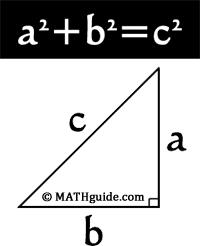
As I said, whether the verbal_symbolic-only expression is X2 + Y2 = R2 or a2 + b2 = c2, if R or c = 0 OR ∞, then the results are not in the class of results that are derived from R or c > 0 AND < ∞ (where in this case the class is the collection of all circles, which exists only if pi exists).

It is so simple but Traditional Math that is based only on verbal_symbolic skills, can't comprehend it exactly because it does not distinguish between "R or c = 0 OR ∞" and "R or c > 0 AND < ∞" results of X2 + Y2 = R2 or a2 + b2 = c2 expressions (the visual_spatial skills, which are essential for this distinction, are not used by Traditional Math).

The verbal_symbolic-only expressions are worshiped by verbal_symbolic-only skill(ers) up to ignorance.
 
Last edited:
Status
Not open for further replies.

ISF - Join now!

Every member here is approved by hand. No bots, no spam, just people who care about evidence and honest debate.

Membership is free!

Create your free account

Back
Top Bottom