• Quick note - the problem with Youtube videos not embedding on the forum appears to have been fixed, thanks to ZiprHead. If you do still see problems let me know.

Cult Archaeology

Great thread Joshua, Thanks for the info. I have another one. I read a book Years ago by Berry Fell, Called America B.C. It talks about a possible link between the ancient Celtics and New England. Going back as far as 800 BCE. It sounded pretty far-fetched and I have never heard much else on the subject. Is there anything to it?
 
The Central Scrutinizer said:


Did the Eries build mounds??? (No, they built a lake! Rimshot)

I know there are some Mississippian mounds in Ohio.

IIRC from my youth (I'm an Ohio native), the Ohio mounds are attributed to the Hopwell culture, circa 100-500 CE. Perhaps other cultures as well, but I don't know. See here for an example.

I did a quick look hoping to find a picture of the Serpent Mound, which is pretty cool. Instead, I ran into this. Eek.
 
Joshua Korosi said:

explain.gif

Someone might be interested to know that strictly speaking the explanatory text is a little misleading in the "determinative for King of Upper and Lower Egypt part" since, for starters, the group of signs is not a determinative at all but a title, or to be more precise, two titles. (A determinative is a single sign that that tells the context for a group of hieroglyphs (usually for a word)).

The hieroglyph group where there are a bee and a reed over two half-circles is the title "King of Upper and Lower Egypt". The bee signifies the Upper (Southern) Egypt and the reed the Lower (North) Egypt. The grouping on the left where there is a basket over two bars is the title "Lord of the Two Lands" I'm not certain (my skill on decoding hieroglyphs is rather limited) but I think that the two slashes underneath are determinatives that denote that the two bars mean two lands in this context.

Other than those two titles, the inscription is so confused that I can't make any sense out of it.
 
One of my favourite 'interpretive pictographs' is of a Mayan relief depicting what some have seen as a television, complete with a power source. I've tried finding a picture of it on the net, and failed. I'll look through my textbooks to see if I still have it.

One thing I'm curious about was an ancient 'battery' that was supposedly found in a dig dated back to around the time of Christ (give or take a few hundred years), in Parthia around modern Baghdad. It consists of a small clay canister, a copper core with an iron rod within, and space where some form of acid or vinegar could be placed as an electrolyte. Apparently it could conceivably generate a few volts of electricity.

The thing is, whilst we can remove the 'woo-woo' factor of aliens due to its simplicity, it does not seem like a huge jump to believe in its use. The arabs have long had a grip on science, being able to diagnose a woman's pregnancy using a rabbit as dated around 900 A.D.

Any thoughts?

Athon
 
Re: Orion and the Pyramids

Joshua Korosi said:
Fit the two over each other, and they are quite compatible. There is a problem, however...

You see, the aerial photgraph of Giza is upside-down - that is, North is at the bottom and South is at the top; whereas the map of Orion is correctly oriented, with North at the top. If you were to actually stand on the Giza plateau and gaze southward over the pyramids as Orion rose above them, you would see that the angle is wrong - Orion's belt, from left to right, trails at an angle toward the north (toward you), while the pyramids trail off toward the south. This is a glaring error, and should effectively end the theory - but Bauval seems personally offended whenever his theory is questioned. See Hal Bidlack's sig... ;)

I thought that under the theory, it was irrelevant where North or South was, but that everything sort of lined up, when the Milky Way was mapped onto the Nile.
 
Joshua Korosi said:


For those who don't know (who doesn't?), Pompeii was an ancient Roman city destroyed by the eruption of Mount Vesuvius in A.D. 79. Because of its proximity to the volcano, Pompeii was quickly and completely buried by the eruption's pyroclastic flow (note: ask Tricky the Geologist to explain more about volcanoes and pyroclastic flow).

Yes, Pompeii was well-known at the time of its destruction. Several Roman ships stationed at a city called Misenum, directly across the Bay of Naples, witnessed the eruption and raced toward Pompeii to attempt rescue; unfortunately, many of them were destroyed as well.

We have an eyewitness account of the events, in the form of two letters from a man named Pliny to Tacitus, the historian. Pliny was the nephew of the Roman fleet commander at Misenum, who died during the rescue attempt.

Letters 1 and 2.

How did the letter writer get hold of the information contained in the first letter? It is a detailed account of travel to Pompeii and subsequent personal events in great detail about someone unable to escape. How has the detail in this letter been authenticated?

The second letter is very interesting, but because the author is the same as the first one, I am not too sure about its authenticity. (i.e. the letters may not be modern frauds, but Roman ones).
 
I don't know about anyother ancient civilizations, but i know roman soldiers (in britain, certainly) were issued a sponge on a stick in place of toilet paper. Each person had there own and washed it after use. Probably just as hygenic as toilet paper.

(edited for spelling )
 
Supercharts said:
I understand that ancient people ate with their hands. I understand that toilet paper is a recent invention. What's that all about then? :confused:
In some places (e.g. India), some people still eat with their hands, more precisely their right hand. Their left hand is used to deal with all unclean things, such as splashing water to wash their bottom after a number two.

Liam
 
1- I like to know about mummies, and why there appears to be a recent surge of fake mummies.

2- Why is it dismissed that trade was going on around the world, and yet the serpent image for example appears in Mayan temples Chinese temples and Egyptian temples, how can such wide spread people build similar structures when it is said nobody traveled around?

Persia fascinates me.

I have so many questions about this I will limit it to 2.
 
The Central Scrutinizer said:


Did the Eries build mounds??? (No, they built a lake! Rimshot)

I know there are some Mississippian mounds in Ohio.

No, but as FutileJester pointed out, the Hopewells did. The mounds have been confined to the Ohio Valley, where the Hopewells lived. I'm afraid the Mound Builder Indians constitute an embarassing gap in my knowledge...you could probably find out about them on the net.
 
Steveo said:
Great thread Joshua, Thanks for the info. I have another one. I read a book Years ago by Berry Fell, Called America B.C. It talks about a possible link between the ancient Celtics and New England. Going back as far as 800 BCE. It sounded pretty far-fetched and I have never heard much else on the subject. Is there anything to it?

I've never heard anything about it...but if it's true, think of the implications!

Bear in mind that while some theories can be classified as "far-fetched" - like the Egyptian light bulbs - this in itself does not disqualify them (although plausiblility does aid credibility) - so long as they are based on specific evidence. When specific evidence is found (for example, the surrounding hieroglyphs that describe the light bulbs as the Sun Barge), then a theory can be rejected. As of yet, I can find very little reference to the theory in question, and absolutely nothing refuting it. But, as you said, the book came out "years ago" - why hasn't anyone followed up on it?
 
LW said:

Someone might be interested to know that strictly speaking the explanatory text is a little misleading ...

snip

Other than those two titles, the inscription is so confused that I can't make any sense out of it.

Later today if I get some time, I've got a reference source that I might be able to use to help translate the rest of the text. My preliminary guess is that it's another title, or part of another title. If there's text with a Pharaoh's name and "Lord of the Two Lands" in it, there's a distinct possibility it will be accompanied by the various other pharaonic platitudes like "Beloved Child of Ra, Glorious in Battle," and etc.
 
Drooper said:
How did the letter writer get hold of the information contained in the first letter? It is a detailed account of travel to Pompeii and subsequent personal events in great detail about someone unable to escape. How has the detail in this letter been authenticated?
Not all members of the party perished as they were out of the range of total destruction (see map) Pliny the Elder was 56 years old at the time and, by the account, overweight so his health failed. Pliny the Younger (the author) was Elder Pliny's adopted son, so it is natural that he would have gathered as much information from survivors as possible.

I'm under the impression that no current scholar doubts the authenticity of Plinian letters.
 
athon said:

One of my favourite 'interpretive pictographs' is of a Mayan relief depicting what some have seen as a television, complete with a power source. I've tried finding a picture of it on the net, and failed. I'll look through my textbooks to see if I still have it.

And here is where we run into our interpretation problem. The "television", like the "helicopter hieroglyph", might actually resemble a modern television. But a "power source", too? What does a Mayan "power source" look like? More likely, the interpreter saw a glyph that looked like a cluster of shapeless "junk" - much like an automobile engine would look to someone who had no idea what's what under the hood - and jumped to that unfounded conclusion. Let's go back to our Mayan "rocket"...

pacala-maya-small.jpg


The World Tree, the bird perched atop it, the Underworld Monster's jaws, and the figure of poor Lord Pacal himself are easily distinguishable. But look at the area between the monster's jaws, beneath Lord Pacal. What the hell is that thing? It looks like a V-6! Actually, it's one of the representations of the Mayan underworld god, whose name eludes me at the moment...the face aspect of it can be discerned upon inspection. But to someone who didn't know, it could easily be mistaken for some kind of "engine".

athon said:
One thing I'm curious about was an ancient 'battery' that was supposedly found in a dig dated back to around the time of Christ (give or take a few hundred years), in Parthia around modern Baghdad. It consists of a small clay canister, a copper core with an iron rod within, and space where some form of acid or vinegar could be placed as an electrolyte. Apparently it could conceivably generate a few volts of electricity.

The thing is, whilst we can remove the 'woo-woo' factor of aliens due to its simplicity, it does not seem like a huge jump to believe in its use. The arabs have long had a grip on science, being able to diagnose a woman's pregnancy using a rabbit as dated around 900 A.D.

Any thoughts?

Athon

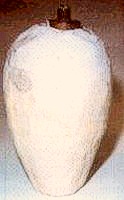
You must be talking about this little gadget:

babylonbattery.jpg


This object, unearthed in Parthia, and a few other similar objects are, in fact, batteries, contemporary with the Roman Empire during the Pathian period (c. 300 BC - 300 AD). They are capable of producing about one volt of electricity, and were used to apply silver electroplate to copper vases and dishes. The silver was beaten and shaped until extremely thin and pliable; the silver was applied to the copper vessel, and a shot of electricity bonded the metals together. Shocking!

The battery resides in the Baghdad Museum...or used to. Due to military operations in and around Iraq within the last dozen years, I can't assure you it even exists anymore.

 
Re: Re: Orion and the Pyramids

Drooper said:


I thought that under the theory, it was irrelevant where North or South was, but that everything sort of lined up, when the Milky Way was mapped onto the Nile.

If Bauval's theory dealt exclusively with the pyramids and Nile river, and their arrangement with respect to the sky, then you would be right - it probably would be irrelevant, though I still don't see why they would've drawn the sky upside-down.

However, Bauval also asserts that the shafts in the Great Pyramid have specific targets. The northern shaft is supposed to be aimed at the star Thuban (or was aimed at Thuban - which sat directly at the celestial north pole in 2700 BC), while the southern shaft was supposed to be aimed at the Orion Belt's transit. If this is true, the the Egyptians must have purposefully tied terrestrial north on earth with celestial north in the sky, and the same for terrestrial and celestial south.

If the shaft arrangements are true, then the arrangement of Giza is not based on the sky after all. If the Giza arrangement assertion is true, then the shaft arrangements must be false. Bauval can't have it both ways - you can't assume that the Egyptians deliberately oriented a pyramid backwards in relation to the sky, but arranged the shafts of that pyramid the opposite way. Either one or both of Bauval's theories is wrong.

Since (as I stated before), the shafts bend within the pyramid and so are not "aimed" where Bauval says they are, we can reject that theory. And since the Egyptians don't seem to have ever oriented any other monuments anywhere else in Egypt with respect to the sky - forwards or backwards - the Giza arrangement theory is implausible.
 
Joshua Korosi said:
My preliminary guess is that it's another title, or part of another title. If there's text with a Pharaoh's name and "Lord of the Two Lands" in it, there's a distinct possibility it will be accompanied by the various other pharaonic platitudes like "Beloved Child of Ra, Glorious in Battle," and etc.
There's no title that I recognize in the beginning of the text (it is read from right to left, as can be seen from the way where the animals look). I think I should recognize the rightmost part of A, where there are hand, mouth, and arm on top of each other, but I don't. The part where there are nine vertical bars might be the number nine, and in this case it would probably mean that the inscription is from the ninth regal year of the king. I feel that some hieroglyphs are missing from the king's cartouche (and the large box seems strange to me) so I don't hazard a guess who it is.
 
One thing i just remembered hearing about, which will no doubt compound the evidence of my ignorance in this area... it may not be a woo-woo question, but at least it's dispelling ignorance.

How many of the "7 ancient wonders of the world" are left standing? I remember hearing once that only one remained intact; the great pyramids. As little as I know about them, the idea that the other 6 were destroyed saddens me greatly.

Which ones are still standing, and which have been destroyed? and by what means?
 
LW said:

There's no title that I recognize in the beginning of the text (it is read from right to left, as can be seen from the way where the animals look). I think I should recognize the rightmost part of A, where there are hand, mouth, and arm on top of each other, but I don't. The part where there are nine vertical bars might be the number nine, and in this case it would probably mean that the inscription is from the ninth regal year of the king. I feel that some hieroglyphs are missing from the king's cartouche (and the large box seems strange to me) so I don't hazard a guess who it is.

New findings!!! (well, I've newly found these things on the net - they were there already)

In the diagrams I've provided above, the entire contents of the cartouche are not included (because they are considered irrelevant, apparently)...but I think they are relevant, because they exhibit the exact same kind of effect (fill plaster falling out) that resulted in the "helicopter".

The cartouche originally belonged to Seti I - and his name was replaced with that of Ramesses II (hey, am I psychic or what?). The phrase hidden behind the "helicopter" is "The one of the Two Ladies, who suppresses foreign countries." This is one of Ramesses' titularies, specifically a "Two Ladies" titulary. When Ramesses replaced Seti's name with his own, he also replaced the original text with the above words. The original text, Seti's "Two Ladies" titulary, "Who repels the Nine Bows".

abydos4.gif


abydos3.gif
 
LW said:

Not all members of the party perished as they were out of the range of total destruction (see map) Pliny the Elder was 56 years old at the time and, by the account, overweight so his health failed. Pliny the Younger (the author) was Elder Pliny's adopted son, so it is natural that he would have gathered as much information from survivors as possible.

I'm under the impression that no current scholar doubts the authenticity of Plinian letters.

I think I will read up on this a bit more.

It still strikes me a strange. The letter specifically states that nobody could escape seaward, due to unfavourable weather conditions. Survivors in Pompeii would have had to escape on foot or cart etc. Having seen footage of pyroclastic flows and Pompeii must have been a big one, these things result in 100% extinction of life up to tens of miles away. I can't believe anybody who was in Pompeii to witnness the events described in the letter could have had sufficient time to get out of harm's way to tell the tale.

Anyway I will go and do my research.
 
Akots said:
How many of the "7 ancient wonders of the world" are left standing? I remember hearing once that only one remained intact; the great pyramids. As little as I know about them, the idea that the other 6 were destroyed saddens me greatly.
There are actually several slightly different lists of the wonders. The one that is most often mentioned is:

1) The Great Pyramids of Giza --- still standing

2) Hanging Gardens of Babylon --- doubtful if they ever really existed at all.

3) Statue of Zeus at Olympia --- Transported to Constantinopole where it was destroyed in a fire in AD 462.

4) Temple of Artemis at Ephesus --- First burned down by Herostratus (BC 356) later fixed and finally torn down by christians (AD 401).

5) Mausoleum at Halicarnassos --- dismantled in the 15th century, stones used to build a nearby castle.

6) The Colossus of Rhodes --- fell in an earthquake in BC 226, material sold as scrap metal in AD 654.

7) The Lighthouse of Alexandria --- damaged by numerous earthquakes, finally dismantled and material used for castle building by Mamelouks in AD 1480.
 

Back
Top Bottom