BillC
Bazooka Joe

When I read that, I assumed you were joking. However, on looking for myself, you were not:They used to have a page on which you could vote.
It said "homeopathy worked for me" and had the single option, "yes".
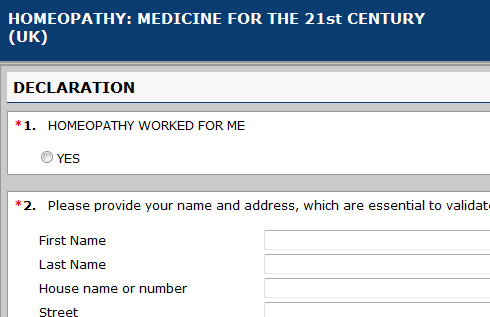

When I read that, I assumed you were joking. However, on looking for myself, you were not:They used to have a page on which you could vote.
It said "homeopathy worked for me" and had the single option, "yes".
"His demolition of the 18 references is, to my mind, complete."
More...
http://www.bmj.com/cgi/content/full...FIRSTINDEX=0&sortspec=date&resourcetype=HWCIT

Edzard Ernst in this week's BMJ on the BCA's "evidence":
http://www.bmj.com/cgi/content/extract/339/jul08_4/b2766
Unfortunately most of it is behind a paywall - however, this is what the BMJ's editor, Fiona Godlee, had to say about it:

Edzard Ernst in this week's BMJ on the BCA's "evidence":
http://www.bmj.com/cgi/content/extract/339/jul08_4/b2766
Unfortunately most of it is behind a paywall - however, this is what the BMJ's editor, Fiona Godlee, had to say about it:
The British Chiropractic Association (BCA) neither wished nor intended this matter to end up in the courtroom. When Dr Singh went on the offensive against the BCA and spoke of it promoting bogus treatments that had "not a jot" of evidence to support them, it was entirely understandable that the BCA should seek to have what were untrue and defamatory comments withdrawn in order to protect its reputation. It sought from Dr Singh a retraction of the allegations along with a public apology. Scientific debate could then have . . .
As Singh explains on the website www.senseaboutscience.org.uk, the Guardian offered the BCA an opportunity to lay out their evidence rather than to sue him for libel. The BCA opted to sue.
...it was entirely understandable that the BCA should seek to have what were untrue and defamatory comments withdrawn in order to protect its reputation.
Hmmm, I wonder how that strategy is working out so far? The bizarre thing is that I'd suspect the BCA would barely have a "reputation" (good or bad) to speak of outside of chiropractic circles or mainstream medicine.
The average chiropractic patient is probably unaware the BCA exists and I can't imagine non-patients would ever have heard of them (skeptical community excepted of course).
OR is the BCA actually a popular public figure in England?
Although the content of the British Chiropractic Association’s list is important, its omissions are perhaps even more so. At least three relevant randomised controlled trials and two systematic reviews are missing from it.24 28 Arguably, these are the most rigorous papers in this area, but they fail to show that chiropractic is effective. The omissions are all the more curious as the association apparently knew of these articles.

IMO, one of the most pertinent parts of Edzard Ernst’s piece in the BMJ is this,
because it suggests that Simon Singh could have a chance of winning after all.

If the BCA lose the case will they have to pay Simon's legal costs?
"Predictions are always difficult, especially about the future" [Yogi Berra] But I will venture that a loss based on a bogus definition of "bogus" could sell quite well, and lead to a change in UK libel law.If Simon loses the case, it might prove tricky to write that book.