• Quick note - the problem with Youtube videos not embedding on the forum appears to have been fixed, thanks to ZiprHead. If you do still see problems let me know.

AA77 FDR Data, Explained

capt'n bs is really scrambling to come up with techno babble ... I suspect he almost had a heart attack when warren asked if the ra wasn't one of the main components of the ground proximity warning system (gpws) ...

He hasn't yet proven the spec limit of 200 knots from rockwell collins that is being thrown around. The web page he linked to turns up 404 (page not found). There isn't anything on the r-c web site either.

... If anyone here was on the uss ike in the med. During that period that was me that buzzed the ship and sent everyone scrambling for cover. Hehehe!
1986?

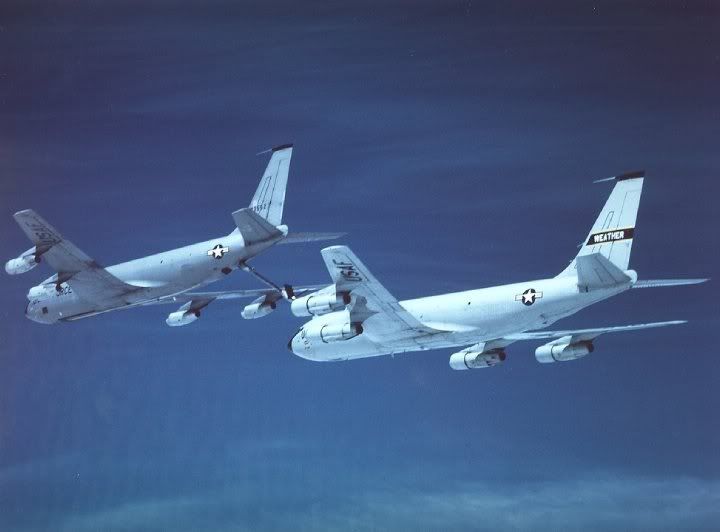
1tankerflight.jpg

45 south, 97 east, december, christmas in perth, radalt works at 450 true, 27,500 feet
 
Last edited:
Hi beachnut,

I asked Dennis Cimino about that limitation of RADALT. He answered Rob's questions about it, but not mine. He did say ...it's now not conjecture that you're a COIN OP (counterintelligence) from either the U.S. government, or the mossad, but you're actually a very badly managed one... though. Oh well, never mind.

Warren.

Wow, Dennis and Balsamo are moronic unsigned integers. Pilots for truth is a club for the deranged morons. Lucky they know they are nuts and selling DVD to sub-morons, or they could be dangerous.


Balsamo on RADALT... regardless of tracking capability, RA does not guarantee your distance from the ground ...
You don't say, no wonder it for auto-land systems because it does not guarantee your distance from the ground.


Balsamo on RADALT... This is also why the Primary Altimeter is right in front of the Pilot's face on all aircraft and if equipped, the radio altimeter is not.
Guess what?
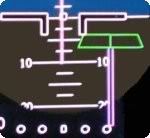
1radaltrunwaysymbol.jpg
911 truth only gets the date right. (is that a 757 ADI?)
Real pilots have a rigorous cross check of all applicable instruments, guess where the RADALT shows up in the last 200 feet for landing? On the ADI... That rising runway symbol, display fed by the RADALT, besides the RADALT display, gives another cue to the pilot of the aircraft's proximity to the ground. oops, better check to see if they did get the date right.

The RADALT is the most accurate data for height above the ground in a jet going 483 knots and pulling 1.946gs; the pressure altitude is worthless, not as accurate; Balsamo has no clue why.


Does the RADALT work at faster speed; yes Balsamo agrees.
Balsamo says... Yes RA is used for Ground Proximity Warnings. But this again doesnt mean it is measuring from the "Ground". It can be buildings or a tree-line, of which, you do not want to hit either.
 
Last edited:
OTTOMH

I think there are 6 antenna on the belly near the nose on the 757/767; fixed. There is a photo of the antenna around here or on the web. The new jets have multiple sensors, most likely for advanced landing systems; bet the system votes and if there is disagreement a fault is issued to stop using the system for auto-land, etc. That is a bet made by a pilot and an engineer, but let us use your money please...

The antenna send out a "radar" like (like, exactly like a microwave frequency range signal) signal and then it picks up the return to figure out the distance to the ground, it is kind of instantly unless you are 186,000 miles above the ground.

On a KC-135 there are two antenna, one for the left seat, and one for the right. The antenna are flush and about the size of a silver dollar.

The RADALT works at high speed. I know it works near 400 knots very well, and Reheat flew RADALT over MACH 1 and it worked. When you think about the speed of LIGHT vs the speed of air breathing human flying vehicles, you would have to wonder why the dolts at p4t (Balsamo club for delusions on 911) can't figure out they are piloting on the BS.

Remembering the speed of light; so the angle stuff is; the signal leaves the aircraft and returns, the plane has moved less than 0.02 inches. What is that angle from 100 feet up??? The sensor/antenna on the tanker was about an inch big, maybe bigger.

When landing in the KC-135 (LANDING, with the GEAR DOWN), you could read off 5, 4, 3, 2, 1, touchdown, it was exact. It was calibrated for landing, so a reading from flight 77 of 4 feet, the last reading from 77 stored in the FDR found burnt and damaged in the Pentagon, means the plane was about 16 feet above the ground just before impact during the last 800 feet. I forgot where in the data stream it was stored. I can look that up, but I think it was discussed somewhere...

Sorry, no I wasn't suggesting it would be affected by the speed of the aircraft which I agree it wouldn't. I was just curious about whether it could be affected by the aircraft banking or by terrain or structures not directly under the aircraft.
 
Sorry, no I wasn't suggesting it would be affected by the speed of the aircraft which I agree it wouldn't. I was just curious about whether it could be affected by the aircraft banking or by terrain or structures not directly under the aircraft.

Sorry for the extra.
 
beachnut said:
<snippage by TjW>

Does the RADALT work at faster speed; yes Balsamo agrees.
Balsamo says... Yes RA is used for Ground Proximity Warnings. But this again doesnt mean it is measuring from the "Ground". It can be buildings or a tree-line, of which, you do not want to hit either.

It's actually a pretty goofy bit of back-pedaling, when you think about it. While it's perfectly true that you don't want to impact trees or buildings, and it's also perfectly true the signal can reflect from things other than the ground, the radalt looks down, not forward.
If you're in a position to be running into buildings or trees, your attention might be better directed to that large slab of transparent stuff in front of your face, to find out what's in front of you, rather than finding the exact distance to whatever it is that's already underneath you.
 
Sorry, no I wasn't suggesting it would be affected by the speed of the aircraft which I agree it wouldn't. I was just curious about whether it could be affected by the aircraft banking or by terrain or structures not directly under the aircraft.
I did raise the possibility of a rapid change in the distance between the aircraft and the ground producing a Doppler effect that may affect the radio altimeter in my questions to Dennis Cimino. I suspect that the tracking capability specified for the radio altimeter is that rate of change rather that the speed of the aircraft, but I don't know enough about how radio altimeters work.

An internet archive copy of the specifications of the radio altimeter is available here. The actual page on the Rockwell Collins web site used to work for me but now gives me a page not found as it did for beachnut. I suspect that the administrator of the Rockwell Collins web server was wondering why that particular page was suddenly getting so many hits. :)

Warren.
 
Sorry for the extra.

No worries, information is useful.

wstutt said:
I did raise the possibility of a rapid change in the distance between the aircraft and the ground producing a Doppler effect that may affect the radio altimeter in my questions to Dennis Cimino. I suspect that the tracking capability specified for the radio altimeter is that rate of change rather that the speed of the aircraft, but I don't know enough about how radio altimeters work.

I may be wrong so anyone correct me if I am but I would think the only thing that could happen due to the doppler effect could be that the reciever wouldn't pick up the signal due to the change in frequency but since it was picked up then the return would still be valid.

ETA: I've just looked at the specs in the link you posted, am I right in thinking that going beyond the specified speed that the resolution will decrease but the accuracy will remain? Is the resolution the horizontal resolution?

ETA: No it's not, it's vertical so it wouldn't be affected by speed, so why is there a max. speed for tracking capability?
 
Last edited:
Earlier navigation used hi range radio altimeters with pressure pattern navigation. The radio altimeter worked at high altitudes at 500 knots. The speed issue is moronic nonsense from Balsamo's failed experts who see delusional conspiracy theories, they see them everywhere.

The antenna strips for one model are 3.5 inches square.

Oh no... There is a maximum speed, 2000 knots. Dennis was right, he was only off an order of magnitude. It was not 330 feet per second, it is 3370 feet per second.
 
Last edited:
Our fiend friend Turbofan is over at ATS attempting to convince everyone that the FDR data was faked in a simulator.


And he's saying that the radalt couldn't work well at those speeds since the processor would be overwhelmed.

Why would it matter how fast the plane was traveling? Seems that since it works for ground proximity warnings, then it will work at those speeds.
 
And he's saying that the radalt couldn't work well at those speeds since the processor would be overwhelmed.

Why would it matter how fast the plane was traveling? Seems that since it works for ground proximity warnings, then it will work at those speeds.
He is the "super" technical guy on RADALT. Then he exposes he is nuts, as he ignores the signal does travel near the speed of light, which makes the speed of the aircraft insignificant. I think it is Balsamo posing as Turbofail

You would not use the RADALT for landing at speed greater than 200 knots, you would have other problems. Balsamo and his nuts on 911 will get some salesman from the RADALT manufacturer to say it does not work over 200 knots and sell that lie.

Using the RADALT for landing would be limited to the attitude at landing speeds below 200 knots, and limited set of configurations. Any use of the RADALT outside those parameters would make it unreliable for landing, but would still show a distance to the ground within feet of being correct. Gee, the error at landing for these systems is less than 2 inches.

Using the RADALT data from the FDR, anyone could figure out the data matches evidence supplied by witnesses and RADAR. ..., the FDR proves Balsamo has no clue.


Balsamo, and his crew of paranoid conspiracy theorist are trying to throw Warren and his work under the bus. Here the "RADALT" expert, Dennis, tries to cast doubt on the terrorists able to cut throats and pull dying pilots out of the seats. (warning, Dennis makes idiotic insane claims, you could die laughing, WARNING)
The old "coffin corner" ploy. Just what is a coffin corner. It is at the maximum altitude, top speed, and stall speed. Where stall meets high speed buffet, the old pushing the envelope Chuch Yeager stuff.

Poor Dennis, Flight 77 was in the middle of the envelope, at a normal cruise speed, all trimmed up, well below maximum altitude, not near stall, not near high speed buffet. Dennis is not an expert at anything but BS. What an idiot on flying.

The plane is trimmed up, if the autopilot is off, the plane will fly trimmed, no real problem for a 757, but Dennis has no clue how easy it is to fly a 757, they think flying a big jet is hard. Balsamo never flew heavy jets, he never got an ATP, he is over the hill at a young age, spewing moronic claims based on his unmeasurable ignorance.

I have talked to those who are trained to cut throats, and they agree, after your throat is cut, you are no longer a big threat, you are dying; by the time you figure out what is going on, it is too late. Since the pilots did not expect to be killed, they were taken by surprise when they were killed. Balsamo has no clue what happen on 911, and his DVD sales are based on the ignorance of those buying them.

The rudder discussion by Dennis reveals he and Balsamo have never flown heavy jets, they have no clue, and Dennis proves it in one short post of insane moronic claims.

 
Wow, Cimino is a fraud. A lying piece of **** fraud just like Capn Bob.

They are utterly clueless.
 
Hi Alexi,

<snip>

I may be wrong so anyone correct me if I am but I would think the only thing that could happen due to the doppler effect could be that the reciever wouldn't pick up the signal due to the change in frequency but since it was picked up then the return would still be valid.
The sort of problem I was thinking about is this:

Say the radio altimeter works out distance by checking the phase shift between the transmitted and received signal. The greater the phase shift, the greater the height. This works well if the received frequency matches the transmitted frequency, but if it does not due to the Doppler effect then you will get an erroneous "phase shift".

I'm not saying that this is definitely the way a radio altimeter works because I don't know that.

ETA: I've just looked at the specs in the link you posted, am I right in thinking that going beyond the specified speed that the resolution will decrease but the accuracy will remain? Is the resolution the horizontal resolution?

ETA: No it's not, it's vertical so it wouldn't be affected by speed, so why is there a max. speed for tracking capability?
I would like to know that as well.

Warren.
 
Paging Apathoid, Where are you? Get out your books and answer some of these questions.

I simply do not yet believe that the FAA would approve an instrument used in the GPWS system with such a low speed certification. Rockwell-Collins can not guarantee this instrument even at climb speed?

I remain unconvinced that tracking capability means what is being implied......
 
Paging Apathoid, Where are you? Get out your books and answer some of these questions.

I simply do not yet believe that the FAA would approve an instrument used in the GPWS system with such a low speed certification. Rockwell-Collins can not guarantee this instrument even at climb speed?

I remain unconvinced that tracking capability means what is being implied......

I'll look, but all I have here at home is my 757 and 767 aircraft initial coursework and avionics theory coursework. I don't think there will be anything specific about the RADALT transceivers in there. I'll pull up the transceiver specific CMMs if I remember next week. :)

This is the first time I've heard of any airspeed stipulation for RA. It pretty much works up to 2500 ft agl at which point the display disappears(on the EADI) or blanks on the RA tape style gauge. RA does have a bank angle limit. There are multiple GPWS modes which use RA outside takeoff and landing configuration, off the top of my head: excessive descent rate("sink rate"/"whoop whoop pull up") and terrain closure rate("terrain, terrain"/"too low terrain"). It's ludicrous that he's saying these modes wont work if one is on a collision course with a mountain at cruise speeds: that's the whole reason GPWS exists!!

All in all, this is just a poor attempt at tu quoque from Booby. For years, he has based his whole "too high to hit the light poles" idiocy on the air data instrumentation; which we've been saying for equally long(and showing in technical literature) was well beyond certification limits. Now he's trying to say the RA was out of its range, which would negate the RA data which shows he is a complete and total fraud.
 
Last edited:
Hi Alexi,

The sort of problem I was thinking about is this:

Say the radio altimeter works out distance by checking the phase shift between the transmitted and received signal. The greater the phase shift, the greater the height. This works well if the received frequency matches the transmitted frequency, but if it does not due to the Doppler effect then you will get an erroneous "phase shift".

I'm not saying that this is definitely the way a radio altimeter works because I don't know that.

I would like to know that as well.

Warren.


The RADALT measures the delay for a signal to go from the aircraft, to the ground and back.

Altitude = (delay * c (speed of light))/2

When a plane climbs or descends, the Doppler effect could interfere with the works, so they take measures to ensure the Doppler effect is minimized. If you design the system, you could use waveform change in the returning signal for other purposes beside altitude above the ground.

You could write the program. Balsamo has problems with c, he has no clue radio waves and RADAR go the speed of light.

When a plane is 100 feet high, the delay would be 0.0000002033407 second.

Multiply by the speed of light we get 200 feet, divide by 2 to get 100. Don't have to worry about Balsamo checking this, it is math.

The RADALT should work at all speed possible in a 757. It would be bad if the RADALT did not work up to 250 KIAS below 10,000 feet in the USA. The lowest bidder version in the KC-135 use in the RGA system worked past Vmo, 350 knots, at 500 feet. The HG9550 Radar Altimeter is good up to a maximum speed of 2000 knots, not that a C-130J needs to be at 2k. If anyone asks a salesman for specs on a RADALT, tell him if he can't match 2,000 knots, then we will have to go with Honeywell. That way the poor uniformed salesperson will have to ask a real engineer for the facts.

The FDR confirms the RADALT works over 300 knots. The RADALT tracks closely with the ground and Pressure altitude. It takes math, so pilots for truth will not be figuring this out.
 
Booby @ the tree fort said:
Also, regardless of tracking capability, RA does not guarantee your distance from the ground. This has been explained numerous times in this thread. This is why you are seeing an "altitude divergence". The Low-Range Radio Altimeter is not meant for high speed Terrain Following and does not have the speed of such a processor, nor is it forward looking. It is meant for low speed landings** in zero visibility to assist with the flare. That is it. This is why it is not required for Standard Instrument flight and the Primary Altimeter is required. MDA, DA, Non-Precision, Precision Cat I, Cat II (Part 91), all reference the Primary Altimeter as it is the most accurate for determining your True Altitude*, especially when calibrated through an Air Data Computer. Radio Altimeters do not and cannot determine your True Altitude*, even when ground elevation is known. This is also why the Primary Altimeter is right in front of the Pilot's face on all aircraft and if equipped, the radio altimeter is not.

I've hilited the errors. Is there one I missed Beachnut?

* who said RADALT is used to determine anything other than absolute altitude?
** as opposed to high speed landings? which don't use RA? ROFL.

ETA: missed one

 
Last edited:
I've hilited the errors. Is there one I missed Beachnut?

* who said RADALT is used to determine anything other than absolute altitude?
** as opposed to high speed landings? which don't use RA? ROFL.

ETA: missed one

The funny part, for landing the RADALT is on the ADI, right in front of the pilot, on the primary instrument used by the pilot, the center of a pilot's crosscheck. Balsamo fails to get anything right.
 
* who said RADALT is used to determine anything other than absolute altitude?
I have a question on this. All distances must be necessarily measured relative to something. I don't know what is being called "absolute altitude" here, but it seems clear to me that RADALT is used for distance relative to the ground, while a barometric altimeter is used for distance relative to the sea level.

If one of those is to be called "absolute altitude", which one is?
 
Hi Alexi,

The sort of problem I was thinking about is this:

Say the radio altimeter works out distance by checking the phase shift between the transmitted and received signal. The greater the phase shift, the greater the height. This works well if the received frequency matches the transmitted frequency, but if it does not due to the Doppler effect then you will get an erroneous "phase shift".

I'm not saying that this is definitely the way a radio altimeter works because I don't know that.

I would like to know that as well.

Warren.

At 4.3GHz the wavelength is about 7cm so I don't think the phase shift would be taken into account as it wouldn't tell you anything useful in regards to the altitude of an aircraft.

ETA: I may be wrong there.

Dual microprocessors perform automatic calibration that continuously compares the received ground return signal frequency with the frequency produced by separate, precise delay lines in each channel. This results in fine resolution, providing extremely high accuracy (+/- 1 ft) to best support autoland flare and touchdown computations. Resolution at touchdown is better than 1.2 inches.

Does that mean it's using the phase shift of a lower frequency signal that's carried by the radar?
 
Last edited:
I have a question on this. All distances must be necessarily measured relative to something. I don't know what is being called "absolute altitude" here, but it seems clear to me that RADALT is used for distance relative to the ground, while a barometric altimeter is used for distance relative to the sea level.

If one of those is to be called "absolute altitude", which one is?

Absolute altitude just means height above ground level(AGL). Don't know why Cap'n Bob felt the need to attack a strawman by saying that the air data computing system does a better job of determining true altitude than RADALT. Pretty silly statement, even for him. In related news: television sets do a much better job of displaying video than speakers do, and Radar Altimeters do a much better job determining absolute altitude than air data systems.
 
Last edited:

Back
Top Bottom