• Quick note - the problem with Youtube videos not embedding on the forum appears to have been fixed, thanks to ZiprHead. If you do still see problems let me know.

A 4-Year-Old Boy Breaks a 3,500-Year-Old Jar at an Israeli Museum

Every site represents the potential of questions we haven't thought to ask.
Which is why we shouldn't excavate any more than is necessary to answer the questions we do have.

Relative to the archeologists of the past, we represent the archeologists of the future. Why would our archeologists of the future not leave their work undone, same as us, and for the same reasons?
Again, nobody is saying "don't do archaeology at all, leave it to the people of the future."

Why shouldn't we put down the tiny brushes altogether? Every time we pick them up, we risk ruining things for future archeologists.
Because we have questions that we can answer now.

And why shouldn't future archeologists put down the brushes, for exactly the same reasons?
Because they will have questions that they can answer then.

Read the article.
 
Think of an archaeological site as though it was a very large sheet cake.

You don't have to eat the whole sheet cake right now just because it's there and you can. Eating SOME of the cake is sufficient to get you the benefits you want from having cake.

You are not depriving yourself of anything by not eating more of the sheet cake right now today, and you are preserving the rest for future you.

Eating NONE of the cake on the grounds that future you will want some, deprives you of any cake today without adding any benefit for future you.

For pedants, this metaphor does not match the part where the cake will eventually get stale or that tomorrow you will probably not be able to appreciate the cake even more thoroughly.

Ooh maybe tomorrow you will have coffee to go with it, where today you haven't invented coffee yet. The cake is still good without coffee, though.
 
Last edited:
No surprise, then, considering what would happen if you left a four year old kid alone with a sheet cake.
 
It's very important when presenting analogies to structure them in a way that begs your question. Here, since no one actually eats whole sheet cakes, it bakes the conclusion right in that it is not desirable.

ETA: and reeeeeaaaaly piss people off by asking them to put themselves in a theoretical dystopian timeline that doesn't have coffee
 
Last edited:
No surprise, then, considering what would happen if you left a four year old kid alone with a sheet cake.
Indeed, and Heinrich Schliemann is a great example of our proverbial four year old here. Grabby hands and wholesale cake (the city of Troy in this case) destruction fully included.

Oh, here's that Smithsonian mag link about preserving and backfilling sites again so nobody has to hunt for it.

 
Last edited:
I guess it makes sense to rebury some sites and artifacts, in the same way that you might put money aside for a rainy day when you will spend it more beneficially, rather than blowing it all on a big party today. I suppose archeologists are also in the best position to determine when to do so, and they should be deferred to. It's just hard to picture burying the Sphinx back over so it looks better for some future people, who may be there... or not. There's something to be said for experiencing all you can in the moment, too.
 
Thermal said:
I guess it makes sense to rebury some sites and artifacts, in the same way that you might put money aside for a rainy day when you will spend it more beneficially, rather than blowing it all on a big party today.
Yeah. Really what we're talking about here is just parsimony. We can create all sort of analogies to explain it, but it's a fairly intuitive concept. Don't use more of a scarce resource than you need to to get what you're after.

The site of the Sphinx has been pretty thoroughly trashed, so I don't know that covering it back up would do much good, or that archaeologists would recommend doing so. I think I'm correct in saying it's been at least partially exposed for as long at it's existed. It's not obvious that covering it up wouldn't just do more structural damage.

And there are always competing interests at stake. I mentioned the Temple of Dendur earlier. That's not sitting in the Metropolitan Museum because it was stolen, it's there because the Aswan High Dam was built, and the original site is now sitting under Lake Nasser. It would be unfair to insist that Egypt remain undeveloped so that all of its many archeological sites could be preserved. It's not their fault they have all this cultural heritage from ancient civilizations.
 
Last edited:
Which is why we shouldn't excavate any more than is necessary to answer the questions we do have.
I'm saying we don't even know if these are the right questions, or even good questions, in the context of hypothetical future technologies and processes.

If every archeological action we take degrades the artifact, then we should hold off on taking any action, so that future archeologists have a chance to figure out a better, less degrading approach.

And, to be safe, we should hold off on taking actions we believe do not degrade the artifact, just in case we're wrong.
 
I'm saying we don't even know if these are the right questions, or even good questions, in the context of hypothetical future technologies and processes.
I don't see why that would be true. "How was this man-made structure built?" isn't a question whose asking is affected by technological development, and there's no sense in which that can be a wrong question, if it is indeed a man-made structure (which I think we can have some confidence about).

If every archeological action we take degrades the artifact, then we should hold off on taking any action, so that future archeologists have a chance to figure out a better, less degrading approach.
That doesn't follow, and would result in indefinite paralysis.
 
Last edited:
I'm saying we don't even know if these are the right questions, or even good questions, in the context of hypothetical future technologies and processes.

If every archeological action we take degrades the artifact, then we should hold off on taking any action, so that future archeologists have a chance to figure out a better, less degrading approach.

And, to be safe, we should hold off on taking actions we believe do not degrade the artifact, just in case we're wrong.
Wouldn't the archeologists be exactly the right people to determine if these are the right questions, though?

I get your point that the next Rosetta stone may be in the unexcavated places they are saving for some theoretical future archeologists, and by not probing further today, we might actually be setting archeology back. Archeologists of the future might be saying "man, if those past diggers just kept going, we would have known about <game changing find> fifty ◊◊◊◊◊◊◊ years ago".

It's really an interesting argument. Should we maximize our knowledge now, or hold off till some vague future tech comes along? Those in the field say to hold off, but is that fueled by boldness or timidity, and which is better?
 
I don't see why that would be true. "How was this man-made structure built?" isn't a question whose asking is affected by technological development, and there's no sense in which that can be a wrong question, if it is indeed a man-made structure (which I think we can have some confidence about).
Yeah, "questions" probably isn't the right word. I should say, "how we go about getting the answers."

Who knows what other evidence we're ignorantly destroying for future archeologists, with our relatively primitive methods of answering even the simplest questions? Better play it safe, and let future archeologists make more informed decisions.
That doesn't follow, and would result in indefinite paralysis.
It totally does follow. And yes, it should result in paralysis, if archeologists had the courage of their convictions.
Wouldn't the archeologists be exactly the right people to determine if these are the right questions, though?
You'd think, but it seems they are second-guessing themselves. If even they don't have faith in their judgement, why should I?
I get your point that the next Rosetta stone may be in the unexcavated places they are saving for some theoretical future archeologists, and by not probing further today, we might actually be setting archeology back. Archeologists of the future might be saying "man, if those past diggers just kept going, we would have known about <game changing find> fifty ◊◊◊◊◊◊◊ years ago".

It's really an interesting argument. Should we maximize our knowledge now, or hold off till some vague future tech comes along? Those in the field say to hold off, but is that fueled by boldness or timidity, and which is better?
My vote is timidity, with a soupçon of misanthropy.

It's like the practice of conserving wilderness for future generations who will never exploit it, because they too are expected to conserve it indefinitely. The peak oil agonists don't want to save the oil for later. They want to leave it where it is permanently. This future archeology business is on the same path. They just won't take it as far because timid and misanthropic or not, archeologists still want to be able to meddle, at least a little bit.
 
It totally does follow. And yes, it should result in paralysis, if archeologists had the courage of their convictions.
It doesn't follow, because you're not correctly identifying the convictions.

The central conviction of archaeology is that we can learn about the people who preceded us by careful study of what they left behind.

Adopting secondary convictions that would make that impossible, now and in the future, will be rejected, because they would make that impossible.

So rather than taking a view that they should eliminate damage to a site, they will instead take the view that they should minimize damage, which allows them to avoid absurdities like the ones you're presenting.
 
Last edited:
For instance, it's standard procedure to wash the stone tools dug up, to see the use marks. However, in 2020 they zapped an unwashed stone tool with an electron microscope, and there was a piece of string stuck to it pushing back the earliest cordmaking to 50k years ago. How many important, history-altering finds went down the sink drain?
 
For instance, it's standard procedure to wash the stone tools dug up, to see the use marks. However, in 2020 they zapped an unwashed stone tool with an electron microscope, and there was a piece of string stuck to it pushing back the earliest cordmaking to 50k years ago. How many important, history-altering finds went down the sink drain?
Better question: would we know anything new at all if the electron microscope guys also decided to hold off till some unknown future tech arrived with better tools?

We know everything we know because people didn't stop. We learn when we push, sometimes unfortunately breaking stuff along the way. For everything that was washed down the drain, we gained other knowledge that those future archeologists built off of. You can't just wait till some magical tech arrives. You do the best you can with what you have, always going forward. Even if things sometimes get broken. The alternative is for no one to ever do anything.
 
Yeah, a certain amount of 'oh, ◊◊◊◊, I just realised we could have learned more if we hadn't been doing that,' is going to occur. As Mumblethrax says, the goal is generally agreed to be 'avoid that' and not 'eliminate that by doing nothing.'

And I am one of the people that actually DOES want to leave some oil unextracted for future us with better, cleaner, more efficient techniques.
 
Tricky line about knowing what to avoid, though. We generally only realize we screwed the pooch long after the fact.
 
It's very important when presenting analogies to structure them in a way that begs your question. Here, since no one actually eats whole sheet cakes, it bakes the conclusion right in that it is not desirable.
Also, for an analogy to work on an international forum, it helps not to use county-centric terms.
Who the ◊◊◊◊, other than Americans, would know what a sheet cake was without googling the term?
 
Also, for an analogy to work on an international forum, it helps not to use county-centric terms.
Who the ◊◊◊◊, other than Americans, would know what a sheet cake was without googling the term?
You don't need to know what kind of cake it is for the analogy to work, just that it's very big, which should be clear from context.

For the record, I did not know sheet cake was an Americanism, but I've just searched and not found a more universal term for 'really big cake like you'd serve at an office party.' So in retrospect a better way to put it would have just been 'a really big cake,' in which case the analogy wouldn't actually have worked any better, and you wouldn't have found out what 'sheet cake' means.

I actually meant a big layer cake though, I didn't realise sheet cake meant one layer on a baking sheet, and thought it meant a huge baking sheet sized cake.
 
Better question: would we know anything new at all if the electron microscope guys also decided to hold off till some unknown future tech arrived with better tools?

We know everything we know because people didn't stop. We learn when we push, sometimes unfortunately breaking stuff along the way. For everything that was washed down the drain, we gained other knowledge that those future archeologists built off of. You can't just wait till some magical tech arrives. You do the best you can with what you have, always going forward. Even if things sometimes get broken. The alternative is for no one to ever do anything.
He has no reason to 'hold off', scanning with a microscope doesn't damage the artifact.
 
He has no reason to 'hold off', scanning with a microscope doesn't damage the artifact.
Makes no difference. The guys rinsing with water wouldn't have thought they were doing damage either.

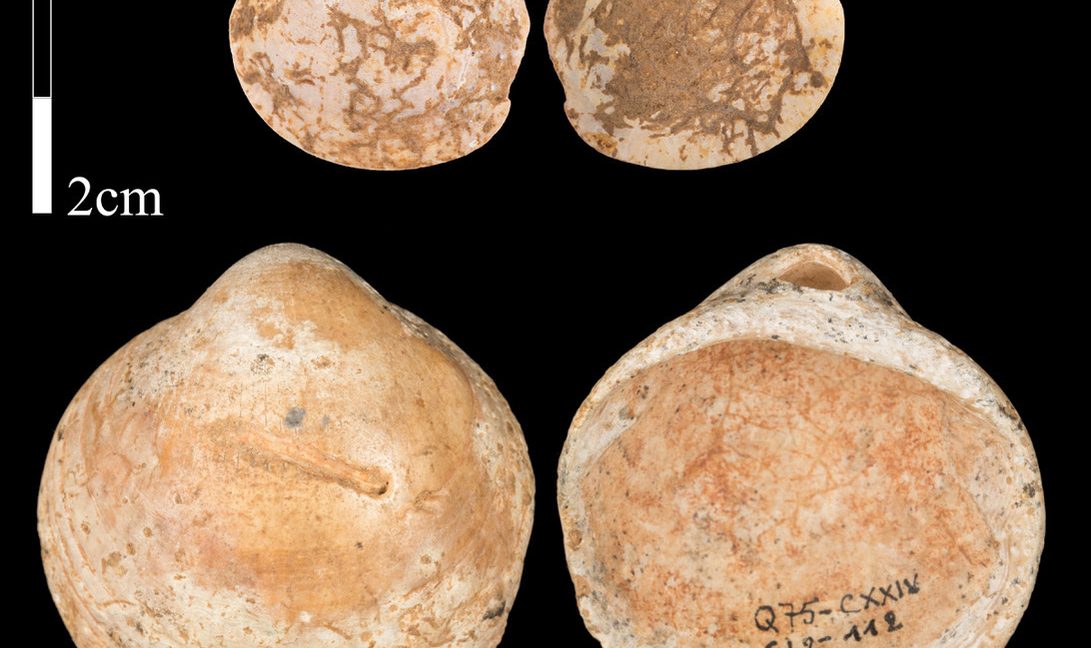
So what sounded weird about your claim is that they were putting an artifact under an electron flipping microscope... dirty? And string fragments survived for tens of millennia? I find this a little odd, so I looked into it. You don't specify who you are citing, so I'm taking a guess here, based on the little info you claim:


Seems that they didn't find any string, nor would anything have been damaged by cleaning the artifacts first. They found striations on the shells that they think were caused by long decomposed flax, wound up into string, as opposed to the leather strips that they would have otherwise assumed.

Is this the finding you are referring to? If so, it has nothing to do with cleaning or finding string that used to be destroyed while cleaning. It has nothing to do with anything, really, except that the archeologists were doing what I am advocating: doing as much as possible with what is available now.
 

Back
Top Bottom