"
gerrycan has posted 4 YouTubes about his WTC7 work:
Part 1: Shear Ignorance - NIST and WTC7
Part 2: NIST and WTC7 - The Expanding Lie
Part 3: Tangled Webs - NIST and WTC7
Part 4: NIST and WTC7 - maladmiNISTration
I haven't watched them and have no intention to."
Well if you have any integrity you should.
Note to
Gamolon: There are more problems with the NIST WTC7 final report than whether or not you agree about the "shear studs".
It is clearly revealed how desperate the NIST organization was in its attempts to provide an explanation for the collapse initiation of WTC7.
In NCSTAR 1-1 published on Sept.1, 2005, the NIST having had 4 years to accumulate and study the WTC7 plans stated; "Most of the beams and girders were made composite with the slabs through the use of shear studs. Typically, the shear studs were 0.75 in. in diameter by 5 in. long, spaced 1 ft to 2 ft. on centre."
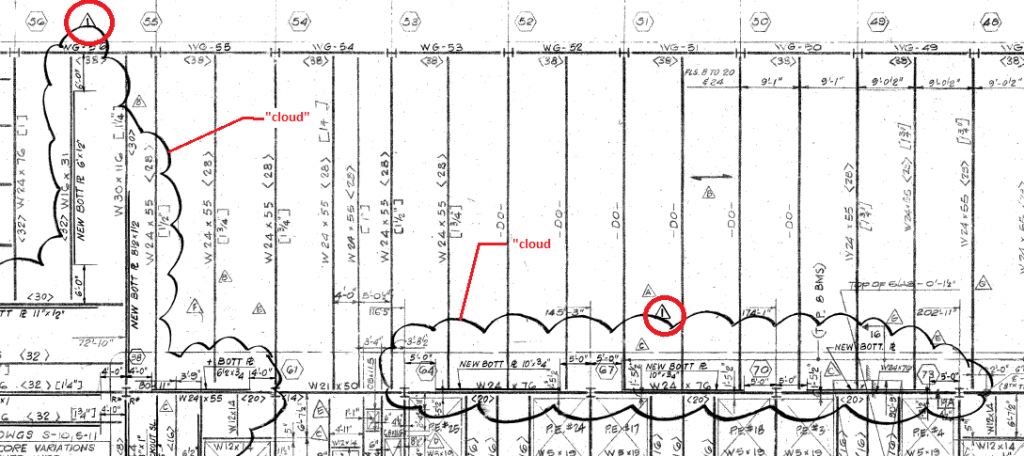
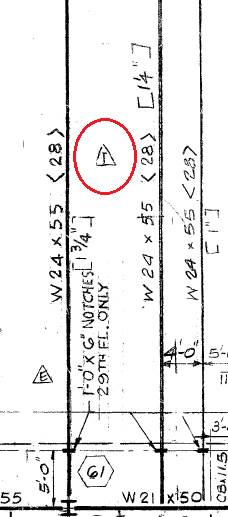
Available WTC7 shop drawings clearly show the requirement of field applied shear studs. As many as 3,896 shear studs per floor.
But, as the NIST discovered, shear studs would have totally undermined their steel expansion hypothesis which they used for their final report.
In NCSTAR 1-9, Vol. 1 published on Aug.1, 2008, the NIST reversed themselves and stated that; "In WTC7, no studs were installed on the girders…"
Additionally, despite shop drawings (Franco-1091) clearly showing 12 inch seats, the NIST based their final hypothesis on a belief that at 600C (highest temperature before the steel weakens and push turns to sag) the girder would be pushed off its 11 inch seat.
In June, 2012, the NIST released an erratum document where the NIST now acknowledges that the girder seats were in fact 12 inches and that this serious error was just a typo. Quite an amazing typo given the importance of that dimension. Interestingly, to compensate for that error, the NIST, later in the erratum document increased the beam expansion from 5.5 inches to 6.25 inches, claiming a transposition error had been made (how convenient).
Unfortunately for the NIST, the temperature required to allow for this greater expansion is 736C. But, at that temperature, the NIST had already claimed the girders would be sagging and no longer pushing.
The NIST have not explained that contradiction, nor have they explained why they ignored stiffeners which are clearly marked in shop drawings and would have required the girder to have been pushed even further before failure.
Yes, there are lots of reasons why you should 'respectfully' watch these short videos.
MM