Harrit sues paper for defamation

In a case of defamation that's the court's primary business. Before the court can determine whether Harrit's reputation was harmed, it must first determine what that reputation is.

And how do you propose the court will do this, JayUtah? On what evidence will it determine Harrit's reputation?

If you'd think about things for about five seconds longer than you evidently do, you'd begin to understand what I'm saying.


Your entire post is legal nonsense, for the reasons previously stated.

Lol. I'm not pretending to offer a legal analysis. I'm just calling you on your B.S.

The rest of your post, being a reiteration of the mostly personal opinion in your first posts, is not worth responding to.
 
Last edited:
I've looked into several recent cases where people have sued for defamation and won, and with one exception plaintiffs we're all publicly accused of various crimes ranging from the use of illegal workers/tax fraud to pedophilia. The exception was someone accused of being a Nazi supporter and spreading Nazi ideology when clearly he was not.

Harrit's a tosse for filing this suit.
 
And how do you propose the court will do this, JayUtah? On what evidence will it determine Harrit's reputation?

Wow, you're really new at this, aren't you?

Gadach v. Benton County Co-op Assn. Start there, and when you're finished I've got four or five more cases for you to read.

The plaintiff's reputation is estabilshed as a finding of fact by the same means every other point of fact is established at trial. The party with the burden of proof first presents evidence in his favor, then the respondent rebuts it and/or makes an affirmative case. The court then decides where the facts most likely lie.

The plaintiff presents evidence that his reputation is stellar, that he is a pillar of the community, and that he has worked hard to achieve and maintain such a reputation. He will present lists of civic, academic, or professional achievements. He will admit lists of awards and recognition. He may present character witnesses, although those are less common because they can be cross-examined. In Harrit's case we would expect him to present a list of his scholarly publications and any awards he may have received from his former university.

Conversely the defendant presents evidence that the plaintiff's reputation is already of low esteem. He may rebut the plaintiff's evidence, for example showing that some particular proffered achievement was, say, routinely granted (e.g., employee of the month in a company with only two employees). He may cross-examine the character witnesses or present some of his own.

But this case-in-chief is typically loaded with sins of omission, so it generally falls to the defendant to attempt to show that the plaintiff's reputation is actually based upon more than the happy items the plaintiff has selected. Hence the defendant brings to the court evidence the plaintiff would rather the court not see. In this case, the public record is full of Harrit's public appearances and statements on 9/11. A basic web search turns up prominent mention of his hoax-promoting activities and alliances with crackpot organizations. Actually that's not true -- it turns up nothing but that.

As part of its findings in the case, a court will determine which picture of Harrit's reputation is most likely true -- in the U.S., the standard is how a reasonable, informed, ordinary citizen who doesn't know Harrit personally will perceive him to be based on all readily and commonly available material. And it is that finding of fact that will be the yardstick against which the court will measure whether that reputation has been damaged by defendant's actions alone.

If you'd think about things for about five seconds longer than you evidently do, you'd begin to understand what I'm saying.

If you had been inside a courtroom for longer than five seconds, you'd begin to understand that what you're saying doesn't matter. You have absolutely no clue what you're talking about.

Lol. I'm not pretending to offer a legal analysis.

Of course you are. You just suck at it.

The rest of your post, being a reiteration of the mostly personal opinion in your first posts, is not worth responding to.

I accept your concession.
 
Sure it was true but making it public was the act which caused the damage.

There are some universal exceptions to the truth rule, for example in the case of medical records under fiduciary trust. If your doctor casually tells people he treated you for severe bedwetting, for example, he has defamed you. The truth of the statement does not excuse publishing it if the publisher had a duty not to publish it. Truths arising out of an ordinary breach of privacy are also defamatory.

A newspaper does not have a duty not to publish its opinion of someone who has deliberately and aggressively placed himself in the public eye on the nonsensical side of a controversy.

The rest of your post - well stated - understood and agreed.

Oh, I wasn't attempting a legal analysis. I was just calling someone on his B.S. :D

Remember we are operating under "Internet Forum Discussion Rules" so ergo et al can keep pretending that courts and the law of the land don't exist and/or that silly internet debating tricks would be allowed in a court. That is a big reason why the truth movement would never go there or welcome another investigation.

I'm glad you brought that up because it's a corollary to what I wrote above. Crackpots lose their court cases precisely because they think silly internet debate tricks will work in court. That's the only way they know how to argue, and they are wholly unprepared for having feet held to the fire.

Judges are not especially stupid, and unlike the audience for most conspiracists, judges are well attuned to hearing, detecting, and rejecting patently lame arguments.
 
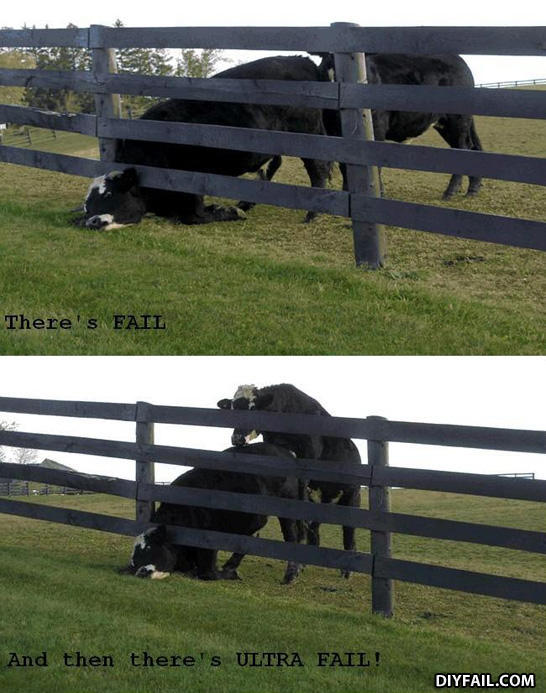
Ultra Fail

dairy-fail.jpg
 
I'm curious to see how much of a role freedom of speech/freedom of the press will play here.

The comment at issue here is really just "Niels Harrit is a poor scientist." That is an opinion statement, and one which people in a free society are entitled to make. If journalists can be dragged into court and forced to prove their every offhand remark, then free speech is curtailed.

I realize that Denmark is not the United States, and that national jurisprudence may not err so heavily on the side of protecting free speech. But to some extent, whatever libel was caused by the statement has to be reconciled against Sorenson's right to make it.
 
The main problem is that "tosse" more often than not is used as meaning "fool" or "idiot" instead of "mentally ill". This alone undermines his case.

Indeed if Common Law serves as an example on this point too, the trier of fact is allowed to determine for himself which of several possible meanings of an ambiguous word was intended. The court is not bound to the literal meaning or to the plaintiff's belief.

Plus, the column was a debate-column, expressing solely the writer's opinion.

True, but opinions and allegations of fact are inherently what they are. "It is my opinion that John Doe is a child molester" is an allegation of fact, despite my lame attempt to disguise it. "It's a fact that the Bible is the most beautiful book ever written," is inherently an opinion.

As I see it, "Niels Harrit is mentally ill," would be an actionable statement of defamation. "I think Niels Harrit is a fool," is not.
 
Which brings us back to the points I made.

At first you claimed the court will not need to bother with Harrit's evidence - now you acknowledge it will, of necessity. Now, what evidence is going to be offered to counter this? Some journalist's opinion? You say "hoax-promoting" sites. What are these? And did Harrit willingly submit material to them? Lots of valid information gets published on wacky sites. That does not make the information wacky.

If this is the case and this hurt his reputation it is not the fault of the defendant. He has to prove that the defendant alone hurt his reputation, not his actions or anyone elses.

You're not really reading what is being written.
 
Last edited:
But this case-in-chief is typically loaded with sins of omission, so it generally falls to the defendant to attempt to show that the plaintiff's reputation is actually based upon more than the happy items the plaintiff has selected. Hence the defendant brings to the court evidence the plaintiff would rather the court not see. In this case, the public record is full of Harrit's public appearances and statements on 9/11. A basic web search turns up prominent mention of his hoax-promoting activities and alliances with crackpot organizations. Actually that's not true -- it turns up nothing but that.

As part of its findings in the case, a court will determine which picture of Harrit's reputation is most likely true -- in the U.S., the standard is how a reasonable, informed, ordinary citizen who doesn't know Harrit personally will perceive him to be based on all readily and commonly available material. And it is that finding of fact that will be the yardstick against which the court will measure whether that reputation has been damaged by defendant's actions alone.

Which brings us back to the points I made.

At first you say the court will not need to bother with Harrit's evidence - now you acknowledge it will, of necessity. Now, what evidence is going to be offered to counter this? Some journalist's opinion? You say "hoax-promoting" sites. What are these? And did Harrit willingly submit material to them? Lots of valid information gets published on wacky sites. That does not make the information wacky.

It seems it needs to be repeated here that your personal and unprofessional opinion of Harrit's 9/11 research does not represent public opinion, and it certainly doesn't represent scientific opinion.

Harrit has presented only factual information, whether it's right or wrong, and whether you agree with it (as an uninformed layperson) or not. If he has also presented his opinions on this information, he states when he does so. As an uninformed layperson, yours or anyone else's personal opinion of him is of no consequence here. One's reputation is not decided by some internet goons on JREF. Do you understand this?

Your entire argument seems to be "Harrit won't win because everyone already sees him as a crackpot, and I too, anonymous JREF poster, also see him as a crackpot." I'm merely pointing out to you that this is not how a court of law operates.
 
Harrit has presented only factual information, whether it's right or wrong, and whether you agree with it (as an uninformed layperson) or not. If he has also presented his opinions on this information, he states when he does so. As an uninformed layperson, yours or anyone else's personal opinion of him is of no consequence here. One's reputation is not decided by some internet goons on JREF. Do you understand this?

We do. What has any of this have to do with his reputation and how has this newspaper hurt it?

Like I said before. You're on day 10 of a court case that won't last a day.
 
Last edited:
If this is the case and this hurt his reputation it is not the fault of the defendant. He has to prove that the defendant alone hurt his reputation, not his actions or anyone elses.

You're not really reading what is being written.

Having something published without one's knowledge on a wacky site is not the same as having your name defamed in a popular or mainstream journal. I think the court can recognize the difference here.

Again, because of your collective skewed perception of 9/11 inquiry, you're not able to see what the issues here are.
 
...
The comment at issue here is really just "Niels Harrit is a poor scientist." ...

I don't see that these journalists allege that Harrit is a scientist (whether poor or not). They opine that he is a fool, and that his cause is as obviously false, and as much subject to widespread public ridicule, as holocaust denialism etc. They would come to the exact same assessment if Harrit were a lawyer, a taxi driver, a politician or a footballer and did the very same things Harrit did wrt 9/11. His being a scientist plays a minor role, IMO.
 
I'm merely pointing out to you that this is not how a court of law operates.

And failing miserably! It is amazing, the amount of time spent by patient posters, trying to educate you. Yet, you put fingers in your ears, and hum.
Missing out on a chance to learn. Sad, really.
 
Having something published without one's knowledge on a wacky site is not the same as having your name defamed in a popular or mainstream journal. I think the court can recognize the difference here.

Again, because of your collective skewed perception of 9/11 inquiry, you're not able to see what the issues here are.

I agree. It is also not the fault of the defendant if these cases hurt your reputation. The paper pointing them out also is not defamation nor is their opinion of the context.

His case due to his own actions is doomed to fail. Had he sued these other publications first.............(unless he can show no knowledge of them).;)
 
Last edited:
At first you say you didn't see any point in debating me, thus conceding the argument. Now you skip over the parts you can't rebut and try to land on a new point -- a mini fringe reset. Since you've decided to rejoin the debate, kindly address the points I previously made.

At first you say the court will not need to bother with Harrit's evidence - now you acknowledge it will, of necessity.

No, you're conflating two bodies of evidence. I said the value of Harrit's claims contained in his pseudoscientific 9/11 research are irrelevant. Harrit apparently wants to use the court as a forum to debate the merits of his 9/11 theories. The relevant allegation of fact, however, is what Harrit's reputation is. A body of evidence attaches to that, but not what is contained in his faux scholarship. Harrit claims his reputation is that of a serious scientist. He will be expected instead to present evidence that this is how a reasonable, generally informed person would see him.

It seems it needs to be repeated here that your personal and unprofessional opinion of Harrit's 9/11 research does not represent public opinion...

I'm an engineer and a scientist. My opinion of Harrit's work is not unprofessional. Since you've opened that door, please list your qualification, credentials, and other pertinent expertise that would let us decide how qualified you are to judge the scientific validity of Harrit's work. I daresay we can't proceed very much farther without that.

Second, your claim is a straw man. I'm not claiming that my opinion of Harrit's work is identical to public opinion of Harrit. I'm saying that Harrit's reputation is the public opinion of him, whatever it may be, not Harrit's personal opinion of himself represented in his court complaint. Harrit wants to stack the deck in his favor by pretending he is known throughout the world only as a serious scientist who doesn't deserve mockery at the hands of a journalist. In fact he is known throughout the world as a shill for conspiracy theorists.

...and it certainly doesn't represent scientific opinion.

Asked and answered. The standard a court applies to determine whether something is valid science is whether it arose from and was subjected to the scientific method, including all particulars of review prior to publication and all subsequent particulars of replication and defense. It also considers the reception of the work by the scientific community.

Harrit specifically avoided peer review for his findings and published them in a vanity journal. He has refused to allow other practitioners access to his samples. That alone makes his "have not been refuted" claim legally meaningless -- it has not been refuted due solely to the actions of the plaintiff in avoiding refutation. And his work is not well received in the scientific community.

Harrit wants to dictate to the court what constitutes reliable scientific research. The court already knows how to determine that. In that Harrit has flagrantly disregarded scientific protocols in publishing his claims, he is behaving unscientifically. Further, as a published scientist, Harrit would be expected to know what scholarly requirements attend the publication of reliable science. Hence his decision to disregard them would have to be considered deliberate. Finally, his appeal to public notoriety provides an ulterior motive for eschewing proper scientific practice.

Harrit has presented only factual information, whether it's right or wrong, and whether you agree with it (as an uninformed layperson) or not.

Actually I studied law at the University of Michigan in conjunction with a program of forensic engineering, which is part of my practice. Again since we have opened that door, what are your qualifications in law?

One's reputation is not decided by some internet goons on JREF. Do you understand this?

According to you, one's reputation cannot be decided at all. But of course now that it serves your argument to change your story, you now imply that it can. Flip-flopping makes you look desperate and ill-prepared.

No one is claiming Harrit's reputation will be decided by "internet goons on JREF." The claim is, and has always been, that Harrit's reputation will be decided by the court, not by his self-serving fiat. And it will be decided according to all available information, not simply the nice bits and pieces Harrit decides to spoon-feed the court. "All available information" includes material critical of him. As has been belabored, crackpots always lose cases because they don't realize that in court they cannot limit what the trier of fact hears.

Your entire argument seems to be "Harrit won't win because everyone already sees him as a crackpot, and I too, anonymous JREF poster, also see him as a crackpot."

No, my argument is that Harrit doesn't get to decide what his reputation is or what the court will use to determine it.

I'm merely pointing out to you that this is not how a court of law operates.

I've been in court several times, in various roles. I'll keep my own counsel about how things work in a court of law.

You clearly have no idea how a court operates. You tried to tell us Harrit, as the plaintiff, had no burden or proof. What nonsense is that? And of course none of this, in your estimation, is "legal analysis." Under what fantasy does discussing how a court will approach the merits of a case not count as legal analysis?

Is your purpose here just to spin the thread idiotically?

 
I Googled for the presence of the word "tosse" at jyllands-posten.dk. It turned up about 350 hits, including headlines that translate as "parachute tosse lands in volcano" and "tosse-driving on the highway."

Clearly it's a word the paper has a history of using to describe foolish people, as opposed to people with genuine mental conditions. Is Harrit really claiming they meant the latter? In the middle of an article about a completely different topic? Ugh. The more I dig into this, the more pathetic Harrit looks.
 
Having something published without one's knowledge on a wacky site is not the same as having your name defamed in a popular or mainstream journal. I think the court can recognize the difference here.

The court can recognize that one who deliberately and purposely seeks public attention by way of controverting an almost unanimous view, is likely to attract undesirable attention. Having persisted in one's attention-seeking behavior in the face of that unfavorable response testifies to one's willingness to accept that condition as part of one's public image.

Harrit arrived at and published his findings in a way he knew would not be palatable to the scientific community. His subsequent actions further illustrate his desire to distance himself from that community and not subject himself to their rigor. It is disingenuous of him now to appeal to that community to rescue his reputation by means of their reflected glow. Harrit has bitten the hand, and now selfishly wants to be fed by it.

Harrit affirmatively and deliberately sought to publish his beliefs as widely as possible to the general public. Knowing that he was taking a side in a public controversy that had raged for more than a decade, he had to have known that by attaching himself very publicly to the debate, his name would be had for good and ill among those interested in it. And by his long-standing participation in the debate and his associations with groups that actively promoted conspiracy theories, he had to have recognized that his belief was distinctly in the minority and was not well thought of by people of all levels of appropriate knowledge.

The court's understanding of Harrit's knowledge of what he was doing in promoting a 9/11 conspiracy theory, and the public's likely reaction to it, is a key point in determining two relevant points of law: first, whether Harrit's actions excuse the newspaper under Danish criminal law (which expressly provides for this); and second, whether Harrit's reputation has been damaged by the actions of another.

Again, because of your collective skewed perception of 9/11 inquiry, you're not able to see what the issues here are.

Sorry, I don't recognize arguments that boil down to nothing more than accusing your critics of closed-mindedness for not agreeing with you.
 
I don't see that these journalists allege that Harrit is a scientist (whether poor or not). They opine that he is a fool, and that his cause is as obviously false, and as much subject to widespread public ridicule, as holocaust denialism etc. They would come to the exact same assessment if Harrit were a lawyer, a taxi driver, a politician or a footballer and did the very same things Harrit did wrt 9/11. His being a scientist plays a minor role, IMO.

Correct. This goes back to the point I extracted from the complaint where Harrit objects to being lumped together with Holocaust deniers and Creationists. Again, he may be arguing that because he's a serious scientist he doesn't deserve to be lumped together with them and called a fool. But that presumes why the author thinks he's a fool and worthy of such dismissal.

I could say, for example, that I think he's a fool for throwing away an honorable scientific career by associating in any way with a conspiracy theory, on whichever side.
 

Back
Top Bottom