• Security incident: ISF was recently accessed by intruders. Please change your password, and change it anywhere else you used it. Read more

history and myth of Exodus

Snipped►

So calling the stories of the Hebrew Bible "all made up" or "all a fairy tale" is certainly inaccurate. But to call it all "true" and "historical" is also inaccurate, and would not have been the way that it would have even been understood in its time.

Well Piggy that is sure a reasonable rationalization—as I said if I did not have the proof that I have I would most certainly accept your theory.
Never the less your rationalisation is very convincing, and your research must be admired as I said to Tim.
But how would you feel if you were wrong in your analysis?


Regards

Paul Bethke
 
Well Piggy that is sure a reasonable rationalization—as I said if I did not have the proof that I have I would most certainly accept your theory.
Never the less your rationalisation is very convincing, and your research must be admired as I said to Tim.
But how would you feel if you were wrong in your analysis?


Regards

Paul Bethke

And that proof is . . .?
 
TimCallahan said:
Well Piggy that is sure a reasonable rationalization—as I said if I did not have the proof that I have I would most certainly accept your theory.
Never the less your rationalisation is very convincing, and your research must be admired as I said to Tim.
But how would you feel if you were wrong in your analysis?


Regards

Paul Bethke

And that proof is . . .?
+1
 
a completely different reason to disbelieve the Exodus story

Hi All,

First, thanks to Tim Callahan for the detailed explanation of the flaws in the Exodus story. Very interesting reading.

But here's something that suggested to me the story was impossible - the idea that the pyramids were built by Hebrew slaves. The graveyard of the pyramid builders and the town where the full-time skilled artisans lived were discovered in the late 20th century. The pyramids were built by Egyptians - some full-time, permanent employees, others, farmers who would give 3 months during the flood season in lieu of paying taxes.

Also, consider that the pharaoh was not just the king, but the god incarnate, and when he died, he became one with the god Osiris. The pyramid was the pharaoh's machine for achieve immortality, which was required in order for the sun to continue to rise & for Egypt to continue to exist. Who would trust that job to a bunch of disgruntled slaves? In addition, the construction of the pyramids required a lot of skill - the base of the Great Pyramid is level to within half an inch. Not the job for unskilled, forced laborers.
 
Hi All,

First, thanks to Tim Callahan for the detailed explanation of the flaws in the Exodus story. Very interesting reading.

But here's something that suggested to me the story was impossible - the idea that the pyramids were built by Hebrew slaves. The graveyard of the pyramid builders and the town where the full-time skilled artisans lived were discovered in the late 20th century. The pyramids were built by Egyptians - some full-time, permanent employees, others, farmers who would give 3 months during the flood season in lieu of paying taxes.

Also, consider that the pharaoh was not just the king, but the god incarnate, and when he died, he became one with the god Osiris. The pyramid was the pharaoh's machine for achieve immortality, which was required in order for the sun to continue to rise & for Egypt to continue to exist. Who would trust that job to a bunch of disgruntled slaves? In addition, the construction of the pyramids required a lot of skill - the base of the Great Pyramid is level to within half an inch. Not the job for unskilled, forced laborers.


I don't think that pyramids are explicitly mentioned in Exodus, so this wouldn't exactly count as a flaw in its supposed historicity.
 
I don't think that pyramids are explicitly mentioned in Exodus, so this wouldn't exactly count as a flaw in its supposed historicity.

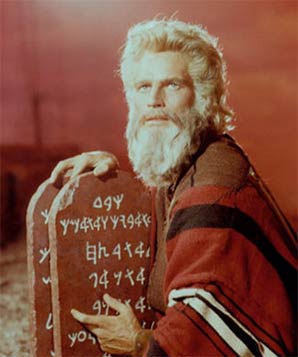
But, but, but...
heston.jpg
 
Hi All,

First, thanks to Tim Callahan for the detailed explanation of the flaws in the Exodus story. Very interesting reading.

But here's something that suggested to me the story was impossible - the idea that the pyramids were built by Hebrew slaves. The graveyard of the pyramid builders and the town where the full-time skilled artisans lived were discovered in the late 20th century. The pyramids were built by Egyptians - some full-time, permanent employees, others, farmers who would give 3 months during the flood season in lieu of paying taxes.

Also, consider that the pharaoh was not just the king, but the god incarnate, and when he died, he became one with the god Osiris. The pyramid was the pharaoh's machine for achieve immortality, which was required in order for the sun to continue to rise & for Egypt to continue to exist. Who would trust that job to a bunch of disgruntled slaves? In addition, the construction of the pyramids required a lot of skill - the base of the Great Pyramid is level to within half an inch. Not the job for unskilled, forced laborers.

In any case, most of the pyramids were built in the sixth dynasty. Some pyramid building was revived in later dynasties, but none in the New Kingdom (Dynasties 18 -20) of the Late Bronze Age. However, what you say about the pyramids holds also for other pharaonic building projects: They were mainly done by free, paid labor. In fact, Ramesses III had problems when his workers went out on strike because they hadn't been paid.

To give Exodus its due, Ex. 1:11 says that the Hebrew slaves built the store cities of Pithom and Ramesses. These would have been storage areas made of mud brick. The motif of Hebrew slaves building the pyramids is more a product of Hollywood than of the Bible.
 
This was an ex girlfriend I considered marrying. She wasn't Jewish at all when we dated but now she has a daughter and she wants her daughter to have all the Jewish stuff.

My relationship with the ex (let's call her Nancy because that is her name) was initially based on sex because she is a social worker and I was the unenlightened as far she was concerned. Our relationship worked. I don't wish to brag but I'm a good listener and I am able to handle women who are difficult nuts to crack. Some get married and miss me and that's why we still are friends with benefits 24 years after we broke up. She is now divorced.

However she started inviting me to Saders and other such bulloney. I had to be clear I'm an atheist and can be at these events but don't expect me to react appropriately.

She was OK with this as long as I changed her locks and did some plumbing. She was angry about me calling woo but she truly was pissed at something else. When I told her there is no evidence in the Sanai peninsula of Jews being lost she was pissed.

Well, on the flip side of the "there is no evidence for" coin, and somewhat in her defense, there is likewise no evidence of all the Egyptian soldiers who passed through the Sinai through the centuries. Do you conclude that the Egyptians did not pass through there? No, so why hold a putatitive exodus to a higher standard of material remains?
 
Well, on the flip side of the "there is no evidence for" coin, and somewhat in her defense, there is likewise no evidence of all the Egyptian soldiers who passed through the Sinai through the centuries. Do you conclude that the Egyptians did not pass through there? No, so why hold a putatitive exodus to a higher standard of material remains?
.
Ona cause maybe the shortest path across the Sinai takes maybe 2 weeks, not 40 years?
And that path was well traveled over the centuries of marching to and from Egypt.
OTOH, a million people spending 40 years there, when the average life span was maybe 40 years would leave a lot of dessicated corpses, if nothing else, like dwellings and agriculture remnants for a million people.
 
Well, on the flip side of the "there is no evidence for" coin, and somewhat in her defense, there is likewise no evidence of all the Egyptian soldiers who passed through the Sinai through the centuries. Do you conclude that the Egyptians did not pass through there? No, so why hold a putatitive exodus to a higher standard of material remains?

Of course, the Israelites were supposed to have spent 40 years in the Sinai. That's a bit different from an army passing through in about 4 days (by a factor of 3,650; i.e. 365 days in a year multiplied by 10).

ETA: I Ratant, sorry to step on your post. I didn't see it until I was done making mine. Great minds . . . .
 
Last edited:
You and everybody else. ;)

Short of discovering the Ark of the Covenant somewhere in Mesopotamia or Persia, I don't know that it will ever be possible to reconstruct it.

Well, funny you should mention that.... ;-)
 
Of course, the Israelites were supposed to have spent 40 years in the Sinai. That's a bit different from an army passing through in about 4 days (by a factor of 3,650; i.e. 365 days in a year multiplied by 10).

ETA: I Ratant, sorry to step on your post. I didn't see it until I was done making mine. Great minds . . . .

I don't believe I've ever said I subscribe to the 40-year time frame.

I don't.
 
.
Ona cause maybe the shortest path across the Sinai takes maybe 2 weeks, not 40 years?
And that path was well traveled over the centuries of marching to and from Egypt.
OTOH, a million people spending 40 years there, when the average life span was maybe 40 years would leave a lot of dessicated corpses, if nothing else, like dwellings and agriculture remnants for a million people.

Yes, yes, the northern route called the Way of Horus, the precise route for which is unknown precisely due to the paucity of material remains that would identify every stretch of it in every period.
 
Last edited:
I don't believe I've ever said I subscribe to the 40-year time frame.

I don't.
.
That's a start.
There's many more problems to look at... most of which have been examined here over the years.
So many of the problems can't be supported by reality, which is a pretty good reason to doubt the whole thing... OT and NT combined.
 
.
That's a start.
There's many more problems to look at... most of which have been examined here over the years.
So many of the problems can't be supported by reality, which is a pretty good reason to doubt the whole thing... OT and NT combined.

My own personal research has led me to interface with professionals in many fields that touch on the topic at hand. I've been doing it off an on again since 1987, and in earnest since 2003.
 
That does not mean I am persuaded—I just admire the amount of research you and others have done on what you call mythology—or is it to prove that it is mythology?

Oooh...no. Where did you get that? From my reading of the discussion is to find out if an exodus did occur and what the nature of the exodus was, how it occurred, when it occurred, why it occurred... No one is trying to prove the exodus is a myth...that would be self defeating and useless...since you already have a conclusion, one tends to cherry pick data to suit that conclusion. Do you see that happening here?
 
ok, so if the pyramid-building was Hollywood...

Hi Tim Callahan,

Haven't mastered the quote thingy yet...but thanks for the reply...

Still, I can ask, even if it's mud brick storage, would you want disgruntled slaves to be in charge of your food storage? Or storage of anything of value?
 
In any case, most of the pyramids were built in the sixth dynasty. Some pyramid building was revived in later dynasties, but none in the New Kingdom (Dynasties 18 -20) of the Late Bronze Age. However, what you say about the pyramids holds also for other pharaonic building projects: They were mainly done by free, paid labor. In fact, Ramesses III had problems when his workers went out on strike because they hadn't been paid.

To give Exodus its due, Ex. 1:11 says that the Hebrew slaves built the store cities of Pithom and Ramesses. These would have been storage areas made of mud brick. The motif of Hebrew slaves building the pyramids is more a product of Hollywood than of the Bible.

And therein we have the first problem with its historicity.

Per-Rameses is the old Avaris, which existed for a looong time, and ended up capital of the Hyksos pharaohs. So if Josephus was right about the Hyksos connection, actually moves the date of the exodus to the time of their expulsion, which incidentally is also when Avaris is razed by the assaulting Egyptian armies.

The site would remain uninhabited until Rameses II rebuilds the city. So, ah-ha, we have a possible dating of when those Hebrew slaves were supposed to have done it.

Pithom -- i.e., Per-Atum, "house of Atum" -- is a whole different story. The site at Tell-el-Maskhuta doesn't quite put it at the same time. In fact the oldest layer that shows a city, is from the 6'th-7'th centuries BCE. You know, a whole half a millennium after Per-Rameses or the supposed band of Levites legging it from Egypt.

The only thing that seems to have been there before that is... a fort from the Hyksos times. Hmm.

There is much hype about the Tell-el-Maskhuta site, not the least because someone found a structure made of bricks without straw. Woohoo, that shows the Exodus is right, right? Well, it would, except it's from the Roman period :p

There are also some anachronistic statues from the Ramesside period there, but the sane working hypothesis is that they were moved there, a practice which was actually bog-standard at the time. Cities bought and sold and hauled statues and obelisks from old abandoned cities all the time. It doesn't mean the city was built by Ramesses II any more than the obelisks in Alexandria mean it was built by Thutmoses III :p (ETA: or for that matter, Byzantium, now Istanbul, has an obelisk of Thutmoses III. So there we go, proof that Byzantium was built by the Egyptians in the 15'th century BCE:p)

So what we really have is an anachronism. The book of Exodus, written circa 6'th century BCE, mentions a city that existed in their time, but almost certainly didn't at any time suitable for the events in the book.

If you will, it's as if I were to write a Spanish-colonial-age-themed novel, where stuff happens in Fordlandia. Actually that city didn't even exist until 1928 when Ford built it.

So, you know, one more reason to not take it as a very historical source. Those guys knew stuff around their time, but don't seem to actually know what happened half a millennium before.

 
Last edited:

ISF - Join now!

Every member here is approved by hand. No bots, no spam, just people who care about evidence and honest debate.

Membership is free!

Create your free account

Back
Top Bottom