• Quick note - the problem with Youtube videos not embedding on the forum appears to have been fixed, thanks to ZiprHead. If you do still see problems let me know.

On Consciousness

Is consciousness physical or metaphysical?


  • Total voters
    94
  • Poll closed .
Status
Not open for further replies.
Read that years back at uni, Oliver Sachs is a legend. No preconceived bias in his books
Funny you should say that, because that's the problem I have with him. He's brilliant when he's strictly reporting case studies, but when we wanders further off he sometimes displays distinct biases (of varying types).
 
I've seen and read a lot about corpus callosum division, and it really does appear that two conscious personalities emerge when the brain is divided in two.

Explain how you know that a brain divided in two still has only one conscious entity.


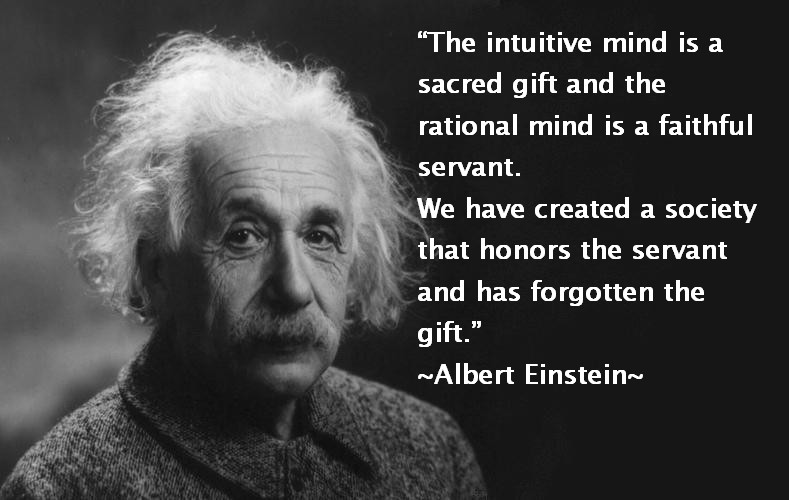
It's sometimes called the tyranny of the left hemisphere. The left hemisphere of the brain is primarily used for subconscious activities, it's basically the brains slave for education and conscious activities that are so well used by the person it's relegated to the realm of subconscious thought. Thus the left hemisphere of the brain is a faithful servant to human consciousness, but it does little to progress conscious thought of the right hemisphere and frontal lobe. We all know how little thought it takes to drive when you are used to it, or how little you have to think when you speak; even if you do have to think about your reply to a person initially as you react by using the right hemisphere. In contrast, the right hemisphere of the brain is the area that we intuit creativity, new thoughts, and is the area of the brain that deals with social situations as it's impossible to predict with any certain scientific degree of accuracy what people are thinking, and hard to know subconsciously in advance how you have to react to their actions and thoughts. It's been quite well proven that people that use the right hemisphere more than the left are happier people.

The term 'tyranny of the left hemisphere' is evident in religious people, they are slaves to their indoctrinated left hemisphere, as this is what they were taught religiously from a young age. And dare I say it here, some peoples scientific beliefs are also regulated, albeit to a smaller degree, by the left hemisphere when they encounter science in contrast to their specific discipline. The right brain is the place that completely new ideas that no-one has ever thought are intuited, it enables open mindedness and new thoughts to enter the subconscious; it's the area of the brain that we learn and react to new things. They are created thoughts; and equally scientifically important is the fact that the 5-HT2a serotonin cortex receptors are stimulatory and the 5-HT1a receptors are more hallucinatory and inhibitory. They are primary targets for essential neurotransmitters like serotonin and adrenalin. These are the primary targets for psychedelic drugs like LSD, mescaline and DMT also. People tend to induce religious and 'spiritual' experiences, and even great scientists have ended up fascinated by their role (Huxley is the most notable, but there are many others)

I'm not doing the above facts justice, I can recommend this talk by neuroscientist Joan Roughgarden, where he goes into depth about temporal lobe epilepsy effects, and also mirror neurons in monkeys that I seem to remeber people bringing up before. These mirror neurons seem to display an empathetic position to even monkeys; Joan Roughgarden posits, jokingly, that they are the "dalai lama neurons" that gives you the ability to put yourselves in others shoes and empathise with other people. If peoples left brain hemisphere is disabled and shut off in certain areas, no matter what their previous beliefs, they will nearly always answer the question "yes, I believe in god". But, they will not describe god in the religious sense, they are quite vague about god, just saying they believe things outside of their previous scientific views that they just 'know' they can intuit creatively outside of their previous thought processes. There is considerable research into hallucinogens effects on creativity. I started a thread here on it, and people tended to agree.

Maybe watch this small excerpt for the exact part in the talk about the 5-HT2a 5-HT1a hallucinatory receptors effects on psychedelics, the neuro-chemicals that bind to them we all share: http://tinyurl.com/c56sdb6

albert-einstein-intuition.jpg
 
Last edited:
As Mr Scott notes, this certainly seems to be the case given the behaviour of split-brain patients. I too am curious as to your reasoning and evidence on this one.

It was a long time ago and it would be hard for me to bring up a reference, but there have been cases where split brain patients have had virtual arm wrestling matches between their left and right arms, because the brain halves were fighting about what they wanted to do. Unfortunately, I'm going by memory on the evidence I recall.

Even if there's some exchange via residual connections between the hemispheres, there's also:

- Common auditory input (disrupted when different information is fed to the two ears through headphones)
- Common visual input (disrupted when measures are taken to present disparate images to the left and right visual fields).

Sometimes, such patients will say what they are doing out loud (left side) so the right side will hear it and keep in sync. Disrupting that causes the two consciousnesses to drift apart.

I believe there's also reconciling of perception of thought going on in such patients, a lot like how we justify decisions made unconsciously. E.g. the right brain will do something, and the left brain comes up with an excuse to suggest that it made the decision to do what the right brain already decided. I understand untampered-with brains do this all the time.

The phenomenon of double personalities in split brain patients is subtle much of the time but can be dramatically manifested in controlled situations.

I'm looking for references on CC division patients. In the meantime, check out a show that's informed me on this: "Phantoms in the Brain" (BBC/Ramachandran).

 
Last edited:
As Mr Scott notes, this certainly seems to be the case given the behaviour of split-brain patients. I too am curious as to your reasoning and evidence on this one.

Wiki is helpful on split brainWP data:

Experiments on covert orienting of spatial attention using the Posner paradigm confirm the existence of two different attentional systems in the two hemispheres.
 
Stup up zeuzzz, where is that quote from?
283778_211514975640657_1951331259_n.jpg


... I just found that on facebook and found it hilarious, self deprecative as it may be :D
 
It's sometimes called the tyranny of the left hemisphere. The left hemisphere of the brain is primarily used for subconscious activities, it's basically the brains slave for education and conscious activities that are so well used by the person it's relegated to the realm of subconscious thought. Thus the left hemisphere of the brain is a faithful servant to human consciousness, but it does little to progress conscious thought of the right hemisphere and frontal lobe. We all know how little thought it takes to drive when you are used to it, or how little you have to think when you speak; even if you do have to think about your reply to a person initially as you react by using the right hemisphere. In contrast, the right hemisphere of the brain is the area that we intuit creativity, new thoughts, and is the area of the brain that deals with social situations as it's impossible to predict with any certain scientific degree of accuracy what people are thinking, and hard to know subconsciously in advance how you have to react to their actions and thoughts.
This sounds well out of date to me. As I understand it, apart from specialist areas, such as language processing (Wernicke's area and Broca's area in the dominant - usually left - hemisphere), there is far less consistency of lateralization than you suggest.

It's been quite well proven that people that use the right hemisphere more than the left are happier people.
Evidence?
 
It was a long time ago and it would be hard for me to bring up a reference, but there have been cases where split brain patients have had virtual arm wrestling matches between their left and right arms, because the brain halves were fighting about what they wanted to do. Unfortunately, I'm going by memory on the evidence I recall.

Yup; I saw a BBC documentary (Horizon?) some years ago about this. They talked to a female split brain patient who had 'contradictory' hemisphere behaviour, e.g. she would button up her blouse with one hand, while the other hand followed, unbuttoning it; or she would pick something up with one hand and the other hand would knock it out of her grasp. IIRC the troublesome hand was under control of the non-verbal hemisphere. There was unsupported speculation that it might be due to frustration at the inability to communicate. It is difficult to test for separate hemisphere consciousness because only one side is verbal, but some split-brain patients have been given lateralized questionnaires (shown to one eye at a time, and filled in by the hand controlled by that hemisphere), and have indicated distinct preferences and opinions between hemispheres.

However, it was said that obvious evidence of this type was rare in split-brain patients, and generally these behaviours were short-lived - some degree of integration seemed to occur that resolved such behavioural problems.
 
That's a good impersonation of Pixy but in trying to imitate his style you forgot to imitiate his substance.

Would you mind expanding on your answer ?

Why should I? Merely stating something with no proof seems to work for both of you.
 
I've seen that one before, and while it's not a favourite (anyone who uses the word "qualia" as though it meant something automatically gets five demerits), I'm not disputing that human consciousness is unique. I'm disputing that consciousness is unique to humans, or for that matter, to living critters.
Thank you for providing yet another example of your own sphexishness. His use of "qualia" was a significant factor in my decision to post the link. :)

As for his suggestion that consciousness (in the sense that he is talking about, including qualia, etc.) might be more or less unique to humans, I find it interesting, but I don't have a really strong feeling either way myself. Probably more against than for, but it's certainly another interesting hypothesis to consider.

ETA: Google + Ramachandran + qualia -> paper with a more detailed discussion
 
Last edited:
Merely stating something with no proof seems to work for both of you.

That's how conversations begin, but I don't see it as a very meaningful ending. They state something, someone disagrees and asks for explanation or evidence, they provide it, someone disagrees that this evidence applies and gives specific reasons why, they either agree or explain why not, etc.

You started with the first step, but are unwilling to move on to step 2. Fair enough, but there's not much discussion likely to happen here, nor much education either, for that matter.
 
ETA: Google + Ramachandran + qualia -> paper with a more detailed discussion

I'm sympathetic to their aim, but found their arguments confused and language sloppy. They attempt compromise an absolute ('irrevocability') to allow for variable 'strength' of qualia. This is bound to fail - degrees of irrevocability?

To start, they assert that qualia should obey 3 laws, claim various examples support this (it isn't always clear that they do), and effectively redefine qualia in terms of these 'laws'. Now the logic starts to unravel.

The first law asserted is irrevocability, an absolute. They then introduce 'bistable percepts', an explicit example of qualia not being irrevocable. So they qualify the irrevocability to include revocation to a single other percept. It's not clear exactly what they intend by this - it's what 'bistable' means. If they mean the irrevocability of any quale is never less than bistable, they don't support it - and I see no reason why there might not be tristable, or more, percepts; after all, their primary example of irrevocable qualia is the dalmation image; but I would suggest that this is not so far from pareidolia, which is often perceptually metastable, with multiple percepts emerging and disappearing. By this point, the first rule of qualia, irrevocability, is looking pretty threadbare.

Implicitly acknowleging this, they begin to distinguish between strong and weak qualia (generated by real perceptions and internally generated, respectively), describing the revocability of weak qualia as a survival advantage.

Next they discuss the computational advantages of irrevocability, asserting "Qualia are irrevocable in order to eliminate hesitation and to confer certainty to decisions...". But, as above, they're not actually irrevocable at all.

Then they introduce Charles Bonnet syndrome as a contradictory example - strong qualia that are internally generated. The association between qualia strength and source of percept is undermined. Similarly for Synesthesia and phantom limb syndrome; It's somewhat incoherent - exceptions don't prove the rule.

Whatever they meant by the first law, 'irrevocable' was not the right word. Possibly they meant 'persistence', but their arguments are clumsy, and it's not clear.
 
I'm sympathetic to their aim, but found their arguments confused and language sloppy.

Whatever they meant by the first law, 'irrevocable' was not the right word. Possibly they meant 'persistence', but their arguments are clumsy, and it's not clear.

Is a man with three hairs on his head "bald"? Methink dlorde doth protest too much. :)
 
Status
Not open for further replies.

Back
Top Bottom