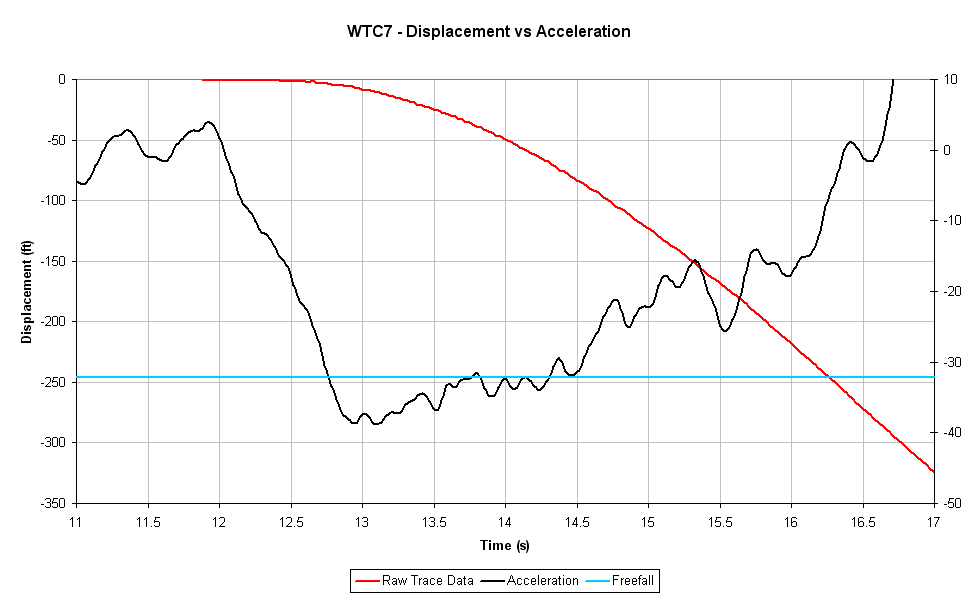
"Margin of error" is a decisional estimate. We speak in terms of "margin" in engineering when we are trying to quantify validity of a determination against uncertainty. For instance, "this ship will not capsize," with a margin of error of 100 tons, means that to the best of our knowledge it can handle approximately 100 tons more cargo / passengers / bilge before it becomes unstable.
This is different than the more relevant "measurement uncertainty." All measurements have uncertainties due to random error, sampling error, experimental error, systematic error. Good researchers try to quantify this error, but in most situations this error is assumed to be quasi-Gaussian, and therefore symmetric. So we might say "the measured rate of descent of WTC 7 was 9.6 m/s2 +/- 1.0," where 1.0 m/s2 is the error estimate. (These are made-up numbers for purpose of discussion.) Unless stated otherwise, this error estimate corresponds to a one-sigma error bound, i.e. we are roughly 68% confident that the real value lies within one interval of our estimate.
Using the above measurement, we might say "WTC 7 descended slower than Free-Fall Acceleration," viz., it descended at less than g with 0.2 m/s2 to spare. This 0.2 m/s2 is the "margin of error," i.e., if we exceed this margin, our declaration is wrong.
Now in this fake example, note that the "margin of error" is much less than the error estimate. So, in this case, we really have no "margin of error." Our declaration is very unreliable.
On the other hand, suppose we measured the rate of descent to be 6.5 m/s2 +/- 1.5. In this case, we would have a margin of about 3.3 m/s2, which is reasonably large compared to the error estimate. In this case, we have a comfortable, but not bulletproof, margin for error in making our declaration.
Hope that helps. Let us all strive to avoid semantic arguments.
This is different than the more relevant "measurement uncertainty." All measurements have uncertainties due to random error, sampling error, experimental error, systematic error. Good researchers try to quantify this error, but in most situations this error is assumed to be quasi-Gaussian, and therefore symmetric. So we might say "the measured rate of descent of WTC 7 was 9.6 m/s2 +/- 1.0," where 1.0 m/s2 is the error estimate. (These are made-up numbers for purpose of discussion.) Unless stated otherwise, this error estimate corresponds to a one-sigma error bound, i.e. we are roughly 68% confident that the real value lies within one interval of our estimate.
Using the above measurement, we might say "WTC 7 descended slower than Free-Fall Acceleration," viz., it descended at less than g with 0.2 m/s2 to spare. This 0.2 m/s2 is the "margin of error," i.e., if we exceed this margin, our declaration is wrong.
Now in this fake example, note that the "margin of error" is much less than the error estimate. So, in this case, we really have no "margin of error." Our declaration is very unreliable.
On the other hand, suppose we measured the rate of descent to be 6.5 m/s2 +/- 1.5. In this case, we would have a margin of about 3.3 m/s2, which is reasonably large compared to the error estimate. In this case, we have a comfortable, but not bulletproof, margin for error in making our declaration.
Hope that helps. Let us all strive to avoid semantic arguments.

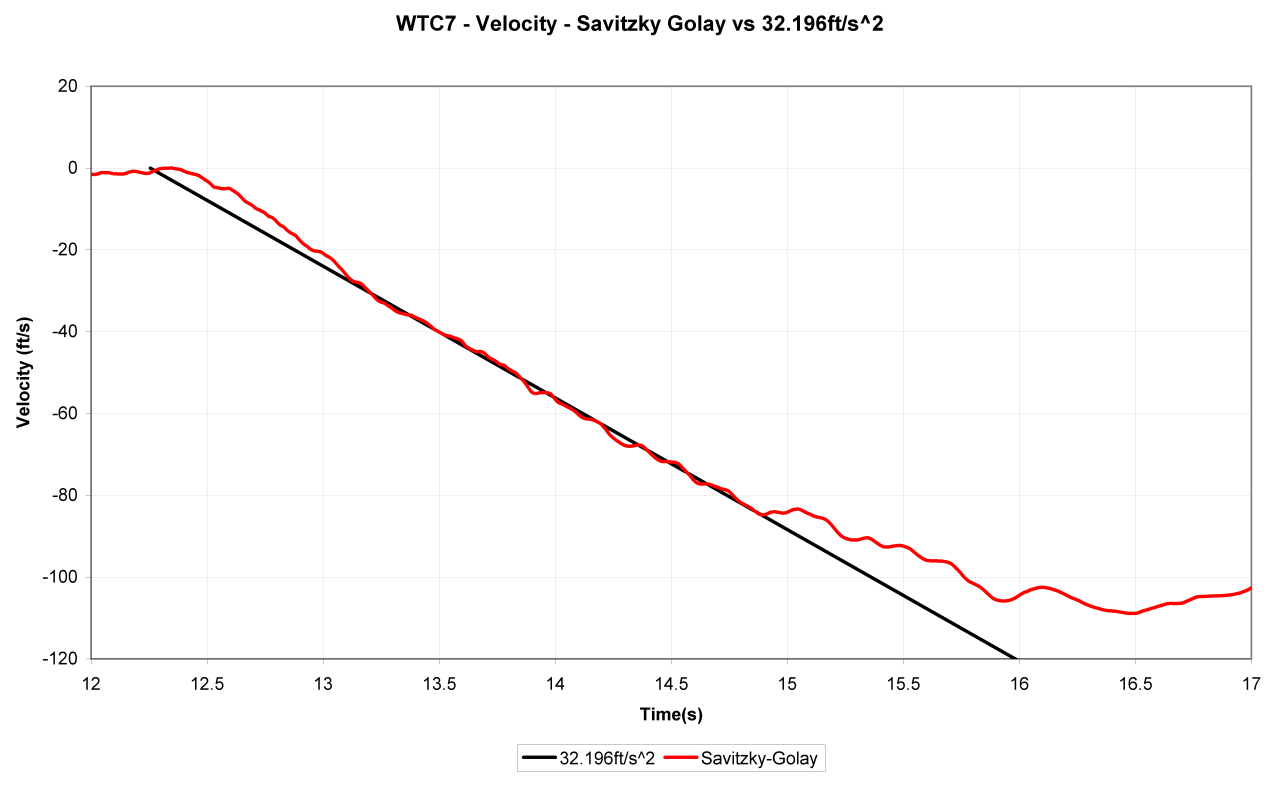
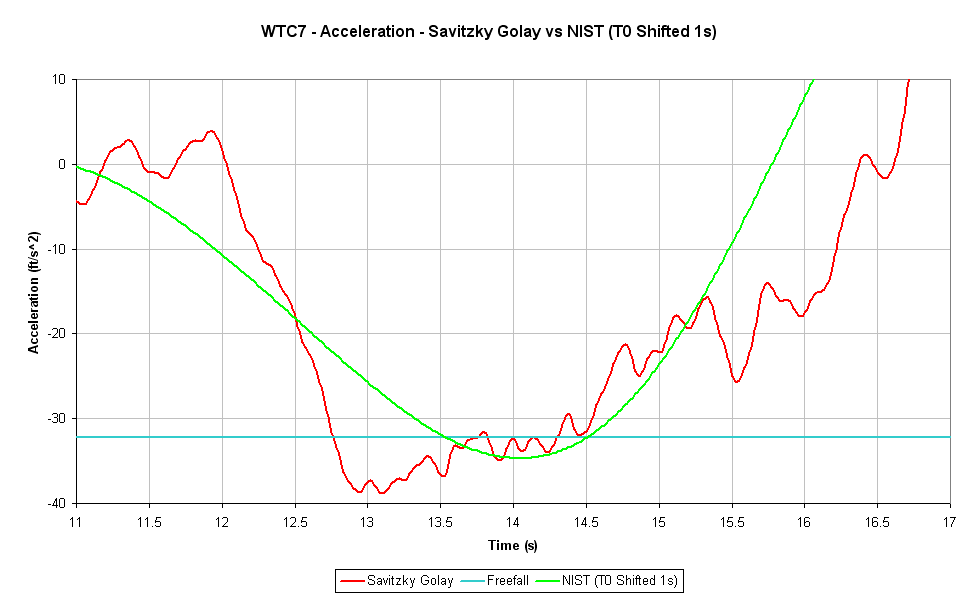
 >0 ... any "margin of error". As I said before...


 ~FFA. How willfully and blatantly stubborn can you be ?