On SMG's
In general, SMGs are either stop-gap or after thought weapons.
In WWII, the SMG was a real stop-gap, especially for the British and the Soviets. You can turn out (on average) three SMG's for every main battle rifle manufactured.
The M3 "Grease Gun" was a simple sheet-metal pressing welded together to form a "tube" receiver like a STen - the STen actually used a DOM (Drawn over Mandrel) tube for it's receiver.
The problem with retaining the TSMG magazine for the M3 series of SMG was the receiver diameter and the bolt diameter - in order to retain that double stack mag the design would need to be heavier, with a heavier recoil spring to control the heavier bolt.
The double stack-to-single feed mag solved that design problem.
In the later Sterling versions, the mag was changed to a proper double stack design, one of the best out there, on a par with the Beretta (later Uzi) design and the HK versions. Colt borrowed the doublestack mag of the Beretta for their M16/9mm with a modification to use the M16 type magazine release.
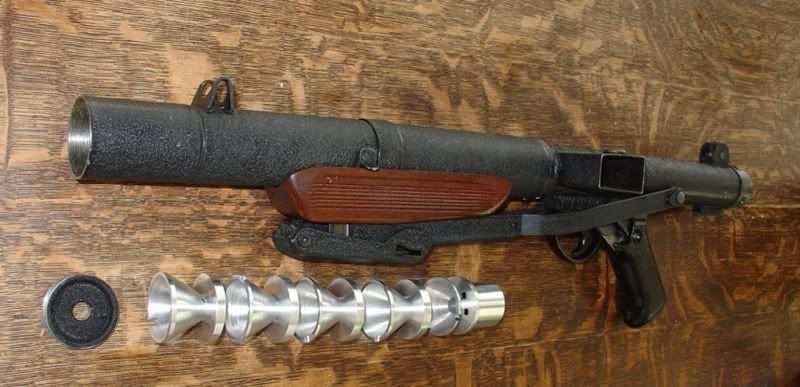
Here in the U.S., there are only so many legally registered and transferable SMG's to go around, so you have to go to some lengths to get foreign made examples of WWII and later SMG's - Here's a good example:
This is a "STenling" built as a suppressed example - a registered STen tube receiver was modified to accept the Sterling fire control parts and the Sterling magazine housing along with the folding stock mount to create a fairly accurate example of the Sterling L34A1.
Very quiet, and 100% reliable.