
ctamblyn
Data Ghost

It's a "delay" in the sense that light takes longer to travel the path than it would if the star were not there.
And, that delay is only evident in a non-local measurement (propagation of light between distant points).
No it doesn't. We know it doesn't because an optical clock in that falling laboratory ticks slower and slower the lower it gets. Our parallel-mirror light clock will tick slower and slower too. All electromagnetic phenomena will be similarly affected, included that within the bodies of the observers within that laboratory.
Be careful to note what what I'm actually referring to here. I'm talking about a measurement made by a physicist in a freely falling laboratory. A local measurement, in contrast to the the non-local measurement I mentioned earlier in my post. Such physicists will always measure 299792458 m/s, and that is the value we denote by "c". It is that value which appears in Maxwell's equations (in vacuo) and the formulae for Z0 and c in terms of μ0 and ε0.
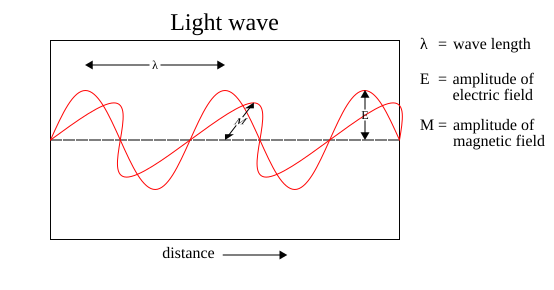
It obviously isn't constant, and this is even more obvious when one understands the unification of electric and magnetic fields into the electromagnetic field.
Electromagetism, at the classical level, is described by Maxwell's equations. And in that context, c and μ0 are just constants resulting from the particular choice of units. So, whatever you're talking about here is not classical electromagnetism.
But that's one for another day. Meanwhile: I don't need to specify how it changes from place to place, all I need to do is demonstrate that it does.
If you assume that c and μ0 are varying through space, then it is quite clearly possible that they could vary in such a way that Z0 remains constant. It is also possible that c and Z0 vary while μ0 remains constant, and so on.
So, you do need to specify how it changes from place to place, otherwise there is no way to know whether your claim was true.
You mean like in gravitational lensing? You might like to read up on that, ct. Here, try this little article.
I'm familiar enough with gravitational lensing for present purposes. As it is perfectly well accomodated by the standard, modern understanding of GR in which c, Z0 and μ0 are a constants, you cannot appeal to the existence of lensing to prove the superiority of your model.
Or take a look at Inhomogeneous Vacuum: An Alternative Interpretation of Curved Spacetime. Here's the abstract:
"The strong similarities between the light propagation in a curved spacetime and that in a medium with graded refractive index are found. It is pointed out that a curved spacetime is equivalent to an inhomogeneous vacuum for light propagation. The corresponding graded refractive index of the vacuum in a static spherically symmetrical gravitational field is derived. This result provides a simple and convenient way to analyse the gravitational lensing in astrophysics".
They do not demonstrate equivalence, merely close similarity in certain limited circumstances (though they reproduce some correct results for a static gravitational field). You are claiming complete equivalence.
You should read this short page for more information on that general "refractive index" approach (and why it falls down): http://mathpages.com/rr/s8-04/8-04.htm
Again, a model in which only a single (ETA: scalar) quantity (in their case, a refractive index they denote by "n") is varying from point to point cannot logically be equivalent to GR in all its gory detail.
Hasn't anybody else here rumbled this blind-em-with-maths rewriting of history? This is what Einstein actually said:
(...snip...)
What Einstein believed from 1911-1915 doesn't matter for this discussion. What we have in front of us is (a) the modern understanding of GR, and (b) your claim that GR's predictions can be reproduced by assuming that c and/or Z0 vary from point to point.
Noted. He's mentioned in the Inhomogeneous Vacuum paper above. Which doubtless some here will say has not been peer-reviewed, or will decry in some other fashion.
It's worth noting that Puthoff's model is not a reinterpretation of GR. It is a different model with different predictions. What we're discussing here is, purportedly at least, classical GR.
I'm not giving you any detail. But I will give you this:
http://outreach.atnf.csiro.au/education/senior/cosmicengine/images/cosmoimg/pantipannihilation2.gif
I'm familar with annihilation and pair production. They are well understood within the framework of the Standard Model. You do not need any understanding of particle physics in order to understand GR (i.e. standard GR).
So, if FGR (as I see it has been christened) depends on the nature of particles to ensure that all clocks are affected exactly equally by gravity, then it cannot be the same thing as standard GR.
Last edited:


 )
)


