Larry Silverstein explaining what he meant by 'pull it'

  • At 5:23 pm WTC 7 sinks into its footprint in the exact manner of an imploded building.

7footprintNot.jpg


Oh, yeah, really fell into it's own footprint, eh skipper?
 
[qimg]http://i56.photobucket.com/albums/g171/boloboffin2/911/7footprintNot.jpg[/qimg]

Oh, yeah, really fell into it's own footprint, eh skipper?


Yup. It really, really did.

WTC_7_aerial_photo2.jpg
 
Last edited:
And yet not one of those examples mentions "pull it".

.

:eek:, almost too funny to be true; truthers say the darndest things.

The truth is we can argue about what silverstein meant forever because there's no way to prove what he meant; even though it's obvious what he meant (pulling firefighters). Maybe by "it" he was referring to the grey aliens that may have been in New York on 9/11, who knows, I can't prove it either way.


All I can say is it doesn't make sense that "it" refers to a demolition or aliens because there weren't demolitions or aliens on 9/11. Oh and it would require the firefighters were in on it, it doesn't make sense why he would confess on TV, and the normal interpretation fits with the events (since there was infact an evacuation), firefighters use the term "pull" to describe the evacuation, etc. etc....

Sadly for truthers, the confession they desperately need was not very explicit or direct, we can't seem to get him to confess again (he changed his mind I guess, decided not to come clean regarding mass murder), so "pull it" cannot be used as evidence for the controlled demolition fantasy.
 
Last edited:
And yet not one of those examples mentions "pull it".

The examples you supply can be used in a number of contexts, not just firefighting. Eg: "we pulled the ad", "she pulled her support", "we pulled out at dawn". But to "pull it" in a context where "it" can only mean either the building OR the firefighting effort (which was not even in the building) more likely, using Occam's Razor, means the building. They pulled the building and then they watched it come down.

It's not difficult. It's the questions that it raises that are difficult. Let's move on to those for once.

Stop dancing around the edges here. Can you put explosives at the scene or not?
 
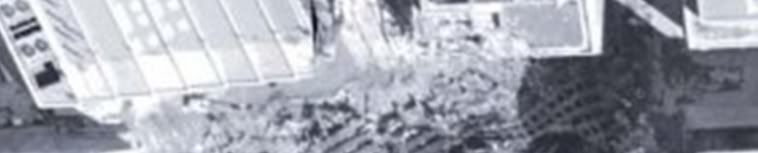
I've taken the liberty of highlighting WTC 7's footprint so Brass isn't confused anymore.

[qimg]http://i1233.photobucket.com/albums/ff387/AJM8125/WTC_7_aerial_photo2.jpg[/qimg]

Thanks. That should clarify it.
 
They were talking about the dangers of it falling that day. If they weren't worried that it was going to fall just yet, Silverstein wouldn't be phoning his insurers on 9/11, would he?

Glad to see ergo is still parading around hearsay. Oh well he has yet to supply a source of pull-it being explosives. I guess that's the only other straw to grasp at.

Indeed...
But to "pull it" in a context where "it" can only mean either the building OR the firefighting effort (which was not even in the building) more likely, using Occam's Razor, means the building. They pulled the building and then they watched it come down.

It's not difficult. It's the questions that it raises that are difficult. Let's move on to those for once.

Of course Ergo continues to lie. Lying in that "pull it" has never meant to demo building via explosives, the fact he has repeatedly ran away from. And also lying in the fact that he knows that FF's were in the area and have directly said they were pulled from the area.

Why all the lies Ergo?

Has pull ever meant to use explosives? No.
Were there FF's in danger of WTC7's collapse? Yes.

Please stop lying...its pathetic.
 
Last edited:
But to "pull it" in a context where "it" can only mean either the building OR the firefighting effort (which was not even in the building)

Why do you people keep saying that?! They didnt need to be in the building to be in danger

Thanks for admitting it can refer to the firefighting rescue efforts.

more likely, using Occam's Razor, means the building.

You give no reason for this.

Occam's Razor demands that you have to be wrong, because you require so many absurdities like Silverstein just admitting he blew up his own building like some kind of insane moron and to top it off no one else notices such an "obvious" admission. Thats just one absurdity.

And yet not one of those examples mentions "pull it".

I didnt say someone said "pull it" I said they used the word "pull".

So "pull" is used to refer to firefighting, like I said. But you cannot show that the single word "pull" is used as a term to refer to explosive demolition much less "pull it".

So...

  • "Pull" is used to refer to firefighting.
  • "pull it" you accept can refer to the firefighting/rescue efforts
  • You have not shown that "pull" is used to refer to explosive demolition

And you still refuse to explain why he would casually admit on TV that he blew up his own building and for no one to notice!
 
Last edited:
That's hiLARious, DGM! Where is that floor-slapping tiger gif when you need it?

He must have got ALL his facts wrong, then! Right? And FOX news NEVER bothered to correct it! Nor did Silverstein ever demand a correction! Nor have any of the other NYPD officers, Con-Edison workers, firefighters or other journalists he mentions attempted to correct this obvious false claim in the two years since it appeared in FOX news! Wow!

Why don't you write to FOX and let them know?

Well because it was not actually a FOX news story. It was a FOX.com opinion piece. They would tell me (rightfully so) to contact Mr Shapiro. Besides, other than Silverstein, he does not mention anyone by name.

So, How does this fit your "theory"? Did the insurance company say no, so they (Silverstein and the FDNY) had to keep it a secret? Did they say, OK and they're in on it too?

I'd love to see you rationalize this.
 
Thanks. That should clarify it.

It should also explain quite nicely how damage managed to get to WTC 7 even though WTC 6 was "in the way".

Remember that post from another thread? You laughing about how it was impossible to damage WTC 7 because WTC "protected" it?


Another self-debunking by ergo. Well done!
 
That's hiLARious, DGM! Where is that floor-slapping tiger gif when you need it?

He must have got ALL his facts wrong, then! Right? And FOX news NEVER bothered to correct it! Nor did Silverstein ever demand a correction! Nor have any of the other NYPD officers, Con-Edison workers, firefighters or other journalists he mentions attempted to correct this obvious false claim in the two years since it appeared in FOX news! Wow!

Why don't you write to FOX and let them know?

You keep ignoring the fact that you cannot use any part of this article you support you.

You require it to be wrong about everything in order to fit your timeline as I've already pointed out.
 
Last edited:
ergo, why does "IT" only mean the firefighting effort if firefighters were in the building to you? That seems to be a pretty artificial definition, and one done on purpose. Rational people, of course, realize that the firefighting effort encompassed more than just some firefighters in the building.

But, that pretty much explains why you don't know it, doesn't it?
 
Has pull ever meant to use explosives? No.

Uh, yes. When Swing Dangler, among the best researchers I've seen here on jref, used to post here, he posted this list which clearly shows that "pull" is used to mean bring down with explosives. You've probably seen the list, but here it is again.


1. "In a flurry of flashes and booms, the Kingdome... rumbled to the ground Sunday in 16.8 spectacular seconds.
More than 4,450 pounds of dynamite, unleashed over a span of tiny delays, blitzed one of the world's largest concrete domes -- one day shy of its 24th birthday. "The roof did its job, the gravity engine worked. It provided the energy we needed to pull the columns inward," said Mark Loizeaux, president of Controlled Demolition Inc., the Maryland-based company whose handiwork brought down the Dome.
"The demolition went perfectly," said Tom Gerlach of Turner Construction Co., which is building a new football and soccer stadium on the site. "The relief is palpable." -Seattle Post-Intelligencer (03/27/02)

2. "In the demolition industry, a blaster is usually trying to pull a structure away from adjacent exposures and towards an area large enough to contain the debris." -ImplosionWorld.com

3. "The University of Louisiana at Monroe, Anderson Excavation, and Controlled Demolition, Inc. (CDI Implosion Subcontractor) of Phoenix, Maryland announced today that Olin Hall on the ULM Campus will be imploded on Saturday September 25 at 10 a.m.
Implosion is a process where a small amount of explosives is used to disrupt selected supports in a building. This allows gravity to pull the structure down in a controlled manner. CDI has used this implosion method thousands of times around the world during the past 52 years to remove unwanted structures. CDI's safety record is unparalleled." -University of Louisiana at Monroe (09/20/04)

4.Jack [Loizeaux] brought a basic knowledge of construction, engineering, and physics to his new science of implosion. More important, though, he brought the fascination and conviction of a true believer. Long before anyone else, he had faith in the power of explosives to help gravity do what it wants to do anyway: pull things down." -University of Georgia

5.On Sunday, June 10, 2001, the City of Des Moines subcontracted the implosion of the Younkers Warehouse Building to Controlled Demolition Incorporated (CDI) from Des Moines and Metro Wrecking and Excavating, Inc. from Phoenix, Maryland. CDI drilled over 500 holes in the supporting columns in the building and placed approximately 250 pounds of explosives. The explosives were detonated with a delay pattern that started in the southeast corner of the building and proceeded toward the northwest corner in a matter of seconds. This delay sequence allowed the explosive charges to detonate fractions of seconds apart; reducing the noise and vibrations to approximately 25 percent of the allowable levels before damage would occur to surrounding buildings. This delay allowed CDI to control the direction that the building would fall and resulted in the illusion that the building melted. CDI planned the implosion to pull the building to the southeast and away from the intersection of SW 9th and Mulberry Streets. The implosion was very successful. -Front Line/Des Moines, IA

6."Stacey Loizeaux, twenty-six years old, has worked for Controlled Demolition, an international explosives engineering firm, since the age of fifteen. She learned the fine art of demolition from her father, Mark Loizeaux, and her uncle, Doug Loizeaux—president and vice-president of the company.
NOVA: A common misconception is that you blow buildings up. That's not really the case, is it?
Stacy Loizeaux: No. The term "implosion" was coined by my grandmother back in, I guess, the '60s. It's a more descriptive way to explain what we do than "explosion." There are a series of small explosions, but the building itself isn't erupting outward. It's actually being pulled in on top of itself. What we're really doing is removing specific support columns within the structure and then cajoling the building in one direction or another, or straight down.
NOVA: I understand that you try to use the smallest amount of explosives possible...Can you explain why?
SL: Well, the explosives are really just the catalyst. Largely what we use is gravity. And we're dealing with Class A explosives that are embedded into concrete—and that concrete flies. So, let's say your explosive is 17,000 feet per second—you've got a piece of concrete moving at that speed when you remove it from the structure.
NOVA: Can you describe the prep work that goes into dropping a building.
SL: Well, it depends on the structure, obviously. We've had chimneys prepared in half a day and we've had buildings that take three months. Generally we don't do the preparation work. We are usually an implosion subcontractor, meaning that there is a main demolition contractor on site, who's been contracted by the property owner or the developer, and they then subcontract the implosion to us.
NOVA: Why do the explosive charges go off at intervals rather than all at once?
SL: Well, if I kick both your legs out from under you, you're going to fall right on your butt. If I kick one leg out from under you, you'll fall left or right. So the way we control the failure of the building is by using the delays. And, again, that varies structure to structure and depending on where we want the building to go. A lot of people, when they see a building implosion, expect it to go into its own basement, which is not always what the contractor wants. Sometimes the contractor wants to lay the building out like a tree. And, sometime, we need to bring down buildings that are actually touching other buildings.
NOVA: How do you do that?
SL: Well, you just pull it away, you peel it off. If you have room in the opposite direction, you just let the building sort of melt down in that direction and it will pull itself completely away from the building. It can be done.
NOVA: What do you look for in an explosive?
SL: Velocity. You have two different types of explosives. You have low order and high order. A low order explosive is like what they used when they bombed the Oklahoma City building—that's ANFO, ammonium nitrate and fuel oil. It's a very slow, heaving explosion. It tends to push more than it does shatter. The explosive we look for is a shattering explosive. What we want to do is instantaneously remove the integrity of the columns or whatever we're working on. That's what we look for in nitroglycerin or NG-based dynamite. With a steel building, we use something called a linear shaped charge. It's the same explosive they use to sever the fuel tank off the Space Shuttle, when they launch.
NOVA: I understand that Controlled Demolition was hired to bring down the remains of the Oklahoma City Federal Building. Were you out there for that?
SL: My father and my uncle went out.
NOVA: Do you get a thrill watching a building fall?
SL: Oh sure. I mean you really don't ever lose it. Your perspective changes. When I first started traveling with my Dad at fifteen, sixteen years old, I used to be awestruck. But you sort of go from that awestruck feeling to where you understand how the structure is coming down and you're watching for certain things—counting the delays or waiting for a part of the building to kick out or waiting for it to pull forward. So it does change, but it's always a rush." -NOVA/PBS (1997)
 
Once again Red, this is the word pull to refer to LITERAL act of what they are talking about.

Truthers claim "pull" and "pull it" is a demolition term, or slang, to refer to explosive demolition.

Now can you show that it is a demolition term or not?

The way it is used in America Rebuilds - "we're getting ready to pull Building 6" - would be a good example IF it also wasnt refering to literally pulling it down with cables and so was also not a demolition term.

Do you accept that there was reason to pull the firefighting and search and rescue efforts away from WTC7, even if there was no one inside it, yet?
 
Last edited:
Once again Red, this is the word pull to refer to LITERAL act of what they are talking about.

Truthers claim "pull" and "pull it" is a demolition term, or slang, to refer to explosive demolition.

Now can you show that it is a demolition term or not?

The way it is used in America Rebuilds - "we're getting ready to pull Building 6" - would be a good example, if it also wasnt refering to literally pulling it down with cables and so was also ot a demolition term.

Wrong EDX, these examples have nothing to do with pulling the damaged facade of a building with cables, as was done with 6. Re-read and try again.
 
Wrong EDX, these examples have nothing to do with pulling the damaged facade of a building with cables, as was done with 6. Re-read and try again.

I never said that your quotes have to do with cables, why lie about what I said?
Read the quotes in context.

For example...

"It provided the energy we needed to pull the columns inward,"

Literal description of columns being pulling inward.


"a blaster is usually trying to pull a structure away from adjacent exposures and towards an area large enough to contain the debris"

Literal description of pulling parts of the structure away from others.

" This allows gravity to pull the structure down in a controlled manner. "

Literal description of gravity "pulling" the structure down.

It's actually being pulled in on top of itself.

Literal description of the building being pulled in on top of itself.

And my one...

"we're getting ready to pull Building 6. It's not every day you try to pull down a eight storey building with cables"

Literal description of pulling the building down with cables.

None of these use the word pull as if its a "demolition term", they are all using it like its a literal description of whatever they happen to be talking about.
 
Last edited:

Back
Top Bottom