• Security incident: ISF was recently accessed by intruders. Please change your password, and change it anywhere else you used it. Read more

Continuation Part 4: Discussion of the Amanda Knox/Raffaele Sollecito case

Status
Not open for further replies.
Was just reading this quote from Mignini, the day after Hellmann's acquittal of Knox and Sollecito. Seeing as Hellmann's motivation report came out on Dec. 16, I wonder if he will soon file the appeal. I wonder also if he is still as fired-up in his stance, or if time has diminished this aspect.

Mignini seems not to understand Zanetti's hyperbolic doubt, to clear the way for a fresh perspective. I find his view of Zanetti's words strangely naive. As though Hellmann and Zanetti were obliged to use the prosecution as their jumping off point. Not exactly the foundation for an appeal.

In any case , they have to the end of January, but am interested to know if there is any news yet in this regard. I feel with Italy's horrendous economic problems the reopening of this seems stale and dated. Perhaps not, but that is the general feeling I get.


Mignini is not the one who decides whether the prosecution will appeal to the Supreme Court. Nor, for that matter, is Costagliola - who, lest we forget, was actually the lead prosecutor for the appeal trial! The only person with the authority to authorise and issue a Supreme Court appeal for the prosecution in this case is the Attorney General of Umbria, Giovanni Galati.

Therefore Mignini is shooting his mouth off (as usual) in the quotes within your linked article. He is in absolutely no position to be making declarative statements about a Supreme Court appeal, and nor is Comodi.

By the way, I hope everyone had a peaceful and restful Christmas or holiday season!
 
Was just reading this quote from Mignini, the day after Hellmann's acquittal of Knox and Sollecito. Seeing as Hellmann's motivation report came out on Dec. 16, I wonder if he will soon file the appeal. I wonder also if he is still as fired-up in his stance, or if time has diminished this aspect.

Mignini seems not to understand Zanetti's hyperbolic doubt, to clear the way for a fresh perspective. I find his view of Zanetti's words strangely naive. As though Hellmann and Zanetti were obliged to use the prosecution as their jumping off point. Not exactly the foundation for an appeal.

In any case , they have to the end of January, but am interested to know if there is any news yet in this regard. I feel with Italy's horrendous economic problems the reopening of this seems stale and dated. Perhaps not, but that is the general feeling I get.


Mignini said:
'The court found her guilty of slander - so why find her guilty of slander? Why did she commit the slander?
'She said that to save herself from the murder charge. She named Patrick Lumumba to save herself and Sollecito simply followed her. Wherever she goes, he goes.'

I see he's still pitching his Slaveboy Raffaele character. I don't think he realizes he's not going to be scripting the movie. Judge Zanetti's panning of his pornographic fantasy with a scant and contrived plotline seems to have irked him, perhaps he needs to learn how to take constructive criticism? :p

He also seems surprised the independent experts were hostile to the prosecution, in his world it must be because they talked to the defense! They must have put them under a spell! He seems to forget that Stefanoni refused and balked at every turn to hide her data, requiring a judge intervention and an entire extra month to their assignment. The fact her voodoo DNA tricks posing as 'science' didn't stand scrutiny has little to do with the fact they talked to the defense, all he has to do is read the report.

I wonder if he ever did?
 
Just read Yummi's translation of the Hellmann section on TOD and was informed for the first time that Monacchia, Dramis, and Quintavalle were all discovered a year after the murder by the same trainee journalist.

Wow, just wow.

Hellman's analysis seems totally sound but I'm curious why no mention of the stomach contents is there.

He correctly assembles the hard evidence of phone records and destroys the Massei assumption that Meredith went home to study and early sleep but instead played with her phone for over an hour and didn't try her mother again.

He has her dying before 10:15 at the latest, which is consistent with Rudy's time and the stomach contents.

He does a nice job of undermining Nara et al. without being nasty.


I think that the fundamentally important thing to remember in all of this is that Hellmann's court was solely concerned with examining the guilt or non-guilt of Knox and Sollecito in regard to the charges they faced. Nothing more or less than that.

So, with that in mind, the only really important thing about the ToD in relation to the guilt or non-guilt of Knox/Sollecito is that all the evidence pointed to it being far earlier than the 11.30-11.40pm put forward by the prosecution and agreed to by Massei's court. That's important because it therefore rules out Capezzali's (and Monacchia's) "earwitness" testimony as unreliable and irrelevant. And that in turn is important because this testimony - especially Capezzali's - pointed clearly towards a multiple-attacker scenario, and it jibed with Curatolo's "version of events".

By concluding - correctly - that the ToD must have been far earlier (before 10.15pm), Hellmann's court automatically strikes out a chunk of prosecution argument pointing towards Knox/Sollecito. As we've noted before, even if Hellmann had determined that the ToD was 9.30pm, this wouldn't have been exculpatory for Knox/Sollecito, since they don't have a cast-iron alibi preventing them from being involved at that time either. But that's not the point at all. There has to be positive evidence pointing towards guilt for it to be a contributory factor to an ultimate guilty verdict. An earlier ToD removes a significant chunk of what was taken by Massei's court to be positive probative evidence against Knox/Sollecito. That's the important thing.

And on a wider issue related to this point, I think it's also extremely important to understand that Hellmann's court (and, for that matter, Massei's court before it) was tasked with determining Knox's/Sollecito's guilt beyond a reasonable doubt. Therefore, it had to consider the evidence - collectively and individually - and establish whether it all added up to guilt. An important rule of jurisprudence is that if two explanations for a given piece of evidence are reasonable - one indicating guilt and the other not - then the benefit of the doubt must always be on the side of the defendant. In this case, every single piece of evidence had a reasonable alternative explanation that was not compatible with Knox's/Sollecito's guilt. In addition, the case looked at as a whole also was entirely consistent with a scenario that was incompatible with Knox's/Sollecito's participation.

And this is why Hellmann is so scathing (and correctly so) about the "reasoning" of Massei's court. As he points out, it is fundamentally unjust and legally improper to use words such as "probably" when linking evidence to a defendant. Massei was in effect interpreting almost every piece of ambiguous evidence in an unfavourable light (the prosecution light, of course) to the two defendants. That's totally wrong and unlawful.

By contrast, it's perfectly proper and reasonable for Hellmann to speculate on alternative non-guilt explanations for various pieces of evidence. It's entirely proper for him to use words such as "probable" or even "possible" in this regard - even though some pro-guilt commentators seem unable or unwilling to understand why this should be the case. The reason is this: the burden of proof is asymmetrical. I don't have the inclination to explain again why this asymmetry is proper - both ethically and legally - and why it therefore allows Hellmann to be speculative on alternative theories while at the same time not allowing Massei to be speculative on theories pointing to guilt. Hopefully most rational and intelligent people will easily be able to see it for themselves anyhow.
 
I think that the fundamentally important thing to remember in all of this is that Hellmann's court was solely concerned with examining the guilt or non-guilt of Knox and Sollecito in regard to the charges they faced. Nothing more or less than that.

...........................

An important rule of jurisprudence is that if two explanations for a given piece of evidence are reasonable - one indicating guilt and the other not - then the benefit of the doubt must always be on the side of the defendant. In this case, every single piece of evidence had a reasonable alternative explanation that was not compatible with Knox's/Sollecito's guilt. In addition, the case looked at as a whole also was entirely consistent with a scenario that was incompatible with Knox's/Sollecito's participation.

..........................

It's entirely proper for (Hellmann) him to use words such as "probable" or even "possible" in this regard - even though some pro-guilt commentators seem unable or unwilling to understand why this should be the case. The reason is this: the burden of proof is asymmetrical. I don't have the inclination to explain again why this asymmetry is proper - both ethically and legally - and why it therefore allows Hellmann to be speculative on alternative theories while at the same time not allowing Massei to be speculative on theories pointing to guilt. Hopefully most rational and intelligent people will easily be able to see it for themselves anyhow.
This is exactly right. Apologies in advance for agreeing with you, because it will be annoting to some others.

This is why Massei's court had no business at all convicting Sollectio and Knox on those four non-calunnia charges. In fact, of the 39 "probablies" that Massei pondered, not any of them are "probably" in the direction of guilt.

Most are simply evidentiary unknowns - like the alleged transport of the knife from Sollecito's place. It's a surmise. But when an equally probable explanation suggests that it is bollocks that a knife was transported, then the court has to decide in favour of the accused.

I think all this is why the PGP are melting down at Hellmann's Court's decision. they are showing a massive misuderstanding of the elements of law.

First there was only the shakiest of evidence, then on review there was no evidence, then there was no law on their side, now there is only the hatred. I truly pity them.
 
Yummi is Maresca? Is that true?

No. Yummi has shown himself to be misinformed about a number of factual points. For example, his understanding of the autopsy photos is based on comments in Micheli's report that contradict what the photos actually show. Maresca would have those photos, and would know better than to raise this point with someone else who also has them.

Also, Candace Dempsey posted the text from a letter Stefanoni delivered to the court, but with a typo that changed the meaning of the letter significantly. Yummi formed an argument around this error, until I gave him the proper text, which Maresca would certainly have had.
 
Probably. On lesser things, like a traffic ticket I once tried to talk the officer out of, I was unsiccessfull. What to me was brilliant logic to the cop was proof of something I did not think, and to this day do not think, I was actually saying. These things notoriously go off the rails - best intentions apparently don't count.

Bill, hi. I have migrated here. I don't want to pick on you or anyone else, but just to observe that discussion of the legal aspect of the calunnia conviction cannot really get very far without having:

1 the definition of the offence (one can draw inferences about what it might be from Hellman but that is not quite the same thing as the statutory definition, an indispensable element in understanding the issue), and

2 information about which general legal defences are available under Italian law (e.g. entrapment, duress)

We would still need to know, once armed with this info, some inside dope on defence strategy to explain why neither duress nor entrapment were run (if available). Fear of prejudice on the main charge would be a likely reason for going soft on the cops.

The defence was only that AK did not form the necessary intent, which is a general criminal intent (meaning the crime is not one of specific intent) and Hellman held that she did.

Morally, there is nothing at all to discuss, both conviction and sentence being manifestly wrong.
 
Halides1,

"The problem with the clasp to which you allude, and one of the problems with the knife (low template DNA without the usual precautions) are reasons why people doing forensic police work should have an advanced degree in science. Good scientific training includes learning how to challenge your own beliefs with well designed experiments and learning how to do good controls. Ms. Stefanoni did not have an advanced degree, and I think that some of the mistakes she and her team made would not have happened if someone who considered himself or herself a scientist first and foremost were leading the forensic investigation."

Agreed. Clearly they were interested in finding something to link Amanda or Raffaele to the scene. Whether it was going well beyond the limits of LCN testing or using a piece of evidence that was clearly mishandled, there seemed to be no concern for finding the truth, only finding what they set out to find, and once they 'found' it, they made no effort to confirm their findings. Worse still, the way the data was interpreted and reporting on was seriously flawed and bias. Just amazing the pro-guilt crowd refuses to acknowledge this.

London John,

"And this is why Hellmann is so scathing (and correctly so) about the "reasoning" of Massei's court. As he points out, it is fundamentally unjust and legally improper to use words such as "probably" when linking evidence to a defendant. Massei was in effect interpreting almost every piece of ambiguous evidence in an unfavourable light (the prosecution light, of course) to the two defendants. That's totally wrong and unlawful."

"By contrast, it's perfectly proper and reasonable for Hellmann to speculate on alternative non-guilt explanations for various pieces of evidence. It's entirely proper for him to use words such as "probable" or even "possible" in this regard - even though some pro-guilt commentators seem unable or unwilling to understand why this should be the case. The reason is this: the burden of proof is asymmetrical."

This should be obvious, but I think the basic concept is missed by many. The burder of proof is on the prosecution, not the defense. Speculation of how things might have happened, which is not dis-proven beyond a reasonable doubt is perfectly acceptable for the defense. However, this same approach would be unacceptable for the prosecution. While there have been convictions based entirely on circumstantial evidence, I don't think it's an acceptable approach when there is such strong evidence of a guilty individual (Guede) and absolutely no motive or logic to tie the defendants to the crime.
 
Probably. On lesser things, like a traffic ticket I once tried to talk the officer out of, I was unsiccessfull. What to me was brilliant logic to the cop was proof of something I did not think, and to this day do not think, I was actually saying. These things notoriously go off the rails - best intentions apparently don't count.

I understand what you are saying. I just don't think it applies here, because what Amanda was charged (and convicted) for is a very serious crime in Italy, not a traffic ticket, or even a minor criminal offense. So for her to be convicted of Calunnia when she was so clearly coerced, no matter what the sentence, is wrong in my view. It is more the equivalent of convicting you of armed robbery, but then letting you go with just a fine and probation.
 
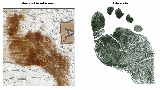
I may have something way off but the big toe prints being displayed elsewhere Rudy's measures 1 1/2 cm while Raffaele's measures 2 cm but the reference prints have Rudy at 26mm and Raf's at 30mm. The P** ration is .75 while the reported ration is .86.

It seems to me that the analysts over there are using a Rudy toe that is too small or a Raffaele toe that is too big. If Rudy's were made a little bigger it looks even more like a total match of his foot.

There is no way that the mat marks match Raffaele's foot but with enough focus they can make water run uphill.

And why are they so jealous of successful writers?
 
Bill, hi. I have migrated here. I don't want to pick on you or anyone else, but just to observe that discussion of the legal aspect of the calunnia conviction cannot really get very far without having:
I guess it will do me no good claiming to be another Bill Williams here.

1 the definition of the offence (one can draw inferences about what it might be from Hellman but that is not quite the same thing as the statutory definition, an indispensable element in understanding the issue), and

2 information about which general legal defences are available under Italian law (e.g. entrapment, duress)
Far me it for me to revel in my ignorance, but me not being a lawyer, even if they were in front of me I probably would be no wiser than the summaries that others provide on these points. I am like most jurors off the street who are pressed into service for no other reason than that they are John Q. Public and the accused needs a jury of peers, not experts.

We would still need to know, once armed with this info, some inside dope on defence strategy to explain why neither duress nor entrapment were run (if available). Fear of prejudice on the main charge would be a likely reason for going soft on the cops.
Could be. Most certainly the cops were not impressed with claims that they'd smacked Knox in the head. Rumour has it that a differing charge on that is pending....

The defence was only that AK did not form the necessary intent, which is a general criminal intent (meaning the crime is not one of specific intent) and Hellman held that she did.
Hellmann seems to imply that the "intent" is surrounding wanting to be free of the rather unpleasant circumstances of interrogation, illegal or otherwise. What was deemed illegal for the purposes of the larger murder charges, was deemed admissible for the calunnia. Once again, I am not lawyer, nor am I an Italian law maker.

Morally, there is nothing at all to discuss, both conviction and sentence being manifestly wrong.
My mileage varies on the former. But I am glad that this is not something to discuss, because one's reasons for asserting both for and against belong to why in my country they sometimes do round up jurors off the street. Here, if they can get 12 whose mileage does not vary, then there's a conviction. All it takes is one dissenter to hang the bunch. Here, the lone official called "The Hanging Judge" got the nickname not because of a prejudice against the accused, but because he once threatened to hang the whole jury one by one for an illogical verdict.
 
I understand what you are saying. I just don't think it applies here, because what Amanda was charged (and convicted) for is a very serious crime in Italy, not a traffic ticket, or even a minor criminal offense. So for her to be convicted of Calunnia when she was so clearly coerced, no matter what the sentence, is wrong in my view. It is more the equivalent of convicting you of armed robbery, but then letting you go with just a fine and probation.
Which was an option in the Patty Hearst case - Hearst had been kidnapped and held in a closet until Stockholm Syndrome could set in. Yet she was convicted to a lengthy prison term for armed robbery, and it took a presidential pardon to spring her.
 
I may have something way off but the big toe prints being displayed elsewhere Rudy's measures 1 1/2 cm while Raffaele's measures 2 cm but the reference prints have Rudy at 26mm and Raf's at 30mm. The P** ration is .75 while the reported ration is .86.

It seems to me that the analysts over there are using a Rudy toe that is too small or a Raffaele toe that is too big. If Rudy's were made a little bigger it looks even more like a total match of his foot.

There is no way that the mat marks match Raffaele's foot but with enough focus they can make water run uphill.

The dimensions of the bathmat print are slightly smaller than the corresponding dimensions of either reference print (Guede or Sollecito). Very likely the bathmat print was made with a lighter step - but that is ultimately a guess, because this is not reliable evidence, and no amount of labor can make it reliable. The PMF discussion is junk science run amok. They start with a conclusion, back in their analysis, invoke whatever sophistry is needed to overcome the obvious mis-match of the large toe, and then reassure one another that they are right.

If they had the evidence they crave so deliriously, they wouldn't have to waste time with this garbage. The exercise reminds me of the religious zealots who want to "prove" the Shroud of Turin is the actual cloth used to wrap the body of Christ, and its markings are none other than artwork rendered by God Himself. They can convince themselves. I don't think they are convincing the larger world.
 

Thanks for the link.

Nobody I've shown any of the footprints to has thought that it matched Raffaele. Even someone at P** had the nerve to say that it always looks like Rudy's foot if either.

Why the PGP are so concerned about this is interesting. Clearly, no one would ever be convicted of a crime because of this bathmat print on its own. They are so concerned because they have so little to tie Raffaele to the cottage much less the murder room. They say that the defense is unfair to take each piece of "evidence" and evaluate it on its own because they don't have any solid evidence at all.

This has been the case all along. This smudge could be Amanda's, the phones could been thrown by the kids, Curatolo saw something and we will alter the times he noted to conform with whatever other theory we've got and if all our important eye/ear witnesses show up a year late in tow of a trainee journalist; no problem.

Could Raffaele's foot have made the print. Yes, but I doubt it. But, for this to mean anything it needs to match and doesn't mean look more like one other guy's footprint.
 
The dimensions of the bathmat print are slightly smaller than the corresponding dimensions of either reference print (Guede or Sollecito). Very likely the bathmat print was made with a lighter step - but that is ultimately a guess, because this is not reliable evidence, and no amount of labor can make it reliable. The PMF discussion is junk science run amok. They start with a conclusion, back in their analysis, invoke whatever sophistry is needed to overcome the obvious mis-match of the large toe, and then reassure one another that they are right.

If they had the evidence they crave so deliriously, they wouldn't have to waste time with this garbage. The exercise reminds me of the religious zealots who want to "prove" the Shroud of Turin is the actual cloth used to wrap the body of Christ, and its markings are none other than artwork rendered by God Himself. They can convince themselves. I don't think they are convincing the larger world.


Thanks Charlie.

What I was trying say was that measuring the toes widths on my screen the ratio between the sizes shown by P** posters and the ratio given by the official measurements seem to be different.

The P** toes are a ratio of .75 (1.5 to 2), Rudy's to Raffaele while the official measurement have a ratio of .86 (26 to 30). Now I realize my methodology doesn't equal the quality of Scientific Police but, hey, I can only do what I can do.
 
I may have something way off but the big toe prints being displayed elsewhere Rudy's measures 1 1/2 cm while Raffaele's measures 2 cm but the reference prints have Rudy at 26mm and Raf's at 30mm. The P** ration is .75 while the reported ration is .86.

It seems to me that the analysts over there are using a Rudy toe that is too small or a Raffaele toe that is too big. If Rudy's were made a little bigger it looks even more like a total match of his foot.

There is no way that the mat marks match Raffaele's foot but with enough focus they can make water run uphill.

And why are they so jealous of successful writers?

You are wrong. The ration of police prints is 0.76

Rudy's toe is 23mm max. wide (not 26)

The pictures "reported elsewhere" do not have a toe 1 and 1/2 cm wide, they are at the natural size on screen: the jpg picture actually has a 23 mm wide Guede's toe.
 
Part 09: Time of Death - Hellmann-Zanetti Report

Part 09: Time of Death - translation by roteoctober

http://hellmannreport.wordpress.com/contents/reasons-for-the-decision/time-of-death/

"So it follows that it is more coherent with the intentions professed by the girl and with the oddities of the above-mentioned phone calls, to hypothesize that actually the aggression, and shortly after the death, occurred much before the time supposed by the Court of Assizes of first degree: certainly not later than 22.13."


The Hellmann Report's reasoning on ToD is very sound. He is absolutely correct that the Court of Assizes of first degree did not take MK's phone calls into proper consideration. It simply made no sense that MK would hang out for an hour fully clothed with out attempting to call her mother again or any other communication. Then play with her phone by making calls in a random and illogical way an hour after arriving home. I'm glad to see her being fully dressed got mentioned here. The same is true of Rudy Guede's skype conversation with his friend, which also was not given enough importance in the first trial.

I would have liked Rudy Guede's given time of 21:20 in hearing MK scream listed. As well as the empty duodenum and wet laundry. I'm glad Bongiorno mentioned the stomach contents in closing and some of the papers picked up on that argument.
 
Time of Death Crucial Issue in Amanda Knox and Raffaele Sollecito Appeals

Injustice in Perugia's Press Release on the ToD topic has stood up very well over time from when it was released in November 2010:

Time of Death Crucial Issue in Amanda Knox and Raffaele Sollecito Appeals
http://voices.yahoo.com/time-death-crucial-issue-amanda-knox-raffaele-7230662.html?cat=17

Ora Del Decesso Punto Importante Per La Defensa
http://www.injusticeinperugia.org/Ora_del_decesso_-_Appello_Amanda_Knox_E_Raffaele_Sollecito.pdf

---------------------------------------

Time of Death Crucial Issue in Amanda Knox and Raffaele Sollecito Appeals

Time of death is a crucial issue in the appeals of Amanda Knox and Raffaele Sollecito, convicted of murdering British student Meredith Kercher in Perugia, Italy. The appeals will show that the two defendants couldn't have committed the murder based on Meredith’s stomach contents, cell phone calls made on the night of the crime and lack of usual activity expected from Meredith.

Look for a court battle over time of death when Amanda Knox and Raffaele Sollecito appeal their murder convictions starting on Nov. 24, 2010 in Perugia, Italy. The court contends that victim Meredith Kercher died at 11:30 p.m. The defense places time of death no later than 10 p.m. Since Raffaele's computer showed activity at 9:26 p.m. on the night of the murder, that would make their involvement nearly impossible. In addition, the prosecution’s star witness claims to have seen them in a nearby park between 9:30 p.m. to 11:00 p.m. (or 12:00 a.m. depending on the version), giving them alibis for Meredith’s time of death.

Stomach Contents and Time of Death

The stomach contents are a reliable way to determine ToD in this case because sufficient variables are known. The time of the beginning of a meal to the time the stomach contents empty into the duodenum was given by expert testimony to be between 2-4 hrs with 2-3 hrs more likely. The court watched the actual autopsy performed by pathologist Dr. Lalli, who correctly closed the duodenum to prevent any slippage of the stomach contents downward. The duodenum was found empty showing that the stomach contents had not yet passed from the stomach. The stomach contents were measured to be 500 cc's and the findings indicated cheese and other items consistent with Meredith’s meal.

Meredith’s meal with friends began around 6:00 p.m. in the evening. She arrived home around 9:00 p.m. That makes three known hours without the stomach contents yet emptying. This makes Meredith’s ToD very probably to be between 9-9:30 p.m. with 10:00 p.m. being at the far end. The court’s ToD of 11:30 p.m. would mean the stomach had not passed contents into the duodenum 5.5 hours after the start of Meredith’s meal at 6:00 p.m., which is completely beyond a reasonable time frame.

Cell Phones

At 8:56 p.m. Meredith attempted to call her mother and the call didn't connect. Meredith Kercher's cell phone then registered three suspicious calls around 10:00 p.m. on the night of the murder. The court contends that she was in her bedroom playing with the buttons on her phone. The appeals contend this phone activity was made by her attacker. At 9:58 p.m. a call to her voice mail was made and then hung up. At 10:00 p.m. a call to Abbey Bank in the UK was attempted but the country code of 44 was not entered. Most interestingly, at 10:13 p.m. an MMS was received by Meredith's phone with a ping from a cell phone tower the phone had not connected with before. This tower is consistent with the route from the cottage to the garden where the phones were found. The defense believes the attacker was trying to turn the English cell phone off by hitting random buttons. This phone activity is consistent with a ToD between 9-9:30 p.m. with the attacker out of the cottage and walking toward the garden by 10:13 p.m.

Meredith’s Lack of Usual Activities

Meredith Kercher typically sent a large number of text messages each day, but sent no texts, emails or placed any calls on the night of the murder. The appeals argue that this lack of normal phone activity is a strong indicator that Meredith was attacked shortly after she arrived home for the evening, around 9 p.m. At 8:56 p.m. Meredith attempted to call her mother and the call didn't connect. The appeals contend that it was extremely unusual for her not to try again. Meredith was concerned for her ill mother and usually called her parents before going to bed.

Meredith had also left a load of wet laundry in the machine while she went to her friend's place for dinner. Normally, she would have removed the laundry upon her return and hung it on a drying rack. Instead, the wet laundry was found still inside the machine after her death, yet another indicator of an early attack.

When Meredith was attacked she was still wearing her light blue jacket and puma shoes that she had worn that night. The chances that she would still be fully dressed in her outside jacket and shoes two and a half hours after arriving home at the prosecution’s suggested attack time seems highly unlikely.


The appeals contend that the court should acknowledge the major error made in the ToD and this will result in no proof of Amanda and Raffaele’s involvement in the murder beyond a reasonable doubt.


For more clarity of the issues raised in the Appeal please log on to: http://www.injusticeinperugia.org/Appeal.html

Injustice In Perugia is an independent grassroots organization working against the wrongful conviction of Amanda Knox and Raffaele Sollecito.

 
Last edited:
You are wrong. The ration of police prints is 0.76

Rudy's toe is 23mm max. wide (not 26)

The pictures "reported elsewhere" do not have a toe 1 and 1/2 cm wide, they are at the natural size on screen: the jpg picture actually has a 23 mm wide Guede's toe.

Good to see you Mach. As I said in my first post on the subject I wasn't sure of the official widths.

Regardless of the widths the bathmat print can't ID anyone as the police expert stated.

If the blood/water was deep enough to "ink" the arch between Raf's big toe and his foot, wouldn't the entire foot be inked and the entire foot minus the heel would be outlined on the mat without all the missing sections as it actually is? Now, that wouldn't be the case if it was Rudy's because he doesn't have that arch, so his foot would leave the mark between toe and foot without needing the depth of blood Raf's would need.
 
It looks to me like the bathmat footprint is the PGP's equivalent to Custer's Last Stand. Unless it is Raffaele's, than there is absolutely nothing placing Sollecito anywhere near the scene of the crime.

Expect everyone to get out their callipers and make their nuances arguments about shapen and size and footscrunches and all sorts of things.

But do not minimize what's at stake here. Four years of hatemongering is on the line.
 
Status
Not open for further replies.

ISF - Join now!

Every member here is approved by hand. No bots, no spam, just people who care about evidence and honest debate.

Membership is free!

Create your free account

Back
Top Bottom