Origin of the paint that was found as red-gray chips - any ideas?

I see, thanks. You are probably right, although it is not so easy (for my untrained eyes) to judge from the linked photo how much of the paint remained on the columns...

On those that i posted here, you can see that they are labelled as to the building and floor for which they were made. The white blotchey areas are spray-on fire protection. Little, if any, damage to the paint, whether from fire or impact on the 50th floor.
 
On those that i posted here, you can see that they are labelled as to the building and floor for which they were made. The white blotchey areas are spray-on fire protection. Little, if any, damage to the paint, whether from fire or impact on the 50th floor.

You are right, this original labeling is quite telling, primer should be preserved in that areas. Otherwise (since I have not your practical experience), I do not see so much difference between appearance of these columns and, let say, columns from impact zones depicted in Fig. 4-3 to 4-5 in NCSTAR 1-3c report. Anyway, if the most of primers was preserved on core structural steel, even better for us:cool:
 
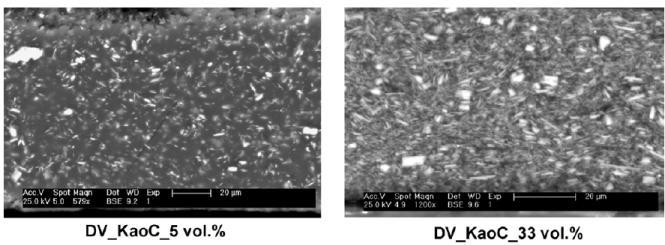
Ivan K - You may want to look at (Incorporation of kaolin fillers into an epoxy/polyamidoamine matrix for coatings, A. Astruca, E. Joliff a, J.-F. Chailana,*, E. Aragona, C.O. Petterb, C.H. Sampaiob, Progress in Organic Coatings 65 (2009) pp158–168)

I can't get access to it.

It has these nice photos.

Paint_Kao_E.jpg


Recognise anything folks? ;)

Source - http://www.bastison.net/ALCHIMIE/alchimie.html Google translate does a good job in English.

:)
 
Ivan K - You may want to look at (Incorporation of kaolin fillers into an epoxy/polyamidoamine matrix for coatings, A. Astruca, E. Joliff a, J.-F. Chailana,*, E. Aragona, C.O. Petterb, C.H. Sampaiob, Progress in Organic Coatings 65 (2009) pp158–168)

I can't get access to it.

It has these nice photos.

[qimg]http://www.bastison.net/Graphique/Images7/Paint_Kao_E.jpg[/qimg]

Recognise anything folks? ;)

Source - http://www.bastison.net/ALCHIMIE/alchimie.html Google translate does a good job in English.

:)

Thanks, Sunstealer. Concerning microscopic appearance of aluminosilicates (namely kaolin in this case), I have to rely on your findings and experience.

I already read the text of Bastison ca half year ago, but it is perhaps time to read it once again.

People from PPG Industries (as probable manufacturer of "Laclede paint") have not yet answered my questions. I think they consider this matter (nano....te CD of WTC) as too marginal and crazy and they are simply not interested. Who knows. Perhaps my e-mail should not mention any idiotic conspiracy theory we are debunking and should be oriented purely to factual questions like "did you produce a paint for WTC floor trusses?".
 
Last edited:
People from PPG Industries (as probable manufacturer of "Laclede paint") have not yet answered my questions. I think they consider this matter (nano....te CD of WTC) as too marginal and crazy and they are simply not interested. Who knows. Perhaps my e-mail should not mention any idiotic conspiracy theory we are debunking and should be oriented purely to factual questions like "did you produce a paint for WTC floor trusses?".
Yes absolutely, when we post here we forget how nuts this all really is. I wouldn't mention any conspiracy crap if I wanted data from a company. It's their time and money being used to help you and if they think they have a kook then they are more likely to ignore the request
 
Google Translate appears to cope fairly well with it, though. Good article.

Dave

Thanks, Moorea34, I did not know this article:cool:
Namely, a mention on so called Ellingham diagrams is interesting. In Wiki, there is an entry Carbothermic reaction: "Carbothermic reactions use carbon as reducing agent, usually for metal oxides. These chemical reactions are usually conducted at several hundreds of degree Celsius. Such processes are applied for production of the elemental forms of many elements." (including iron)

(These matters have been probably discussed in other forums, but I am not strong in metallurgy etc...)

Btw, I found a paper describing partial reduction of iron oxide when heated with polyethylene at temperatures bellow 600 C, but the link does not work now. Quite probably, much more of such papers or patents on low-temperature reduction of iron oxides in the presence of graphitized polymers exist, since this could be an interesting (and even economic) way how to use some plastics (polymer) wastes...
 
Last edited:
Yes absolutely, when we post here we forget how nuts this all really is. I wouldn't mention any conspiracy crap if I wanted data from a company. It's their time and money being used to help you and if they think they have a kook then they are more likely to ignore the request

Well, then... perhaps someone else should send another e-mail to PPG Industries with just one single question: "Did do manufacture and supply primer paint for WTC floor trusses?" I do not think that they would spend so much time to find it:cool:
 
[qimg]http://www.bastison.net/Graphique/Images7/Paint_Kao_E.jpg[/qimg]

Recognise anything folks? ;)
While i do see what appear to be kaolinite crystals, I also see large objects with straight edges which in no way resemble any form of kaolin with which I am familiar. Would there be any other filler in these samples. I was thinking of some form of mica or diatomaceous earth. The fracture patterns of the larger pieces match mica
and diatomaceous earth does usually contain shells of more than one species, some of them quite large.
 
Is anybody who visits this thread living in New York City? I think that this photo of "WTC meteorite" stored in Hangar 17 shows us some parts of floor trusses. Especially inside the "meteorite", some floor steel with primer paint on it might be preserved (but some kind of meteorite "dissection" would be required to get some samples...).
 
Last edited:
I see several parts of floor trusses sticking out between slabs and there at the bottom, slightly right of center. They all seem to by coated in rust. (The color appears rather grainy and varied. Those that were caught between the slabs seem to have been mashed down so tightly that I doubt that much, if any, paint remained in place. Certainly, all manner of iron salts would have infiltrated the lump. The patina overall shows that this was dug out of a very wet environment. The rust and reconstituted concrete has probably filled most spaces inside with a very obdurate material so that removing a paint sample would be hideously dificult. It might not even be totally feasible to recognize the paint by its collor by now.
 
Mark Basile and his Search for the paint:
(excerpts from this discussion: http://911blogger.com/node/20998)

Appearance of red chips:
"You know to look at them (red-gray chips), you'd almost, and I think some of the samples, you know, have been looked at, you would think that they were just basically something.... Kind of like a paint chip..almost. And I think that, you know, if I go through all the different samples that I've looked at and that... - You know I know he must have seen the same types of things - .. I think that there are actually little bits of paint in there..."

It seems that this guy is on the right track at that moment...

Thickness of red chips:
"Thickness of the red layer is.. They vary a little bit, but basically they're on the order of a few sheets of paper (???), actually is... is the layer.. You know it's anywhere from like .. say then to thirty thousands in thickness."

Is seems that Mark Basile found red layers about 30 µm thick. This is a typical thickness of paint layers and, btw, it is in a good accordance with the thickness of "Laclede primer paint" (25 µm).

Concentration of red chips:
"I'm not sure what Steven if he quotes an actual percent. Uhm.. You know it's not a high percent. You know in my sample I'm down somewhere in the ... oh... It's below a tenth of a percent, it's .. you know.. it's probably somewhere in the 200 to 500 parts per million, that type of thing."

It seems that concentration of red-gray chips according to Mark Basile is somewhat lower (0.02-0.05 %) than that found by Harrit et al, but still in reasonable agreement with the expected concentration of Laclede paint chips in the dust (according to Oystein′s calculation).

Burning of red chips:
"George Corrette:
Now one of the things that we've heard; these kind of crude critiques of this study is: "Well all these red and gray chips, well how do you know they're just not paint chips". What would one expect with Sherman-Williams exterior coat paint if you were to do the exact same thing with this: take those paint chips, put them on this quarter inch resistance heater that you have, and ignite it if you will, heat it up to a point of ignition...uhm...T..
Mark Basile:
Yeah cause, you know, things will burn..
George Corrette:
..That's right..
Mark Basile:
If you heat them up to their ignition temperature, they will burn. Well I would expect it to burn, and there would be an energy release, but it would be, you know, of a relatively, I'll call mild, like if you burn wood in a fire."

It seems that Mark Basile knows that "things", like some paints, burn. He even showed us a video of burning of one red chip http://www.youtube.com/watch?v=S1TwVACENAo which looks, e.g., like ignition of some wood (or paint) chip - comparatively slow burning and pale flame...His own comment: “It is not overall spectacular but something happened there.”
_______________________________________

Well, although Mark Basile′s own findings and thoughts are fully consistent with paint hypothesis, he is still sure enough that he studied nanoth....te.
Why?
Since he thinks that this poor little pale flame belonged to thermitic reaction able to produce “molten iron” .
And where is the proof for this claim?
I see only one such “proof” in his lecture, time 46:57: XEDS of some droplet formed during burning of the chip "Lucky Thirteen". Droplet is really richer in iron (53 % of Fe) in comparison with unburned chip, but there is also a lot of oxygen (21 %) and some carbon (8 %), aluminum (5 %) and silicon (8 %).
According to Basile′s table, weight ratio Fe/O is 53/21 = 2,52.
Weight ratio between Fe and O in iron(III) oxide, Fe2O3, is (2x55)/(3x16) = 2.3.
So this droplet is by no means droplet of “molten iron”, but just droplet of iron oxide contaminated mostly with aluminum,silicon and carbon (from the polymeric binder).
Again: Is Basile lying intentionally? (He is a chemical engineer, I think… )

 
Last edited:
It seems that Mark Basile knows that "things", like some paints, burn. He even showed us a video of burning of one red chip http://www.youtube.com/watch?v=S1TwVACENAo which looks, e.g., like ignition of some wood (or paint) chip - comparatively slow burning and pale flame...His own comment: “It is not overall spectacular but something happened there.”

Oh, yes, something clearly did happen.

When he heated the paint chip, it puffed up and began emitting vaporized hydrocarbon gases.

The hydrocarbon gases reached ignition temperature ("flash point," to be more exact.)

The hydrocartbon gases around the chip ignited from one end.

The flames moved to the other end of the chip and went out.

There was a small flash of flame near the center of the chip.

The flames produced some pale light, fluttering about a little bit above the surface of the chip.

The material in the chip itself produced absolutely no light of its own.

People, thermite MUST become incandescent to do any bleeding thing.

This is paint.

Again: Is Basile lying intentionally? (He is a chemical engineer, I think… )
That would be hard to prove, but I do think it might be a good idea to run him by a psychiatrist sometime soon.
 
Ivan Kminek said:
"Mark Basile and his Search for the paint:
(excerpts from this discussion: http://911blogger.com/node/20998)"

Appearance of red layers:"

Quotes from 911blogger August 27, 2009 publication.

Mark Basile said:
"You know to look at them (red-gray chips), you'd almost, and I think some of the samples, you know, have been looked at, you would think that they were just basically something.... Kind of like a paint chip..almost. And I think that, you know, if I go through all the different samples that I've looked at and that... - You know I know he must have seen the same types of things - .. I think that there are actually little bits of paint in there..."

Ivan Kminek said:
"It seems that this guy is on the right track at that moment..."

But what else did Mark Basile say about paint that Ivan Kminek has conveniently deliberately left out?

Mark Basile said:
"Whereas if I have a thermite fire and I were to put that rod in there it would melt, be.. you know, if I had sufficient material there to do that, so... it's just the level of energy release, so, yep, there'd be an energy release, but I wouldn't expect say if within that paint chip there was iron oxide as one of the pigments that they put in there, I wouldn't expect to open that paint chip afterwards and find, you know, molten iron has been produced and now there would be iron droplets inside the residue of that chip...it just isn't going to be able to get to those temperatures...It's just like I said with the wood fire, I mean, it, you know, it just isn't going to happen."

Ivan Kminek said:
"Thickness of red layers:"
Mark Basile said:
"...thickness of the red layer is.. They vary a little bit, but basically they're on the order of a few sheets of paper (???), actually is... is the layer.. You know it's anywhere from like .. say then to thirty thousands in thickness..."

Ivan Kminek said:
"Is seems that Mark Basile found red layers about 30 µm thick. This is a typical thickness of paint layers and, btw, it is in a good accordance with the thickness of "Laclede primer paint" (25 µm)."

A more complete extract from that passage.

Mark Basile said:
"The biggest one [chip] that I've reacted at this point is about one and a half by two millimeters across, and the thickness of the red layer is.. They vary a little bit, but basically they're on the order of a few sheets of paper, actually is... is the layer.. You know it's anywhere from like .. say then to thirty thousands in thickness. They vary from one to the next. Uhm... and then the gray layer on the other side is of a comparable thickness. But the gray layer basically seems to be largely iron, although there's some other stuff that's integrated into it too, it seems to have a fairly high carbon and oxygen content as well. But it doesn't ignite, it's just the red layer that ignites."[/i]

Ivan Kminek said:
"Concentration of red layers:"
Mark Basile said:
"I'm not sure what Steven if he quotes an actual percent. Uhm.. You know it's not a high percent. You know in my sample I'm down somewhere in the ... oh... It's below a tenth of a percent, it's .. you know.. it's probably somewhere in the 200 to 500 parts per million, that type of thing."

Ivan Kminek said:
"It seems that concentration of red-gray chips according to Mark Basile is somewhat lower (0.02-0.05 %) than that found by Harrit et al, but still in reasonable agreement with the expected concentration of Laclede paint chips in the dust (according to Oystein′s calculation).

Burning of red layers:"
George Corrette said:
"Now one of the things that we've heard; these kind of crude critiques of this study is: "Well all these red and gray chips, well how do you know they're just not paint chips". What would one expect with Sherman-Williams exterior coat paint if you were to do the exact same thing with this: take those paint chips, put them on this quarter inch resistance heater that you have, and ignite it if you will, heat it up to a point of ignition...uhm...T.."
Mark Basile said:
"Yeah cause, you know, things will burn.."
George Corrette said:
"..That's right.."
Mark Basile said:
"If you heat them up to their ignition temperature, they will burn. Well I would expect it to burn, and there would be an energy release, but it would be, you know, of a relatively, I'll call mild, like if you burn wood in a fire."

Ivan Kminek said:
"It seems that Mark Basile knows that "things", like some paints, burn."

A more complete extract from that passage.

George Corrette said:
"So you're not like taking a torch to them to ignite them?"
Mark Basile said:
"No, I basically have a setup where I have a stainless steel resistive heating element, that I basically use...It's about little less than a quarter of an inch across and I basically...put the chips basically in the center of the strip, and then by controlling the amount of electricity that flows through the strip, I can heat it up to pretty much any temperature that I want... just up enough to basically get them to ignite, and they ignite in the region of... oh... somewhere a little over 400 degrees centigrade typically, and....When they ignite,...I basically have just recorded them burning and then after the fact you can open them up and look inside for these...iron droplets and films that I spoke of earlier."
George Corrette said:
"Now one of the things that we've heard; these kind of crude critiques of this study is: "Well all these red and gray chips, well how do you know they're just not paint chips". What would one expect with Sherman-Williams exterior coat paint if you were to do the exact same thing with this: take those paint chips, put them on this quarter inch resistance heater that you have, and ignite it if you will, heat it up to a point of ignition."
Mark Basile said:
"Yeah cause, you know, things will burn.."
George Corrette said:
"That's right."
Mark Basile said:
"If you heat them up to their ignition temperature, they will burn. Well I would expect it to burn, and there would be an energy release, but it would be, you know, of a relatively, I'll call mild, like if you burn wood in a fire, you get heat out of it. It's a certain amount, but if I take, you know, a steel rod, and I put it into that fire along with my burning sticks it generally doesn't melt."
George Corrette said:
"That's right."
Mark Basile said:
"Right. Whereas if I have a thermite fire and I were to put that rod in there it would melt, ... you know, if I had sufficient material there to do that, so... it's just the level of energy release, so, yep, there'd be an energy release, but I wouldn't expect say if within that paint chip there was iron oxide as one of the pigments that they put in there, I wouldn't expect to open that paint chip afterwards and find, you know, molten iron has been produced and now there would be iron droplets inside the residue of that chip... "

Ivan Kminek said:
"He even showed us a video of burning of one red chip http://www.youtube.com/watch?v=S1TwVACENAo which looks, e.g., like ignition of some wood (or paint) chip - comparatively slow burning and pale flame...His own comment:
Mark Basile said:
"It is not overall spectacular but something happened there.”

Ivan Kminek said:
"Well, although Mark Basile′s own findings and thoughts are fully consistent with paint hypothesis, he is still sure enough that he studied nanothermite.
Why?
Since he thinks that this poor little pale flame belonged to thermitic reaction able to produce “molten iron” .
And where is the proof for this claim?
I see only one such “proof” in his lecture, time 46:57: XEDS of some droplet formed during burning of the chip "Lucky Thirteen". Droplet is really richer in iron (53 % of Fe) in comparison with unburned chip, but there is also a lot of oxygen (21 %) and some carbon (8 %), aluminum (5 %) and silicon (8 %).
According to table, weight ratio Fe/O is 53/21 = 2,52.
Weight ratio between Fe and O in iron(III) oxide, Fe2O3, is (2x55)/(3x16) = 2.3.
So this droplet is by no means droplet of “molten iron”, but just droplet of iron oxide contaminated mostly with aluminum and silicon.
Again: Is Basile lying intentionally? (He is a chemical engineer, I think… )"

Mark Basile also stated during that presentation that he needed access to a DSC in order to do more complete and accurate testing.

Is Mark Basille a liar?

Unlike yourself Ivan Kminek, I have observed absolutely no disingenuous behavior on the part of Mark Basile.

MM
 
Not sure if this was already covered elsewhere, but did Harrit et al. attempt to obtain paint chips from the WTC to act as a control?
 
Is Mark Basille a liar?

Unlike yourself Ivan Kminek, I have observed absolutely no disingenuous behavior on the part of Mark Basile.

MM

You misunderstood me, MM (and perhaps it was not clear enough):
I consider only Mark Basile′s claim that "iron droplets" were formed during burning of the chip as (maybe) "intentional lie". Everything else Basile said sounds basically honest... But, remember: those "iron droplets" were in fact only proof of thermite for Mark Basile:blush:
 
Not sure if this was already covered elsewhere, but did Harrit et al. attempt to obtain paint chips from the WTC to act as a control?

Yes, but only paint from the perimeter columns. This paint from the perimeter columns is a variety of Tnemec. We already know that the 4 red-gray chips from the Harrit e.al. paper (labeled a-d and shown in Fig. 2-11) that they analysed in depth with XEDS, photomicrographs and DSC are not Tnemec. We strongly suspect that a fifth chip, shown in fig. 12-18, may be Tnemec; Sunstealer found a presentation by Steven Jones where he showed analytical results of WTC Tnemec he had obtained, and the match is striking.

Again, our theory is that chips a-d are primer paint from the floor joists, which was produced by a different steel manufacturer named LaClede; that paint had a different specification than the one for the perimeter columns. I am not aware that anyone has ever obtained paint samples from floor joists and analysed them. We are going purely by specification.
 
Last edited:
Ivan Kminek said:
"He even showed us a video of burning of one red chip http://www.youtube.com/watch?v=S1TwVACENAo which looks, e.g., like ignition of some wood (or paint) chip - comparatively slow burning and pale flame...His own comment:
Mark Basile said:
"It is not overall spectacular but something happened there.”
leftysergeant said:
"Oh, yes, something clearly did happen.

When he heated the paint chip, it puffed up and began emitting vaporized hydrocarbon gases.

The hydrocarbon gases reached ignition temperature ("flash point," to be more exact.)

The hydrocartbon gases around the chip ignited from one end.

The flames moved to the other end of the chip and went out.

There was a small flash of flame near the center of the chip.

The flames produced some pale light, fluttering about a little bit above the surface of the chip.

The material in the chip itself produced absolutely no light of its own.

People, thermite MUST become incandescent to do any bleeding thing.

This is paint."

Invisible hydrocarbon gases that strangely stayed with the chip instead of rising like most hot gases do?

The ignition clearly originated within the chip and was quite incandescent.

If this is paint, you should be able to easily reproduce these results leftysergeant. I look forward to seeing your test results.

wtccipignitioncomp2ar1.jpg


MM
 
Invisible hydrocarbon gases that strangely stayed with the chip instead of rising like most hot gases do?

Away fromm the chip, and away from the heat source it sat on, the gases would not reach required density or temperature. Please learn something about fire chemistry so that I do not need to waste time explaining away your ignorance.

The ignition clearly originated within the chip and was quite incandescent.

Any art major would probably laugh at you on that one. The light value of the chip remains the same throughout, and cast shadows remain dark under the chip as the gases burn.

MASSIVE FAIL.
 

Back
Top Bottom