• Quick note - the problem with Youtube videos not embedding on the forum appears to have been fixed, thanks to ZiprHead. If you do still see problems let me know.

Deeper than primes

Status
Not open for further replies.
Is irrelevant as it specifically refers to such “direct measurement” as being “impossible”.
It is impossible from the classical point of view, which is based only on strict ids of the members of a given vector, which has strict ids as a result of superposition collapse (where this result is not under superposition of ids anymore, or by analogy: "Using a spotlight prevents the ability to research the natural life of night creatures").

Your own translation Doron specifically refutes your claims of “superposition collapse” or “a quantum state (which is not under superposition anymore)” as it asserts such direct measurement “can't be done”.
Your are not aware of the influence of your current research methods (called "direct research methods") on the researched subject (which cause its collapse) exactly because your reasoning is tuned to deal only with strict ids, which are isparable results of your direct research methods.

In other words, you are closed under circular reasoning, where the research methods define the researched subjects only in the state of strict ids, which gives the illusion that superposition states are not reachable unless they are strict ids.

Again your left-hemisphere-only reasoning is not aware of its limitations exactly because your mind is closed by it (can't get anything beyond it).

You are nothing but a person that says NO in "Collapsing wavefunctions?" column of http://en.wikipedia.org/wiki/Interpretations_of_quantum_mechanics table, exactly because you are left-only hemisphere person that has no tolerance to Uncertainty, Indeterminate, Vagueness, etc. ... (and your "spotlight" research methods actually provide the initial conditions in order to deal only with strict ids, which are the result of superposition collapse that was done by you (in other words, you are under a closed self-made state of strict-only framework)).

http://www.internationalskeptics.com/forums/showpost.php?p=7450437&postcount=16217 opens this circularity, but you simply can't get it.

Again stop simply trying to posit aspects of your own failed reasoning onto others.

Your reasoning uses a spotlight in order to research the natural life of night creatures.

Go ahead dig yourself under your spotlight

[qimg]http://farm7.static.flickr.com/6148/6018843906_1a874ef6e6_z.jpg[/qimg]

It is about time to leave self diggers like you behind, and move forward.​
 
Last edited:
It is impossible from the classical point of view, which is based only on strict ids of the members of a given vector, which has strict ids as a result of superposition collapse (where this result is not under superposition of ids anymore, or by analogy: "Using a spotlight prevents the ability to research the natural life of night creatures").

Please learn the difference between ‘classical’ and ‘quantum’ applications as your assertions above demonstrate that you, as yet, have not. To try to put it succinctly for you ‘classical’ applications deal with continuous values while ‘quantum’ applications involve discrete values. By actually: just making up self-contradictory crap won’t get you anywhere or help you to learn anything Doron.


Your are not aware of the influence of your current research methods (called "direct research methods") on the researched subject (which cause its collapse) exactly because your reasoning is tuned to deal only with strict ids, which are isparable results of your direct research methods.

Again stop simply trying to posit aspects of your own failed reasoning onto others

In other words, you are closed under circular reasoning, where the research methods define the researched subjects only in the state of strict ids, which gives the illusion that superposition states are not reachable unless they are strict ids.

No Doron in the same words I used before, your own translation refutes your claims.

Again your left-hemisphere-only reasoning is not aware of its limitations exactly because your mind is closed by it (can't get anything beyond it).

Also stop simply trying to posit aspects of your own half brained notions onto others.

You are nothing but a person that says NO in "Collapsing wavefunctions?" column of http://en.wikipedia.org/wiki/Interpretations_of_quantum_mechanics table, exactly because you are left-only hemisphere person that has no tolerance to Uncertainty, Indeterminate, Vagueness, etc. ... (and your "spotlight" research methods actually provide the initial conditions in order to deal only with strict ids, which are the result of superposition collapse that was done by you (in other words, you are under a closed self-made state of strict-only framework)).

“says NO in "Collapsing wavefunctions?” Stop lying Doron, I have never made any such statement or the other assertions you claim above. In fact quite the contrary, I have clearly stated previously that the "Collapsing wavefunctions?” result in a more defined peak in the probability distribution and that any variable can be “Indeterminate”. You are nothing but a compulsive liar Doron.


“opens this circularity”? That makes even less sense than usual for you Doron. It’s your post Doron if you don’t like whatever “circularity” you think it “opens” then I would recommend you make more of an effort to make better posts

Your reasoning uses a spotlight in order to research the natural life of night creatures.

Go ahead dig yourself under your spotlight

[qimg]http://farm7.static.flickr.com/6148/6018843906_1a874ef6e6_z.jpg[/qimg]

It is about time to leave self diggers like you behind, and move forward.​

You just lie to yourself and fallaciously expect to simply lie to (and about) everyone else as efficaciously. It’s about time you just stopped lying Doron and at least learned something.
 
Your reply speaks loud and clear of hoplesness: Even the explicit graphics that accompanied my request didn't help you to understand what I asked you to do. Spoon-bending Uri at least knows how to fake the paranormal . . .

Bases > 2 don't speed up the processing, coz additional components must be included in the system that would monitor the amount of voltage applied, as opposed to circuit closed/opened or absence/presence of the current.
 
Please learn the difference between ‘classical’ and ‘quantum’ applications as your assertions above demonstrate that you, as yet, have not. To try to put it succinctly for you ‘classical’ applications deal with continuous values while ‘quantum’ applications involve discrete values. By actually: just making up self-contradictory crap won’t get you anywhere or help you to learn anything Doron.
Please learn the difference between uncertain ids under superposition, and certain ids under superposition collapse of the variables themselves (no matter if continuous or discrete values are involved with the given variables).

You will not find it in any paper that deals only with strict variables (variables under superposition collapse), exactly because papers that are based only on superposition collapse are written by scholars that use only their brain's left-hemisphere.

Once again, the power of the continuum is actually a property of at least 1-dimensional space, and no amount of 0-dimensional spaces actually reaches that power.

This fact is rigorously and immediately understood by using both brain's hemispheres, where the right-hemisphere provides the spatial\parallel abilities of the brain and the left hemisphere provides that verbal\serial\step-by-step(analytic) abilities of the brain, under a one comprehensive framework.

Your left-hemisphere-only reasoning can't get the actual power of the continuum and can't get the difference between superposition of ids and parallel-ism, and superposition collapse and serial-ism.

As a result you
The Man said:
"have clearly stated previously that the "Collapsing wavefunctions?” result in a more defined peak in the probability distribution and that any variable can be “Indeterminate”.
which is a complete nonsense simply because the pics are indeterminate only under the parallel-ism of superposition of ids, as seen if the two silts are opened (actually what is considered as a single strict photon is interfered with itself, such that its id is under superposition, or in other words, the single photon has no strict id when the two silts are opened).

Enter it into your mind: when both silts are opened the wavefunctions is not collapsed (there is a superposition of ids).

The wavefunction is collapsed (there is no superposition of ids), if a single silt is opened.

In other words: the "Collapsing wavefunctions?” result in a less defined peak in the probability distribution and that any variable can be “determinate” (there is no superposition of ids).

-------

Furthermore:

Localily stands at the basis of wavefunction collapse (superposition is collapsed), which is characterized by strict id, exactly as observed if only a single silt is opened.

Non-local stands at the basis of wavefunction that is not collapsed (superposition is not collapsed), which is characterized by non-strict id, exactly as observed if both silts are opened.

Here is your reply about this subject ( http://www.internationalskeptics.com/forums/showpost.php?p=5977247&postcount=10004 ):

The Man said:
Actually we describe that pattern as simply a sine wave or a superposition of sine waves of the same frequency.

Again from the Uncertainty principle

http://en.wikipedia.org/wiki/Uncertainty_principle


In quantum physics, a particle is described by a wave packet, which gives rise to this phenomenon. Consider the measurement of the absolute position of a particle. It could be anywhere the particle's wave packet has non-zero amplitude, meaning the position is uncertain – it could be almost anywhere along the wave packet. To obtain an accurate reading of position, this wave packet must be 'compressed' as much as possible, meaning it must be made up of increasing numbers of sine waves added together. The momentum of the particle is proportional to the wavelength of one of these waves, but it could be any of them. So a more accurate position measurement–by adding together more waves–means the momentum measurement becomes less accurate (and vice versa).
*bolding added


As the peak of the wave packet becomes more localized the frequencies of the sine waves in superposition become more distributed around a single frequency. As the peak of the wave packet becomes less localized the frequencies of the sine waves in superposition become less distributed around a single frequency.

Again the single slit pattern can be described as a supposition of wave patterns distributed in frequency while the double slit pattern can be only by described as a superposition of waves of a single frequency.

The single photon however only strikes one place on the screen, its interaction with the screen is always very highly localized. The patterns only result from a significant number of photon interaction with the screen.

The patterns represent probability destitutions of finding a photon has impacted some part of the screen and those distributions are represented as I described above.

Again Doron please learn the actual math and the meaning of concept like superposition.

As can clearly be seen, the traditional understanding, which is based only on left-hemisphere reasoning, simply misses the direct proportion of being non-local AND non-strict and being local AND strict.

If both hemispheres are used, this direct proportion is immediately understood.
 
Last edited:
Let us correct my previous post, it is badly written:

Here is the some wrong part:

----------
doronshadmi said:
As a result you
The Man said:
"have clearly stated previously that the "Collapsing wavefunctions?” result in a more defined peak in the probability distribution and that any variable can be “Indeterminate”.
which is a complete nonsense simply because the pics are indeterminate only under the parallel-ism of superposition of ids, as seen if the two silts are opened (actually what is considered as a single strict photon is interfered with itself, such that its id is under superposition, or in other words, the single photon has no strict id when the two silts are opened).

Enter it into your mind: when both silts are opened the wavefunctions is not collapsed (there is a superposition of ids).

The wavefunction is collapsed (there is no superposition of ids), if a single silt is opened.

In other words: the "Collapsing wavefunctions?” result in a less defined peak in the probability distribution and that any variable can be “determinate” (there is no superposition of ids).

-------

Here is the correction:

--------------

As a result you
The Man said:
"have clearly stated previously that the "Collapsing wavefunctions?” result in a more defined peak in the probability distribution and that any variable can be “Indeterminate”.
which is a complete nonsense simply because "a more defined peak in the probability distribution" (there is a clear single peak) is exactly the result of one open silt, which is defiantly under superposition collapse, or in other words, the ids are strict.

Enter it into your mind: when both silts are opened the wavefunctions is not collapsed (there is a superposition of ids).

The wavefunction is collapsed (there is no superposition of ids), if a single silt is opened (there is a clear single peak).

In other words: the "Collapsing wavefunctions?” result in a more defined peak in the probability distribution and that any variable can be “determinate” (there is no superposition of ids since there is a clear single peak).

--------------

Here is the result of a single silt pattern experiment:
[qimg]http://upload.wikimedia.org/wikipedia/commons/7/70/Single_slit_intensity_distribution.png[/qimg]
[qimg]http://hyperphysics.phy-astr.gsu.edu/hbase/phyopt/imgpho/muls1.gif[/qimg]


Here is the result of a double silt pattern experiment:
[qimg]http://sciencevault.net/11hscphys/82worldcommunicates/pics/822%20Diffraction%20pattern.png[/qimg]
[qimg]http://hyperphysics.phy-astr.gsu.edu/hbase/phyopt/imgpho/mulsi2.gif[/qimg]

As clearly can be seen, a single silt pattern has a clear single peak (it is local and there is no superposition of ids), where a double silt pattern does not have a clear single peak (it is non-local and there is superposition of ids).

------------------------------------------------------------------

Also let us correct my wrong criticism about the following wiki page:

Again from the Uncertainty principle

http://en.wikipedia.org/wiki/Uncertainty_principle

In quantum physics, a particle is described by a wave packet, which gives rise to this phenomenon. Consider the measurement of the absolute position of a particle. It could be anywhere the particle's wave packet has non-zero amplitude, meaning the position is uncertain – it could be almost anywhere along the wave packet. To obtain an accurate reading of position, this wave packet must be 'compressed' as much as possible, meaning it must be made up of increasing numbers of sine waves added together. The momentum of the particle is proportional to the wavelength of one of these waves, but it could be any of them. So a more accurate position measurement–by adding together more waves–means the momentum measurement becomes less accurate (and vice versa).
*bolding added

If we increasing the numbers of sine waves of a given wave packet that are added together (they are 'compressed' as much as possible) we get the single silt pattern, for example:
muls1.gif

which is definitely local AND strict (the measurement of position is more accurate).

If we decreasing the numbers of sine waves of a given wave packet that are added together (they are not 'compressed' as much as possible) we get the two open silts pattern, for example:
mulsi2.gif

which is definitely non-local AND non-strict (the measurement of position is less accurate).

In other words, The Man does not understand the Uncertainty principle, and how it is related to the Double silts experiment.

----------------------------------

Here is the correction of the first part of the previous post:

The Man said:
Please learn the difference between ‘classical’ and ‘quantum’ applications as your assertions above demonstrate that you, as yet, have not. To try to put it succinctly for you ‘classical’ applications deal with continuous values while ‘quantum’ applications involve discrete values. By actually: just making up self-contradictory crap won’t get you anywhere or help you to learn anything Doron.
Please learn the difference between uncertain ids under superposition, and certain ids under superposition collapse of the variables themselves (no matter if continuous or discrete values are involved with the given variables).

For example ( http://en.wikipedia.org/wiki/Probability_distribution ):

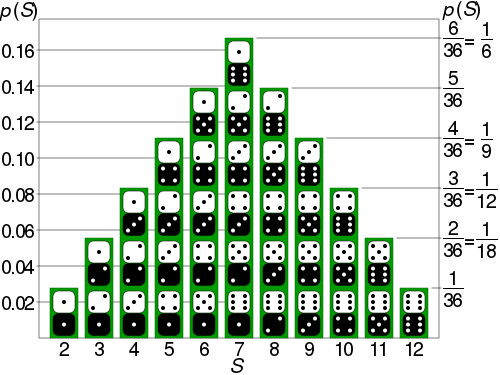
500px-Dice_Distribution_%28bar%29.svg.png

is an example of discrete and strict ids.


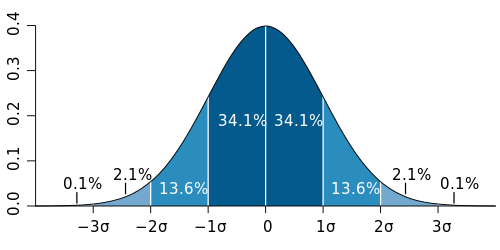
500px-Standard_deviation_diagram.svg.png

is an example of continuous and strict ids.

Please pay attention that both cases have the same pattern of one open silt:

muls1.gif


You will not find superposition of ids in any paper that deals only with strict variables (which are variables under superposition collapse), exactly because papers that are based only on superposition collapse are written by scholars that use only their brain's left-hemisphere.

Once again, the power of the continuum is actually a property of at least 1-dimensional space, and no amount of 0-dimensional spaces actually reaches that power.

This fact is rigorously and immediately understood by using both brain's hemispheres, where the right-hemisphere provides the spatial\parallel abilities of the brain and the left hemisphere provides that verbal\serial\step-by-step(analytic) abilities of the brain, under a one comprehensive framework.

Your left-hemisphere-only reasoning can't get the actual power of the continuum and can't get the difference between superposition of ids and parallel-ism, and superposition collapse and serial-ism (no matter if it is continuous or discrete) .

 
Last edited:
muls1.gif

The Man said:
( http://www.internationalskeptics.com/forums/showpost.php?p=5977247&postcount=10004 )
Actually we describe such a Patten as a superposition of sine waves of different freaqancies.
Well, actually different frequencies is a superposition collapse state, which enables the strict id of different frequencies, which are 'compressed' around a given strict peak. In other words, the superposition is collapsed around a well positioned peak (or in other words, it is local).

So, in this case we have (local AND strict ids) framework (superposition collapse).


mulsi2.gif

The Man said:
( http://www.internationalskeptics.com/forums/showpost.php?p=5977247&postcount=10004 )
Actually we describe that pattern as simply a sine wave or a superposition of sine waves of the same frequency.
Well, actually the same frequency is the absence of a single peak around a particular value, or in other words the system is under superposition, which does not able the appearance of different strict frequencies around a given strict peak. In other words, the superposition is not collapsed around a well positioned peak (or in other words, it is non-local).

So, in this case we have (non-local AND non-strict ids) framework (superposition).


--------------------------------------------


As can be seen, The Man, left-hemisphere-only reasoning can't deal with real superposition.
 
Last edited:
Please learn the difference between uncertain ids under superposition, and certain ids under superposition collapse of the variables themselves (no matter if continuous or discrete values are involved with the given variables).

Doron learn to use words that mean what you want to say and not simply say “superposition” that you claim does not use superposition. Until you do you are just talking deliberately self-contradictory nonsense.

You will not find it in any paper that deals only with strict variables (variables under superposition collapse), exactly because papers that are based only on superposition collapse are written by scholars that use only their brain's left-hemisphere.

You will not find, by your own assertions any superposition in your “superposition” so your bemoaning of what “You will not find” is just a result of your own deliberately self-contradictory nonsense.

Oh, and stop simply trying to posit your half-brain notions onto others.

Once again, the power of the continuum is actually a property of at least 1-dimensional space, and no amount of 0-dimensional spaces actually reaches that power.

Once again, nonsense. So does this “power” you refer to involve, well, power or is it a non-power “power” like your non-superposition “superposition”

This fact is rigorously and immediately understood by using both brain's hemispheres, where the right-hemisphere provides the spatial\parallel abilities of the brain and the left hemisphere provides that verbal\serial\step-by-step(analytic) abilities of the brain, under a one comprehensive framework.

Your left-hemisphere-only reasoning can't get the actual power of the continuum and can't get the difference between superposition of ids and parallel-ism, and superposition collapse and serial-ism.


Stop simply trying to posit your half-brain notions onto others.


As a result you
which is a complete nonsense simply because the pics are indeterminate only under the parallel-ism of superposition of ids, as seen if the two silts are opened (actually what is considered as a single strict photon is interfered with itself, such that its id is under superposition, or in other words, the single photon has no strict id when the two silts are opened).

Enter it into your mind: when both silts are opened the wavefunctions is not collapsed (there is a superposition of ids).

The wavefunction is collapsed (there is no superposition of ids), if a single silt is opened.

In other words: the "Collapsing wavefunctions?” result in a less defined peak in the probability distribution and that any variable can be “determinate” (there is no superposition of ids).

‘Oh waiter, I ordered the cheeseburger not the word salad’

-------

Furthermore:

Localily stands at the basis of wavefunction collapse (superposition is collapsed), which is characterized by strict id, exactly as observed if only a single silt is opened.

Non-local stands at the basis of wavefunction that is not collapsed (superposition is not collapsed), which is characterized by non-strict id, exactly as observed if both silts are opened.

That’s ok Doron we already know you don’t understand the double slit experiment, no need to demonstrate that fact again.


I’m quite aware of my pervious posts, thank you.


As can clearly be seen, the traditional understanding, which is based only on left-hemisphere reasoning, simply misses the direct proportion of being non-local AND non-strict and being local AND strict.

If both hemispheres are used, this direct proportion is immediately understood.

Stop simply trying to posit your half-brain notions onto others.


Let us correct my previous post, it is badly written:

With that as your criteria, you’ve got a lot of correcting to do.

Here is the some wrong part:

----------


-------

Here is the correction:

--------------

As a result you

which is a complete nonsense simply because "a more defined peak in the probability distribution" (there is a clear single peak) is exactly the result of one open silt, which is defiantly under superposition collapse, or in other words, the ids are strict.

Enter it into your mind: when both silts are opened the wavefunctions is not collapsed (there is a superposition of ids).

The wavefunction is collapsed (there is no superposition of ids), if a single silt is opened (there is a clear single peak).

In other words: the "Collapsing wavefunctions?” result in a more defined peak in the probability distribution and that any variable can be “determinate” (there is no superposition of ids since there is a clear single peak).

--------------

Here is the result of a single silt pattern experiment:
[qimg]http://upload.wikimedia.org/wikipedia/commons/7/70/Single_slit_intensity_distribution.png[/qimg]
[qimg]http://hyperphysics.phy-astr.gsu.edu/hbase/phyopt/imgpho/muls1.gif[/qimg]


Here is the result of a double silt pattern experiment:
[qimg]http://sciencevault.net/11hscphys/82worldcommunicates/pics/822%20Diffraction%20pattern.png[/qimg]
[qimg]http://hyperphysics.phy-astr.gsu.edu/hbase/phyopt/imgpho/mulsi2.gif[/qimg]

As clearly can be seen, a single silt pattern has a clear single peak (it is local and there is no superposition of ids), where a double silt pattern does not have a clear single peak (it is non-local and there is superposition of ids).

------------------------------------------------------------------

Find the double slit pattern when one looks through which slit each photon went (when the two slit interference pattern ‘collapses’) and see what you get.


Also let us correct my wrong criticism about the following wiki page:


Another criteria that’s going to give you a lot of correcting to do.

Again from the Uncertainty principle

http://en.wikipedia.org/wiki/Uncertainty_principle


*bolding added

If we increasing the numbers of sine waves of a given wave packet that are added together (they are 'compressed' as much as possible) we get the single silt pattern, for example:
[qimg]http://hyperphysics.phy-astr.gsu.edu/hbase/phyopt/imgpho/muls1.gif[/qimg]
which is definitely local AND strict (the measurement of position is more accurate).

“Numbers of sine waves of a given wave packet that are added together”? So you mean the number of waves in superposition (not your “superposition” that does not use superposition).

If we decreasing the numbers of sine waves of a given wave packet that are added together (they are not 'compressed' as much as possible) we get the two open silts pattern, for example:
[qimg]http://hyperphysics.phy-astr.gsu.edu/hbase/phyopt/imgpho/mulsi2.gif[/qimg]
which is definitely non-local AND non-strict (the measurement of position is less accurate).

“Numbers of sine waves of a given wave packet that are added together”? So you mean the number of waves in superposition (not your “superposition” that does not use superposition).

In other words, The Man does not understand the Uncertainty principle, and how it is related to the Double silts experiment.

Evidently I understand it better than you and your non-superposition “superposition”. How about that part of the “Double silts experiment” where one actually looks at which slit the each photon goes through, you seem to be deliberately ignoring that part. This is the most significant part of the experiment.


----------------------------------

Here is the correction of the first part of the previous post:


Please learn the difference between uncertain ids under superposition, and certain ids under superposition collapse of the variables themselves (no matter if continuous or discrete values are involved with the given variables).

For example ( http://en.wikipedia.org/wiki/Probability_distribution ):

[qimg]http://upload.wikimedia.org/wikipedia/commons/thumb/1/12/Dice_Distribution_%28bar%29.svg/500px-Dice_Distribution_%28bar%29.svg.png[/qimg]
is an example of discrete and strict ids.


[qimg]http://upload.wikimedia.org/wikipedia/commons/thumb/8/8c/Standard_deviation_diagram.svg/500px-Standard_deviation_diagram.svg.png[/qimg]
is an example of continuous and strict ids.

Please pay attention that both cases have the same pattern of one open silt:

[qimg]http://hyperphysics.phy-astr.gsu.edu/hbase/phyopt/imgpho/muls1.gif[/qimg]


You will not find superposition of ids in any paper that deals only with strict variables (which are variables under superposition collapse), exactly because papers that are based only on superposition collapse are written by scholars that use only their brain's left-hemisphere.

Once again, the power of the continuum is actually a property of at least 1-dimensional space, and no amount of 0-dimensional spaces actually reaches that power.

This fact is rigorously and immediately understood by using both brain's hemispheres, where the right-hemisphere provides the spatial\parallel abilities of the brain and the left hemisphere provides that verbal\serial\step-by-step(analytic) abilities of the brain, under a one comprehensive framework.

Your left-hemisphere-only reasoning can't get the actual power of the continuum and can't get the difference between superposition of ids and parallel-ism, and superposition collapse and serial-ism (no matter if it is continuous or discrete) .


You claimed a “correction”, please clearly indentify the error fist and then clearly indentify the correction.


[qimg]http://hyperphysics.phy-astr.gsu.edu/hbase/phyopt/imgpho/muls1.gif[/qimg]

Well, actually different frequencies is a superposition collapse state, which enables the strict id of different frequencies, which are 'compressed' around a given strict peak. In other words, the superposition is collapsed around a well positioned peak (or in other words, it is local).

Nope different frequencies added together is a superposition and as your “superposition” does not use superposition a “superposition collapse” of your “superposition” is a given. Yes a single slit has a well defined position peak but the frequencies involved are more broadly distributed. Try a spectrogram, amplitude by frequency not just amplitude by time. Please learn something Doron.

So, in this case we have (local AND strict ids) framework (superposition collapse).

Nope, again look at a spectrogram, the distribution of frequencies and their amplitudes.

[qimg]http://hyperphysics.phy-astr.gsu.edu/hbase/phyopt/imgpho/mulsi2.gif[/qimg]

Well, actually the same frequency is the absence of a single peak around a particular value, or in other words the system is under superposition, which does not able the appearance of different strict frequencies around a given strict peak. In other words, the superposition is not collapsed around a well positioned peak (or in other words, it is non-local).


So, in this case we have (non-local AND non-strict ids) framework (superposition).

Nope a single frequency is a well defined peak around the value of that frequency. Again look at a spectrogram and please learn something.

--------------------------------------------


As can be seen, The Man, left-hemisphere-only reasoning can't deal with real superposition.


Stop simply trying to posit your half-brain notions onto others.
 
For example ( http://en.wikipedia.org/wiki/Probability_distribution ):

[qimg]http://upload.wikimedia.org/wikipedia/commons/thumb/1/12/Dice_Distribution_%28bar%29.svg/500px-Dice_Distribution_%28bar%29.svg.png[/qimg]
is an example of discrete and strict ids.


[qimg]http://upload.wikimedia.org/wikipedia/commons/thumb/8/8c/Standard_deviation_diagram.svg/500px-Standard_deviation_diagram.svg.png[/qimg]
is an example of continuous and strict ids.
Can you kindly disclose what is the "strict ids" in the normal distribution graph?
 
Can you kindly disclose what is the "strict ids" in the normal distribution graph?


Sorry epix, as distributions in probability, frequency and/or time* don't explicitly assert a physically spacial position they must be deliberately ignored by the Doronic fixation on just physically spacial positions.


*When dealing with light, time and space (physically spacial position) are directly convertible by the constant C. The other mentioned distributions involve positions in the mathematical spaces that they are mapped.
 
Last edited:
The Man said:
How about that part of the “Double silts experiment” where one actually looks at which slit the each photon goes through, you seem to be deliberately ignoring that part. This is the most significant part of the experiment.
By using strong measurement (which has a significant influence on the measured) the wave pattern of the two open silts case is collapsed into a well positioned peak, similar to the pattern of the single silt case.

From a local point of view, the wave pattern is a signature of the superposition of non-strict localities, which are collapsed into a well positioned peak pattern of strict localities by uning strong measurement.

Be aware that the appearance on the screen detector is characterized by a set of well positioned particles (=strict locality), exactly because the screen itself causes the collapse of the momentum (=non strict locality), which is characterized by wave pattern (which is a signature of non-locality of localities).

Strong measurement actually tries to measure the accurate position of a single particle after it passes the barrier of two open silts, by using small amount of measurements with significant influence on the measured.

This measurement style prevents the accurate results of both position (=strict locality) and momentum (=non strict locality), so according to this measurement position and momentum prevent each other at the quantum level.

Weak measurement ( as developed by Yakir Aharonov and recently tested by Aephraim Steinberg http://www.nature.com/news/2011/110602/full/news.2011.344.html ) measures the position of a single particle after it passes the barrier with two open silts, by using a very large amount of measurements with insignificant influence on the measured, where the result is the average of this large amount of measurements.

According to this measurement style, it is possible to reconstruct the paths (=non-locality) for an ensemble of quantum particles, which actually enables to measure both the momentum (=non strict locality) and position (=strict locality) of quantum objects and getting more precise results of both of them (the non-local (wave-like) and the local (particle-like) properties of quantum objects do not prevent each other if weak measurement is used (they prevent each other if strong measurement is used)).

No matter what measurement style is used, it does not change the fact of the existence of Non-locality (path) and Locality (position) as fundamentals of quantum objects.

It also does not change the fact that Non-locality and Locality can be in superposition of ids, that is collapsed into strict ids, as follows:

A=”Non-locality”
B=”Locality”

n=2

n-Uncertainty x n-Redundancy Distinction-Tree is some particular example of a novel model, which shows exactly how a mixture of states in superposition (AB,AB) are collapsed into single outcomes (A,B):

Code:
(AB,AB) (AB,A)  (AB,B)  (AB)    (A,A)   (B,B)   (A,B)   (A)     (B)     ()

A * *   A * *   A * .   A * .   A * *   A . .   A * .   A * .   A . .   A . .
  | |     | |     | |     | |     | |     | |     | |     | |     | |     | |
B *_*   B *_.   B *_*   B *_.   B ._.   B *_*   B ._*   B ._.   B *_.   B ._.

(2,2) = (AB,AB)
(2,1) = (AB,A),(AB,B)
(2,0)=  (AB)
(1,1) = (A,A),(B,B),(A,B)
(1,0)=  (A),(B)
(0,0)=  ()

Any appearance of that tree is called Distinction State (DS), where any DS is under a structure called Frame (F), for example: (AB,B) is a DS that is under (2,1) F.

The universe of single outcomes is the particular case of DS (A,B) under F (1,1) under the 2-Uncertainty x 2-Redundancy Distinction-Tree.

The Man said:
different frequencies added together is a superposition
Wrong, it can't be a superposition since different frequencies can be ordered around a strict pack, which is larger than the other peaks (or in other words, it is local).

The Man said:
a single frequency is a well defined peak around the value of that frequency.
You are right, I did not write it correctly, here is the correct one:

Well, the system is under superposition, which does not able the appearance of different strict frequencies around a given strict peak, which is larger than the other peaks. In other words, the superposition is not collapsed around a well positioned peak (or in other words, it is non-local).
 
Last edited:
Let's correct the following part of my previous post.

Instead of
doronshadmi said:
Be aware that the appearance on the screen detector is characterized by a set of well positioned particles (=strict locality), exactly because the screen itself causes the collapse of the momentum (=non strict locality), which is characterized by wave pattern (which is a signature of non-locality of localities).
it has to be

Be aware that the appearance on the screen detector is characterized by a set of well positioned particles (=strict locality), exactly because the screen itself causes the collapse of the momentum (=non strict locality), which is characterized by wave pattern (where the wave pattern is the signature of non-locality which causes superposition among localities, such that they can't be ordered around a given peak, which is larger than all other peaks around it).
 
The Man said:
Try a spectrogram, amplitude by frequency not just amplitude by time. Please learn something Doron.
1) The amplitude can be by spacetime.

2) If time is not involved, then by using only (physical or mathematical) space, the amplitude of the sin wave of the same frequency does not able the appearance of different strict frequencies around a given strict peak, which is larger than the other peaks. In other words, the superposition is not collapsed around a well positioned peak (or in other words, it is non-local).

Please learn something The Man, instead of just technically using "Fourier transform, which decomposes a function into the sum of a (potentially infinite) number of sine wave frequency components." ( http://en.wikipedia.org/wiki/Frequency_domain ).

Reductionism-only (decomposition of a function, in this case) can't provide a meaningful understanding of the considered subject, The Man.

In http://www.internationalskeptics.com/forums/showpost.php?p=7459226&postcount=16229 your reductionist-step-by-step-only reasoning clearly airs its view, as follows:

You replied in details to the wrong post http://www.internationalskeptics.com/forums/showpost.php?p=7456081&postcount=16226 exactly because you do not get the whole picture before you reply in details (you did not see http://www.internationalskeptics.com/forums/showpost.php?p=7456413&postcount=16227 (which clearly asserts that http://www.internationalskeptics.com/forums/showpost.php?p=7456081&postcount=16226 is wrong) before you replied in details to the wrong post).
 
Last edited:
In addition to http://www.internationalskeptics.com/forums/showpost.php?p=7461487&postcount=16235 and http://www.internationalskeptics.com/forums/showpost.php?p=7461518&postcount=16236 posts, a straight line (which is 1-dimensional space) has a zero amplitude.

In this case the members of the set of 0-dimensional spaces along it, are indistinguishable of each other in terms of frequency.

Actually the points at the peaks of a sine wave are indistinguishable of each other exactly because of the sameness of frequency, so no matter if we deal with sine waves or not, the sameness of frequency is not sufficient for observation of points' strict ids (the non-locality of (in this case) 1-dimension space has a significant influence on the non-strictness of the point's ids, which is exactly the state of superposition of ids (they are not collapsed into strict ids).

Strict ids are observed as different frequencies, which are ordered by their strict different peaks around a given peak that is larger than the rest of the given different peaks.

A well-positioned pattern of strict ids like
muls1.gif

can't be in a superposition of ids.
 
Last edited:
About comparison.

By left-only hemisphere reasoning, comparison is possible only if strictness is involved.

By using both hemispheres reasoning, comparison is possible also if non-strictness is involved, for example:

The ids of (AB,AB) is non-strict, yet their amount is strict, so by using strictness AND non-strictness, comparison is actually done between 2 objects that have non-strict ids.

If both amount AND ids is non-strict (for example (ABC..., ABC..., ...) then the comparison is done between the strict Non-locality (notated here by the outer "(" ")" ) and the objects "ABC..., ABC..., ..." that their amount AND ids is non-strict, which enables to conclude, for example, that the non-strict amount of non-strict objects is actually their inability to reach strict Non-locality.

If ids are strict but there amount is non-strict (for example: 0.111...2) we get the same conclusion about the inability of non-strict amount of strict objects to reach strict Non-locality.

-------------------

If Non-strict non-strictness = Strictness, then:

Strict Non-strictness is necessarily = Non-strict Strictness (and vice versa).


If Non-strict non-strictness ≠ Strictness, then:

Strict Non-strictness is not necessarily = Non-strict Strictness (and vice versa).

In other words, comparison is done also in this case.
 
Last edited:
Let us correct http://www.internationalskeptics.com/forums/showpost.php?p=7464536&postcount=16238.

--------------------------

In addition to http://www.internationalskeptics.com/forums/showpost.php?p=7461487&postcount=16235 and http://www.internationalskeptics.com/forums/showpost.php?p=7461518&postcount=16236 posts, a straight line (which is 1-dimensional space) has a zero amplitude.

In this case the members of the set of 0-dimensional spaces along it, are indistinguishable of each other in terms of frequency.

Actually the points at the peaks of a sine wave are indistinguishable of each other if there the frequency is the same, so no matter if we deal with sine waves or not, the sameness of frequency is not sufficient for observation of points' different strict ids (the non-locality of (in this case) 1-dimension space has a significant influence on the non-differentiation of the point's ids in terms of frequency (they are not collapsed (the symmetry is not broken) into different strict ids).

Strict ids are observed as different frequencies (asymmetry), which are ordered by their strict different peaks around a given peak that is larger than the rest of the given different peaks.

A well-positioned pattern of different strict ids like
[qimg]http://hyperphysics.phy-astr.gsu.edu/hbase/phyopt/imgpho/muls1.gif[/qimg]
can't be in a superposition of ids, because superposition of ids is at least the symmetrical state of the inability to determine the id of a given object, which is not the case with a well-positioned pattern of different strict ids (which is asymmetric).
 
Last edited:
By using strong measurement (which has a significant influence on the measured) the wave pattern of the two open silts case is collapsed into a well positioned peak, similar to the pattern of the single silt case.

Technically the banded interference pattern becomes two well defined peaks instead, as would be expected in the classical particle double slit case. Are you now claiming that the collapse of the wave function results in a more well defined “positioned peak”?


From a local point of view, the wave pattern is a signature of the superposition of non-strict localities, which are collapsed into a well positioned peak pattern of strict localities by uning strong measurement.

No Doron the interference pattern results from the superposition of (sum over) possible histories. When we look at which slit each the photon passes that superposition can simply no longer include the, now impossible, both slit history. Since your “superposition of non-strict localities” does not use superposition, by your own aerations, you are just continuing to lie by calling it a “superposition of non-strict localities”. Stop lying Doron.

Be aware that the appearance on the screen detector is characterized by a set of well positioned particles (=strict locality), exactly because the screen itself causes the collapse of the momentum (=non strict locality), which is characterized by wave pattern (which is a signature of non-locality of localities).

Be aware that the uncertainty principle still applies.


Strong measurement actually tries to measure the accurate position of a single particle after it passes the barrier of two open silts, by using small amount of measurements with significant influence on the measured.

Detecting which slit each photon passes through just detects, well, which slit each photon passes through.

This measurement style prevents the accurate results of both position (=strict locality) and momentum (=non strict locality), so according to this measurement position and momentum prevent each other at the quantum level.

Detecting which slit each photon passes through accurately detects which slit each photon passes through.


Weak measurement ( as developed by Yakir Aharonov and recently tested by Aephraim Steinberg http://www.nature.com/news/2011/110602/full/news.2011.344.html ) measures the position of a single particle after it passes the barrier with two open silts, by using a very large amount of measurements with insignificant influence on the measured, where the result is the average of this large amount of measurements.

According to this measurement style, it is possible to reconstruct the paths (=non-locality) for an ensemble of quantum particles, which actually enables to measure both the momentum (=non strict locality) and position (=strict locality) of quantum objects and getting more precise results of both of them (the non-local (wave-like) and the local (particle-like) properties of quantum objects do not prevent each other if weak measurement is used (they prevent each other if strong measurement is used)).

Please try to at least learn what an average is Doron.


No matter what measurement style is used, it does not change the fact of the existence of Non-locality (path) and Locality (position) as fundamentals of quantum objects.

Sure it doesn’t change it, as nether “locality (path)” nor “Locality (position)” are “fundamentals of quantum objects”. Though position and momentum are considered complimentary properties of quantum objects.

It also does not change the fact that Non-locality and Locality can be in superposition of ids, that is collapsed into strict ids, as follows:

Still just deliberately self-contradictory nonsense as you claim your “superposition” does not use superposition. Stop lying Doron.


A=”Non-locality”
B=”Locality”

n=2

n-Uncertainty x n-Redundancy Distinction-Tree is some particular example of a novel model, which shows exactly how a mixture of states in superposition (AB,AB) are collapsed into single outcomes (A,B):

Code:
(AB,AB) (AB,A)  (AB,B)  (AB)    (A,A)   (B,B)   (A,B)   (A)     (B)     ()

A * *   A * *   A * .   A * .   A * *   A . .   A * .   A * .   A . .   A . .
  | |     | |     | |     | |     | |     | |     | |     | |     | |     | |
B *_*   B *_.   B *_*   B *_.   B ._.   B *_*   B ._*   B ._.   B *_.   B ._.

(2,2) = (AB,AB)
(2,1) = (AB,A),(AB,B)
(2,0)=  (AB)
(1,1) = (A,A),(B,B),(A,B)
(1,0)=  (A),(B)
(0,0)=  ()

Any appearance of that tree is called Distinction State (DS), where any DS is under a structure called Frame (F), for example: (AB,B) is a DS that is under (2,1) F.

The universe of single outcomes is the particular case of DS (A,B) under F (1,1) under the 2-Uncertainty x 2-Redundancy Distinction-Tree.

Simply repeating your nonsense does not make it any less nonsense.


Wrong, it can't be a superposition since different frequencies can be ordered around a strict pack, which is larger than the other peaks (or in other words, it is local).

By your own assertions your “superposition” can’t be a superposition. Stop lying Doron. So your problems with your “superposition” are just yours and quite deliberate. Please learn what a distribution is and how some have more defined peaks than others.

You are right, I did not write it correctly, here is the correct one:

Well, the system is under superposition, which does not able the appearance of different strict frequencies around a given strict peak, which is larger than the other peaks. In other words, the superposition is not collapsed around a well positioned peak (or in other words, it is non-local).

Again your “superposition” does not involve superposition so it is just deliberately self-contradictory nonsense, Stop lying Doron, also please learn what a distribution is and how some have more defined peaks than others.

Your deliberate ignorance still does not change the fact that…


...a single frequency is a well defined peak around the value of that frequency. Again look at a spectrogram and please learn something.

You claimed…

You are right…

To that assertion. So is “a single frequency is a well defined peak around the value of that frequency” or not?


You first assert…

Well, the system is under superposition, which does not able the appearance of different strict frequencies around a given strict peak, which is larger than the other peaks.

A singular large peak.


In other words, the superposition is not collapsed around a well positioned peak (or in other words, it is non-local).

Then directly contradict yourself. As always Doron if you can’t even at least agree with just yourself no one can possibly ever agree with you.


1) The amplitude can be by spacetime.

2) If time is not involved, then by using only (physical or mathematical) space, the amplitude of the sin wave of the same frequency does not able the appearance of different strict frequencies around a given strict peak, which is larger than the other peaks. In other words, the superposition is not collapsed around a well positioned peak (or in other words, it is non-local).

So you’re simply and deliberately not going to look at a spectrogram? How unsurprisingly deliberately ignorant of you.


Please learn something The Man, instead of just technically using "Fourier transform, which decomposes a function into the sum of a (potentially infinite) number of sine wave frequency components." ( http://en.wikipedia.org/wiki/Frequency_domain ).

I learn things all the time Doron and don’t just use a Fourier transform. Your “direct perception" continues to fail you so consistently.


Reductionism-only (decomposition of a function, in this case) can't provide a meaningful understanding of the considered subject, The Man.

Stop trying to simply post aspects of your own failed reasoning onto others.


In http://www.internationalskeptics.com/forums/showpost.php?p=7459226&postcount=16229 your reductionist-step-by-step-only reasoning clearly airs its view, as follows:

Stop trying to simply post aspects of your own failed reasoning onto others.

You replied in details to the wrong post http://www.internationalskeptics.com/forums/showpost.php?p=7456081&postcount=16226 exactly because you do not get the whole picture before you reply in details (you did not see

Nope, I clearly quoted the posts I replied to…


which included both the ones you cite. Your “direct perception” continues to fail you at even such a simple, mundane and obvious task of just seeing what posts were quote and replied to.
 
The Man said:
Technically the banded interference pattern becomes two well defined peaks instead, as would be expected in the classical particle double slit case. Are you now claiming that the collapse of the wave function results in a more well defined “positioned peak”?
Good morning The Man.

I am not just "now claiming", I claim it all along the discussion.


More well defined “positioned peak” (classical single or double slit case) is exactly the collapse of the superposition of a wave function.


The Man said:
You first assert…

doronshadmi said:
Well, the system is under superposition, which does not able the appearance of different strict frequencies around a given strict peak, which is larger than the other peaks.
A singular large peak.

Wrong The Man, a system under superposition is not a singular large peak (where a singular large peak is different strict frequencies around a given strict peak, which is larger than the other peaks).

The following diagram is a singular large peak:

muls1.gif


and it is not under superposition (the superposition is collapsed into a strict singular large peak).


The Man said:
doronshadmi said:
In other words, the superposition is not collapsed around a well positioned peak (or in other words, it is non-local).
Then directly contradict yourself.

Wrong again The Man.

mulsi2.gif


is not a singular large peak, and it is under superposition (the superposition is not collapsed into a strict singular large peak).

The Man said:
So you’re simply and deliberately not going to look at a spectrogram?
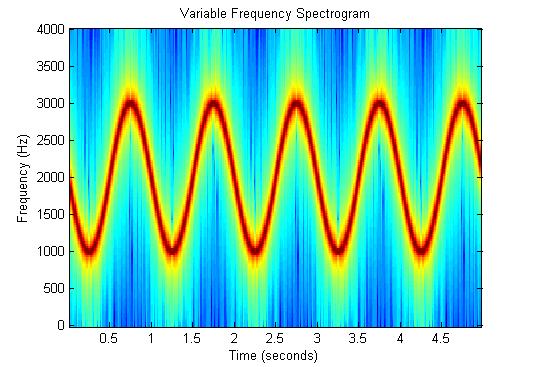
As you see, I looked at the spectrogram with single frequency, and it is under superposition (it is not collapsed into a single large peak, where a single large peak is the first spectrogram).


The rest of your post is wrong because your misunderstanding of the considered subject, as demonstrated above.

The Man said:
Simply repeating your nonsense does not make it any less nonsense.
Simply repeating your ignorance does not make it any less ignorance.
 
Last edited:
Good morning The Man.

Good evening Doron.

I am not just "now claiming", I claim it all along the discussion.

Fine then please show where you have specifically made that claim “all along the discussion”. You may be confusing a more well defined distribution peak with a singular value. While a singular value does certainly indicated a well defined distribution peak (as well defined as a distribution peak can get) a more well defined peak than before does not require nor infer a singular value.

More well defined “positioned peak” (classical single or double slit case) is exactly the collapse of the superposition of a wave function.

Technically that is not correct. Again looking at through which slit each photon goes just removes the both slits path from the possible histories. The reaming possible histories must still be summed over (considered in superposition) in order to accurately calculate the resulting pattern on the screen, in other words (since your so fond of them) looking through which slit each photon passes does not eliminate the superposition of possible histories it just removes one possible history (going through both slits) from that superposition of (sum over) possible histories.


Wrong The Man, a system under superposition is not a singular large peak (where a singular large peak is different strict frequencies around a given strict peak, which is larger than the other peaks).


As usual you are simply, deliberately and self-contrarily asserting your non-superposition “superposition” as a superposition. Stop lying Doron and you might not give yourself so many difficulties. A 1 unit amplitude wave at 5 Hz in superposition with an in phase 5 amplitude wave at 5 Hz would result in a (on a spectrograph) a 6 unit vertical line at 5 Hz. Again please learn something Doron and stop lying.

The following diagram is a singular large peak:

[qimg]http://hyperphysics.phy-astr.gsu.edu/hbase/phyopt/imgpho/muls1.gif[/qimg]

and it is not under superposition (the superposition is collapsed into a strict singular large peak).

Please tell us specifically what superposition “collapsed”. As usual you are simply, deliberately and self-contrarily asserting your non-superposition “superposition” as a superposition. Stop lying Doron and you might not give yourself so many difficulties. Again all the possible paths to the screen must be considered in superposition in order to accurately calculate the probability of any given photon striking any particular point on the screen. In the single slit case the only possible paths, understandably, all involve going through that single slit.


Wrong again The Man.

[qimg]http://hyperphysics.phy-astr.gsu.edu/hbase/phyopt/imgpho/mulsi2.gif[/qimg]

is not a singular large peak, and it is under superposition (the superposition is not collapsed into a strict singular large peak).

Again look at a spectrogram, your deliberate ignorance will not help you.

As you see, I looked at the spectrogram with single frequency, and it is under superposition (it is not collapsed into a single large peak, where a single large peak is the first spectrogram).

See what? You have shown no spectrogram. So you are either confused about what a spectrogram is or just simply lying. Amplitude by position (in the images linked) is not a spectrogram.

http://en.wikipedia.org/wiki/Spectrogram

The rest of your post is wrong because your misunderstanding of the considered subject, as demonstrated above.

All of your posts are wrong because of your simple and deliberate ignorance as well as your lying.

Simply repeating your ignorance does not make it any less ignorance.

Doron directly addressing your assertions is not ignoring them, please learn the meaning of ignorance and you might just be less prone to your utter dependence upon it.
 
Technically that is not correct.
It is corrent The Man.

looking through which slit each photon passes does not eliminate the superposition of possible histories it just removes one possible history (going through both slits) from that superposition of (sum over) possible histories.
This "just removes one possible history" is exactly the collapse of the wavefunction into a well positioned different and strict frequencies around a given peak that is larger than all these different and strict frequencies.


You have shown no spectrogram.
Wrong again. For example look at the following spectrogram, taken from http://en.wikipedia.org/wiki/Spectrogram :

VariableFrequency.jpg


and the two open silts case

mulsi2.gif


-------------------

In other words, you are cheating yourself.
 
Last edited:
Status
Not open for further replies.

Back
Top Bottom