Except that at the very start of ROOSD - apart from the floor bits and pieces already damaged by aircraft impact or fire or directly involved in initiating collapse:
1) The 'other' floors are still tied to the outer perimeter (and core at the other end);
2) Where do you get the impetus to fail the first floor of the ROOSD process; AND
3) How do you stop the perimeter columns applying force to the floors if you want it to be "floor on floor"?
Watch this annotated segment a few times...
The white line follows the NE edge of the building, and so provides a *virtual* running location of where the lower NE corner of the upper section would be, if intact.
The vertical red line is static, and shows the lower NE edge with the top of the line set to the initiation location (molten metal yada yada)
The horizontal red line shows the location of the upper edge of the lower east face.
The purpose of the image is to show the wedging action of the upper block on the lower east perimeter.
However, it is also useful to see that the east face dust ejecta (which indicates the lowest visible sign of ROOSD crush front) remains in very close proximity to the lower NE corner of the descending upper block.
Such may indicate, however unlikely, that that lower edge remained *effective* in imparting significant force upon lower floors...for quite a while...until ROOSD took over.
(I have large versions of the clip kicking around. It's only small to keep GIF filesize down)
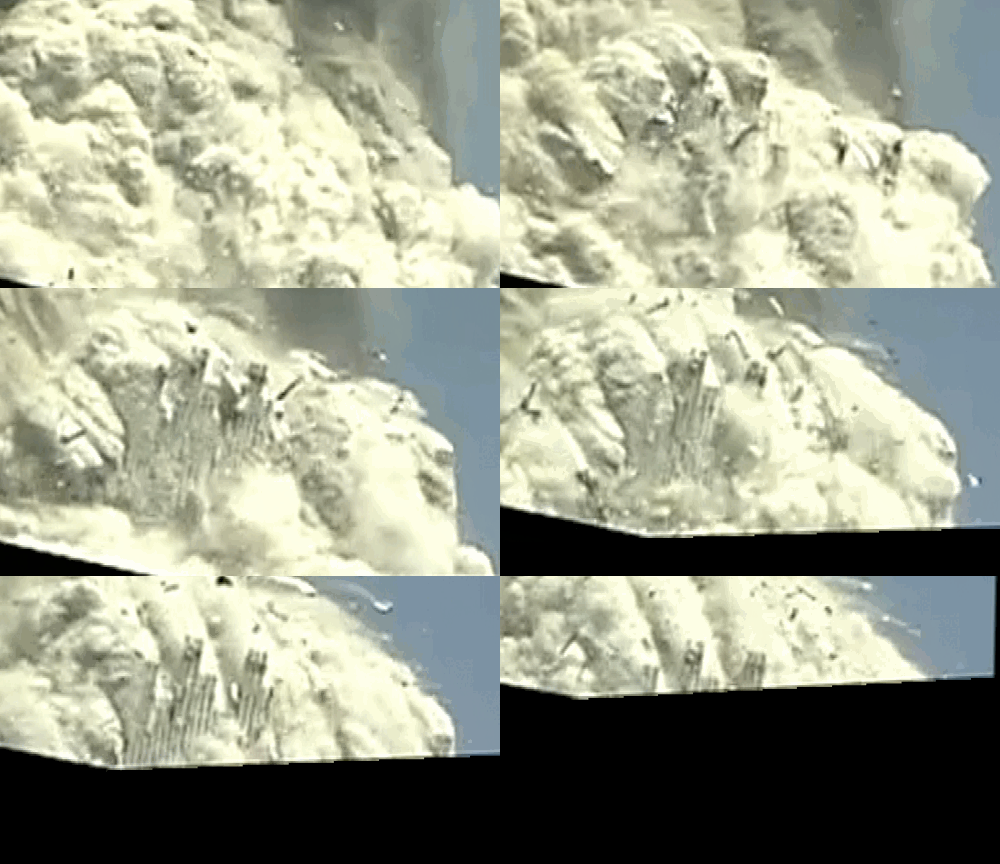
Then, probably more important in understanding the details, at what stage do the staggered ends of broken columns become available relative to the shearing of the floors at that level?
Speculative, but it may be that the lower ends of the upper East face fold in and help protect the *wedge* ??
Which naturally is one of the answers that femr2 is working towards if only those people who don't want more info than NIST provides could let him get on with the process. The perennial circling on the theme of "I'm not interested in those details so what right have you to be interested" - flavoured by the sauce of personal comments.
<tips hat>
In addition, I occasionally ask a few questions. Unlikely as it may seem, I'm normally after answers to them, in as much detail as possible.
The only thing that is near certain for my money is that at the start of the process it is floors attached to top block perimeter and core (and maybe hat truss) which combine to give sufficient falling weight to shear the first floor or two or three or...
Not sure about core-side there. May well be that core-side has already detached, or even early core column detachment.


 (EDIT oops that is ambiguous - I meant "inside" or "outside" for each complete face of the block)
  )
)

 Whoa there. Which columns ? Overwhelming majority of columns, both perimeter and core did not fracture. What are you talking about ?
 )
)




 )
)


