That has always puzzled me.
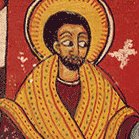
^ Jesus, courtesy of the Ethiopian church


That has always puzzled me.

There is a pretty big difference between religious apology and the historical mainstream.

That article is basically correct. Groups tend to model their graven images of Jesus on their own likeness.

It's a willingness to consider and engage that is rare, but appreciated.
This is the same thing surely? Something 99% likely to be true, is 1% likely to be untrue. Something 1% likely to be true, is 99% likely to be untrue.
Unless you are saying that our scale can only go between untrue and "don't know". That the evidence limits us to suggestions between 1% likely and 50% likely? In which case, I disagree.
The "almost definitely not true" limit never changes with respect to the evidence. If we have lots of evidence, we can conclude something to be "almost definitely not true" and if we have hardly any evidence, we can still conclude something to be "almost definitely not true".
With the top limit, we are dependent on the quality and quantity of sources. If we have every source there could possibly be, the top limit would be near as damnit 100% likely to be true. As our sources for claims become worse and worse, this limit approaches 50%, but doesn't get there until we have absolutely no sources at all. Even with only one source (say, Philemon) we can still draw from above 50% and say a claim is "more likely than not" (for instance, the claim that Paul believes in God).
For John, I've mentioned Josephus as an external validation. Josephus gives the same outline of John's life as that found in the synoptics, and they even differ on a key point for which there are reasonable arguments for Josephus being wrong and the synoptics being correct (this is the only time where, if I had to pick sides and bet my life on one or the other, I would side with the NT over the account of a contemporary historian.)
Of course, it is always possible that Josephus' writings were faked, and it is possible that Josephus didn't exist. Same deal with Paul. Possible he didn't exist. Possible absolutely nobody in history existed.

That article is basically correct. Groups tend to model their graven images of Jesus on their own likeness.
As an example see this model found outside the Holy Church of Lecherous Adulterers in Miami.

Of course, it is always possible that Josephus' writings were faked, and it is possible that Josephus didn't exist. Same deal with Paul. Possible he didn't exist. Possible absolutely nobody in history existed.
In other words, it's not going to be very useful on this thread.
It's a good thing we have Archaeology, Anthropology, a number of other "ologies," and multiple independent sources for a lot of ancient history.
(You REALLY should have read the post in which I laid out the REAL Historical Method).
GB

tsig said:There is a pretty big difference between religious apology and the historical mainstream.
Doesn't look like it so far.
Don't do yourself down, you're engaging on a good level so far. I certainly prefer it to "lying for the cause"No, it's just that almost everyone else is sharper than me. I have to restate the problem so I know what I'm attempting to consider.

There is no way to tell, which much certainty, but you can still pick on probabilities can you not? In my example, can you not say the claim is "more likely than not" or are you required to say that we have been given no information?Without corroborating evidence there is no way to tell whether something is true or not. Assigning a percentage to it is giving the illusion of accuracy when all you are doing is guessing.
This really depends on your standards for knowledge, and whether or not probability counts. I don't think weighting possibilities over others is the same as guesswork. If someone tells you they live at house number 72, and you head along with your wife and she asks what number house it is, do you have to respond "don't know"? You have no corroborating evidence. In order to justify your belief that they live at 72, you have to make claims regarding plausibility and so on, and then give the belief probabilities. Very probable that he does live at number 72, possible but unlikely that he got it wrong, extremely unlikely that he full on lied to you.In any case, "don't know" isn't the same as 50% likely to be true, it just means "don't know". Without corroborating evidence it's always going to be "don't know" unless you're going to make a guess.
True, but no specific person needed to have.I'm pretty sure that someone in history must have existed unless we were created ex nihilo.
I wouldn't bet my life on it. I meant if I had to make a decision. If I was on a particularly odd Japanese gameshow in which I had to give one answer or the other, and a wrong answer means I get killed, and not answering or saying don't know means I get killed, then I would go with the NT over Josephus in that particular instance. The "evidence" is the argument over which account, if true, best explains the existence of the other. If John the Baptist was really killed for being way too moral, and getting people to be moral, and spreading morality, then why would the Gospel authors choose instead to say he questioned the legality of Herod's marriage? If, on the other hand, John the Baptist questioned the legality of Herod's marriage, it is clear why Josephus would prefer a narrative in which John is something of a martyr.Why would you bet your life on the authenticity of one account of a possibly fictitious event over another account of a possibly fictitious event ? You're going on gut feel rather than evidence.
True. But of course we do run into a problem about what is considered an independent corroborative source. If we declare something fake, then no corroborative sources are now good enough. They are now all based on the same, ultimate falsehood.Josephus' writings may not necessarily have been faked, they may just have been based on the same collection of myths and rumours that formed the basis for the gospels. Likewise with Paul, we have a collection of writings whose provenance is difficult to determine.
Don't do yourself down, you're engaging on a good level so far. I certainly prefer it to "lying for the cause"

There is no way to tell, which much certainty, but you can still pick on probabilities can you not? In my example, can you not say the claim is "more likely than not" or are you required to say that we have been given no information?
This really depends on your standards for knowledge, and whether or not probability counts. I don't think weighting possibilities over others is the same as guesswork. If someone tells you they live at house number 72, and you head along with your wife and she asks what number house it is, do you have to respond "don't know"? You have no corroborating evidence. In order to justify your belief that they live at 72, you have to make claims regarding plausibility and so on, and then give the belief probabilities. Very probable that he does live at number 72, possible but unlikely that he got it wrong, extremely unlikely that he full on lied to you.
I wouldn't bet my life on it. I meant if I had to make a decision. If I was on a particularly odd Japanese gameshow in which I had to give one answer or the other, and a wrong answer means I get killed, and not answering or saying don't know means I get killed, then I would go with the NT over Josephus in that particular instance. The "evidence" is the argument over which account, if true, best explains the existence of the other. If John the Baptist was really killed for being way too moral, and getting people to be moral, and spreading morality, then why would the Gospel authors choose instead to say he questioned the legality of Herod's marriage? If, on the other hand, John the Baptist questioned the legality of Herod's marriage, it is clear why Josephus would prefer a narrative in which John is something of a martyr.
True. But of course we do run into a problem about what is considered an independent corroborative source. If we declare something fake, then no corroborative sources are now good enough. They are now all based on the same, ultimate falsehood.
Don't do yourself down, you're engaging on a good level so far. I certainly prefer it to "lying for the cause"
It does seem that way.I'm starting to think phelix has created a hybrid that more or less says "I haven't got any evidence but if I did, this is what it would look like."
And that addition would be quite valuable considering Luke was a traveling companion of Paul. And we know Paul had a 14 day meeting with Peter and other apostles as reported in Acts by Luke. That would be like an author who was writing about the Civil War being the traveliing companion of someone who had a two week meeting with Robert E. Lee. Do you think that author might have picked up some useful information from his traveling companion.Luke, or whoever wrote that gospel had Mark in front of him, and perhaps the hypothetical document called Q. Luke just added or subtracted what he thought was relevant to his version and to whomever he was writing the gospel for.
which bit in the new testament? I've referenced Josephus for some of the truths in the gospels, referenced roman official sources and tacitus for some of the truths in Acts, and given arguments for some of the truths we can get from Paul's letters.It does seem that way.
phelix,
If you have a point, could you please make it concisely? Do you have evidence for the truth of the New Testament? If not, perhaps you could contribute your thoughts to another topic here?
And that addition would be quite valuable considering Luke was a traveling companion of Paul. And we know Paul had a 14 day meeting with Peter and other apostles as reported in Acts by Luke. That would be like an author who was writing about the Civil War being the traveliing companion of someone who had a two week meeting with Robert E. Lee. Do you think that author might have picked up some useful information from his traveling companion.

which bit in the new testament?
So creepy. "Hey, I'd like to take you with me on my adventures, but first we have to mutilate your schlong in case people check."Paul circumcised Timothy.
The juicy bits.


