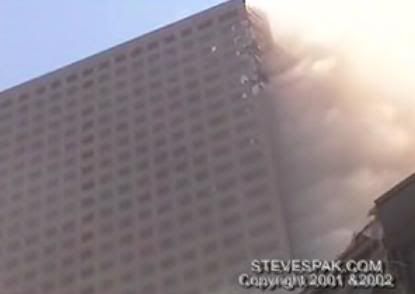
Fire seeks combustibles. WTC 7 "burned", according to you, for 6 hours. Where are the fires?
This is, actually, the right question.
We know that the fires were very severe on the south side of the building. We have copious and consistent testimony from firefighters that the south side of the building was fully engaged in fire, and we have videos of the south side which show smoke issuing from the entire south face. The fires, as any reasonable person would conclude, were real, and enormous, and at the time of the videos were concealed by the smoke they produced. We also know that the fires reached the north side of the building, from photographs that show flames issuing from windows on the north side, and blackening around broken windows that indicate that fire had passed those windows.
Now, we could pretend that there was no connection between these two sets of facts, but that would be stupid; the fire on the north side must have got there somehow. The only way for it to have got there is from it to have spread from the south face, where the fires started. So we know that there must also have been fires in the middle of the building.
The only question left is, were the fires big enough to cause the collapse? NIST investigated this question, and constructed a model of the fires that agreed with where and when flames were seen. Their model showed that a fire consistent with the observations was easily large enough to cause the collapse of the building.
And that's the end of it. We have an explanation of the collapse that relies only on things we have seen, and on things that must have happened by extrapolation from what we've seen. The additional work by NIST, in which they demonstrated that explosives would have caused noises which weren't heard, is strictly speaking unnecessary; we have a very good explanation of how and why WTC7 collapsed.
The only effect of statements like:
Most people by now know that fire doesn't bring down steel-framed buildings, and definitely little smouldering fires don't, and that a statement that uses the term "pull it" in relation to then witnessing the collapse of a building does suggest some volition on the part of the parties involved.
is to demonstrate that the person making it has no interest in finding out what actually happened, and is simply trying to misrepresent irrelevancies to support an interpretation based on denial of reality.
Dave