Merged Discussion of femr's video data analysis

Again, perhaps it was knocked or due to the helicopter, perhaps not. Due to the behaviour of the shake, I doubt it was either of those, but regardless, the point is that numerous other events occur on the tower at the same time, all of which either suggest shaking or the earliest moments of an elongated initiation process relatively far in advance of release.
What does "behavior of the shake" mean. Did I miss something that eliminates (or causes doubt about) the mundane. Is it the timing alone?


:confused:
 
What does "behavior of the shake" mean. Did I miss something that eliminates (or causes doubt about) the mundane. Is it the timing alone?
Not alone, no.

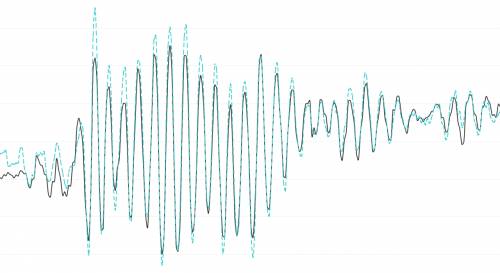
Horizontal...
26055033.jpg


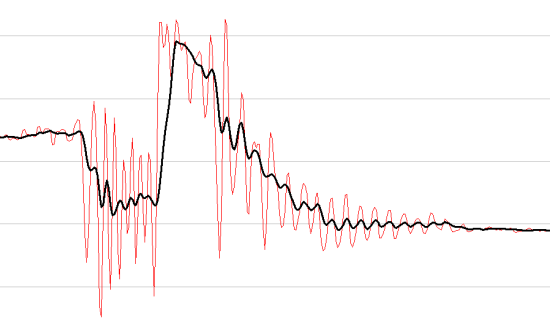
Vertical...
68321176.png


A *knock* of the camera would behave in a more *impulse-decay* manner. The vertical movement recieves a couple-o *impulses*. There is no obvious initial impulse. Looks more like transmitted vibration than a knock to me, but feel free to disagree.

May go into more detail, but folks...tower movement ~9.5s in advance of release... ;)
 
Not alone, no.

Horizontal...
[qimg]http://femr2.ucoz.com/_ph/6/2/26055033.jpg[/qimg]

Vertical...
[qimg]http://femr2.ucoz.com/_ph/6/68321176.png[/qimg]

A *knock* of the camera would behave in a more *impulse-decay* manner. The vertical movement recieves a couple-o *impulses*. There is no obvious initial impulse. Looks more like transmitted vibration than a knock to me, but feel free to disagree.

May go into more detail, but folks...tower movement ~9.5s in advance of release... ;)
Could you point me to the thread (or post) about the "tower movement"? I assume it's on more videos then the one we're talking about here.
 
[qimg]http://femr2.ucoz.com/_ph/7/545777892.png[/qimg]

Thank you very much. The seismic graphs available don't reach that far. This is my guess at how the seismic data and the camera shake correlate (pure eyeballing without a theoretical basis):

sauret-shake-vs-seismic.png


The black vertical line marks frame 1100. I've added seconds to the frame numbers just to make it easier for myself to visualize the time axis. The superimposed graph is taken from this page: http://www.ldeo.columbia.edu/LCSN/Eq/WTC_20010911.html

Since the seismic data does not start at an useful point to determine a possible correlation, I can't make my mind, but given the strong differences in intensities and the fact that there was not enough interest in the preceding moments from the people who released the seismic plot, and that the other coarser seismic plot doesn't show any relevant spike anywhere near there, I'm going to adventure the opinion that they're not correlated.

If you have enough interest, you may find this link useful:
[nfurl]www.ldeo.columbia.edu/LCSN/Eq/20010911_WTC/fact_sheet.htm[/nfurl]

ETA: Maybe the first link on this page is useful too:
http://almaty.ldgo.columbia.edu:8080/data.request.htm
(the station name for Palisades is PAL, the network name is LCSN)
 
Last edited:
It looks like a heavy passing vehicle to me.

I point to the following characteristics:

- The vertical movement signal starts at a roughly baseline level, swings increasingly negative, then makes a sudden swing to positive after which it decays approximately back toward the baseline. This corresponds to what I would expect to observe from the wave of ground displacement and/or air pressure from a passing heavy vehicle (but most likely ground displacement in this case).

- At the time of the swing from negative to positive, the frequency of the high frequency component of the vertical signal decreases noticeably. Since there is no reason to expect any physical changes to the camera mount altering its frequency response characteristics at that moment, this is most likely a change in the driving frequency, that is, vertical motion of the ground. A passing heavy vehicle offers a very straightforward explanation for this: a Doppler shift.

- At the same time, the horizontal shake frequency does not change, and at no time does that horizontal frequency match the vertical one. That suggests that the vertical oscillations are driven oscillations, at a resonant frequency of the camera-mount system. Beats, characteristic of such a driven oscillation, can be seen throughout that trace.

Can any other hypothesized cause better (or at least equally well) explain the specific characteristics of these signals? I await with bated (not baited!) breath.

Respectfully,
Myriad
 
Thank you very much. The seismic graphs available don't reach that far.
I went on a hunt for the raw seismic data yesterday, with some success. I'm not sure what filters they apply, as the raw data is significantly noisier than their published graphs, but I'm bound to try and overlay them.

The raw data spans a wider timespan, but I don't think there's a 5s pulse there. (I'd be bangin' on about it already if there was I expect)

I'll have a look.

ETA: The raw data I scavenged was located from...

ftp://ftp.ldeo.columbia.edu/archive/LCSN/WTC/Waveform_Data/

ETS2: Overlay of seismic data seems fine.
 
Last edited:
It looks like a heavy passing vehicle to me.

I point to the following characteristics:

- The vertical movement signal starts at a roughly baseline level, swings increasingly negative, then makes a sudden swing to positive after which it decays approximately back toward the baseline. This corresponds to what I would expect to observe from the wave of ground displacement and/or air pressure from a passing heavy vehicle (but most likely ground displacement in this case).
The camera height above ground was quite large. Need to gather the details, but can be worked out by reference to the foreground building.

Also, the vertical position does not actually recover, and the *jump* is more likely to be *slippage* of the actual camera orientation due to the vibration.

- At the time of the swing from negative to positive, the frequency of the high frequency component of the vertical signal decreases noticeably. Since there is no reason to expect any physical changes to the camera mount altering its frequency response characteristics at that moment, this is most likely a change in the driving frequency, that is, vertical motion of the ground. A passing heavy vehicle offers a very straightforward explanation for this: a Doppler shift.
I suggest re-evaluating when the height above ground has been presented.

- At the same time, the horizontal shake frequency does not change, and at no time does that horizontal frequency match the vertical one.
I very much doubt they are both using the same scale. I'll have to regenerate them to know. They were produced for a different purpose.

That suggests that the vertical oscillations are driven oscillations, at a resonant frequency of the camera-mount system. Beats, characteristic of such a driven oscillation, can be seen throughout that trace.
I think the horizontal motion shows more harmonic motion tbh.

Can any other hypothesized cause better (or at least equally well) explain the specific characteristics of these signals?
I think elevation is the critical factor for your suggestion.

Other suggestions have been *helicopter* and *foot*.
 
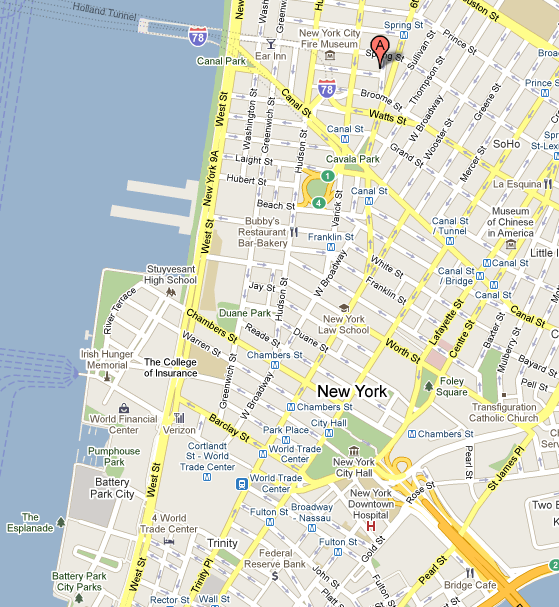
Sauret footage was apparently filmed from their studio location, making it...

7th Floor.

145 6th Avenue, 7th Floor.

878183310.png
 
Sauret footage was apparently filmed from their studio location, making it...

7th Floor.

145 6th Avenue, 7th Floor.

[qimg]http://femr2.ucoz.com/_ph/6/878183310.png[/qimg]
If that's true I think it would be safe to rule out ground movement or passing trucks.

Thanks


ETA: Ground movement as in association with the towers.
 
Last edited:
The height of the camera above ground is irrelevant, unless you're telling me it was airborne, hand-held or otherwise not directly supported by the ground. In which case, the video provides no support for any hypothesis that the shake was caused by a ground tremor of any origin whatsoever.

I was not clear about the nature of what I referred to as vertical ground movements. I meant this to include variations in tilt as well as any (probably much more minor and harder to detect by this method) variations in actual absolute ground elevation. But effects of any ground movement, whether tilting or absolute rise/fall or for that matter longitudinal shaking, would not be attenuated by a higher camera platform.

If the time scales and/or origins of your two graphs, apparently aligned on top of each other, are not the same, please correct this or at least make it clear as it is extremely misleading. In any case, the vertical shake frequency changes simultaneous with the inversion of the signal, consistent with a Doppler shift as the cause of the vibrations moves relative to the camera.

Respectfully,
Myriad
 
I went on a hunt for the raw seismic data yesterday, with some success. I'm not sure what filters they apply, as the raw data is significantly noisier than their published graphs, but I'm bound to try and overlay them.

The raw data spans a wider timespan, but I don't think there's a 5s pulse there. (I'd be bangin' on about it already if there was I expect)

I'll have a look.
From http://www.ldeo.columbia.edu/LCSN/Eq/20010911_WTC/WTC_LDEO_KIM.pdf:

Figure 1: Seismic recordings on E-W component at Palisades for events at World Trade Center (WTC) on September 11, distance 34 km. Three hours of continuous data shown starting at 08:40 EDT (12:40 UTC). Data were sampled at 40 times/s and passband filtered from 0.6 to 5 Hz. Two largest signals were generated by collapses of Towers 1 and 2. Eastern Daylight Time (EDT) is UTC minus 4 hours. Expanded views of first impact and first collapse shown in red. Displacement amplitude spectra in nm-s from main impacts and collapses shown at right. Sampling is done for 14-second time windows starting about 17 s after origin time. Note broadband nature of spectra for collapses 1 and 2. Their signals are similar with a correlation coefficient of about 0.9 as are those for two impacts.​
(bolding mine). Maybe that helps. Figure 1 is the famous 3-hour graph.

I've seen a small anomaly in that graph near the zone of interest. Not enough to draw any conclusions, but at least enough as to cast a little doubt.

Other suggestions have been *helicopter* and *foot*.
I'd throw in a manipulation of the camera. A button press, the head touching the viewfinder...

Sauret footage was apparently filmed from their studio location, making it...

7th Floor.

145 6th Avenue, 7th Floor.
I wouldn't discard they climbing up to the terrace. The take seems to be quite high.
 
If that's true I think it would be safe to rule out ground movement or passing trucks.


If that's true it a truck or subway less likely to be the vehicle in question, but then it could be lots of other things... a piece of equipment on a dolly a few feet away, a janitor wheeling a dump cart down the hallway, a forklift on the floor above or below...

There's also the possibility of machinery starting up, HVAC cycling. Lots of things make building floors shake. Though I still prefer a moving source because of the apparent tilt-reversal and Doppler shift in the vertical.

ETA: Elevators.

Respectfully,
Myriad
 
Last edited:
If that's true it a truck or subway less likely to be the vehicle in question, but then it could be lots of other things... a piece of equipment on a dolly a few feet away, a janitor wheeling a dump cart down the hallway, a forklift on the floor above or below...

There's also the possibility of machinery starting up, HVAC cycling. Lots of things make building floors shake. Though I still prefer a moving source because of the apparent tilt-reversal and Doppler shift in the vertical.

Respectfully,
Myriad
True.

The helicopter also gains merit. I know when they fly over my building things tend to shake.
 
The height of the camera above ground is irrelevant
I disagree.

unless you're telling me it was airborne
Which I'm clearly not, and it's clearly not, so why bother to make the suggestion.

would not be attenuated by a higher camera platform
Building tremor absorbtion behaviour would come into play, but, again, the focus here should really be on the tower behaviour rather than get into such, aiii ?

Numerous events on the tower coincide. How many would stretch the bounds of coincidence do you rekn ? Again, I'm simply saying they coincide.

If the time scales and/or origins of your two graphs, apparently aligned on top of each other, are not the same, please correct this or at least make it clear as it is extremely misleading.
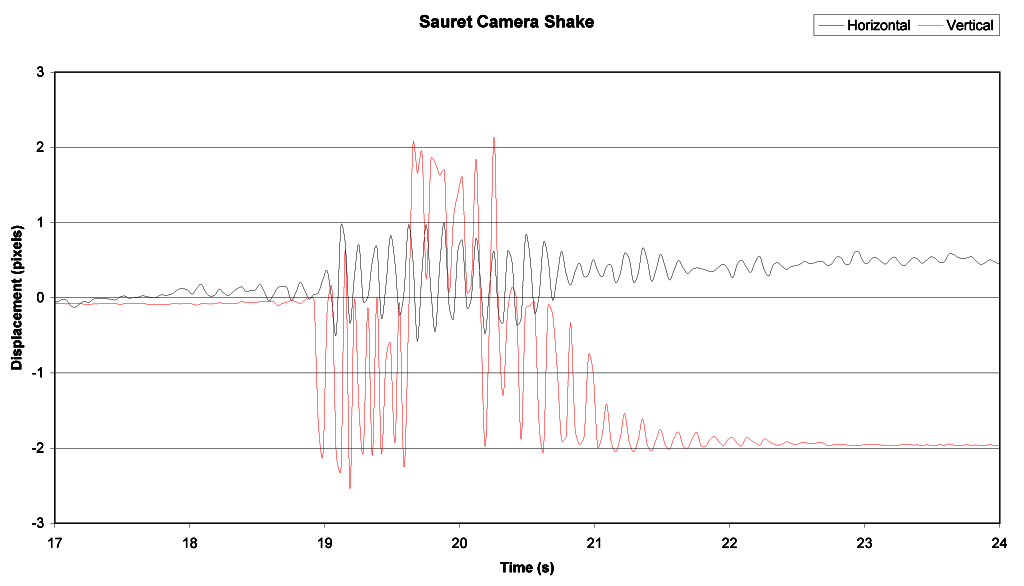
It's only misleading when you make assumptions. Here's the shake vertical and horizontal motions overlaid...
685335724.png

(Slightly lower resolution data than previous images you are talking about (as this data is only from the upper field), but fit-for purpose.)

In any case, the vertical shake frequency changes simultaneous with the inversion of the signal, consistent with a Doppler shift as the cause of the vibrations moves relative to the camera.
As I said above, vertical position change persists after the camera shake, indicating the vertical shift is a physical movement of the camera position/orientation.
 
I disagree.


Which I'm clearly not, and it's clearly not, so why bother to make the suggestion.


Building tremor absorbtion behaviour would come into play, but, again, the focus here should really be on the tower behaviour rather than get into such, aiii ?

Numerous events on the tower coincide. How many would stretch the bounds of coincidence do you rekn ? Again, I'm simply saying they coincide.


It's only misleading when you make assumptions. Here's the shake vertical and horizontal motions overlaid...
[qimg]http://femr2.ucoz.com/_ph/6/685335724.png[/qimg]
(Slightly lower resolution data than previous images you are talking about (as this data is only from the upper field), but fit-for purpose.)


As I said above, vertical position change persists after the camera shake, indicating the vertical shift is a physical movement of the camera position/orientation.
I believe he made this post before he learned the camera was in 7 floors up in a building.
 

Back
Top Bottom