[*snipped irrelevant babbling*]
As to the condition of the binoculars...have you ever tried looking through binoculars with the faults you describe? No --of course you haven’t. Simply it makes them almost unusable - and certainly the witnesses did NOT describe a pair of worn out scrappy binoculars that were virtually unusable. Also, given their positions at the research facility, if the binoculars were in the condition described, they would have, being the type of people they were, responsible and reliable, simply procured a new set. These were not the type of people to go out for the day taking with them substandard equipment. It is not credible to think they would. No, we must assume that the binoculars were in as reasonable condition as any normal use binoculars ever are. Quite suitable for viewing what they did.
So and you can see I have neglected nothing relevant to the sighting.
So we have another demonstration of your sub-par reading skills? (That's giving you the benefit of the doubt, of course, because it could be that you're just being dishonest again.) Go re-read my post. I didn't describe any faults in any binoculars. Have you asked the principal or English teacher there at your high school about those remedial reading programs?
Your argument from incredulity and ignorance regarding the quality and condition of the binoculars is, well, an argument from incredulity and ignorance. You don't know anything about the condition of the binoculars. Ignorance. And you can't believe that they could have been less than sufficient to support your position. Incredulity. I'm sure you agree. (If you don't, you'll get a chance to redeem yourself below...)
Since you seem to be pretty damned certain about
all the criteria involved which would have affected the Rogue River sighting, if you're going to eliminate
every mundane possibility, how about you start here...
What make and model were the binoculars? What sort of prisms? What sort of lens coating? What magnification? How old/new? How often were they serviced/cleaned? How recently? Under what conditions were they stored/carried? Did they get wet? Ever? Were they waterproof? Any river sand ever get into the slides/focusing gears? Were they the personal property of the witnesses? Did they tune the diopter adjustment regularly? Recently? For each person that handled them?
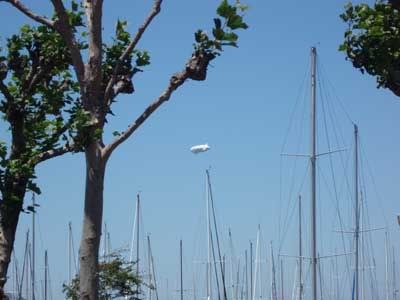
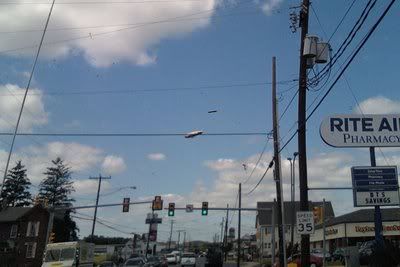
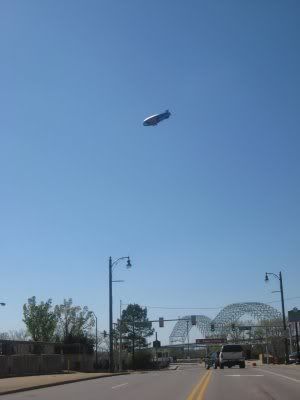
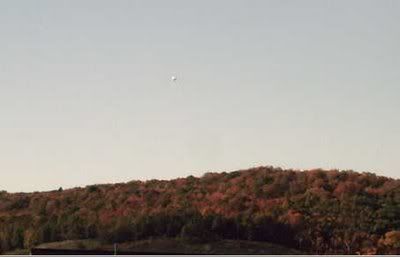
What material was used as blimp skins in 1949? What differences were there between the skin of the envelope and the skin of control surfaces? What differences were there between covering material for the horizontal stabilizer and the elevator surface, vertical stabilizer and the rudder surface? What materials were used for the surfacing the gondola? What types of paint were used for all those various surfaces? All the same? Different types for different surfaces? What was the pigment that made it silvery? What was the paint base made from? Technically describe its reflective qualities, or even in layman's terms, flat, matte, satiny, glossy? What would have been the maximum angle of all four control surfaces, elevators and rudders, and how would that have affected the light reflectivity from all various distances within the guesses of the witnesses?
What was the pollen count at that time on that day in that part of that state? What kinds of pollens? What was the measured humidity level, temperature, air pressure? Which direction was the wind from and at what speed? Where were any sources of pollen and/or pollutants relative to the sighting? Distances and directions? What sort of man made environmental pollutants were in the air? In what densities? What optical distortion and/or reflective properties would those various pollutants cause at those various densities and at various distances within the range of guesses of the witnesses? What sort of non-pollen natural pollutants, dusts, spores, sea salts, etc., were in the air? In what densities? How would their various optical properties have
specifically affected viewing conditions of the atmosphere that day?
If you really want to eliminate all the mundane possibilities, you need to provide detailed answers to all those questions. And when you're done with those, oh yes, there will be more,
Rramjet. Many, many more. You've got a lot of work to do.
Or maybe, if you can't answer all those questions above, with citations and support from relevant source material of course, here's an angle...
The right thing to do now is to admit that you've been wrong, that there are indeed plausible, mundane possibilities that could explain the Rogue River sighting. Acknowledge that you don't have enough data to support your claim that the witnesses descriptions were accurate and reliable, didn't omit any critical details, and didn't include any guesses, hyperbole, mistakes in judgement, or unfounded speculation. Admit that you haven't been able to eliminate a blimp as one possibility to explain what they saw, and that you never will.