Krantz (1992, p.23) reports:
Turns that are made in walking direction will impress one part of the foot more deeply than another, and just which part depends much on where int he stride the turn is being made, as well as how abrupt the turn is. Even movements of the upper body, such as turning to look at something, can be reflected in footprint variations. These motions may be seen in pressure ridges where the foot, or some part of it, pushed slightly to one side or the other.
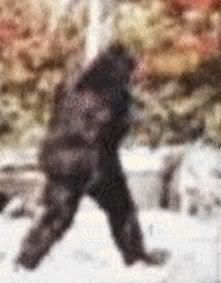
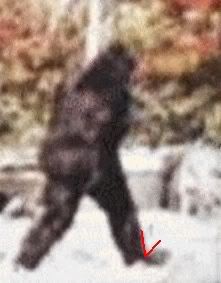
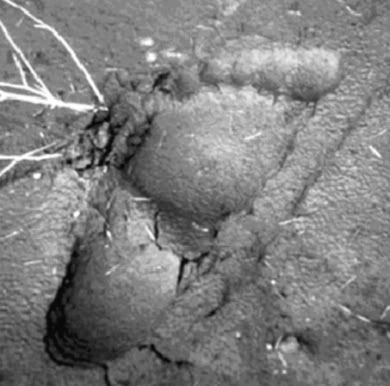
So, this can explain the depth of the heel, even if the foot were a rigid construct. We don't need to resort to a living, flexible foot in order to explain the data visible in the pic.
As far as the mid-print dirt-mound, if you're a disciple of Krantz, you most likely will opine that this is evidence of a flexible foot and therefore a living one. My rebuttal to this contention is threefold:
1. It could be a man-made flexible foot -- constructed of rubber or latex -- rather than the usual, Wallace-style rigid board.
2. The dirt mound could have been placed there purposefully in order to present the illusion of a flexible, living foot.
3. Krantz could be mistaken in his opinion that a living, flexible foot is the only kind that could leave a mid-print dirt-mound.
Since we don't have any type specimen for the animal that supposedly made this print, we cannot say with any authority that one of the above bits of fakery, or some other I have not yet imagined, does not account for the illusion of a living foot.

Too bad it don't mean ----.


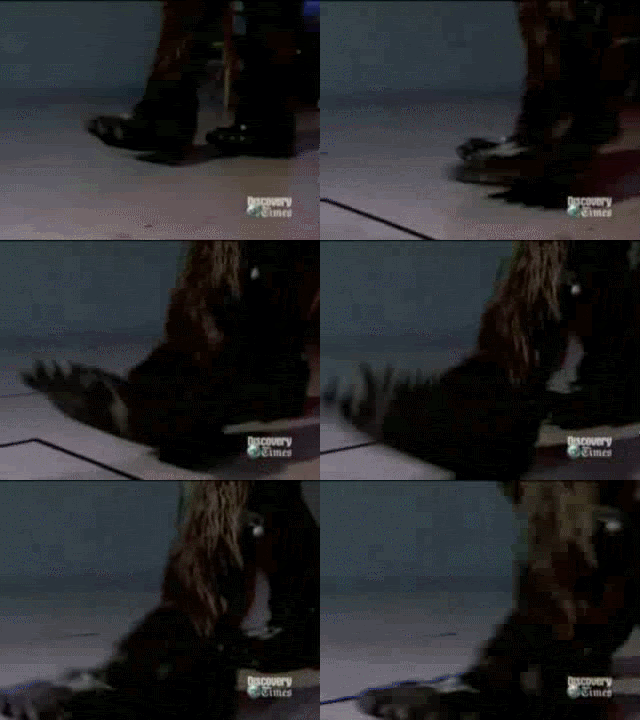
 .....for a fake rubber foot, with long, loosely-hinged toes, that would have no visible means of applying pressure into the ground.