Molten Steel

Status
Not open for further replies.
Please verify who took this photo, the metal being poured is aluminum, the temperature, and if it was taken outdoors in full daylight.

Would you like to know the name of the dog that is watching just out of camera range? The exact GPS coordinates? The color of the pants of the guy who's holding the tongs?
 
Please verify who took this photo, the metal being poured is aluminum, the temperature, and if it was taken outdoors in full daylight.

Well actually this picture which I've posted several times, as I checked it again, a picture of molten aluminum/plastic hard drives (two birds in one stone). The temperature is obviously above melting temperatures so it doesn't matter how hot it is since it either way negates your stance and confirms mine.

images_pic-thumb-25199-drives_in_the_crucible.jpg
(the hardrive)
Looks quite outdoorsy:
images_pic-medium-25216-flame_and_toxic_smoke.jpg

Voila:
images_pic-medium-25229-pouring_the_drive_platters.jpg


The guy who took the pictures is Dave Bullock, you can reach him at; eecue@eecue.com

Since you got me in the mood in displaying pictures, I thought I'd include yet another picture of molten aluminum.
311995518_e69dd6fa89.jpg
(indoors yes, not that it matters to any significant degree though, however there is obviously a lot of spotlighting on it so that the camera could take a clear picture.)
 
Last edited:
Would you like to know the name of the dog that is watching just out of camera range? The exact GPS coordinates? The color of the pants of the guy who's holding the tongs?

Don't give him any tips, he might actually use those come-backs.
 
It's like being attacked by a five-year old in a Power Rangers costume. He doesn't really want you to hit back, but he thinks he does.

get back with me when u read page 5 and tell me if it says sensor saturation or not. its a simple yes or no answer. im addressing you calling me a liar.

Sigh. I already explained this:
Yes, you are lying. AVIRIS does not only sense in 1.9 to 2.5 micron band. It goes all the way up to 0.5 micron, and those bands were not saturated. Therefore, the detector was not saturated.

This is why randomly searching for words without understanding a damn thing about what you're reading is a stupid idea. Yes, the page has the words "sensor saturation" on it. But the sensor is not saturated.

Since you clearly have no ability nor inclination to understand the technical details, let me try a grotesquely simplified analogy.

Suppose I have ten buckets. I want to use these buckets to capture water and measure how much of it there is. Now, two of my buckets are already full. Filled to overflowing, in fact. But the other eight aren't. The amounts of water vary, but on average they're about half full.

So -- is it impossible for me to collect any more water? Are my buckets full? Yes or no?

Your answer, so far, is "yes." That's wrong. You're a liar.

This is analogous to AVIRIS. The spectrometer has 210 bands -- the "buckets" in the analogy -- from 400 nanometer wavelength to 2500 nanometers, each of width 10 nm. The bands from 1900 to 2500 are saturated -- that's my two "overflowing buckets" -- and can't be used for measurements, but that leaves the other 150 bands (my eight partly empty buckets) that can. Therefore, the instrument is not saturated. It explains this in the ruddy paper, in gruesome detail. Only a rare combination of total ignorance and shocking arrogance could produce the opposite argument.


Honestly, Senemut, start paying attention. Nobody is this dense.
 
Last edited:
Oxygen starved with plentiful shafts and air ducts?
Good point.

The elevator shafts were sealed but the breached air ducts would supply plenty of air.

And, of course, you're ignoring the fact that office contents on the impact side would be slammed towards the core ...
Not at all.
I noted that the office contents would be spread out, reducing the amount per sq. ft. with some ending up on the very limited floor space in the core.
 
I noted that the office contents would be spread out, reducing the amount per sq. ft. with some ending up on the very limited floor space in the core.
You do realize that spreading the fuel out, allowing for a greater ratio of oxygen to fuel, works against your claim, don't you? Which releases its energy more quickly, a thick log, or the same mass of wood in the form of a bundle of twigs?
 
Well actually this picture which I've posted several times, as I checked it again, a picture of molten aluminum/plastic hard drives (two birds in one stone). The temperature is obviously above melting temperatures so it doesn't matter how hot it is since it either way negates your stance and confirms mine.

http://eecue.com/img/images_pic-thumb-25199-drives_in_the_crucible.jpg (the hardrive)
You don't show the part where he skims the slag. There is no conformation that the aluminum and plastic mixed.

That it does.

Voila:
http://eecue.com/img/images_pic-medium-25229-pouring_the_drive_platters.jpg

The guy who took the pictures is Dave Bullock, you can reach him at; eecue@eecue.com

Since you got me in the mood in displaying pictures, I thought I'd include yet another picture of molten aluminum.
http://farm1.static.flickr.com/118/311995518_e69dd6fa89.jpg?v=0(indoors yes, not that it matters to any significant degree though, however there is obviously a lot of spotlighting on it so that the camera could take a clear picture.)
The holder's red eyes are from a camera flash. [a common problem]


We seem to have a conundrum.

pouringaluminuminsidesi.jpg


pouringaluminuminsidere.jpg


pouringaluminumoutsides.jpg


pouringaluminumoutsider.jpg


Sunstealer:
"That video you attach is laughable. Where is the scientific experiment and the paper detailing the results? There isn't one, just someone claiming to heat up some aluminium. There's nothing to say what temperature that "mixture" got upto apart from the claim that it was aluminium and that it became liquid. I saw no analysis in that video of the control sample and the sample mixed with things we didn't see. Learn how science is done and then comeback and prove your claims."

Hold yourself to the same standard.
 
You do realize that spreading the fuel out, allowing for a greater ratio of oxygen to fuel, works against your claim, don't you? Which releases its energy more quickly, a thick log, or the same mass of wood in the form of a bundle of twigs?
There is a finite amount of energy in a given amount of fuel. If it burns hotter it will consume the fuel faster and burn out quicker. Whether the fire burns very hot and fast or slow and less hot, in the end the same amount of heat is created.

There was very little combustible material in the core and very little floor space to hold scattered office contents.

There is NO justification for assuming or speculating that core columns got any hotter than the sample columns collected by SEAoNY.
 
You don't show the part where he skims the slag. There is no conformation that the aluminum and plastic mixed.

It was quite step-by-step documented, and for arguments sake let's say all of the plastic material was scooped up, the pour is still not silvery and in daylight.

The holder's red eyes are from a camera flash. [a common problem]

So what? You mean that your excuse here for not conceding is the inventive yet patently dumb equating of ocular reflection with the colour of metal shifting from silvery to red by a camera flash going off? :confused:

We seem to have a conundrum.

Where's the conundrum? I've never claimed that aluminum can't appear silvery, I've repeatedly said it does at certain temperatures but when around melting temperatures.
You see, the first upper photo you linked to is taken in-doors and it shows a silvery colour, I've shown you a lot of photos of molten aluminum (in-doors and outdoor, with lighting varying) from in-door pouring giving a variety of red-to-yellow glow. Your retort is that since it is indoors and not exposed to "full daylight" it looks that way, but looks silvery in daylight.

So, the conundrum would be in figuring out your logic. How on earth do you explain that some photos of molten aluminum look silvery, taken in-doors, while other photos can show molten aluminum in many different shades of red and yellow? My explaination is that molten aluminum has, like metals do in general, a colour spectrum that differs depending on temperature.

However, your argument appears to boil down to that aluminum is, seemingly, the only metal that has one colour spectrum (i.e on melting temperatures), especially out-doors.

Explain yourself.
 
Last edited:
It was quite step-by-step documented, and for arguments sake let's say all of the plastic material was scooped up, the pour is still not silvery and in daylight.
Was it scooped off as slag?

So what? You mean that your excuse here for not conceding is the inventive yet patently dumb equating of ocular reflection with the colour of metal shifting from silvery to red by a camera flash going off? :confused:
Just noting a possibility to explain the conundrum. Another possibility is that this photo has been "touched up".

Where's the conundrum? I've never claimed that aluminum can't appear silvery, I've repeatedly said it does at certain temperatures but when around melting temperatures.
You see, the first upper photo you linked to is taken in-doors and it shows a silvery colour, I've shown you a lot of photos of molten aluminum (in-doors and outdoor, with lighting varying) from in-door pouring giving a variety of red-to-yellow glow.
You have shown one outside photo from someone's back yard, a lot of photos in very dark rooms and this new one of a couple guys pouring from the same kind of vessel as the one pouring silver colored aluminum.

It has been established and you accept that molten aluminum is silvery in daylight at 660°C+.
There are indoor and outdoor photos to confirm this.

Now you come up with these photos supposedly showing aluminum pouring red. It doesn't wash. No way can the back yard experiment be considered verifiable scientific evidence.
[nice design and craftsmanship on the home made tongs however]

You offer no documentation to support what the red colored metal in the foundry photo is.

My explaination is that molten aluminum has, like metals do in general, a colour spectrum that differs depending on temperature.
The metallurgists in the foundry are making a pour, they are not conducting an experiment. They would not heat aluminum much above 660°C because that would be a waste of time and money.


You did not respond to Sunstealers reasonable question:
"Where is the scientific experiment and the paper detailing the results?"
 
Just noting a possibility to explain the conundrum. Another possibility is that this photo has been "touched up".

This is why it is a waste of time with this one. Everything that proves him wrong is faked. He did the same with some of the photographs from the WTC7 appendix.

Truly delusional.
 
There is NO justification for assuming or speculating that core columns got any hotter than the sample columns collected by SEAoNY.

So, no evidence they got heated to 2500ºC by thermite then. Can we dismiss thermite as mere speculation now, or would you like to give us another demo of your confirmation bias?

Dave
 
It has been established and you accept that molten aluminum is silvery in daylight at 660°C+.

Just like the silvery stuff at the bottom of this photo, in fact :

aluminiumfalling.jpg


Now you come up with these photos supposedly showing aluminum pouring red. It doesn't wash. No way can the back yard experiment be considered verifiable scientific evidence.

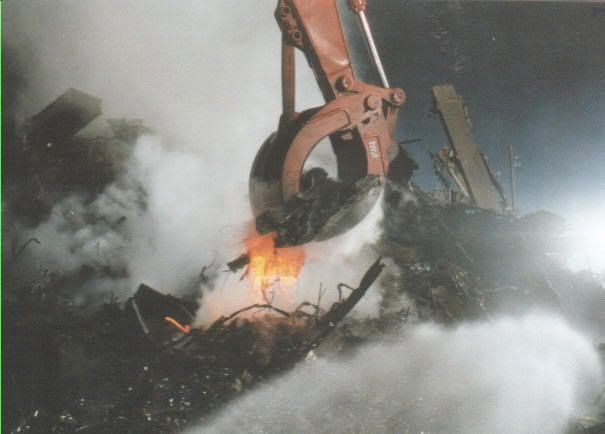
Yet you accept without question that the material in the grappler is near-molten steel based on .... what evidence ??? Even though you agree the photo was taken at night :

grabgood.jpg


You offer no documentation to support what the red colored metal in the foundry photo is.

You've been shown many foundry photos showing aluminium glowing red/yellow. Why are you quibbling?
 
Last edited:
This is why it is a waste of time with this one. Everything that proves him wrong is faked. He did the same with some of the photographs from the WTC7 appendix.

Truly delusional.

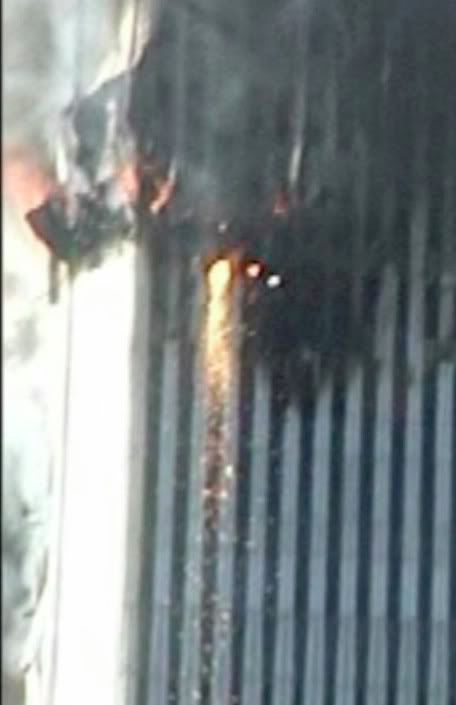
exactly. If you dare discuss with him that the video of the falling orange sparks and molten debris could have been off in terms of color, white balance, etc...they go ballistic, how dare we suggest this.

But you show them photographic evidence that proves their theories bogus, and suddenly they are out with "That photo could have been doctored/touched up."

Talk about unbalanced.

TAM:)
 
Just like the silvery stuff at the bottom of this photo, in fact :

http://i250.photobucket.com/albums/gg274/sap-guy/aluminiumfalling.jpg
The video is not high res. Is it silvery or is it washed out against the building as the droplets get smaller?

There is also the fact that the falling molten metal is in the 1200-1400ºC range, far above what office fires can attain, much less maintain long enough to melt tons of aluminum or steel.

Yet you accept without question that the material in the grappler is near-molten steel based on .... what evidence ??? Even though you agree the photo was taken at night :

http://i250.photobucket.com/albums/gg274/sap-guy/grabgood.jpg
There is nothing else that it could be. It is definitely not aluminum because aluminum would be liquid at temperatures far below the semi molten metal in the in the crab claw.

This is not an excavator but it is consistent with what Mark Loizeaux was talking about.
[FONT=&quot]"There are both video tape and still photos of the molten steel being "dipped" out by the buckets of excavators."[/FONT]

C7 said:
You offer no documentation to support what the red colored metal in the foundry photo is.
You've been shown many foundry photos showing aluminium glowing red/yellow. Why are you quibbling?
Those pictures taken in dark rooms.

The pictures, indoors and out that have plenty of sunlight, show aluminum pouring silver.
 
Was it scooped off as slag?

I do not see that it was, going by their step-by-step documentation of their drive slagging.

Just noting a possibility to explain the conundrum.

How is the camera flash even a possible let alone probable cause for red glowing aluminum? You can't equate ocular reflection turning up as red in a photo with molten steel looking all red due to a camera flash.

According to you, hypothetically it is a possibility that camera light produces a red glow of the molten material while much regular light produces a silvery glow of the material (not just reflections bouncing off the material, but the liquid itself)??

Another possibility is that this photo has been "touched up".

Of course, as if pictures of molten aluminum gets their mandatory fabricational touch-up in case some might be willing to use them to stick it to Jones.:rolleyes:
You can always claim a picture has been "touched up", despite its source, in any given context, when it shows something that you refuse to acknowledge (that aluminum has, like all other metals, a colour spectrum).

You have shown one outside photo from someone's back yard, a lot of photos in very dark rooms and this new one of a couple guys pouring from the same kind of vessel as the one pouring silver colored aluminum.

Yes I've shown you a few outside photos from the same back yard, a lot of photos in dark, semi-dark and notably lit-up rooms, all with varying light, all showing red-yellow colours of aluminum. And you are denying it all, sticking with the inventive yet demonstrably wrong idea that aluminum only looks silvery when molten and thus has no colour spectrum unlike all other metals.

Also, what does pouring molten aluminum from the same kind of vessel have to do with anything?

It has been established and you accept that molten aluminum is silvery in daylight at 660°C+.

Aluminum is generally silvery around 580-660°C degrees yes, I've never negated that and I do not see what that has got to do with the fact that aluminum has a colour spectrum that is visibly there, despite the amount of lamps, camera flashes or if it is taken outdoors.

There are indoor and outdoor photos to confirm this.

Indeed, around its melting temperature aluminum generally has a silver colour, wether indoor or outdoor, the same goes for aluminum at higher temps and colour differences as it climbs the colour spectrum, it shows a variety of colours dependant on the temperature as this is so for metals in general (wether indoor or outdoor).

Now you come up with these photos supposedly showing aluminum pouring red. It doesn't wash.

It doesn't wash? Why do you find the varying colours of molten aluminum to be a contradiction?

You offer no documentation to support what the red colored metal in the foundry photo is.

Documentation? Want a license approval stamp in the corner as well?
The only way for you to find proof that it is not possible to duck away from by unfalsifiable escapes, is to visit a foundry yourself and/or watch with your own eyes as someone shows you this, anything short of that is something you can always beg to be proven isn't "touched up" or "mislabeled" or what have you. But we both know why you are utterly denying the established facts of aluminum having a colour spectrum, don't we?

Look, I've offered you a whole series of a variety of photos showing molten aluminum in different shades of yellow/red (indoor and out door with strong to less strong lighting) and even silver from foundries etc, simply stop ignoring them and use spotty come-backs like "camera flash" arguments to negate them.

No way can the back yard experiment be considered verifiable scientific evidence.

It's a couple of guys melting hard drives in a semi home-made foundry, it doesn't change the physics or what is visibly there. Do you think they faked the pictures, changed it around and purposely molten something else entirely that looks strikingly silver (which steel, iron et al does not do) after it's cooled down in the forms, in hopes of someone finding it and using it against yours or Jones statements? Seriously Christopher, you will have to accept what metalsmiths around the entire globe knows and does for a living.

And... I think that since you simply deny anything given to you (because nobody likes to be proven wrong), wether it is specified and detailed science of organometallic and aluminum-organic blends, chemicals etc or pictures of molten aluminum, unless you get to see it for yourself in the flesh so to speak.

The metallurgists in the foundry are making a pour, they are not conducting an experiment.

So what?

They would not heat aluminum much above 660°C because that would be a waste of time and money.

I suppose when I am to heat up the steel bars to at least a cherry red before I grip it and pass it along to the guy handling the press, I am wasting time and money when I the heat in the furnace gets a bit hotter (since it gets hotter by each hour) and the bars are bright yellow after a few minutes extra heating? Don't be so dramatic.

Let me tell you from my own work experience. You start the day by heating up the furnace. If its in the winter and on a Monday morning, you might have to heat it up for an hour before you can start smithing. Now, as the hours go by the furnace gets a little bit hotter and some places inside the furnace accumulates more heat than others, depending on the diesel-fueled blaster levels that you tweek (ie the amount of air vs burn to go into the furnace).

If you're heating a "bucket", ie the designated pour-contained, it works the same way, you have to really up the heat, by providing a lot more heat unto the container (or furnace) to get the desired range of temperatures, and then you put the aluminum in it. It can easily be 200-300 degrees celsius hotter by that time, causing the first pour of aluminum to be a lot hotter than the subsequent remaining pour in the mold (depending on the size of the mold, container and so forth).

It's also a bit tricky to pour into a mold when it's a small one, especially with a larger container, so it doesn't happen within seconds, hence sometimes it is necessary to heat the aluminum (or preferred metal) so that it does not cool to rapidly or too much before you get the last remains of pour into the molds. Ergo, the first amounts of pour can sometimes need to be a lot hotter, because once removed from its ongoing heat source, aluminum like metals in general cools quickly (especially when exposed to much cooler surroundings). As you can see in the picture, they have just begun pouring into the first mold, with the other molds covered against potential impurities, dust etc to fall into the mold (which I recognized since I've done similar procedures myself).

If I had my supervisors permission (which I doubt I'd get), and your presence here in Sweden, I would gladly show you all of this if you had a few days to spare.
My tip is to take your doubts to the only place where they can be readily and irrefutably laid to rest because, given your resistance against the demonstrable clarifications and pictures, I think only a visit to an aluminum foundry accompanied by supervisors of relevant expertise can cure your doubt, as nothing else seems good enough for you.

You did not respond to Sunstealers reasonable question:
"Where is the scientific experiment and the paper detailing the results?"

On what? All the pictures et al? Tell you what, I've been smithing and melting and casting for years in such surroundings as shown, as the men who were in the given pictures probably have as well, and not once have I conducted a "scientific experiment" on it or written papers detailing the process with pictures. We metalsmiths don't do that, neither does our supervisors, we just know how to do the work and can spot patently false statements about molten metals rather quickly, providing oceans of pictures six ways from sunday at times.

However, if, like Jones, one claims to conduct a scientific experiment, it is reasonable to expect the experiment (to start with) to actually be relevant to the arguments or doubts that brought on the experiment, which his experiment is not.
 
Last edited:
This is why it is a waste of time with this one. Everything that proves him wrong is faked. He did the same with some of the photographs from the WTC7 appendix.

Truly delusional.
Proof? What proof?
WhiteLion posted a couple of pictures he says are aluminum pouring red. He did not provide any documentation to confirm that.
Your idea of proof is some anonymous poster claiming to be an expert and expecting us to take their word as proof. No sale.
 
Status
Not open for further replies.

Back
Top Bottom
