• Security incident: ISF was recently accessed by intruders. Please change your password, and change it anywhere else you used it. Read more

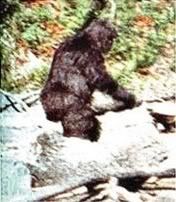
The PG Film - Bob Heironimus and Patty

Status
Not open for further replies.
Astrophotographer wrote:


I already knew they're different....without even using a ruler.
The difference in length is very easy to see, judging it by eye.

I never said they were the same.
Oh, yeah...

The lens diagram you posted doesn't say anything about the accuracy of the Bob/Patty comparison. All it shows is that lenses invert images.
Do I need to mine what you wrote when I first posted that diagram at the defunct PGF thread?

Of course an arm could appear to be different lengths, depending on the angle it's at, relative to the camera.

So what?
It renders every single size and body proportion comparisson you make between Patty, Hieronimus and the red BBC ape useless unless you can demonstrate that perspective effects were ruled out. It renders every single size estimate useless unless you can fulfill the previous requisite and have some solid scaling refference.

I understand the concept, very well, Astro.....but Bob's arm and Patty's arm are at very nearly the same angle (both viewed from the side, with the arm a few degrees 'back' of a straight vertical, in it's swing) in the comparison images........and also....in other comparison images of the two, Bob's arm comes up shorter than Patty's.
Please demonstrate both arms are in both images, contained within the same plane relative to the film. All it takes is Bob's arm being pointed slightly towards the camera to make it look shorter - as the diagram shows.

This is not a meaningless coincidence. I'm thinking :rolleyes: it's simply because Bob's arm is shorter than Patty's arm, proportionally speaking.
Even if this were the case, arm extensions can account for the effect. Actually using a costume with a diaper butt to give the illusion of short femurs will do the trick withour arm extensions. Want me to draw a diagram explaining this?

Poor methodology brings another dead end for bigfoot.

Again......anyone who claims the comparison is extremely inaccurate, needs to explain exactly why it is inaccurate....with specific information which relates directly to the images I posted.


Why is it so difficult for skeptics to do this??? :)
Already made, not for the first time.
Why is it so difficult for you to understand this?
 
Oh my God Guys!
I am actually two different people.
bigfoot.jpg
 
Yeti's claim is that it is impossible for two photos one an individual to be taken such that the distance between the eyeline and tip of the hand, with the body in similar positions is different from picture to picture.

Small quirks in the pose and the angle of the camera can add up to big differences.

Add to that the estimated location of the feet and eyeline, the fact that even if the hand filled the glove enough to move it it could still contain a whole inch or more of extra material and you've got very little proof of anything.
 
Cavemonster wrote:
Yeti's claim is that it is impossible for two photos one an individual to be taken such that the distance between the eyeline and tip of the hand, with the body in similar positions is different from picture to picture.


It's nice to see a skeptic actually do something, in the way of analysis....rather than just spout-off. :)

One minor problem, though, Cavey....as I highlighted in the quote above....you only included 2 points in your comparison. The third point of camparison......a necessary one......you left out completely. (Probably out of necessity.)

In my comparison image.....even though I estimated the location of Patty's foot (using other images of Patty)...the degree of possible error in it's exact location is very small.
And it's insignificant, due to the large amount of difference in the 2 arm lengths.

Also, I've done other comparisons of Bob and Patty, and Bob ALWAYS comes up well short, in the arm department.
 
I can easily add a third point. It was just difficult to get the feet in with my set up.

I think we can both agree though, that in comparing two photos very little is revealed about actual difference in proportions.

Even if the foot placement were exact, if you really want to make me schlep, I can go outside and have my roommate snap a full body shot of me that would show a large difference in my proportions.

Add to that the mass of the fur suit itself makes the exact position of the limbs inside it difficult to establish. Especially where the fingers end in the gloves and where the real eyeline is.

I'm a puppeteer and I'll tell you that I can get very detailed, mechanical (no electronics needed) movement in a fake hand that is several feet away from my real one, much less several inches.

If you have evidence of other comparisons, I'd love to see it, but these two photos don't even suggest a difference, much less prove one.
 
I just took a good, close look at your comparison image, Cavemonster....after splitting the image into 2 separate images (and enlarging, and increasing the brightness)....and I can see that you've mis-scaled yourself, against yourself.
That's probably why you left off that important 3rd point. ;)

It'll take me some time, because I'm not very familiar with Photoshop, but I'll make up some more comparisons, using those images of yourself....and post them here.
 
Last edited:
Cavemonster wrote:
Add to that the mass of the fur suit itself makes the the exact position of the limbs inside it difficult to establish. Especially where the fingers end in the gloves and where the real eyeline is.


The point of the Bob/Patty comparison wasn't to try to locate exactly where any body limbs, or joints, are inside of Patty's supposed "suit".

The point of it was to simply show that, when Bob and Patty are properly scaled (eyes and feet matched-up), that Bob's fingers do not reach to the point they would have to, to actually be Patty's fingers (inside a glove, of course.)
Bob's arms are too short....by several inches.

I'll be posting more comparisons of them.
 
The point of it was to simply show that, when Bob and Patty are properly scaled (eyes and feet matched-up), that Bob's fingers do not reach to the point they would have to, to actually be Patty's fingers (inside a glove, of course.)
Bob's arms are too short....by several inches.

I'll be posting more comparisons of them.

Once again, please demonstrate how fingers can bend in the manner presented as "Bigfoot finger flexing". Fingers containing bones. Empty rubber fingers can easily explain the "flex".
 
Last edited:
My point as a puppeteer is that Bob's fingers could have been anywhere inside that arm and still gotten any kind of motion in the fingers. No special technology required, all assembled simply and mechanically.

As for the photos, the effect is called foreshortening, a very basic principle in any 2d image of a 3d object.

http://en.wikipedia.org/wiki/Perspective_(graphical)#Foreshortening

That accounts for a whole lot of variation especially without the foot and the ambiguous eyeline and the fact that the position of the head inside the mask is difficult to know for sure.

You end up with a level of variation that comfortably includes these pictures.
 
It's nice to see a skeptic actually do something, in the way of analysis....rather than just spout-off.

LOL. Why don't you comment about the analysis I did of your comparison then? That was a REAL analysis and not just "spouting off". It included measurements and why your analysis was flawed and how it could account for your crayon lines being off. As in the previous thread you ignore it. But wait here is another gem:

One minor problem, though, Cavey....as I highlighted in the quote above....you only included 2 points in your comparison. The third point of camparison......a necessary one......you left out completely.

So his feet placement means a whole lot? I think not unless he dug a hole in his floor. However, you have just hit the nail on the head (even a blind squirrel finds a nut every so often) but probably don't realize what you just said. If you do not align all the body points, the comparison is not valid. In the previous thread, I pointed out numerous problems with the angle of the shoulders, the swing of the arm, etc. causing the drop of the arm being different. Your response was "I don't do numbers". I guess anything beyond crayons is too much thinking.
 
My point as a puppeteer is that Bob's fingers could have been anywhere inside that arm and still gotten any kind of motion in the fingers.
No special technology required, all assembled simply and mechanically.


I agree with you, Cavemonster....if Bob's arm is too short (which it is), then Roger could have made the suit with some type of remote-controlled fingers..........absolutely!

But, in that case, the likelihood that Roger built a suit with remote-controlled fingers in it, is less than him building a suit without such a thing.

The other problem for the 'remote-controlled fingers' theory is the fact that whoever was inside the suit, didn't use the device at all during the main steady part of the film, during the look-back.
When the film is watched at normal speed, you really can't notice Patty's quick finger movement, because it's in a section of the film where it's mostly shaky, with only a very short steady part.

So, the question is...if Roger built such a feature into the suit, why wasn't that feature used in the pre-planned steady part of the film, where it could have been seen quite easily??

Why not get a little 'bang for your buck'?


As for the photos, the effect is called foreshortening, a very basic principle in any 2d image of a 3d object.

http://en.wikipedia.org/wiki/Perspective_(graphical)#Foreshortening

That accounts for a whole lot of variation especially without the foot and the ambiguous eyeline and the fact that the position of the head inside the mask is difficult to know for sure.

You end up with a level of variation that comfortably includes these pictures.


Actually...what we end up with....in every single comparison of Bob and Patty, is Patty with longer arms than Bob. :)


the fact that the position of the head inside the mask is difficult to know for sure.


Not at all.

Bob's eyes could not have been any higher in the mask than the apparent eyes that we see...."Patty's eyes"....because the extremely sloped head, which slopes back sharply, just above the eyes, would not allow for it.

And Bob's eyes could not be lower than Patty's eyes, because Patty's head is so low, with her chin at, or below, the level of the shoulders.

Check out this good quality profile shot of Patty...


Pattywalk2a.jpg


You can see a clear 'indent' where Patty's eyes are located...and the sharply-sloped forehead just above the brows.
There is barely enough room in there for a person with a very high, vertical forehead (if their eyes were aligned exactly with Patty's eyes).

Now imagine Bob's eyes located above Patty's eyes, and you have a modern-day miracle on your hands! :)


So...I'm sorry to report...there just isn't any 'wiggle-room', vertically, for Good Old Bob's head.


On a sidenote....another problem for Bob "I wish it was me" Heironimus, is that Patty's head is a tad too far forward-projecting, for Patty to actually be a "Bob-in-a-suit".
More on that....at a later date.
 
Last edited:
I agree with you, Cavemonster....if Bob's arm is too short (which it is), then Roger could have made the suit with some type of remote-controlled fingers..........absolutely!

But, in that case, the likelihood that Roger built a suit with remote-controlled fingers in it, is less than him building a suit without such a thing.

The other problem for the 'remote-controlled fingers' theory is the fact that whoever was inside the suit, didn't use the device at all during the main steady part of the film, during the look-back.
When the film is watched at normal speed, you really can't notice Patty's quick finger movement, because it's in a section of the film where it's mostly shaky, with only a very short steady part.

So, the question is...if Roger built such a feature into the suit, why wasn't that feature used in the pre-planned steady part of the film, where it could have been seen quite easily??

Why not get a little 'bang for your buck'?


Actually...what we end up with....in every single comparison of Bob and Patty, is Patty with longer arms than Bob. :)


Not at all.

Bob's eyes could not have been any higher in the mask than the apparent eyes that we see...."Patty's eyes"....because the extremely sloped head, which slopes back sharply, just above the eyes, would not allow for it.

And Bob's eyes could not be lower than Patty's eyes, because Patty's head is so low, with her chin at, or below, the level of the shoulders.

Check out this good quality profile shot of Patty...


[qimg]http://i172.photobucket.com/albums/w28/SweatyYeti/Pattywalk2a.jpg[/qimg]


You can see a clear 'indent' where Patty's eyes are located...and the sharply-sloped forehead just above the brows.
There is barely enough room in there for a person with a very high, vertical forehead (if their eyes were aligned exactly with Patty's eyes).

Now imagine Bob's eyes located above Patty's eyes, and you have a modern-day miracle on your hands! :)


So...I'm sorry to report...there just isn't any 'wiggle-room', vertically, for Good Old Bob's head.


On a sidenote....another problem for Bob "I wish it was me" Heironimus, is that Patty's head is a tad too far forward-projecting, for Patty to actually be a "Bob-in-a-suit".
More on that....at a later date.

Let's say I give you that in every instance, the costume's arms are longer than Bob's.

When I put energy into building a creature costume for entertainment purposes, one of the most crucial things is that the proportions don't appear to be those of an actor in a suit. Look at Godzilla's short arms and towering head (sight line well above the actor's eyes)

It would be a pretty terrible costume builder who didn't try their best to disguise the person inside. Longer arms makes a whole lot of sense seeing that the main influence of the design seems to be the gorilla.

As for why the finger twitch wasn't showcased more, I could postulate a number of reasons.
1) There is no active mechanism, the fingers move kinetically and that is the moment that friction momentum etc lined up for them to move. Essentially the hand is built with stops and hinges so that when wiggled, it moves naturally. This would be the easiest way to create a moving hand.

2) Bob was moving the hand more or less randomly and in the "take" that was the best for a number of other reasons, there was only a little finger movement. (since they knew the tape would be scrutinized, they only needed one example)

3) From experience I'll tell you that when you're in a hot suit you aren't used to and have a particular way of moving and mechanisms to use (often unfomfortably) you will often use them sparingly, to concentrate on your more essential performance more.

4) He may have feared that overuse of the hand mechanism would show more clearly how it works. Much in the same way, the briefer a special effects shot is in a movie, the harder it often is to tell how it was done.

5) Less is more.

Are you suggesting that none of these 5 things (and many more) are possible or likely?
 
I wish someone with a camera, a tripod, and a willing assistant would put SweatyYeti out of his misery by doing the following little experiment (hint to SweatyYeti: if you just imagine doing this, you'll see why your photo comparison is absurd)

1: set camera on tripod so as to take photo of someone's whole body from the side.
2: have that person keep their feet still, and have their head fixed against some reference point (tree branch?)
3: take one photo with the shoulder closest to the camera down and forward and the arm extended backwards and down in a plane perpendicular to the direction of the camera.
4: take another photo with the same shoulder lifted up and backwards and the arm extended backwards and down, but with the hand about a foot closer to the camera than the shoulder.

Result: two photos in which the feet and eyes will be perfectly aligned, the overall body position will look roughly similar, and yet the hands will be at noticeably different levels. SweatyYeti will either have to insist that the camera has magically made two people out of one, or he will have to realize that he's putting forward a truly pathetic argument.
 
That won't do it for him since he claims that the difference is consistently present as the camera changes angles and the body changes position.
 
I wish someone with a camera, a tripod, and a willing assistant would put SweatyYeti out of his misery by doing the following little experiment (hint to SweatyYeti: if you just imagine doing this, you'll see why your photo comparison is absurd)

1: set camera on tripod so as to take photo of someone's whole body from the side.
2: have that person keep their feet still, and have their head fixed against some reference point (tree branch?)
3: take one photo with the shoulder closest to the camera down and forward and the arm extended backwards and down in a plane perpendicular to the direction of the camera.
4: take another photo with the same shoulder lifted up and backwards and the arm extended backwards and down, but with the hand about a foot closer to the camera than the shoulder.

Result: two photos in which the feet and eyes will be perfectly aligned, the overall body position will look roughly similar, and yet the hands will be at noticeably different levels. SweatyYeti will either have to insist that the camera has magically made two people out of one, or he will have to realize that he's putting forward a truly pathetic argument.
Ehhhh... Why didn't we search Wikipedia for the article on perspective distortion in photography?
This should stop the arguments. I should be able to draw the lens diagram for why this happens over the weekend but you can instantly tell that trying to determine distance from an image IS DEPENDENT ON THE CHARACTERISITICS OF THE CAMERA USED!!!!!!!!!!!!!!!!!!!!!!!!!!!!!!!!!!!!!!!!!!!!!! Bigfoot 0. Sanity 100000.
 
Last edited:
Ehhhh... Why didn't we search Wikipedia for the article on perspective distortion in photography?
This should stop the arguments. I should be able to draw the lens diagram for why this happens over the weekend but you can instantly tell that trying to determine distance from an image IS DEPENDENT ON THE CHARACTERISITICS OF THE CAMERA USED!!!!!!!!!!!!!!!!!!!!!!!!!!!!!!!!!!!!!!!!!!!!!! Bigfoot 0. Sanity 100000.

The hard part of that experiment must have been finding those 18 different trucks.
 
Status
Not open for further replies.

ISF - Join now!

Every member here is approved by hand. No bots, no spam, just people who care about evidence and honest debate.

Membership is free!

Create your free account

Back
Top Bottom