• Quick note - the problem with Youtube videos not embedding on the forum appears to have been fixed, thanks to ZiprHead. If you do still see problems let me know.

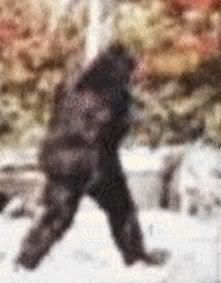
Bigfoot - The Patterson-Gimlin Film

Status
Not open for further replies.
The only caption on the drawing is "A Rude Awakening".

The Wilder story says he was "awakened by his car being shook up two different times", so that, apparently, is the story being illustrated.

Then we have the story from Anderson the camera store owner. He said RP talked about his own car being lifted by Bigfoot. Wilder, Patterson, and Anderson. All stories. All anecdotes. Which, if any, are true?

Spin the wheel or roll the Magic 8-Ball to reveal the truth about these deep secrets of the world. Don't let the complete and ongoing nonconfirmation of Bigfoot slow you down. Grab for the gusto in life. Believe in Bigfoot. Believe Bigfoot witnesses. Have this kind of fun before you die.
 
So my response to any argument for foot bending devices would be to ask, "show me the mechanism" in at least a schematic design drawing, something indicating joints, linkage, actuator mechanisms and controller mechanisms. It may be as simple as springs and connecting rod levers, but I'd still like to see it diagrammed, if someone argued for it.

Bill, do you think a mechanism is even needed for these feet? The footprints measure 14.5" and are fundamentally similar to a human foot (same number and location of toes, no claws, and so on). For comparison, the bottoms of my shoes measure nearly 13" and I'm only 5'6". And if it's a hoax, there's the chance that the prints were made separately, and the costume had smaller feet. It's a Bigfoot ... you wouldn't fake smaller footprints, eh?

My inclination is that the feet, if it's a costume, are a regular human foot in a furry bootie. No enhancements, no added complexity. Just a big human foot flexing as human feet do.
 
Ok I see what you are saying. My only critique is that you lumped relative measurements (ratios) into the mix.


With relative measurements you also get down to the thousandths of an inch. Photo units are just as precise as any instrument you use in your business. These are the units for relative measurements. We are measuring the image not the actual object. The restoration of the object from 2-D to 3-D is the source of the error not the instrument precision. That is where the interpretation comes in. You need to track reliable body markers relative to surface features to estimate where the joints are on the guy in the suit. Then associate them wrt a 3-D model. Any results would be contentious but it all depends on what you are trying to determine. It is a waste of time unless you can establish an acceptable range of uncertainty. What is acceptable? The only things we might be able to establish through measurement are the relative dimensions of Patsy and compare those values against an average human of the same approximate height. The height itself can be roughly determined through other means. There does seem to be enough information for estimating various ratios X microns/Y microns * 100. The accuracy and the meaning of it all remains to be seen.

>>>Ok I see what you are saying. My only critique is that you lumped relative measurements (ratios) into the mix.

It didnt start off that way but it got convoluted somewhere down the line while I was proving my point and yes, for brevity, I did start lumping them together

>>>With relative measurements you also get down to the thousandths of an inch.

I disagree to a point ( depending on how you mean that) If you mean the "relative measurement" can be accurate in and of itself- yes, if you mean then you can use that relative measurement in any manner to accurately gauge an object without any known to place the range at, then no ( and I have never seen a certifying authority that would accept such or allow me to stamp it or standard that would accept it)

>>>Photo units are just as precise as any instrument you use in your business.

to a point, yes and if enough pictures are taken- thats not the case with the PGF. They can be reasonably accurate but nowhere near "precision"

>>>These are the units for relative measurements. We are measuring the image not the actual object. The restoration of the object from 2-D to 3-D is the source of the error not the instrument precision.

yes

>>>That is where the interpretation comes in.
That "interpretation" was the sole basis of my stance. When that comes in, accuracy and certifiability goes out.

>>>You need to track reliable body markers relative to surface features to estimate where the joints are on the guy in the suit. Then associate them wrt a 3-D model. Any results would be contentious but it all depends on what you are trying to determine.

I agree with that 100%. IF we could track markers yes. ( then again, if those markers were there with any degree of accuracy, I would never have voiced dissention and we wouldnt be discussing this now) Its funny, ( if you were to search all the threads he and I had on this) you just summed up my entire argument.

>>> It is a waste of time unless you can establish an acceptable range of uncertainty. What is acceptable? The only things we might be able to establish through measurement are the relative dimensions of Patsy and compare those values against an average human of the same approximate height.

Preach it brother, I'm there- thats all I have been saying

>>>The height itself can be roughly determined through other means. There does seem to be enough information for estimating various ratios X microns/Y microns * 100. The accuracy and the meaning of it all remains to be seen.

Insert "estimated" height and I'm there too. ( I wouldnt expect you to try to find all the threads and posts on it, but if you did) See, from day one, I never disputed that but the "counter argument" started off as though the film DID contain all the elements to measure it with extreme accuracy that would stand scrutiny and it hasnt been done yet. ( or various themes revolving around that core)

It wasnt until I unzipped an ASPRS manual and posted pics and the literal wording did others all of a sudden become "enlightened" and agreed with my premise and started piling on straw. ( thats when it got convoluted)

 
You can pull this off with any pair of ordinary shoes. Just lift your toes. The front of the shoe goes up. Now imagine that the tips of your shoes are molded in the shape of toes. Bingo, you're a special effects wizard. :D

Here's a video showing what Kilaak Kommander is describing. By the way, nice "Destroy all Monsters" reference!
 
You mean jerk your hand down? What about when there is a foot in it which is only a few inches smaller?

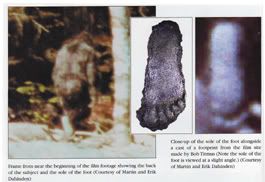
This one is not quite as easy to discredit as some of the other features. What is the physical action of the costume foot at work here? I do not think these are shadows. The apparent flexing of the foot is an anomaly. Maybe Bill Munns has some thoughts on how a costume foot might do this.

The appearance of toes bending upward would seem to be the natural result of rubber toes extending past the end of the foot inside.. ( a' la clown shoes ) The rubber feet wouldn't have to extend more than 2 or three inches beyond the wearer's toes ...

I fail to see all the perplexity over the fact that rubber bends ..
 
The timber industry is another strike against Bigfoot. Maybe it would be difficult to find a body in virgin forest. But how much timber is cleared in North America each year? Yet no logger has come out of the forest with squatch remains in the back of his truck. The industry be damned... that body is a huge windfall for the guy that found it.

Why would loggers find bodies? Sick and dying animals hole up. When the death has occurred the scavenger system takes over and the body is reduced to practically nothing in days. I've seen plenty of clear cuts in the PNW and it would take a very alert logger to notice a few bones mixed in with the rocks. Bones are quickly covered in moss. Club moss grows over talus in full sun and would hide bones for some time even with the trees gone.

In WNC the forests are being allowed to grow back after extensive overcutting in the 20's and 30's. There's very little logging going on. One operation I saw looked like a thinning - there was so little disturbance a body could have been concealed in a nearby clump of rhodys and not been noticed.
 
Thank you Mr. Munns. So unless there were mechanics involved to flex the feet this way then it is unlikely the tracks were made by the costume feet? A fake foot without toe support would not be able to dig into the sand and leave toe impressions. These would have to be fake feet with fake tracks added later. This reduces the likelihood that the costume feet made the tracks. Maybe foot stamps were made from the costume feet and used later to add depth and definition to the tracks.

I think there is a case to be made that the tracks were completely redone. The old ones were obliterated and new ones added with a longer stride length. Although I do not care for explanations that further complicate the hoax. It is complicated enough already.
 
The appearance of toes bending upward would seem to be the natural result of rubber toes extending past the end of the foot inside.. ( a' la clown shoes ) The rubber feet wouldn't have to extend more than 2 or three inches beyond the wearer's toes ...

I fail to see all the perplexity over the fact that rubber bends ..
Only because I am trying to imagine the forces involved with bending rubber toes as appears on the film. A downward force needs a lot of inertia to bend firm rubber a few inches long. A walking stride does not have enough momentum to force rigid toes to bend. This would involve the human's foot bending inside the costume foot. Which of course is possible. They would have to be form fitting costume feet with some midfoot flexibility. My problem is this does not simplify anything. It adds complication which I do not like. Why add any thought to the mechanics of the costume foot if you are just going to replace the tracks anyhow?

All that is left with the PGF are some loose ends. Those nagging features of the film that are difficult to explain without over-complicating the hoax. That is all I really care about with this mystery. I would like to resolve those anomalies to my satisfaction to wrap this one up. "Rubber bends" just does not cut it for me.
 
What kind of rubber behaves like that then? I am sure it exists. I just find it a nagging coincidence that it was the perfect kind.
 
Last edited:
Then we have the story from Anderson the camera store owner. He said RP talked about his own car being lifted by Bigfoot. Wilder, Patterson, and Anderson. All stories. All anecdotes. Which, if any, are true?

This had to do with whether or not Roger thought sasquatches were terrifying VW-flinging monsters. In reading his book (and I have read it) I find nothing to indicate that.
 
I think there is a case to be made that the tracks were completely redone. The old ones were obliterated and new ones added with a longer stride length.

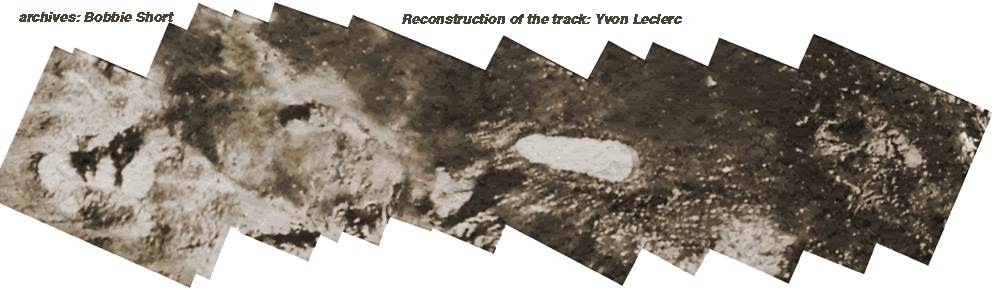
That would have had to have been done before Lyle Laverty and crew found them the next day and with no trace left of the activity.

Busy guy, that Roger.
 
This had to do with whether or not Roger thought sasquatches were terrifying VW-flinging monsters. In reading his book (and I have read it) I find nothing to indicate that.

Don't need to find a direct quote from Rodge in the book- Why did he stop Bob from leaving him alone at Bluff Creek?
 
Last edited:
Diogenes wrote:
The appearance of toes bending upward would seem to be the natural result of rubber toes extending past the end of the foot inside.. ( a' la clown shoes ) The rubber feet wouldn't have to extend more than 2 or three inches beyond the wearer's toes ...


Hmmm......it seems to be the natural result of rubber toes. :confused: Really?
Well, to me it seems to be real toes bending.


Seems we have a dilemma here!


I know what to do.....if someone can replicate that toe-bending with a 'fake foot w/rubber toes', then we'd actually have a reason to think Greg is right.

Until then.....the theory is nothing more than a joke, fit for a Clown. ;)


Diogenes wrote:
I fail to see all the perplexity over the fact that rubber bends ..


I have to agree with you, here, Greg.....rubber definitely bends!
 
To All:

For starters, I have no opinion on Patty's feet. Haven't gotten to that analysis part and don't see enough in the footage to have confidence I'd arrive at anything conclusive. So these answers are merely about fake feet as I know the materials, physics and options.


Kilaak:

"Bill, do you think a mechanism is even needed for these feet? The footprints measure 14.5" and are fundamentally similar to a human foot (same number and location of toes, no claws, and so on). For comparison, the bottoms of my shoes measure nearly 13" and I'm only 5'6". And if it's a hoax, there's the chance that the prints were made separately, and the costume had smaller feet. It's a Bigfoot ... you wouldn't fake smaller footprints, eh?

My inclination is that the feet, if it's a costume, are a regular human foot in a furry bootie. No enhancements, no added complexity. Just a big human foot flexing as human feet do."


My feet are 12" and I'm 6' 3", so 14.5" is sure bigger than mine. But extending feet an inch or two could easily be done, if no mechanism, kind of crazy with a mechanism. You could probably cheat 1/2" to 3/4" both front and back, plus a little fat on the sides, of a real foot to get "Patty" feet.

Diogenes:

'The appearance of toes bending upward would seem to be the natural result of rubber toes extending past the end of the foot inside.. ( a' la clown shoes ) The rubber feet wouldn't have to extend more than 2 or three inches beyond the wearer's toes ...

I fail to see all the perplexity over the fact that rubber bends .."


Diogenes, it's how the rubber bends that makes the issue a bit more complicated. If the feet are slip cast latex and hollow, they bend so easily that they would not make any toe impressions in the ground. If they were latex slush cast with polyfoam cast to fill the spaces not occupied by the wearer's foot or shoe, the polyfoam would still bend and not make toe impressions in the ground.

If they were cast polysulfide compounds (a cold cure rubber compound back in the 60's), they, have a stronger impression into the ground as they bend, but they'd straighten out as the foot is lifted, increasing the risk the wearer will trip over the toes of the rubber feet.

Basically, it's a question of easy bending rubber will make no toe impressions in the ground, and a relatively firm rubber that can bend with force but pushes back strongly will make some kind of toe impression but will try to straighten itself as the foot lifts, increasing the chance the impression in the sand has toe-prints with the fronts of the toes pulled in a forward smudge (plus the tripping potential).


Odinn:

'Thank you Mr. Munns. So unless there were mechanics involved to flex the feet this way then it is unlikely the tracks were made by the costume feet? A fake foot without toe support would not be able to dig into the sand and leave toe impressions. These would have to be fake feet with fake tracks added later. This reduces the likelihood that the costume feet made the tracks. Maybe foot stamps were made from the costume feet and used later to add depth and definition to the tracks.

I think there is a case to be made that the tracks were completely redone. The old ones were obliterated and new ones added with a longer stride length. Although I do not care for explanations that further complicate the hoax. It is complicated enough already. "


As much as I know, mechanics seem highly unlikely, so I just don't go there with any enthusiasm. Feet artificially designed to be bigger than real feet, worn and trying to make believable footprints, while walking smoothly over irregular ground, just seems like a recipe for failure. I would love to see somebody try it, just to see in fact how successful it would be.

Bill
 
But the argument that scientists are fools (or whatever the point of bringing up the platypus was) doesn't hold water.

That wasn't the point, but thanks for the additional information. That was interesting.
 
It all had to match..........

Pattysfoot.jpg
0_track.gif
 
Here's another little detail to consider, with Patty's supposed "loosely-flopping fake toes"....


PattyToesGif8.gif


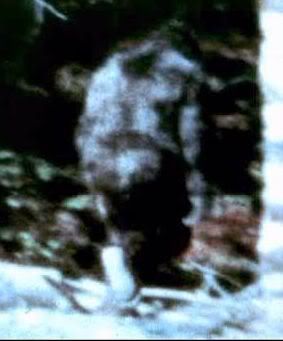
Considering how far Patty's toes extend upwards...and how loose they would have to be to flip up easily.....how is it that her toes are curled-up tight against her foot, when the foot is in a vertical position?...


PFoot2.jpg
Foot11.jpg


Just a little detail to keep in mind, when trying to replicate....what Roger did. ;)
 
Last edited:
Status
Not open for further replies.

Back
Top Bottom