10 story hole in WTC 7

Status
Not open for further replies.
You know Chris, I can change that color chart by adjusting my computer screen parameters.
Cameras also do not absolutly accuratly record what we see.

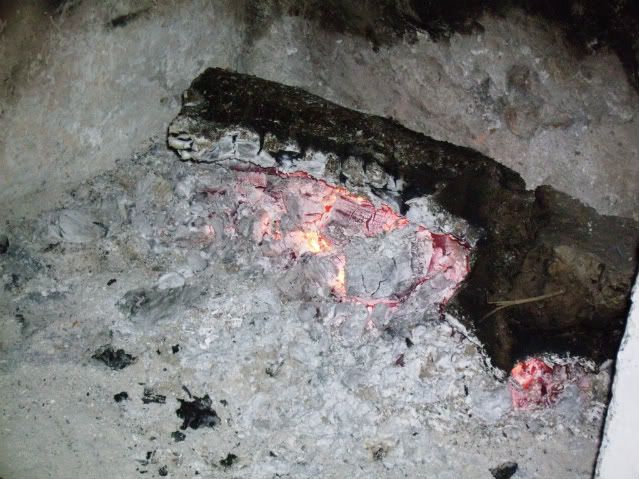
Finally why won't you estimate the temperature of the hearth fire shown above? You have been asked to do so several times now.
 
There was aluminium in the debris, and temperatures above the melting point of aluminium were measured in the debris pile. I strongly suspect that there was molten aluminium present in the debris pile.

Meanwhile, is there anything in the shape of your "glob" of metal that shows, or even suggests, that it was previously molten?

Dave

Molten aluminum glows silvery at a temperature of 600-800 Celsius ... but the witnesses report of "red hot" metal.
... of course molten aluminum glows red / yellow at a temperature over 1000 Celsius ... but the question is then: How can it become so hot?
 
Last edited:
Molten aluminum glows silvery at a temperature of 600-800 Celsius ... but the witnesses report of "red hot" metal.

For the record, if that's a description of steel, 'red hot' could mean anything from 600 oC to 800 oC, which is below the melting point of steel. I don't even think steel at that those temperatures would have been incredibly unusual since the temperature of the fires from the impacts reached near these temperatures at different stages.

As for reaching 1500 oC, people have posted pictures of firefighters supposedly standing right over 'pools of it' with the light shining out of an apparent break in the debris pile and you generally have to be realistic about the fact that the radiant heat from such hot material would cook the flesh off their faces (the photos I am talking about were photoshopped anyway, but point given, this doesn't speak for everything).
 
Last edited:
Molten aluminum glows silvery at a temperature of 600-800 Celsius ... but the witnesses report of "red hot" metal.
... of course molten aluminum glows red / yellow at a temperature over 1000 Celsius ... but the question is then: How can it become so hot?

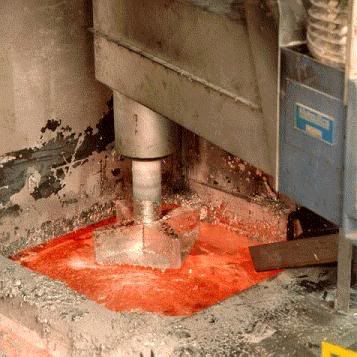
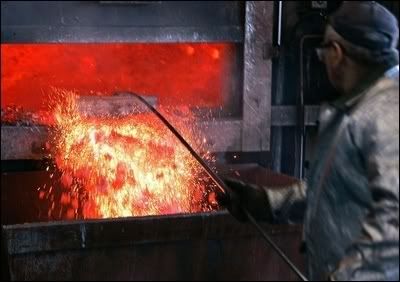
Molten aluminium :

moltenaluminium2.jpg


moltenaluminium.jpg


Bottom line - don't expect to draw deep scientific conclusions from the apparent colour shown in photos. Spectroscopic analysis is a different matter of course.
 
Last edited:
I'm a bit slow Chris,
Indeed

so could you help me out here?
Yes

Could you use your colour charts to estimate the temperature of that hearth fire I posted a little way up the page?
Your fire photo has been photoshopped and it looks like someone put a fan i front of it.
In any case, to judge the temperature of fire you should use this:

[FONT=&quot]Temperatures of flames by appearance[/FONT]
[FONT=&quot]The temperature of flames with carbon particles emitting light can be assessed by their color:[/FONT][FONT=&quot][7][/FONT]

  • [FONT=&quot]Red [/FONT]
    • [FONT=&quot]Just visible: 525 °C (977 °F)[/FONT]
    • [FONT=&quot]Dull: 700 °C (1290 °F)[/FONT]
    • [FONT=&quot]Cherry, dull: 800 °C (1470 °F)[/FONT]
    • [FONT=&quot]Cherry, full: 900 °C (1650 °F)[/FONT]
    • [FONT=&quot]Cherry, clear: 1000 °C (1830 °F)[/FONT]
  • [FONT=&quot]Orange [/FONT]
    • [FONT=&quot]Deep: 1100 °C (2010 °F)[/FONT]
    • [FONT=&quot]Clear: 1200 °C (2190 °F)[/FONT]
  • [FONT=&quot]White [/FONT]
    • [FONT=&quot]Whitish: 1300 °C (2370 °F)[/FONT]
    • [FONT=&quot]Bright: 1400 °C (2550 °F)[/FONT]
    • [FONT=&quot]Dazzling: 1500 °C (2730 °F)[/FONT]
http://en.wikipedia.org/wiki/Fire


Had you actually looked at the link, you could have answered your own question. The color chart for 816[FONT=&quot]°C has the caption:
"Unfanned coals of a wood fire approx."

[/FONT]http://www.blksmth.com/heat_colors.htm

To get carbon based fires to the temperatures necessary to heat any metal to over 1000[FONT=&quot]°C it is necessary to force a great deal of air through the coals or whatever fuel is being used.
Although the temp chart is approximate, it is clear that the molten steel is in the 1100-1400
[/FONT][FONT=&quot]°C range. Aluminum may get orange yellow hot but it is a liquid at that point and could not be the glob we see.[/FONT]
 
For the record, if that's a description of steel, 'red hot' could mean anything from 600 oC to 800 oC, which is below the melting point of steel.
These highly qualified people went on the record saying:

[FONT=&quot]Leslie Robertson, the structural engineer responsible for World Trade Centers 1, 2, 4, 5, 6 and all subgrade levels[/FONT][FONT=&quot], stated "As of 21 days after the attack, the fires were still burning and [/FONT]molten steel[FONT=&quot] was still running[/FONT][FONT=&quot]." [/FONT](source_SEAU.org)

[FONT=&quot]“In the first few weeks, sometimes when a worker would pull a steel beam from the wreckage, the end of the beam would be dripping [/FONT]molten steel[FONT=&quot],” Fuchek said. [/FONT](source)

[FONT=&quot]"I saw [/FONT]melting of girders[FONT=&quot] in World Trade Center[/FONT][FONT=&quot]." said the first structural engineer given access to the WTC steel. [/FONT](source)(audio)

[FONT=&quot]"I talked to many contractors and they said they actually saw [/FONT]molten metal[FONT=&quot] trapped, beams had just totally had been melted because of the heat." said Chaplain Herb Trimpe [/FONT](source)(audio)

[FONT=&quot]A NY Department of Sanitation spokeswoman said "for about two and a half months after the attacks, in addition to its regular duties, NYDS played a major role in debris removal - everything from [/FONT]molten steel[FONT=&quot] beams[/FONT][FONT=&quot] to human remains...." [/FONT](source)

[FONT=&quot]As late as five months after the attacks, in February 2002, firefighter Joe O'Toole saw a steel beam being lifted from deep underground at Ground Zero, which, he says, "was dripping from the [/FONT]molten steel[FONT=&quot]." [/FONT](source)

So unless you want to say these people are liars or idiots, and look like one yourself, you will have to come to grips with the simple fact that:

There was molten steel in the debris piles.
 
To get carbon based fires to the temperatures necessary to heat any metal to over 1000°C it is necessary to force a great deal of air through the coals or whatever fuel is being used.

You mean like if there were big subway tunnels feeding air into the base of the fire, and a chimney effect from the heat of a giant rubble pile fire pulling that air upwards?
 
From the BBC hit piece about WTC 7:

http://www.911blogger.com/node/16541?page=1

(47:57) (speaker, quote:) "In New England, the claims of the mysterious melted steel from tower seven has been unraveled. It was found by fire protection engineer professor Jonathan Barnett - in a salvage yard." - (Prof. Barnett, Simpson Gumpertz & Heeger) "It's came from a much larger theme." - "This was the size of steel that they used in the construction of tower seven, they didn't use this particular kind of steel in towers one or towers two. So that's why we knell its pedigree" - "It was a surprise to me, because it was so eroded and deformed and so...uhm ... we took it for analysis in the lab." - (Prof. Richard Sisson, Worcester Polytechnic Institute) "All it was attacked by what we determined was a liquid slab. When we did the analysis we actually identified it as a liquid, containing iron, sulfur and oxygen." - "You can see, what it does is, it attacks the grain boundaries and this bit would eventually have fallen out and it would continue the attack." -
"Professor Sisson says, it didn't melt: It eroded.
The cause were those very hot fires in the debris after 9/11.
They cooked the steal over weeks.
The sulfur came from masses of gypsum wallboard that was pulverised and burnt in the fires." - (Prof. Sisson) "I don't find it bring mysteries at all. That if I had steel in this sort of a high temperature atmosphere, that is rich in oxygen and sulfur, this would be the kind of result I would expect." (49:22)

How intense must be the heat, which can make out of steel a swiss cheese "Emmental"? In this connection, of course, our old question: From where does the heat come from?

 
Last edited:
No it hasn't.


There was no fan.

So, the bright white areas would correspond to
Whitish: 1300 °C (2370 °F)
or even hotter?

How about this fire, Chris? What would be the temperature here --

[qimg]http://i250.photobucket.com/albums/gg274/sap-guy/IMGP0117.jpg[/qimg]

Do you want to claim, that there was wood in the debris field of the WTC?
:confused:
 
Last edited:
Do you want to claim, that there was wood in the debris field of the WTC?
:confused:

Now you're catching on. Because those who keep claiming to know exactly what material they are seeing based purely on the color might as well be claiming there was wood in the debris.
 
Do you want to claim, that there was wood in the debris field of the WTC?
:confused:

That isn't the point I'm making at all, and I'll be very interested to hear Chris's estimate of the temperature of that second fire.

But - while we're discussing it - of course there was a great deal of wood in the debris field. Desks, partitions etc etc
 
Last edited:
I think you should look at the web definitions for molten:

mol·ten (mltn)
v. Archaic

A past participle of melt.
adj.
1. Made liquid by heat; melted: molten lead.
2. Made by melting and casting in a mold.
3. Brilliantly glowing, from or as if from intense heat: "A huge red bed of coals blazed and quivered with molten fury" Richard Wright.

source
[FONT=&quot]“In the first few weeks, sometimes when a worker would pull a steel beam from the wreckage, the end of the beam would be dripping [/FONT]molten steel[FONT=&quot],” Fuchek said. [/FONT](source)

I told you this before, Fuchek was in area and not working with the recovery of debris. If the beam were not totally melted then the liquid portions and the solids would be in thermal equilibrium... the beam would come apart like putty... It is also unclear to what degree of metallurgy he is knowledgeable in.

[FONT=&quot]"I saw [/FONT]melting of girders[FONT=&quot] in World Trade Center[/FONT][FONT=&quot]." said the first structural engineer given access to the WTC steel. [/FONT](source)(audio)
I already commented on this:
Marginally interesting, but not very specific on the molten steel claims. More than anything, the article describes that the collapse of the bridge, that is, the failure mode of the steel was similar to that of the trade centers

Again he stated that the steel melted, yet the article is comparing the structural failure in the WTC collapse to the failure of the bridge. As an engineer if the steel was melted at a temperature of 1500+ oC I would suspect that the article would have placed more emphasis than it did...

Link

This connection sample was taken from WTC 5 and shows exactly what happens when the connections fail due to heat exposure. Do you consider this melting out of curiosity?


[FONT=&quot]"I talked to many contractors and they said they actually saw [/FONT]molten metal[FONT=&quot] trapped, beams had just totally had been melted because of the heat." said Chaplain Herb Trimpe [/FONT](source)(audio)
key word: metal
Aluminum is a metal, iron is a metal, steel is a metal, lead is a metal... the account is not specific about the classification... Molten aluminum or lead would be unsurprising in the temperatures reported from the debris pile, but not molten steel or iron, although steel would be glowing cherry red at some of the recorded temperatures.

So unless you want to say these people are liars or idiots, and look like one yourself, you will have to come to grips with the simple fact that:
[/SIZE]
There was molten steel in the debris piles.

Never said they lied, or were idiots. How many of your witnesses are experts in metallurgy? How many do you expect to use the word 'molten' in proper terminology? Do I have to continue repeating this?


From the BBC hit piece about WTC 7:

http://www.911blogger.com/node/16541?page=1

(47:57) (speaker, quote:) "In New England, the claims of the mysterious melted steel from tower seven has been unraveled. It was found by fire protection engineer professor Jonathan Barnett - in a salvage yard." - (Prof. Barnett, Simpson Gumpertz & Heeger) "It's came from a much larger theme." - "This was the size of steel that they used in the construction of tower seven, they didn't use this particular kind of steel in towers one or towers two. So that's why we knell its pedigree" - "It was a surprise to me, because it was so eroded and deformed and so...uhm ... we took it for analysis in the lab." - (Prof. Richard Sisson, Worcester Polytechnic Institute) "All it was attacked by what we determined was a liquid slab. When we did the analysis we actually identified it as a liquid, containing iron, sulfur and oxygen." - "You can see, what it does is, it attacks the grain boundaries and this bit would eventually have fallen out and it would continue the attack." -
"Professor Sisson says, it didn't melt: It eroded.
The cause were those very hot fires in the debris after 9/11.
They cooked the steal over weeks.
The sulfur came from masses of gypsum wallboard that was pulverised and burnt in the fires." - (Prof. Sisson) "I don't find it bring mysteries at all. That if I had steel in this sort of a high temperature atmosphere, that is rich in oxygen and sulfur, this would be the kind of result I would expect." (49:22)


How intense must be the heat, which can make out of steel a swiss cheese "Emmental"? In this connection, of course, our old question: From where does the heat come from?

Bio... oxidation would have had ample time to act during clean up... oxidation of metals can result in the same erosion that is seen in long-term rust damage. The debris pile was a concoction of debris, some of the steel was already preheated.

You had sulfur from the gypsum wallboard adding to corrosion, heat speeds up corrosion, water adds oxygen to the corrosion process... the transcri[t you took it from says this...
 
Last edited:
How intense must be the heat, which can make out of steel a swiss cheese "Emmental"?
Last I checked, steel will rust away at room temp, although that takes a while. Adding heat and water speeds that up greatly. Add sulfur too and you've got eutectic corrosion also eating away at the metal. By the way, rusting & corrosion are exothermic, they add additional heat to the fire.
In this connection, of course, our old question: From where does the heat come from?

From the fire of course. The rubble piles burned for weeks, you know this.
 
You mean like if there were big subway tunnels feeding air into the base of the fire, and a chimney effect from the heat of a giant rubble pile fire pulling that air upwards?
Interesting theory but problematic.
It would require a continuous 'chimney' thru 6-8 stories of rubble.
Then there's the fact that the hottest spot was under the WTC 7 debris pile.
WTC 7 didn't have a basement.
 
Yeah, instead it had a power station and subway under it. A lot more fuel than a regualr basement would provide.
 
Interesting theory but problematic.
It would require a continuous 'chimney' thru 6-8 stories of rubble.
Then there's the fact that the hottest spot was under the WTC 7 debris pile.
WTC 7 didn't have a basement.

If there weren't paths for air to flow through the rubble, then the fires would have gone out. Surely you aren't suggesting that the rubble pile was airtight?
 
Interesting theory but problematic.
It would require a continuous 'chimney' thru 6-8 stories of rubble.
Then there's the fact that the hottest spot was under the WTC 7 debris pile.
WTC 7 didn't have a basement.

Hi Chris - any thoughts on the temp of that 2nd fire?
 
From the BBC hit piece about WTC 7:

http://www.911blogger.com/node/16541?page=1

(47:57) (speaker, quote:) "In New England, the claims of the mysterious melted steel from tower seven has been unraveled. It was found by fire protection engineer professor Jonathan Barnett - in a salvage yard." - (Prof. Barnett, Simpson Gumpertz & Heeger) "It's came from a much larger theme." - "This was the size of steel that they used in the construction of tower seven, they didn't use this particular kind of steel in towers one or towers two. So that's why we knell its pedigree" - "It was a surprise to me, because it was so eroded and deformed and so...uhm ... we took it for analysis in the lab." - (Prof. Richard Sisson, Worcester Polytechnic Institute) "All it was attacked by what we determined was a liquid slab. When we did the analysis we actually identified it as a liquid, containing iron, sulfur and oxygen." - "You can see, what it does is, it attacks the grain boundaries and this bit would eventually have fallen out and it would continue the attack." -
"Professor Sisson says, it didn't melt: It eroded.
The cause were those very hot fires in the debris after 9/11.
They cooked the steal over weeks.
The sulfur came from masses of gypsum wallboard that was pulverised and burnt in the fires." - (Prof. Sisson) "I don't find it bring mysteries at all. That if I had steel in this sort of a high temperature atmosphere, that is rich in oxygen and sulfur, this would be the kind of result I would expect." (49:22)

How intense must be the heat, which can make out of steel a swiss cheese "Emmental"? In this connection, of course, our old question: From where does the heat come from?
This is probably the most egregious lie in the BBC piece. Drywall is used for fireproofing and the sulfur in drywall is locked in a chemical cage. Fires smolder at about 500-600°C. This is nowhere near hot enough to erode steel. The "sulfur from gypsum" theory is unprecedented and unproven. Prof. Sisson is spouting junk science as if it were fact.
 
No it hasn't.


There was no fan.

So, the bright white areas would correspond to
Whitish: 1300 °C (2370 °F)
or even hotter?

How about this fire, Chris? What would be the temperature here --

http://i250.photobucket.com/albums/gg274/sap-guy/IMGP0117.jpg
The color chart for 816[FONT=&quot]°C has the caption:
"Unfanned coals of a wood fire approx."

[/FONT]http://www.blksmth.com/heat_colors.htm

If your photo shows something else, there is a fan and/or the colors have been pushed.
 
Status
Not open for further replies.

Back
Top Bottom