What evidence is there for evolution being non-random?

Nobody is doubting there is randomness. The randomness is obvious.
FINALLY. Thank you.

But evolution is "random mutation" with natural selection. Natural selection is is far different in regard to randomness. It is determined by the quality of the programs exhibited in the pool of randomness.
No, it's not. The selector is oblivious to the amount of randomness to select from. That which is produced is selected from, and the criteria of that selection are separate from the production of that which is selected from.

A concrete example: Orcas eat seals. If there are plenty of seals, then the orcas will eat them and leave the sea otters alone. If the seals die back, because people fish all the food out of the sea and they've nothing to eat, then the orcas have to eat something, and now they start eating sea otters. The characteristics that determine which otters live and which get eaten were formerly unimportant to their survival- now they are the essence of importance. The orcas will eat whatever is available; they don't care (in a statistical sense) if it's seals or sea otters. But to the sea otters, what formerly was merely a random characteristic- say, being able to hear the orcas coming- now is suddenly the most important characteristic that determines whether their genes will be present in the next generation or not. Randomness has provided that which will keep some otters alive to breed; and most if not all of the next generation will be able to hear the orcas coming.

Here's two problems with saying, "evolution is not random:" if it's not, where did all the diversity come from? More important, if you have interest in the environment, why is genetic diversity important? Why not just take all but a handful of the otters for fur coats? Magic selection will come along and make up for it, right? After all, selection is more important than randomness, right? To top it all off, go down that road, and guess where you wind up? The cretinist goes, "OK, well, if evolution is not random, then where did all the diversity come from?" and if you've been saying, "evolution is not random," now you either look like an idiot or a liar.

If the program (DNA) in the vector confers advantages in whatever environment it finds itself in, then the organism just may escape the brutal conditions of life long enough to make some copies of the program that runs it and some new vectors that will carry the program into the future whereby randomness can have a chance to act again on the information. It really IS different than other random processes scheibster...different than the spiral-ness of galaxies--because the information replicates...nothing in physics does.
Ahhhhhh, the magic replicator. But selection criteria don't care; they operate either way. They operate on something that is indestructible and ubiquitous just as well as on something that is frangible and evanescent, but capable of replicating. And from both, selection extracts order. The nature of that which is selected matters little; the process of selection extracts order from it.

You see, I understand what you're getting at; I still think, though, that you don't understand what I'm getting at. Let me try again:

WITHOUT RANDOMNESS THERE IS NOTHING FOR SELECTION TO SELECT FROM.

I don't think anyone is saying evolution is non-random...
You're kidding, right? You cannot possibly be serious after writing, "evolution is not random" fifty times in this very thread. Perhaps I exaggerate; perhaps it was only twenty.

just that it's not explanatory to call it random, because selection is just not a memoryless process it is non-random in comparison with the relative randomness of mutation (which is not really even completely random)...it's determined entirely by what there is to choose from...
Selection occurs regardless of either the source or the character of that which is selected from.

Evolution is based upon two factors:
1. Variation, i.e. randomness.
2. Selection.
This is a tautology. Anyone who has taken even basic biology knows this. The cretinist argument is not wrong because it asserts evolution is random- it is wrong because it ignores selection. By not insisting upon the power of selection to create order from randomness, in concert with a source of variation, you cannot prove the cretinist wrong; they'll turn on you as soon as you say, "evolution is not random," and ask the obvious question: "Then where did all the diversity come from?" If you don't address BOTH points, you're walking right into the trap.
 
I've never said evolution is not random. I've said that saying "evolution is random" is creationist claptrap to make it all sound impossible. I was pointing out that biologists, including Dawkins, says "mutations are random; NATURAL SELECTIONS is not--in fact, in regards to creationist arguments where random means "willy nilly", it is the opposite of random. Read my posts again. I just say it's uninformative to say "evolution is random". Just as this thread has random components, I wouldn't say that the evolution of this thread is random. It's not predictable, but each post is determined by what came before.

The question in the OP was about the evidence for evolution being non-random--about Dawkins saying Natural selection was the opposite of random. Mijo says selection is random because sometimes "more fit" (per mijo) things die and other time "less fit" stuff live and so this makes it random. So since mutations are random and evolution has random components--he wants to call the entirety of evolution "random" or a "stochastic process".

While mutations are relatively random, selection is not. Therefore, when you characterize all of evolution as random or a "random process" you overlook the selection process...and that's the part creationists don't want anyone to understand per multiple quotes. They want to say, "Dawkins claims all this complexity arose from chance alone"-- Sure, chance plays a big role, but it wasn't chance alone--it was a long series of successful selections that results in the variety of life we see today. It's not random like galaxies producing spirals because galaxies don't replicate...life does...ONLY SELECTED life replicates. Preferential survival and reproduction drives the evolution of life.

Go read what I wrote again. I have often claimed that calling evolution in it's entirety "random" or "nonrandom" is uninformative. That is why biologists say "random mutation coupled with natural selection"--the latter being much less random then the randomness of mutation...maybe even the opposite of such "randomness".

Natural selection is the key to understanding evolution which is why creationists want to dismiss the whole thing as "random chance"--willy nilly assemblage. Because then their "alternate hypothesis" looks a tad more plausible. The more you understand natural selection, the less and less designed everything looks--it becomes very clearly cobbled together from the bottom up--it only "looks" designed because we see the results of eons of experiments that have been successfully selected again and again and again.

--Jeez, talk about someone not actually reading someone's posts...
 
Last edited:

A model that can produce an infinitely large parameter for an organism is not modeling reality. A sensible way to proceed would be to make the limits of the integration finite, but scale the distribution to keep the area = 1.

The limits could be set based on a multiple of the standard deviation of a sample from the real world. The area would be adjusted to 1 by multiplying the pdf by a constant, larger than (but close to) 1.

Approximations and adjustments are made all the time to theoretical distributions when analyzing and processing data. I don't know why you're making such a big deal about what is commonplace:confused:
 
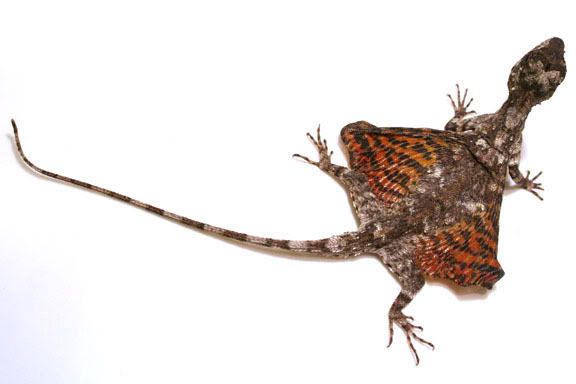
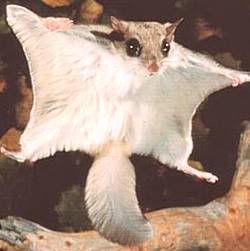
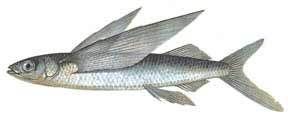
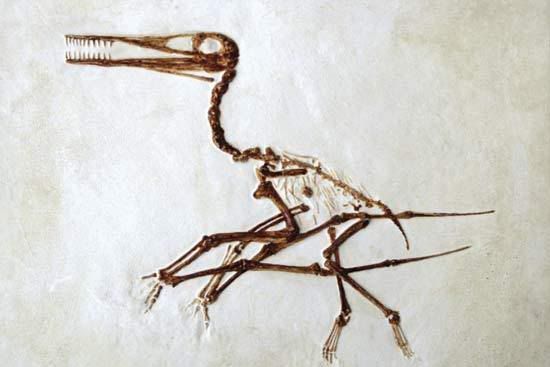
Mutations: Random design changes

Selection: A variable function of environmental pressures

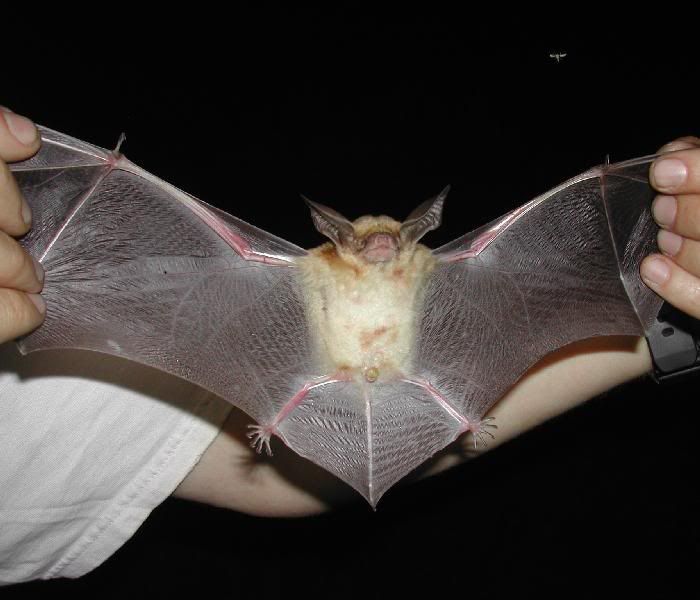
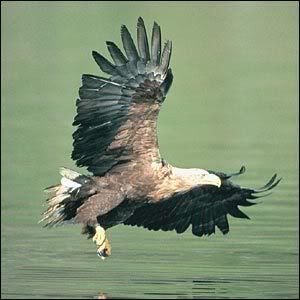
After countless iterations under different environmental pressures and mutation avaliability, these are the results, for vertebrates, when it comes to flying/gliding:
Dracovolan_00.jpg

flyingsquirrel.jpg

ucanbal9ba.jpg

image.jpg

c-pallid-bat.jpg

218345_eagle.jpg

Predictable outcomes?

Despite the requirement for flying (aerodynamic surfaces capable of providing some lift), the solutions were quite different. Not to mention that if no suitable mutation ever showed up, no "flight solution" would evolve.
 
Correa Neto, I have mentioned flight before: e.g.

http://www.internationalskeptics.com/forums/showthread.php?postid=2605257#post2605257

I am not arguing that there are no traits that are highly likely to evolve (eyes being another clasic one) but that it is governed by probabilities.

I am saying that it is in principle impossible to know what species will evolve in the future.

I actually think that on geological timescales, Ivor would agree with me, but he would prefer "pseudorandom", whilst I think it is truly random.

I dislike the description of natural selection as being non-random, because it gives undue weight to the "creator lighting the blue touchpaper and retiring, knowing that humans were certain to evolve" argument.

As Behe thinks the earth is 4.5 GY old and we shared a common ancestor with chimps, I imagine this is how his arguments go, unless it is the supernatural selection argument. Especially as he accepts "microevolution" (whatever that is). - actually I know, it is an "intellectual" figleaf.

Cyborg:

I would still say that selective breeding is a better model for evolution than engineering.

Yes it is the information is important, but every development that I have been involved with, the selection process was more rigorous than natural selection. The designs used the lessons learnt in a way that random mutations can't.

"Lets see if we can turn this problem on, then we can possibly control it and turn it off". With evolution the only information is transmitted by the survivors. With engineering both the successes and failures provide (quantititive) information.

Now I would say that selective breeding falls down as a model precisely because, in general, the breeders know the traits they want to develop, so can select for this one trait, or group of traits.

In natural selection, the only trait is sucessfull reproduction.

Because most organisms fail to reproduce, the "culling" is pretty rigorous (but still probabilistic). However many "fitter"* individuals will also fail to reproduce.

*"fitter" in this case means if the selection was non-random and an omniscient being was assessing which were most likely to survive....


Jim
 
Last edited:
A model that can produce an infinitely large parameter for an organism is not modeling reality. A sensible way to proceed would be to make the limits of the integration finite, but scale the distribution to keep the area = 1.

The limits could be set based on a multiple of the standard deviation of a sample from the real world. The area would be adjusted to 1 by multiplying the pdf by a constant, larger than (but close to) 1.

Approximations and adjustments are made all the time to theoretical distributions when analyzing and processing data. I don't know why you're making such a big deal about what is commonplace:confused:

Uh....because you're talking about redefining the probability distribution to make its moments finite. Once you do that it is no longer a probability distribution or at least no longer the type of probability distribution with which you began. The point is that the Cauchy distribution for instance is defined over the entire real line so taking it and lopping off the ends that are unimportant to you to make its moments finite changes the nature of the distribution. The practice to which you seen to be referring is integrating between two values of a random variable to get the probability of the random variable being between those values.
 
In what context? What is "information" in one context is "noise" in another.

Yes, If it doesn't look indistinguishable from noise, then it has redudant informati_n (which is good for transmission) b_cause t is st_ll p_ssibl_ t_ underst_nd but, the same information could be more compressed.

If it looks the same as noise, then it can't be compressed any further.

Evolution requires imperfect copying, (mutation).

Randomnness is nescesary and sufficient.

Now back to the "random selecton vs random mutation"

articulett said:
While mutations are relatively random, selection is not. Therefore, when you characterize all of evolution as random or a "random process" you overlook the selection process...and that's the part creationists don't want anyone to understand per multiple quotes. They want to say, "Dawkins claims all this complexity arose from chance alone"-- Sure, chance plays a big role, but it wasn't chance alone--it was a long series of successful selections that results in the variety of life we see today. It's not random like galaxies producing spirals because galaxies don't replicate...life does...ONLY SELECTED life replicates. Preferential survival and reproduction drives the evolution of life.
"While mutations are relatively random, selection is not. "

Articulett, what is wrong in saying that natural selection is probabilistic, and not disordered?

It would not be wrong information for anyone with any understanding of science or maths. It can directly conter the tornado in a junkyard analogy, by saying "that is not what random means in this case"

If anyone wants to argue that random always means that every outcome is equally likely, offer to bet $50 with them on the outcomes of ten consecutive (fair) dice throws. They willl get your cash if all ten throws are sixes, and you will get it if at least one throw is not. By their logic both outcomes are equally likely, so it is a fair bet...


You are unsure whether mijo, Schneibster, meadmaker and I have the same definiton of random.

As Schneibster has sad, we do. In factfundamentally, all the dictonary definitions that I have seen, except for the "haphazard, all outcomes equally likely" one are fundamentally acceptable, and usable.

If the ditonary said "that any of the possible outcomes are equally likely possible" then I would accept that tautological definition too.


*Omniscient about physical laws and the everything within the universe, but no supernatural ability to know the outcome of random events prior to their occurance. This being would of course know the probabilities of each event occurring in any situation...
 
Articulett, do you see why I don't like saying that scientific knowledge "evolves", nor that the aeroplane "evolved"?

One reason is that aircraft, including those that never got off the doodling pad, did have designers, including several "highly intelligent designers" (Leonardo da Vinci's helicopters for example).

Evolution is an iteratitive process, but not all iterations are evolution.

Selective breeding of farm animals is not really evolution, because the selection is so biased towards a particular trait. It does use an evolutionary method. Natural selection is biased solely towards reproducing the genes of the parent organisms.

<tangent>
Am I right in thinking that domestic dogs have a far larger variation in their size than domsetic cats, yet does the whole family of felines show a greater variation in size than canines?

I can't think what the largest canine is/was, anyone care to enlighten me please?
</tangent>
 
I would still say that selective breeding is a better model for evolution than engineering.

I don't think you get the point of the analogy - the point is that despite what many people, creationists or not, think about evolution a lot of people have some wildly inaccurate concepts about what design is. As such if one is going to posit a design argument opposing evolution it seems salient to point out how much there is in common.

The designs used the lessons learnt in a way that random mutations can't.

Does genetic material exchange constitute the sharing of lessons learnt in your book? If so sexual reproduction represents such a thing.

In natural selection, the only trait is sucessfull reproduction.

This is because, quite simply, naturally the only organisms you will see are the ones that will survive. But this is true even if you are the product of selection by another group of organisms.

The question you have to ask is if a population of species A affects the population of species B if it is still natural selection. If so then humans selecting traits in farming animals is akin to bees and flowers mutually driving their evolution. (And before you ask what cows have influenced in humans consider those who have the gene for digesting lactose and those who do not).

*"fitter" in this case means if the selection was non-random and an omniscient being was assessing which were most likely to survive....

An omniscient being would know which would survive.

Seriously again I am going to have to say use the terms deterministic and non-deterministic. The word random is tied up with too many ancillary concepts to be conducive to sensible discussion here.

As in: any change to the genome is non-deterministic with respect to the genome itself; any selection of any change in genome is deterministic with respect to the environment.

Some people still argue about whether or not randomness is something that actually exists - I doubt anyone could seriously argue with the above sensibly.
 
Last edited:
I don't think you get the point of the analogy - the point is that despite what many people, creationists or not, think about evolution a lot of people have some wildly inaccurate concepts about what design is. As such if one is going to posit a design argument opposing evolution it seems salient to point out how much there is in common.
true, but if their proposed alternative is a designer, it is probably best not to confuse the issue with talkiing about objects that were designed and saying "they evolved", when the development process was different in important aspects from evolution, and "development" or "improvment" are perfectly good words.


Does genetic material exchange constitute the sharing of lessons learnt in your book? If so sexual reproduction represents such a thing.
Only of successes.

Engineering can also learn from failures:

If I design a device that fails in the application because one of its electrical parameters is too high, I can use this knowledge to try reducing the value without having to try random iterations .
This is because, quite simply, naturally the only organisms you will see are the ones that will survive. But this is true even if you are the product of selection by another group of organisms.

The question you have to ask is if a population of species A affects the population of species B if it is still natural selection. If so then humans selecting traits in farming animals is akin to bees and flowers mutually driving their evolution. (And before you ask what cows have influenced in humans consider those who have the gene for digesting lactose and those who do not).
The difference between humanity and other animals is that breeders conciously select for particular traits; they have a goal in mind for the organism (higher milk yield, an obscene number of claws etc...)

Ant farming of fungi is an interesting one, I would argue for coevolution, and symbiosis, as there is no concious selection involved there...

An omniscient being would know which would survive.

I defined "omniscient" as follows

*Omniscient about physical laws and the everything within the universe, but no supernatural ability to know the outcome of random events prior to their occurance. This being would of course know the probabilities of each event occurring in any situation...

Jim
 
true, but if their proposed alternative is a designer, it is probably best not to confuse the issue with talkiing about objects that were designed and saying "they evolved",

Analogies FFS.

If I design a device that fails in the application because one of its electrical parameters is too high, I can use this knowledge to try reducing the value without having to try random iterations .

If a random mutation causes a being to die then it is unlikely that mutation will be used again.

The difference between humanity and other animals is that breeders conciously select for particular traits; they have a goal in mind for the organism (higher milk yield, an obscene number of claws etc...)

So what? Now you want to push the discussion into consciousness? Is that unnatural?

Is the goal not always, "use this organism in order for me to better survive"?

Ant farming of fungi is an interesting one, I would argue for coevolution, and symbiosis, as there is no concious selection involved there...

What's so magical about conciousness?

I defined "omniscient" as follows

And again this all rather assumes there is such a thing as a 'random' event.
 
Cyborg, I have just seen your edits:
Seriously again I am going to have to say use the terms deterministic and non-deterministic. The word random is tied up with too many ancillary concepts to be conducive to sensible discussion here.

As in: any change to the genome is non-deterministic with respect to the genome itself; any selection of any change in genome is deterministic with respect to the environment.

Some people still argue about whether or not randomness is something that actually exists - I doubt anyone could seriously argue with the above sensibly.

I would semi-agree, however I would argue that the environment does change "randomly", and I would prefer probabilistic to deterministic, due to random microenvironmental changes and macroenvironmental changes.

An example of a microenvironmental change that could affect the selection is a predator being lamed by a thorn for a what could have been a short time, but long enough to miss a few kills, and thus starve before reproducing.

Whether that is truly random or pseudorandom, I don't realy care about. I suspect the former.

On a gelolgical timeframe, I would argue it is random, and highly unpredictible, there is no non-supernatural way of knowing what species will evolve in the next eight million years.

Jim
 
An example of a microenvironmental change that could affect the selection is a predator being lamed by a thorn for a what could have been a short time, but long enough to miss a few kills, and thus starve before reproducing.

Predator shoulda evolved tougher feet.
 
Yes, I do think there are random events, some of the odder QM experiments seem to imply that not only are we in principle unable to measure an object's position and momentum exactly, the object itself doesn't "know" both either.

If a random mutation causes a being to die then it is unlikely that mutation will be used again.

But the point is that I can take the information from a failure and say "this was too far to the left, let's move it to the right. As opposed to "this was too far away, let's change our aim randomly, and see which of our many attemps is closer, then repeat"*.

You get to the same place, but at different speeds, as evolution can only use information from relative success.

What's so magical about conciousness?

Because it has a defined goal and direction. "I want a dog that will have a strong hearding instinct and love water, lets cross newfoundlands with border collies"

That is fundamentally different from "anything that reproduces, reproduces" with no concious designer. Especially if one is arguing that a designer was not needed for the evolution of humanity.

* As Ivor has pointed out, if you constantly try to change a target value, but the spread of your process is wider than your difference from the goal, you will actually make the situation worse.

I can choose to make use of evolutionary approaches, and I can also chose to use other approaches to analyse my data and act on it
 
Predator shoulda evolved tougher feet.

I imagine that their feet are tough enough in usual situations, so that those with tougher feet suffer different losses, worse traction, slightly slower?

The comprimise aspect is why birds on islands without predators often lose their flight; it costs energy, so the flightless birds are less likely to starve, or can raise larger broods for the same food cost.

Fine - until the rat is introduced e.g. to New Zealand.
 
Last edited:
You get to the same place, but at different speeds,

Wrong. Wrong. Wrong.

Evolution is not going any place - comparing speeds is ****ing stupid - or at least get the difference between a breadth first and depth first search.

Because it has a defined goal and direction.

So what? Implict goals and directions work just as well.

That is fundamentally different from "anything that reproduces, reproduces" with no concious designer.

No, it really isn't.

* As Ivor has pointed out, if you constantly try to change a target value, but the spread of your process is wider than your difference from the goal, you will actually make the situation worse.

There is no goal.
 
Last edited:
I imagine that their feet are tough enough in usual situations, so that those with tougher feet suffer different losses, worse traction, slightly slower?

The comprimise aspect is why birds on islands without predators often lose their flight; it costs energy, so the flightless birds are less likely to starve, or can raise larger broods for the same food cost.

Fine - until the rat is introduced e.g. to New Zealand.

So basically your point would be that the environment determines whether or not your particular phenotypical expression is beneficial or not right?
 
Evolution is not going any place - comparing speeds is ****ing stupid - or at least get the difference between a breadth first and depth first search.

That is my point, design is going somewhere, "a better fighter than the Germans"

Use of evolutionary algorithms in design is also going somewhere too.
 
So basically your point would be that the environment determines whether or not your particular phenotypical expression is beneficial or not right?

Yes, and the environment changes randomly
 
Yes, and the environment changes randomly

But what survives to reproduce is entirely determined by organisms that have what it takes in the given environment (thorns and meteors included) that it happens to find itself in.
 

Back
Top Bottom