Simple Challenge For Bigfoot Supporters

Status
Not open for further replies.
Mangler, I remain intrigued by your comment from a while back:

"I have watched/caught people faking tracks"

I hope you can find the time to flesh out a response. I'm sure you have opinions about the purported Bigfoot tracks that have been photographed and published in books and on the Internet, I'm curious to hear them.
 
"Mangler, I remain intrigued by your comment from a while back:"

Ya I kind of figured you would call me on that one.


Tube,

First off I would like to express how much I admire the work that you have done, unfortunately I feel that the implications of what you have shown are being brushed over (to say the least), not just your work but the work of others. Tho I have to admit that I'm not in the least bit surprised.

When someone stakes their reputation on something they really should know all the facts first. There are actually several good people I have witnessed trying to go the distance but when their conclusions did not match that of the mainstream footers the insults and accusations started flying. When I hear/see a statement like "No amount of argument here is going to change people's minds" I throw my hands up and say, WTF! IMO people with no peripheral vision tend to, for lack of a better term, throw a wrench in the crank, which as most know, will cause very, very bad things happen in the real world. It never ceases to amaze me how quickly these (experts) jump to a conclusion based on insufficient/defective data. It disturbs me when they are challenged head on with what seem to be verifiable facts and all they do is backpedal and sidetrack, they have such difficulty admitting that they could be wrong. There's one important/admirable quality about every tracker/professional guide/skeptic I know, they at least entertain the possibility, hell many truly hope that bigfoot is out there, they want to be the one to find it, because come on, for most who puts in major dirt time, it's all about the money.

When I hear/read stories about up close and personal contact that contain very detailed descriptions of this creature, I listen/read, but for instance as soon as something like this "In 1993, I shot a 1200-lb bull Elk near Yakima." comes out of their mouth or off the page I'm done. Were talkin a fair chase Rocky Mountain bull story (ya, BS story) here not a high fence Roosevelt or sub-species. Inconsistencies like this do not fly, in yet it's another story that's published for all to read. Oh the world of Bigfoot.


I can't really go into much detail about who I busted, and they swear that they were just going to make test impressions, ya right. It is kind of an odd/funny coincidence that they were making them fairly close to another researchers area, NOT. I can mention that the area in question was located in the vicinity where some filming for a documentary about sasquatch was done. I wont go into much detail but I will say it was just over a ridge from Darrington Washington.


I have this super secret spot where I glass (and on occasion spend the night and get drunk) when I'm feeling lazy. From this outcrop I can glass maybe 1.5 miles (with my big glasses) in three directions, the area in question is a river basin. On one occasion I spotted some (what I felt was) peculiar activity.


I got on these two guy's at maybe a mile distance, they didn't have a clue. I watched them for apox. 30 min. as they covered an area of this river bed/flood plain, maybe 10,000 sq. feet, they would occasionally disappear for short amounts of time into the brush on the terrace. I noticed them being fairly animated as they walked this ground, pointing at one area, then another, there was also a bit of laughing going on and they were definitely keeping an eye out for something or someone. The longer I glassed the more it seemed that one of them was somehow familiar, I couldn't put my finger on it but I felt the urge to drive over there for a closer look. The drive took maybe 45 minutes, I found their vehicle on the main FS road, turned around and drove about a quarter mile down stream, parked and headed towards the river. I wanted to approach from down steam, I've found that human nature tells a person to look up stream more often than down when they are on guard.

I worked my way up through the brush, making it maybe 40-50 feet from them. I wanted to get close and hear what they were saying but the wind had picked up by that time, their voices were covered by the sounds of the wind and river. I tried to get closer but by then they seemed to have picked up on me. I hooked down to the open plain and approached that way, I didn't want to be mistaken as a threat ( which I might add is not an easy task for me). I immediately began to see what they were up to. They had laid a short track-way (7 impressions) on to the upper flood plain (kind of a sandy silt but held well), one impression was fairly good the others were simply there to draw attention to it (IMO). There were scuff marks from the terrace to the upper plain (2-3 foot gradual drop off) and again from the plain to the terrace. On the terrace there was a very poor attempt at both ends of the trail to make the track-way gradually disappear. All in all it was a piss poor shot at a hoax, my guess would be Class B at the BFRO.

Anyway I kind of Bitch Slapped them and made it crystal clear that some people might take their actions the wrong way, that there have been, and still are, people that use this general vicinity as a research area. They made a lame attempt at apologizing, never admitting to anything and Blah Blah Blah.

As I stated before they said they were just testing out theories. They spoke of test casting, but had no casting material with them/no camera that I could see, there was also a spur road that they could have driven down that would have brought them right to the area in question. Ya, beyond a reasonable doubt, Busted.

Before anyone starts to theorize about who it was, don't. I will state to all that it was just a couple local kid's that are into bigfoot and they made a stupid mistake, they got caught.

BTW, the casts/stamps that they used were kind of cool. Each cast was two pieces held together with hinges on the top, rubber tacked to the side at the break to limit the flex. The break was in the area where the head of the proximal phalanges would be and cut at a slight curve across the cast. The cast material, as near as I can figure was a composite/fill of rubber, plastic and maybe glass, like they use in injection molds? I think. Maybe some sort of firm flexible urethane? I'm really kind of clueless as to what they were made of. The toes, although touching one another could be spread apart with a bit of applied pressure. I didn't get much visual or info out of them, they kind of just wanted to get the hell out of there after they met me, I have that kind of effect on people. The casts sat in custom leather booties with toes and all. I have to admit whoever put the awl to that leather was good, those toes were pretty cool (no seams on the bottom or sides). The casts were about 14-15" by 6" at the ball and maybe 4" max at the heel. The straps that held them to the feet/shoes were sewn into the leather (3 straps), the foot/shoe mounted maybe 3" forward of the aft end of the heel. No discernible dermals, which surprised me, why go to that much trouble and not complete the job? Maybe that was next on the list? That's pretty much it I have not seen them since.


I have another story where I end up being the stupid/gullible one. Two guys down by Cathlamet on the Columbia River burnt me sooooo bad. They ruined what I thought for over an hour was the greatest day of my life. I hate it when that happens.


m
 
I have another story where I end up being the stupid/gullible one. Two guys down by Cathlamet on the Columbia River burnt me sooooo bad. They ruined what I thought for over an hour was the greatest day of my life. I hate it when that happens.


Cathlamet? I lived in Cathlamet for awhile.

What's the story?
 
Ray, is Krantz is saying that sequence of stages is the typical chain of events for a newly discovered and then scientifically-described species?
.
Well, he says the sequence applies to "most other animals", though he may mean the ones that are/have been considered cryptids. In the paragraph prior to the one I quoted for example, he mentions the gorilla, and the okapi specifically, and indicates "many other animals have had a similar history, being cryptic (hidden) for many years from science, yet known to the people where they lived."

[my emphasis]

He also mentions on page 8 how:

"The famous coelacanth moved from Stage 1 to Stage 3 in 1938 when South African scientists saw their first complete specimen. It could be argued that Stage 2 had occurred in its proper sequence in the form of fossils that are eighty million and more years old, even if they weren't the same species. But the existence of fossils does not constitute evidence for a living form.

Sasquatch is presently at Stage 1 of this sequence, thus it is crytozoological and not a scientific reality. It is possible that its Stage 2 already exists in the fossil record as Gigantopithecus but this speculation requires confirmation with a specimen from the living species. More complete remains of the fossil form, if the confirmed the appropriate size along with erect bipedalism, would greatly strengthen the case for the reported living species, but this would still fall far short of proof in the eyes of most authorities."
.
Later, on page 9, Dr. Krantz continues:

Other people are actively pursuing Stage 5, the study of sasquatch ecology, or are openly advocating that this be done. In the first place, no scientific organization will support any investigation of the habits of an unknown animal. In the second place, no scientists or government agencies will believe any ecological data on an animal that does not officially exist, no matter who brings it in or how accurate that data may appear to be. In the third place, even if the sasquatch is someday proven to exist, any data collected before that time will be suspect--it was gathered by someone who presumably was acting on faith rather than on knowledge. It will be presumed that his/her data may be correspondingly colored by a lack of objectivity."
.
That may help answer Huntster's question of why no money is being funneled into squatch research by/for science.

The next paragrah continues:

"The skeptics rightly demand that a specimen be produced (Stage 2) before it can be taken seriously. Only then will the Scientific Establishment willingly devote its considerable resources to moving on through the other steps."
.
Once again Dr. Krantz knocks the ball out of the park. Makes me wonder how many bigfoot proponents have read Big Footprints. All of it.

RayG
 
The new question then becomes: Why don't wildlife biologists stumble over evidence for Bigfoot while researching Gulo gulo in the Cascades?
.
Maybe bigfoot is well-versed in the ninja arts of Hensojutsu (animal morphing), Yoji-gakure no jutsu (distractions), Shinobi-iri (stealth), Joei-on jutsu (obliterating sound and light), and Intonjutsu (the art of escape and concealment, or "disappearing"). It's no coincidence that Intonjutsu is further comprised of such techniques as Gotonpo (hiding using the five elements), and Shinobi-Aruki (silent movement).

Bigfoot/otter morphology, rock-tossing distractions, tracks that appear and disappear, able to elude any modern man-made camera or trail-cam, unable to be tracked by man or dog, able to move silently and quickly through the thickest forests, able to hide in plain sight...

Why it's obvious. Bigfoot is a big, hairy, uber-ninja. :eek:

RayG
 
Mangler, your post is blowing my mind on a number of different levels. It's a good kind of mind blowing, too.

First off, thank you for the positive feedback about the things I've studied. Thankfully, the things I've done are reproducible, so others wanting to see what I'm talking about can do so. It was good for me to see Wolftrax on the BFF duplicating the desiccation ridges and "ridge flow pattern". Once you see for yourself what these textures are like, it kind of becomes a situation of "what were they thinking to imagine these textures were dermal ridges in the first place"? It took me a very long time to come to terms emotionally with a fingerprint expert being wrong, and rather spectacularly so. I think Wolftrax is going through the same thing right now as well.

Though I like to think of myself as having a fairly "open" style when it comes to talking about things publicly, there are certain things I've kept to myself as they are speculative, and I can't prove or demonstrate them.

First off, I don't want to be accused of aiding and abetting hoaxing. I've mostly tested rigid Wallace style prosthetics, as this is already a know and publicized artifact. But as time has gone on, various subtle details begin to occur to me that I've kept to myself. it is simple evolution, really; certain things work, and certain things don't. At this point in time, I'm conflicted as to whether I want to continue testing this kind of stuff, as you will never convince certain people that particular tracks are not "real" and made by Bigfoot, no matter how convincing your fake tracks might be.

But what you just described fits in very well with a number of things I've privately speculated about, not only about the design of the fake feet, but about certain "Bigfoot" tracks found in Western Washington.

While I think there will always be people who go for the simple Wallace-style fake foot, your discovery reinforces something I had privately discovered myself; it is much easier to cast something like a fake foot than it is to carve it out of wood. The Pacific Northwest is home to Fiberlay, a nationally known retail company that specializes in composites and organic casting compounds.

http://www.fiberlay.com/

They sell a whole range of urethane based casting compounds that run the gamut from rigid to very soft, much softer than a skateboard wheel. A number of these products are sold at Seattle Pottery Supply too. Obviously in today's Internet age, physical location is no barrier to obtaining this stuff.

Though you describe the men you caught as being sort of bozos, I suspect that the fake feet you saw were not the first pair they developed. I suspect they saw the same shortcomings I found with rigid Wallace style fake feet, and evolved beyond it.

As I say, your post kind of blows my mind... I hope you stick around here, as your input is VERY interesting and much appreciated.
 
Last edited:
From your first link:

"The Vancouver Island Marmot (Marmota vancouverensis) is found only in the high mountainous regions of Vancouver Island, in British Columbia, Canada. The species can be distinguished from other marmots by its rich, chocolate brown fur and contrasting white patches. Individuals live in small colonies in subalpine meadows on steep, avalanche-prone slopes, preferring those with a southern exposure. It usually hibernates 8 months out of the year.'

Does that sound like sasquatch habitat to you? If you want the researchers to find sasquatch evidence they might have better luck lower down where there are no Marmots.

Marmots tend to stay put, comparatively.

Why didn't wildlife biologists stumble over evidence for wolverines while researching Golden Mantled Ground Squirrels? They "should" have found out Wolverines weren't really extinct in the southern Cascades after all.

Bindernagel had around 100 reports from Vancouver Island, as I recall.
LAL, I appreciate your taking a stab at the Vancouver Island Marmot issue. Unfortunately, your arguments seem to be easily summarized as 'when the people are down and on the look out the sasquatches are up, when the people are up and on the look out the sasquatches are down'. It would also seem that you read or absorbed very little of the extensive information that I provided as evidenced by your asking if VIM habitat sounds like sasquatch habitat. First, one must take a moment to ponder what does sound like sasquatch habitat given the pan-continental nature of their sighting reports. It would seem at least some modest cover and a proximatous water supply is generally what constitutes sasquatch habitat. Does Iowa sound like sasquatch habitat to you? It would seem all it takes is enough trees to hide behind. Does VIM habitat sound like sasquatch habitat? Yes, it very much does.

You obviously didn't take much time considering the issue as shown by a number of points. First, you have clearly overlooked that one of the key elements and challenges of VIM conservation efforts is that the animals are not staying in their typical habitats but are often moving down into and establishing colonies in the peripheries of clearcut areas. In the short term this makes for easier habitation of the animals but in the long term does not provide the same protection as their natural habitat as evidenced by large die-offs in such colonies. Second, you seem to have disregarded all the effort that is done to study predation on the creatures. Did you see the list of known predators? Do those animals habitats correspond only to the VIM's? The how, when, why, and of course by what of predation is painstakingly investigated. We know sasquatches are reported to feed on ground squirrels and we know that the VIM's are in prime traditional sasquatch habitat. Next, you seem to imply that the VIM's stay completely put and are localized in one small area which you would know is simply not the case if you read the population studies. There are in fact some considerablely major distances between some colonies and field researchers must employ the utmost vigilance when observing their movments and watching out for signs of new movment, habitation, and predation.

Finally, I see that your other questions have been answered but I would like to further address your question on the standard methods for identifying new species. Obviously, this is a question that if you're already not well aware of the answer then the answer is readily available to you. But the reason behind the asking is that you're trying to make some point about sightings and how that pertains to bigfoot. The point that I was making is that scientists do not consider using information such as sighting reports to contribute to solid observations of a species until they have a type specimen and preferably live specimens to study. I do not need to point out the bigfoot has yielded no such thing though they are apparently to be found all across the continent. Here are some links with the information you ask for:

Scientific classification.

Systematics.

Phylogenetics.

DNA barcoding.
 
Kitakaze, you seem to suffer from M.A.D. (Multiple Avatar Disorder.)

See a professional ;)
Yes, it's true... quite true. You see it all started when I made the recent mistake of starting to participate in the 'let someone else choose your avatar' thread in the humour section. I find the current ass hat I've been given to be rather blaise but I must accept what is designated me if I am to be able to continue utterly degrading my fellow participants. If you have any interest you may find where I gave another member an E.B.M (Explosive Bowel Movement) to be of particular note.:D
 
mangler, thanks for taking the time to share some very interesting posts with us. I would have to second Tube's observation that the 'kids not really into bigfoot' idea that they may have tried to pass would certainly not seem to be the case given the fact that the gear you describe them using is not your simple wooden stamper.
 
With respect to Desert Yeti, in keeping with what I feel has been a general direction of this very productive thread in terms of addressing major fallbacks and amorphous standard assumptions of bigfoot proponents I would now like to suggest another line of scrutiny. Thanks to tube's hard efforts we've seen clearly how such experts as Jimmy Chilcutt could be so wrong in his assessment of 'dermatoglyphics'. It should go without saying that Chilcutt has no ground to claim expertise when it comes to examining plaster casts or alledged bigfoot prints in general.

When confronted with the reliable evidence produced by tube's efforts it is the standard fallback for proponents to speak of the morphology and characteristics of 'the living foot' (ie flex, toe spread, etc) and Chilcutt's observations thereof. I have elsewhere pointed out that toe spread is no difficult task to achieve but I would now like to invite proponents to show us these very clear examples of successive tracks displaying clear toe movement that is congruent with a living foot and not easily attributable to a hoaxing method. It is my suspicion that this 'living foot' talk is yet another one of these amorphous myths in the manner of the 'where's the dead bears?' type.
 
By the way, are people able to capture short lived, unexpected events on camera, including video, if the phenomena is real in the first place? Yes:

http://www.youtube.com/watch?v=KLM1pfgv9IE
Just wanted to say that that was absolutely one of the coolest links I've seen in this thread. The accompanying music is quite similar to a couple of the bands and production projects I was in before coming to Japan.
 
Tube, kitakaze;


Actually I was making (what I thought was) a feeble attempt at covering the fact that one of these guy's is in fact known to the bigfoot community. And when I stated kids, that's the politically correct term that I use when calling an adult a punk. I apologize for the misunderstanding.:boggled: I find it kind of difficult to give these guy's up because I'm very intrigued by what they are doing and curious as to how far they will make it. IMO this episode was indeed what I believe to be just one in a series of attempts made on their part, I did in fact tell them that I would photographically record as well as cast any impressions in the future, that I felt, even remotely, leaned in their direction. I am fairly certain they don't want me knocking on their door and/or going public but in the same breath I'm fairly certain that they haven't stopped. I personally don't care if they continue or not, impressions are secondary to me. Now if I hear about someone coming across an unmistakable track-way that can be run for any distance I may feel the need to pay them a visit, but until that day comes, why the hell would I really care, it's not like they are the only ones out there doing this.


As far as what I think of the photos that I have seen, I really hate to judge them, I prefer tracks/spoor In situ (hell who doesn't). I have no knowledge of what this creatures foot should look like, no understanding of the impressions it would make, I hate to make any claim with simply photos since it would all be speculation (but in all honesty I do speculate about such). I do know spoor does not simply vanish, if it did then I would have to start giving some serious thought to Kushtaka or Bakw'as and that whole shape-shifter tale, AKA "hairy, uber-ninja", too funny. If they look like casts/stamps, history tells me that's probably what they are, a flat foot on a human has flexibility I would have to assume that bigfoot would be the same. All hoaxed track-ways have a beginning and an end, it's really not that difficult to find them.


I see the actual track impressions as almost secondary to the track-way, one, two, even three impressions wont tell me much, the track-way helps me form a chronology of events. Most people don't understand how critical it is to isolate the scene (stay the hell out of there). If they are not versed in tracking they should just back away, don't try to age it and don't worry about direction. I realize most folks don't have trackers on call so if someone plans on chasing this ghost they really do need to learn tracking, even introduction classes could solve most of these mysteries.


I have never understood how this one particular (expert) group could claim anything but ignorance when they stated, "The three trackers discuss the strange imprint, then suddenly it dawns what animal caused it." and "The base camp is alerted. Everyone comes to see the impression.". Ya that's the first thing I'd do, get as many people as possible tromp-in around the area. Again, The rodeo came to town but only the clowns showed up!!! If they didn't have anyone good enough to make a run on the tracks they should have sent someone to town to find a real tracker, it's not like they were out in the middle of the frickin ocean! We are talking about the biggest find since the P/G film, right? Maybe even BIGGER! LOL, more LOL with rolling on the floor.

Where the hell is the track-way? So now they come up with this, "One possible explanation is immediately apparent -- the animal did not want to leave tracks." Now I have to admit that some animals can be quite clever but come-on. Hell, I'll even admit that I've run elk at park boundaries before on many occasions and they do seem to know right where that boundary is and once they cross that imaginary line they stop, they literally stop and taunt you, I have always found this to be quite an amazing trait. So what I started doing was, I started breaking trail inside the boundary, a big no no, but hey I was looking for the find of the century and the risk of a ticket was well worth it. My train of thought was something along the lines of an island in the midst of a forest, distinctive boarders that protected their sanctuary. If they are as intelligent as some think I wondered if this might make perfect sense.

So now I have another hair brain idea on my list of many that I have to deal with. First I had to choose my location, North Cascades, Rainier or the Olympics? For my first run I chose the Olympics because I was more familiar with that area at that time (eventually I did cover them all). Where would I start? I chose to start at trail heads where I asked every hiking group if they had ever had something strange or unexplainable happen to them in this mountain range, I also left notes on vehicles with email and phone number. I didn't go to every trail head but I covered enough (spent 3 weeks (sept.) doing this) to get a starting point. I worked most the winter that year but came back in late March for the long haul. To make a long, long story short I no longer believe there is an island in the midst of a forest, and that old Bull Elk still seem to be about the smartest animal out there, IMO.


Tube, I don't really have much of a problem discussing what I feel are the inconsistency of many of the recorded impressions that I have seen. There are just so many. I will get back to you with some of these at a later time/date.


m

 
I do know spoor does not simply vanish, if it did then I would have to start giving some serious thought to Kushtaka or Bakw'as and that whole shape-shifter tale, AKA "hairy, uber-ninja", too funny.

Easiest way to tell if a shape-shifter has been active in your area, is to check for tremendous explosions causing a devastating amount of damage. Careless shape-shifters seldom get a second chance. :D

RayG
 
*kitakaze sings stupid song to himself* shapeshifting, shapeshifting, my pants are shapeshifting...

Shapeshifting is a common theme in mythology and folklore... (not to mention in many of the so-called Native bigfoot myths.)

Interlude - Art Break

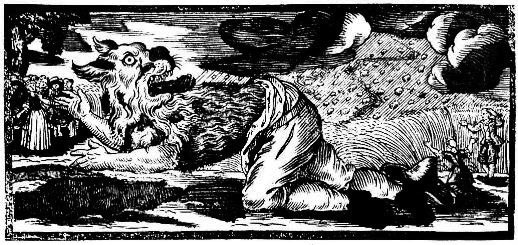
Cool images from the shapeshifter link (uncopyrighted):

Svipdag_transformed_-_John_Bauer.jpg


"Svipdag transformed" by John Bauer.

Faroese_stamp_580_the_seal_woman.jpg


Faroese seal women stamp.

GermanWoodcut1722.jpg


German werewolf woodcut, 1722.

Cadmus_teeth.jpg


"Cadmus Sowing the Dragon's Teeth" by Maxfield Parrish.

Kuniyoshi_Kuzunoha.jpg


Kuzunoha the fox woman, casting a fox shadow.

See it here! Video of a real-life shapeshifter!
 
LAL, I appreciate your taking a stab at the Vancouver Island Marmot issue. Unfortunately, your arguments seem to be easily summarized as 'when the people are down and on the look out the sasquatches are up, when the people are up and on the look out the sasquatches are down'. It would also seem that you read or absorbed very little of the extensive information that I provided as evidenced by your asking if VIM habitat sounds like sasquatch habitat.


I said I hadn't caught up with the thread. I did have time to read the Wikipedia entry and the first thing that struck me was the altitude. There was a similar discussion on Mountain Goats.

I'm reminded of the Yeti expeditions that looked above treeline instead of in the montane forests..

First, one must take a moment to ponder what does sound like sasquatch habitat given the pan-continental nature of their sighting reports. It would seem at least some modest cover and a proximatous water supply is generally what constitutes sasquatch habitat. Does Iowa sound like sasquatch habitat to you?

Iowa would not be my first place to look if I wanted to have a sighting. The whole state has fewer sightings than average counties in western Washington and Oregon. Why are people in Iowa less likely to lie, hallucinate and misidentify sasquatch-wise than people in the PNW?

For Vancouver Island we only need to look at what's habitat in the PNW.

It would seem all it takes is enough trees to hide behind. Does VIM habitat sound like sasquatch habitat? Yes, it very much does.


Avalanche-prone slopes? Alpine meadows? Hardly.


You obviously didn't take much time considering the issue as shown by a number of points. First, you have clearly overlooked that one of the key elements and challenges of VIM conservation efforts is that the animals are not staying in their typical habitats but are often moving down into and establishing colonies in the peripheries of clearcut areas. In the short term this makes for easier habitation of the animals but in the long term does not provide the same protection as their natural habitat as evidenced by large die-offs in such colonies. Second, you seem to have disregarded all the effort that is done to study predation on the creatures. Did you see the list of known predators? Do those animals habitats correspond only to the VIM's? The how, when, why, and of course by what of predation is painstakingly investigated.

See above. I'll try to read the rest of the links when I have time. A predator can certainly move out of its preferred habitat for a short time in search of prey, but they don't live in an unsuitable niche.
We know sasquatches are reported to feed on ground squirrels and we know that the VIM's are in prime traditional sasquatch habitat. Next, you seem to imply that the VIM's stay completely put and are localized in one small area which you would know is simply not the case if you read the population studies.

"Sadly, a population estimated in the mid-1980s to be over 300 animals is currently estimated to contain just over 205 animals, making them one of the rarest and most endangered mammals in the world."

http://www.marmots.org/


No I didn't. The stay put comparatively speaking in that one individual doesn't range over hundreds of miles. They stay in colonies. I would have had no problem locating Pikas in Washington once I found out what was making those weird calls, but casually spotting one is an occurence that happened to me exactly once. Pikas use boulders too.


"This natural pattern of forest growth put marmots quite literally between a rock and a hard place since they live neither in the forests nor on the rocky mountaintops. Instead, they live in small patches of sub-alpine meadow, scattered, like tiny islands in a vast sea of unsuitable habitat. There they find the forage they need, deep soil for digging burrows and large boulders to provide convenient lookout spots to watch for predators.

http://www.marmots.org/ecology.htm

There are in fact some considerablely major distances between some colonies and field researchers must employ the utmost vigilance when observing their movments and watching out for signs of new movment, habitation, and predation.

Did any of your links say specifically Marmot researchers have found no evidence of sasquatches?

Finally, I see that your other questions have been answered but I would like to further address your question on the standard methods for identifying new species. Obviously, this is a question that if you're already not well aware of the answer then the answer is readily available to you. But the reason behind the asking is that you're trying to make some point about sightings and how that pertains to bigfoot. The point that I was making is that scientists do not consider using information such as sighting reports to contribute to solid observations of a species until they have a type specimen and preferably live specimens to study.

Got your copy of Meldrum's book? On page 41 he talks about George Cuvier asserting in 1825 it was doubtful any new large four-footed animals remained to be discovered. Cuvier discovered the Red Panda in 1826. A series of discoveries followed as naturalists acted on travellers' tales and native knowlege of the local fauna.

"This approach was in large measure how new zoological discoveries were made. It was an established formula for investigating and discovering new and exotic species. However, in more recent times this technique has fallen by the way and has been replaced by formal surveys that rely less on indigenous knowlege. Few scientists specifically search for rumored animals. Instead, most field biologists conduct broad taxonomic surveys to see what may turn up in their broadly cast nets or narrow transects. An exception to this trend is Dr. Marc van Roosmalen, a Dutch primatologist who has a predeliction for discovering new species in the Amazon forest. By walking into a village with his eyes and ears open he routinely learns of unusual primates in the surrounding environs. His appreciation of native knowlege of local faunas often results in the description of a new species or even a new genus of Neotropical primate." (pgs. 41-42)


I do not need to point out the bigfoot has yielded no such thing though they are apparently to be found all across the continent. Here are some links with the information you ask for:

That's not the information I asked for.
 
Incidently, the name for sasquatches in the Nuu-chah-nulth language is "cacuuqhsta". Hupacasath First Nation elder Jessie Hamilton said that sightings are not unheard of, but are usually confined to the west side of the island.

Regarding a sighting in 2002, she said:

"He was seen by different tribes on the other side of the island," she said. But it surprised her that the creature has been spotted so low in elevation. She speculated that the beast may have been driven into lower elevations by a lack of precipitation in the mountains over the past couple of months.

"It surprises me that he was seen so low," she said. "He may be looking for water."
 
Status
Not open for further replies.

Back
Top Bottom