Great pyramid of Giza -- Could we rebuild it?

Well, leaving aside her fantastic misinterpretations (for instance, that Hodges "proved" that ramps could not possibly have been used - not true at all), Morris has her own theory about pyramid construction that is immensely subject to questioning. Her theory, of course, is based on the oft-repeated but mistaken premise that the stones of the pyramid were fashioned with uncanny precision and accuracy. She does not believe actual hard stone could've been cut to such a degree of precision with the sorts of cutting tools the Egyptians had, so her response is that molds were created, and a sort of liquid concrete was poured into them and allowed to set, forming stone blocks nearly in situ. She fails to explain of course how the molds themselves could've been fashioned to such a degree of precision with the Egyptians' primitive tools. She also seems to ignore the tremendous quarries that share the Giza Plateau with the Pyramids, indicating that, well, lots and lots of stone was removed from the ground there. In fact, in another quarry in Aswan, there is a HUGE obelisk half-hewn out of the rock, lying there in outre' defiance of her notion that obelisks and other monumental structures, in addition to pyramid blocks, were made out of this poured and molded "concrete".
 
If you look close, you see that the pyramid's core is of a darker color than the heaped ruin around it. There exists an Arab account, which tells of a Muslim ruler of Egypt stripping this Medum pyramid of its limestone mantle. It was a messy job, hence the heaps of rubble.

Well that particular pyramid is a mud-brick core pyramid.

It seems very odd indeed that this Muslim ruler would have the pyramid "stripped", and then proceed to use so little of that limestone.
It is generally accepted today that the heaps of rubble are actually the collapsed remains of the sides of the pyramid, which fell off by themselves due to a structural design flaw. It likely happened before the thing was finished, as evidenced by the fact that - well, the pyramid is unfinished. None of the interior work was finalized or smoothed out. After this disgrace, Sneferu (the king in question) abandoned the Meidum pyramid and instead ordered a new one built in nearby Dashur. The engineers messed up on that one, too, which is why it very noticeably changes slope half-way up. The same king then had yet another pyramid built, on about the same site, which they FINALLY got right. Damned engineers - yeesh.
 
I was arguing with a creationist, and they claimed that humanity is becoming less advanced as an argument against evolution.
Assuming that his claim that humanity is becoming less advanced was in fact true (which it obviously isn't), his argument is still incorrect. Evolution does not make species more complex, but rather more suited to their environment. If a simpler and less complex creature is more suited to a particular environment, then evolutionary pressure will eventually result in simpler and less complex creatures.

If anything, his argument would be one FOR evolution, not against.
 
Well, leaving aside her fantastic misinterpretations (for instance, that Hodges "proved" that ramps could not possibly have been used - not true at all), Morris has her own theory about pyramid construction that is immensely subject to questioning. Her theory, of course, is based on the oft-repeated but mistaken premise that the stones of the pyramid were fashioned with uncanny precision and accuracy. She does not believe actual hard stone could've been cut to such a degree of precision with the sorts of cutting tools the Egyptians had, so her response is that molds were created, and a sort of liquid concrete was poured into them and allowed to set, forming stone blocks nearly in situ. She fails to explain of course how the molds themselves could've been fashioned to such a degree of precision with the Egyptians' primitive tools. She also seems to ignore the tremendous quarries that share the Giza Plateau with the Pyramids, indicating that, well, lots and lots of stone was removed from the ground there. In fact, in another quarry in Aswan, there is a HUGE obelisk half-hewn out of the rock, lying there in outre' defiance of her notion that obelisks and other monumental structures, in addition to pyramid blocks, were made out of this poured and molded "concrete".
Margaret Morris' theory is irrelevant to this discussion. Please explain what "This Old Pyramid" proved about the construction of the major Giza pyramids. In particular, please explain how hauling some 1-ton stones a few feet up a ramp sheds any light whatsoever on how the builders of the Great Pyramid managed to raise 50-80 ton blocks to heights of 160 feet and position them precisely into place above the King's Chamber.
 
I was arguing with a creationist

STOP!

Right there is the problem, no more needs to be said. Haven't you ever heard this before:

Never argue with a fool. Someone watching may not be able to tell the difference.

Quit while you are ahead. :p
 
Last edited:
Margaret Morris' theory is irrelevant to this discussion. Please explain what "This Old Pyramid" proved about the construction of the major Giza pyramids. In particular, please explain how hauling some 1-ton stones a few feet up a ramp sheds any light whatsoever on how the builders of the Great Pyramid managed to raise 50-80 ton blocks to heights of 160 feet and position them precisely into place above the King's Chamber.
Moving stones on ramps is a quite scaleable operation. It won't scale indefinitely, but from 1 ton to 80 tons is not a big problem, and ramps are largely scaleable.

Hans
 
Margaret Morris' theory is irrelevant to this discussion. Please explain what "This Old Pyramid" proved about the construction of the major Giza pyramids. In particular, please explain how hauling some 1-ton stones a few feet up a ramp sheds any light whatsoever on how the builders of the Great Pyramid managed to raise 50-80 ton blocks to heights of 160 feet and position them precisely into place above the King's Chamber.


Rodney, we've danced this dance before.

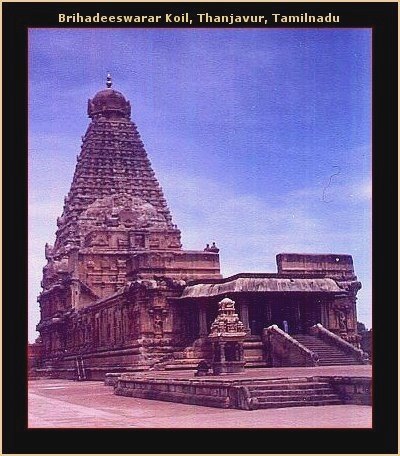
Really big stones are NOT impossible to move. Especially when you have lots and lots and lots (and lots) of people helping. And it's been done, over and over and over again, by other primitive people. Another example:

PROBLEM: How do you get the two forty-ton solid granite halves of this immense capstone 65 meters into the air and on top of this vimana?

14b.jpg


SOLUTION: A ramp. A very, very long ramp. A ramp nearly a mile long, even. Sound silly? "Impractical"? Well, I'll agree that it was impractical. But that didn't stop the Chola king, Rajaraja, from ordering the mile-long ramp built in order to finish the Brihadeeswarar temple. We know this happened, because the remains of the beginning of the ramp still exist. The ramp was made out of SAND (yes, sand), a whole lot of it, and its volume probably contained more cubic feet of material than was used to build the actual temple itself. It didn't matter. Rajaraja wanted his temple. And Khufu wanted his pyramid. And there are three quarries on the Giza Plateau that were completely backfilled with rubble (and, coincidentally, LOTS of sand) that had to come from somewhere. If there were no other way to build the Pyramid than by constructing a ramp half the size of said pyramid, that ramp was going to be built. Period.

Of course, Rajaraja cheated and used elephants to help pull the really heavy stones. The Egyptians just had to use a few more people.

"This Old Pyramid" was eye candy. How the pyramids were built is simply not a mystery, as far as Egyptology is concerned. It's only a "mystery" to those who want it to be a mystery for some reason. "This Old Pyramid" was an attempt to talk at such people, I think - and in that way, I suppose it was a failure.
 
"This Old Pyramid" was eye candy. How the pyramids were built is simply not a mystery, as far as Egyptology is concerned. It's only a "mystery" to those who want it to be a mystery for some reason. "This Old Pyramid" was an attempt to talk at such people, I think - and in that way, I suppose it was a failure.
Thanks for finally admitting that, but I'd still like to know how the builders of the Great Pyramid raised those 50-80 ton monoliths 160 feet above ground and positioned them precisely into place.
 
Thanks for finally admitting that, but I'd still like to know how the builders of the Great Pyramid raised those 50-80 ton monoliths 160 feet above ground and positioned them precisely into place.

Do you actually read what people write in their posts? Does Google not work with your browser? Or are you unable to convert measures, like tons and pounds, feet and meters?
 
Thanks for finally admitting that, but I'd still like to know how the builders of the Great Pyramid raised those 50-80 ton monoliths 160 feet above ground and positioned them precisely into place.

The same way Rajaraja's workers raised those two 40-ton monoliths 215 feet above the ground and positioned them precisely into place.

Ramps and sweat, Rodney.

Ramps and sweat.
 
The same way Rajaraja's workers raised those two 40-ton monoliths 215 feet above the ground and positioned them precisely into place.

Ramps and sweat, Rodney.

Ramps and sweat.
Since "This Old Pyramid" failed to give us the required demonstration of the "ramps and sweat" needed to prove anything whatsoever regarding how the major Giza pyramids were constructed, I will look forward to someone else -- perhaps the folks here? -- doing that. And I'm not asking you to rebuild them -- just solving at least a handful of the technical hurdles the builders faced.
 
I got to visit Giza as well, thanks to the U.S. Navy dropping anchor in Alexandria. I'd checked out a book from their library some time ago, wanted to return it. So I get on the bus. Well, not only do I find out the library burned down some centuries ago, but I'd also gotten on the wrong bus. Next stop, Cairo.

Thing I remember is how far away from the Great Pyramid you had to get for a picture of the whole thing. I had to back up to the mouth of the Bosporus before the structure fit inside my viewfinder.

We got to go inside. Not impressive. There was grafitti on the walls, and it looked like a drunk Feng Shui artist went crazy in there. But from the outside - the scale, the mass of it all. Wow. Even my camel was taken aback - it swallowed another hump. Made for an interesting ride back to town.
 
Since "This Old Pyramid" failed to give us the required demonstration of the "ramps and sweat" needed to prove anything whatsoever regarding how the major Giza pyramids were constructed, I will look forward to someone else -- perhaps the folks here? -- doing that. And I'm not asking you to rebuild them -- just solving at least a handful of the technical hurdles the builders faced.


Specifically, what technical hurdles are you referring to? Long ramp, lots of people...what's left to figure out?
 
Since "This Old Pyramid" failed to give us the required demonstration of the "ramps and sweat" needed to prove anything whatsoever regarding how the major Giza pyramids were constructed, I will look forward to someone else -- perhaps the folks here? -- doing that. And I'm not asking you to rebuild them -- just solving at least a handful of the technical hurdles the builders faced.
\

There is no "required" demonstration. We already know Egyptians pulled really huge blocks around all the time. There are no "technical hurdles" left, except in the minds of people who, as I said before, want there to be some kind of mystery. It just takes some semblance of understanding of the concept of hard work and commitment. When people say things like "a ramp would be so long and would need more material than the pyramid itself needed, and therefore they would've have done it that way", they are demonstrating how little they understand the mindset of the ancients. They most certainly would have done it that way if need be, no matter how bloody big the ramp had to be.
 
Specifically, what technical hurdles are you referring to? Long ramp, lots of people...what's left to figure out?
Let's start with the number of ramps in the building of the Great Pyramid. How many ramps do you suppose there were -- 1, 2, 5, a dozen? Next, were those ramps straight, spiral, or a combination? Then, how was the problem of raising the largest blocks (50-80 tons) to a height of 160 feet or so and positioning them precisely into place above the King's Chamber solved by the use of those ramps? You can start with those questions. And, if you think you have a viable solution, an illustration would be helpful.
 
Thanks for finally admitting that, but I'd still like to know how the builders of the Great Pyramid raised those 50-80 ton monoliths 160 feet above ground and positioned them precisely into place.

Read the various links I provided at the start of the thread.
 
See Margaret Morris' review of "This Old Pyramid" --

I went to have a look at that. She says:

The front-end loader brought all blocks from the quarry and installed them into the mini-pyramid, except for the three or four one-ton blocks needed for the on-camera demonstration. The front-end loader even placed those few blocks onto NOVA's mini-ramp.
You seem to have accidentally omitted the bit where they actually did manhandle three or four one-ton blocks, proving that it was physically possible to do so. They placed those blocks on the ramp with the front-loader too, but if you can drag a block up a slope why would you not be able to drag it on a flat surface? Clearly they cheated for the other blocks, but how many would they have to move by hand to convince you that all of them could be moved by hand?
 
Let's start with the number of ramps in the building of the Great Pyramid. How many ramps do you suppose there were -- 1, 2, 5, a dozen? Next, were those ramps straight, spiral, or a combination? Then, how was the problem of raising the largest blocks (50-80 tons) to a height of 160 feet or so and positioning them precisely into place above the King's Chamber solved by the use of those ramps? You can start with those questions. And, if you think you have a viable solution, an illustration would be helpful.

These are not "hurdles"...they are unknown factors. A "hurdle" is a problem with no visible solution. In the case of the pyramids, there is a solution. Build ramps. Long ones, short ones, many, a few, straight, spiral, I don't know....but we do know that a lot of people working together can pull a heavy block up a ramp. It can be done, and was.
 
You seem to have accidentally omitted the bit where they actually did manhandle three or four one-ton blocks, proving that it was physically possible to do so. They placed those blocks on the ramp with the front-loader too, but if you can drag a block up a slope why would you not be able to drag it on a flat surface? Clearly they cheated for the other blocks, but how many would they have to move by hand to convince you that all of them could be moved by hand?
They would have to move at least one 50-80 ton block up their ramp. To my knowledge, not one person on earth doubted that a 1-ton block could be moved up the "This Old Pyramid" ramp, but even a 10-ton block likely could not have been moved up that ramp. As Margaret Morris notes in her review:

"The film displayed a three-dimensional computer-rendered image of a cantilevered spiral ramp. In reality, its special cantilever support beams would have to be built into the pyramid faces to meet complex engineering requirements. For instance, the beams would have to extend far enough into the core masonry to counterbalance the weight of their unsupported lengths extending beyond the pyramid's faces. Each beam must also have enough counterbalance to support the weight of its proportional load of the finished ramp, plus the proportional load of the heaviest weight moving along the ramp (like the 27 foot-long beams over the King's Chamber). The cantilevered ramp system is so demanding that it would dramatically impact calculations for building the Great Pyramid. Theorists, for instance, mostly work with an average block size of 2.5 tons, but they would need to factor in the elevation of thousands of enormous cantilever beams for the ramp itself. Given the overwhelming demands of the cantilevered ramp, it is surprising that NOVA introduced the idea. Critics of the spiral ramp point out that it would obscure the true reference points (the four corner stones at the pyramid's base, the angle of the pyramid's sides, and its baseline). Failure to make all measurements from these absolute reference points would introduce errors that would compound as the pyramid rose. Even the slightest error would have compounded as workers took successive measurements from inaccurate reference points. The result would be a structure with irregular sides that would not form a proper pyramid shape. NOVA offered no solution to this problem, making it impossible to take this design seriously."
 

Back
Top Bottom