• Security incident: ISF was recently accessed by intruders. Please change your password, and change it anywhere else you used it. Read more

Sometimes I side with the philistines

could you articulate the harm to society that is being cured by vandalizing a piece of art like this?
The over-valuation by society of a piece of art like this.

Can you articulate the boon to society that is being provided by a piece of art like this?

Can you articulate what constitutes a piece of art?

Can you articulate the privileges that should be accorded to a piece of art, as opposed to any other object?
 
Sidestepping the whole "what is art?" argument I'm just going to say that if a museum wishes a piece of art protected from harm they have an obligation to the work to protect it. Put up a barrier. Put it in a glass case. Put it on a pedestal. That's true for any piece of art but triply so for a work of art made to look like a chair, placed where people can sit on it. There wasn't even a velvet rope up!
 
Sidestepping the whole "what is art?" argument I'm just going to say that if a museum wishes a piece of art protected from harm they have an obligation to the work to protect it. Put up a barrier. Put it in a glass case. Put it on a pedestal. That's true for any piece of art but triply so for a work of art made to look like a chair, placed where people can sit on it. There wasn't even a velvet rope up!
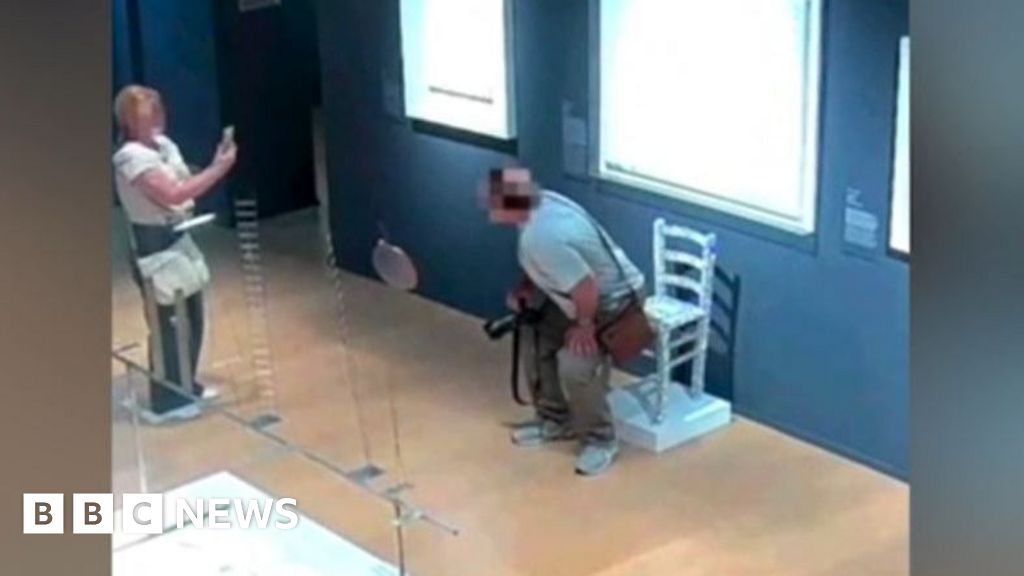
To be fair, the museum did put a note on the chair, and put it up on a pedestal. I think that's clear enough. At that point I think their responsibility to signal that it's art has been met.

Also, the museum-goers were pretending to sit in the chair for photos, and slipped. It's clear they understood it was art.

I suppose the museum could be criticized for not doing even more to keep the chair safe, but ultimately vandals gonna vandal. The more you separate the art from the audience, the harder it is for the audience to engage with the art the way the artist intended - or even at all. My understanding is that the Mona Lisa is so far separated from the audience these days that it's hardly worth trying to engage with.

Sometimes you just have to put the piece close enough for the audience to engage with it, and hope for the best.

And sometimes, I think, you just have to accept that if this is how the audience wants to engage with it, that's part of what makes it art.

 
To be fair, the museum did put a note on the chair, and put it up on a pedestal. I think that's clear enough. At that point I think their responsibility to signal that it's art has been met.

Also, the museum-goers were pretending to sit in the chair for photos, and slipped. It's clear they understood it was art.

I suppose the museum could be criticized for not doing even more to keep the chair safe, but ultimately vandals gonna vandal. The more you separate the art from the audience, the harder it is for the audience to engage with the art the way the artist intended - or even at all. My understanding is that the Mona Lisa is so far separated from the audience these days that it's hardly worth trying to engage with.

Sometimes you just have to put the piece close enough for the audience to engage with it, and hope for the best.

And sometimes, I think, you just have to accept that if this is how the audience wants to engage with it, that's part of what makes it art.
I think the museum should have done more. Any institution open to the public should spare twenty seconds to think about what the public is actually like, and prepare accordingly.
 
I guess the art piece is doing exactly what it was created for.
If it didn't create any emotions in you, you would just ignore it.
No one is forcing anyone to appreciate it.
 
I think the museum should have done more. Any institution open to the public should spare twenty seconds to think about what the public is actually like, and prepare accordingly.
you mean like IKEA finally realizing that it is a bad idea to place mock toilets in their mock bathrooms?
 
The story said it wasn't deliberately vandalized? A couple pretended to sit on it (hovering on their haunches, I guess), and the guy slipped and fell on it. Then they beat feet, I guess under the "you break it, you bought it" thinking that would have them living in a cardboard box.

In Paris' Louvre and pretty much all the museums, you could reach out and touch almost everything. It's supposed to be part of the experience to have no obstructions between you and the work, I think.

On the "what is art?" front, meh. It seems to make people happy. ◊◊◊◊ if I get most of it, try though I might.
 
I think the museum should have done more. Any institution open to the public should spare twenty seconds to think about what the public is actually like, and prepare accordingly.
Done more why?

What's so special about this Swarovski-encrusted tinfoil "chair" that it should have been more protected than it was? Someone said it was art, so now we have to treat it like one of the great treasures of the age?

Boop to that. Like I said, sometimes I side with the philistines. Sometimes the best way to engage with a piece of art is for a bourgeois jackass to put his ass print on it.

I can think of two other chairs that are far more deserving of being elevated above the common arts and crafts projects, as works of art. They both have the added benefit of you can actually sit on them. And the added benefit of being novel.

Not-thing, but thing-shaped, is derivative. Thing, but covered in unconventional other thing, is derivative. Being sat on by a disrespectful holidaymaker is exactly what this piece, its creator, and the museum deserved.
 
Last edited:
The story said it wasn't deliberately vandalized? A couple pretended to sit on it (hovering on their haunches, I guess), and the guy slipped and fell on it.
On that point, I subscribe to my mother's wisdom, when I told her I didn't mean to drop and break one of her fine china plates. "Sometimes, you have to mean NOT to."


Then they beat feet, I guess under the "you break it, you bought it" thinking that would have them living in a cardboard box.
On that point, I subscribe to the principle that property damage should be assessed at the amount of the valuation of the property, not the amount the vandal can comfortably afford to pay. Don't wanna Find Out what living in a cardboard box is like? Don't ◊◊◊◊ Around with artwork that's valued at more than your lifetime earning potential.

In Paris' Louvre and pretty much all the museums, you could reach out and touch almost everything. It's supposed to be part of the experience to have no obstructions between you and the work, I think.
Exactly. Tradeoffs. Tradeoffs everywhere.

On the "what is art?" front, meh. It seems to make people happy. ◊◊◊◊ if I get most of it, try though I might.
Art is like gender. Super important, completely undefinable, and woe to you if you dissent from the orthodoxy.
 
Sorry, who is doing the overvaluing?
It's not "society" that is paying hundreds of millions for pieces of Art.
They are generally not the ones curating what Art is being put on display.

You're ire is misdirected.

I guess the art piece is doing exactly what it was created for.
If it didn't create any emotions in you, you would just ignore it.
No one is forcing anyone to appreciate it.

And here you are, white knighting for a blatantly derivative arts and crafts project as if it were some great work of art. It's exactly this kind of pretentiousness about art that in the general direction of I fart.
 
On that point, I subscribe to my mother's wisdom, when I told her I didn't mean to drop and break one of her fine china plates. "Sometimes, you have to mean NOT to."
Wise words indeed, but I make a distinction between vandalism (carrying an element of deliberate intent) and dumbassery.
On that point, I subscribe to the principle that property damage should be assessed at the amount of the valuation of the property, not the amount the vandal can comfortably afford to pay. Don't wanna Find Out what living in a cardboard box is like? Don't ◊◊◊◊ Around with artwork that's valued at more than your lifetime earning potential.
Again, wise words, yet i can still sympathize (to some degree) with the impulsive selfie culture that doesn't realize that ◊◊◊◊ can go very wrong. My own venturing into that state of mind is related more towards personal safety/ life-and-limb issues, but the common element of unintentional shortsightedness is there, I think?
Exactly. Tradeoffs. Tradeoffs everywhere.
I'd think that just going into a museum or gallery signs you up in the contract that you will value what you are looking at. The tradeoff is implicitly agreed to just by the fact that you want to go there to see these things.
Art is like gender. Super important, completely undefinable, and woe to you if you dissent from the orthodoxy
I dunno. I find art aficionados to be tolerant of those of us in the unwashed and unappreciative masses. I think it is far more a failing on their part to not be able to justify why one piece of ◊◊◊◊ is remarkable and a similar one isn't.
 
Wise words indeed, but I make a distinction between vandalism (carrying an element of deliberate intent) and dumbassery.
Dumbassery is very often a choice people make. This is why I prefer "collision" or "crash" rather than "accident" when it comes to momentum-transferring automotive mishaps.

Again, wise words, yet i can still sympathize (to some degree) with the impulsive selfie culture that doesn't realize that ◊◊◊◊ can go very wrong.
Again, "collision", not "accident".

My own venturing into that state of mind is related more towards personal safety/ life-and-limb issues, but the common element of unintentional shortsightedness is there, I think?

I'd think that just going into a museum or gallery signs you up in the contract that you will value what you are looking at. The tradeoff is implicitly agreed to just by the fact that you want to go there to see these things.
Oh, I wouldn't think that at all. I can come into your exhibition hall to see what kind of things you value, without implicitly or otherwise agreeing to your valuation.

I dunno. I find art aficionados to be tolerant of those of us in the unwashed and unappreciative masses. I think it is far more a failing on their part to not be able to justify why one piece of ◊◊◊◊ is remarkable and a similar one isn't.
The convenient thing about art is that it's all subjective. If you're good about it, it's just your personal opinion, and that's fine. If you're not good about it, it's pretentious, condescending, autosycophantic, and otherwise anti-social. My entire point here is that sometimes the art aficionados need a reminder that they're not special, and that the average person on the street has just as much standing to ◊◊◊◊ all over their precious artworks, as they have standing to declare those works precious art in the first place.

I think sitting on this uninspired, derivative "chair", accidentally, mid-selfie, is a healthy reminder of just how nonsense the idea of "art" can be.

"You say you've got something special here? Special for my butthole!"

~ Triumph the Insult Comic Dog, probably
 
Last edited:
I think sitting on this uninspired, derivative "chair", accidentally, mid-selfie, is a healthy reminder of just how nonsense the idea of "art" can be.
Has anyone considered that this intrepid couple were hired to make this piece of... this piece more valuable? Publicity and all. Swarovski crystal ain't cheap, even if the chair is.
 
Done more why?

What's so special about this Swarovski-encrusted tinfoil "chair" that it should have been more protected than it was? Someone said it was art, so now we have to treat it like one of the great treasures of the age?
As I said, I'm not interested in the "what is art" argument, and I'm certainly not interested in your Lewis Black grumpy old man impression. If an institution open to the public has an asset it considers valuable and that asset is susceptible to harm from exposure, the institution should take basic steps to secure that asset's safety. If it doesn't it is being negligent as well as foolish. I expect the museum will have an uphill climb to get an insurance payout on this one.
 
As I said, I'm not interested in the "what is art" argument, and I'm certainly not interested in your Lewis Black grumpy old man impression. If an institution open to the public has an asset it considers valuable and that asset is susceptible to harm from exposure, the institution should take basic steps to secure that asset's safety. If it doesn't it is being negligent as well as foolish. I expect the museum will have an uphill climb to get an insurance payout on this one.
Gotcha. Fair enough.
 

ISF - Join now!

Every member here is approved by hand. No bots, no spam, just people who care about evidence and honest debate.

Membership is free!

Create your free account

Back
Top Bottom