Still is common in US commercial operations- but it then requires 208v equipment if you want to use the 'non neutral' leg of the system...
eg View attachment 76984
I'd hate to be a US commercial sparky- is this the 120v circuit, the 208v circuit or the 240v circuit??? (or the 3 phase 480v one???)
it gets confusing for sure, and I'm not up on all the ins and outs of multiphase, but as I understand it, 208 volts is what you get when you bridge two of the three phases on a three phase setup. You get 208 three phase from a wye connection, but 240 from a delta. It's confusing and I'm glad I don't have to deal with this stuff in real life!
I already related my wiring adventure elsewhere. (Changed a 230V to a 115v. Successfully.) All the while I was keeping in mind that a classmate of mine who was a profession electrician died in the line of duty, so it can happen to anyone. A careless distraction, a stray wire...
Much prefer ours thanks- its '230v nominal' (that covers 220, 230 and 240v range) or its '400v nominal' (covers 380, 400 and 415v)...
Three phase has its colours, and single phase has its colours- and if you are taking a 'single phase fused spur' off a 3 phase supply, its wired in single phase colours after the take off point...
And because the 3 phase supply is just '3x 230v phases' to the neutral- there's no 'odd voltages'- tapping into a 400v 3 phase supply gives you the 'normal' 230v on the single phase tap....
it gets confusing for sure, and I'm not up on all the ins and outs of multiphase, but as I understand it, 208 volts is what you get when you bridge two of the three phases on a three phase setup. You get 208 three phase from a wye connection, but 240 from a delta. It's confusing and I'm glad I don't have to deal with this stuff in real life!
The US delta has the neutral is a center tap on one leg... (see right diagram)
That's why if they use 'load distribution' like we do (here we 'spread the load' by putting houses on alternating phases), the two 'neutrals' have to have that minimum distance between them geographically- because the two different 'neutral/earths' are at different voltages- so if the resistance of the ground between them is low enough you can get a current flowing constantly between them!!! (you will anyway, but by spacing them far enough apart (different suburbs/towns) you can minimise it... not stop it but minimise it...
Otherwise the distribution system (11kv and up here) would be operating 'unbalanced' with far more load on one phase than the other two- and that is very inefficient at the generator end!!!!!! (either way, the US delta system is inherently more 'lossy' than 'TROTW' 'star' configuration system)
I already related my wiring adventure elsewhere. (Changed a 230V to a 115v. Successfully.) All the while I was keeping in mind that a classmate of mine who was a profession electrician died in the line of duty, so it can happen to anyone. A careless distraction, a stray wire...
Thats why we have so many rules (including no DIY in Australia at ALL...)
Professional electricians here have lots of rules to follow, and its a legal requirement- keep breaking them and get caught- and you can lose your licence- for good....
I used to work with a US 'Master electrician' here in the mines in Australia for a while- he actually lost his job because he didn't believe in following all our 'nanny state rules'- he got kicked off site a couple of times for minor breaches for the day (3 times and you are out- for good), and finally the last (and major one) that nearly cost our company itself to be 'kicked off'- that's a major thing indeed- your company gets kicked off one minesite, and you get kicked off ALL of them- closing the industry off to you for ever....
Plus he found his 'Australian Trade Equivalency' cancelled, which meant he couldn't work as an electrician (at any level) anywhere in Australia...
Here, there's 'no working live' (except for testing purpose only, and only with approved equipment and following procedures) - all systems must be 'locked out' during work (even if you are the only one there) using approved lockouts and 'test for dead' must be done before undertaking ANY work)
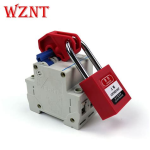
So you kill the circuits and 'lockout' and 'tag' so it can't be turned back on without your key... (and that HAS to be done by the person who fitted the lockout- no taking someone elses lockout off- you put it on, you take it off- in person...)
Lockout and tag in use- on the back of the tag, you have your name, contact details and fault description
Even someone working by them selves in a house setting, fitting that is a legal requirement...
If there are multiple sparkies working on the same site- then a 'multiuser lockout' is used- its fitted to the MCB lockout, and each electrician adds their own lock- it cant be removed until ALL of the locks are removed...
It is fitted instead of a single padlock, and up to six locks in that case can be used at once, for larger worksites (construction or in the mines) we often had to 'daisy chain' them- add as many as needed.... and the MCB lockout can't be removed until every single lock is removed......
'Testing for dead' is also a legal requirement before laying a tool on the system- and that doesn't mean grabbing a test light or multimeter...
You use an approved meter, you test it BEFORE doing your tests (with a 'Proving Unit' or 'tester tester' lol) to check its working correctly, do your tests, then test the meter AGAIN afterwards on the proving unit...
Correct way to use them...
(less than a minute long)
Get caught doing 'the wrong thing' (and yes there's inspectors that can be watching you at any random time) and you can get big fines and/or lose your licence- temporarily (you will have to resit a safety course before being allowed to work again) or even permanently for major or repeated breaches...
eg of 'some' of the regs for lockout and testing (17 page pdf)
I don't have a padlock for this sort of thing, but the basic rule has always been that working live is essentially an poor term for working not yet dead.
I have a nifty little gadget that senses the presence of electricity without touching anything. Highly recommended for anyone handling electrical stuff, as it will pick up the signal even totally enclosed wires and cords with no place for a test probe.
If you're using it initially to determine if a circuit is live, then definitely, check with a meter. It's handy if something has stopped working as a first step toward figuring out why, but it's telling you where to start further testing. But if you have a beeper and it's beeping, you know it's working at that point. If you turn off a breaker or a switch or pull a plug and the beeping stops when you do, you know you turned off the right breaker. I am assuming you use the beeper as a confirmation, not as a sole test. Used prudently, it's a very handy troubleshooting device, and especially nice if you're dealing with poorly labeled circuits.
I don't have a padlock for this sort of thing, but the basic rule has always been that working live is essentially an poor term for working not yet dead.
I have a nifty little gadget that senses the presence of electricity without touching anything. Highly recommended for anyone handling electrical stuff, as it will pick up the signal even totally enclosed wires and cords with no place for a test probe.
A sniffer is my lifesaver. I've been assured that power was cut off to many a given circuit, only to get dimed out by the sniffer.
Mine also can be sat for 12 and 24v current, handy for all kinds of troubleshooting. Even has a flashlight on the opposite end. I always test it against a known hot wire before trusting its 'dead' reading.
We also have lockout rings put on breakers that don't have a disconnect within sight of the appliance. Took them years to realize that the reasoning applied to hard-wired dishwashers.
Fun sniffer story from two weeks ago- customer (who, like most of my customers, relies on me to be the first step in troubleshooting) had a high foyer pendant light/chandelier that stopped working. The 3-way switches were working normally (sniffer told me when power was leaving and killed on wires), so I got up on a high ladder to sniff the sockets of the lights themselves. Full power. So... you guessed it.. neutral fault. I checked the cluster of neutrals and sure enough, one had pulled loose. Seemed that the customer's nephew, a union electrician, had put a new timer switch in, and the foyer light neutral gave way while he was tying in his neutral}
It's misleading in one way but not the other. If it says there's power, you can be sure there is, at least somewhere in the vicinity, and you must stop until you figure out where it's coming from. It never beeps when there is no power at all: it's reliable in this direction. But if it says that there's no power, it might just be failing to detect it, so it's not to be trusted as your first and only test. The general rule is that you first test it on a known live circuit to determine that it's working. It's much more useful as an indicator of what doesn't need work, as in Thermal's example above. Or, in many cases where things are ambiguous or poorly labeled, to let you know when you've thrown the right switch or breaker, where you've already confirmed that the circuit is live and the sniffer working correctly. It shines as a detector of interruptions and faulty switches, including things like internally defective extension cords, as you can trace a live circuit along its path until it stops.
So, for example, I was working on the dishwasher the other day (without success and we need a new dishwasher). There's a sub-feed circuit breaker inside a cabinet in the dark. I think I know which one it is, but I'm not willing to bet my life on it. So with the breaker on, I sniff the wiring at the dishwasher. Buzz. The sniffer is working right. Now I switch off the breaker I think is right, and sniff again. Buzz stops. If you're a belt and suspenders sort, you'll do a final check with a meter just in case some stray voltage has crept in somewhere, but you won't need rubber gloves and special probes to do it.
Most of the time, issues like this are nice and straightforward and binary. On and off, broken and not broken. But switches and breakers and sensors and the like can be just a little off too. Leakages to ground, water in the wrong place, etc., and maybe the power getting through is not enough to activate whatever you're troubleshooting. But maybe there's a leakage or a stray little bit of wire or something, that's less than whatever is needed to fire the tester or start the machine, but enough to zap you. Information is good to have and meters are cheap.
Another beauty of the non-contact detector is if you shut off power to a series of receptacles in a room, the sniffer will alert you to a junction from another circuit that someone previously fed into the box you were confident you just shut power off to.
I think the sound reasoning is that a meter will give you an actual voltage reading, which is more reliable than a simple yea or nay to detecting A/C current
I think the sound reasoning is that a meter will give you an actual voltage reading, which is more reliable than a simple yea or nay to detecting A/C current
A sniffer will tell you there's power around here somewhere. Like, I've had some switches that were setting the damned thing off from 4 inches away, making it impossible to figure out (during troubleshooting) what was hot and what was not. A meter, with leads on exactly the wires you are checking, are more specific.
false positives and false negatives are both possible, which can be dangerous or just wasting a lot of time with bad info. besides, you should be verifying with a proper meter before doing any work, so i don’t really see it as much of a time saver when a meter gives the same or better info
that said, lots of people find them handy or rely on them solely. better just to get in the habit of using a meter imo
Had a buddy of mine that took a lower tech approach to identifying power to a circuit. We were supposed to be demolishing a front porch, and our faithful electrician assured us power had been disconnected. Not just shut off, but physically de-wired. My sniffer begged to differ. So my buddy (a mason) walked over to the Romex feed and cut it with a pair of Wiss snips. Big zap and shower of sparks, but not a flinch from him. The breaker, surprisingly, tripped and he identified the circuit correctly.
I wonder sometimes how most of my acquaintances have lived as long as they have.
false positives and false negatives are both possible, which can be dangerous or just wasting a lot of time with bad info. besides, you should be verifying with a proper meter before doing any work, so i don’t really see it as much of a time saver when a meter gives the same or better info
that said, lots of people find them handy or rely on them solely. better just to get in the habit of using a meter imo
The only problem.i have with a meter is the risk of having it set to the wrong readout and not noticing till too late. I find a sniffer to be more friendly to the blurry-eyed.
This site uses cookies to help personalise content, tailor your experience and to keep you logged in if you register.
By continuing to use this site, you are consenting to our use of cookies.