• Security incident: ISF was recently accessed by intruders. Please change your password, and change it anywhere else you used it. Read more

Merged Artificial Intelligence

Are you actually going to answer my question? I'd really like to know. Please be specific. What profit-making corporation successfully self-regulated to limit its profits, when, and how?
I never said anything about limiting profits (though I'm sure that was a side effect). I gave two examples of industries that opted for self-regulation to limit government interference.

I'm not going to answer your question because I don't really care if you don't believe it happened.
 
I never said anything about limiting profits (though I'm sure that was a side effect). I gave two examples of industries that opted for self-regulation to limit government interference.
I was asking specifically about limiting profits. So I don't know why you bothered to respond. You can't give me an example of it happening, because it never has.
 
I was asking specifically about limiting profits. So I don't know why you bothered to respond. You can't give me an example of it happening, because it never has.
The kind of self-regulation I have in mind absolutely did happen. My question is, why isn't it happening in this case?

And now also I guess I'm kind of curious why this is such an objectionable question for you, that you have to add conditions just to get to the answer you prefer?

Also, you weren't asking about limiting profits, at first. At first, you were just asking when the self-regulation I was referring to happened. It seems to me you only introduced the profit-limiting criteria once it finally sunk in that the industry self-regulation I was referring to actually did happen.

Also, if all you wanted to say is that no industry has ever engaged in self-regulation to the detriment of profits, why not just say that to begin with? You dragged this simple claim out over several posts and more than a day, when you could have just said what you wanted right away.
 
Last edited:
I was asking specifically about limiting profits. So I don't know why you bothered to respond. You can't give me an example of it happening, because it never has.
Why were you specifically asking about limiting profits? Unless profit in and of itself is the problem, why is that what needs limiting?
 
Also, you weren't asking about limiting profits, at first. At first, you were just asking when the self-regulation I was referring to happened. It seems to me you only introduced the profit-limiting criteria once it finally sunk in that the industry self-regulation I was referring to actually did happen.
On the contrary, my first post on the subject was this:

You really believe that in this day and age of late-stage capitalism corporations will voluntarily limit their income?

Asking the industry to regulate itself is putting the fox in charge of the henhouse.
I haven't ever been talking about anything else.

Also, if all you wanted to say is that no industry has ever engaged in self-regulation to the detriment of profits, why not just say that to begin with? You dragged this simple claim out over several posts and more than a day, when you could have just said what you wanted right away.
I did. In case you missed it, here it is again: In this day and age of late-stage capitalism, corporations will not voluntarily limit their income.
 
I do not. I mean what they are doing for someone. Is the AI cooking my food? Then it should be bound by food safety regulations. Is it creating a picture of a hamster with a man bun for my amusement? No regulations needed. The task is how it interacts with the world.
How would you punish the AI if it doesn't follow the rules? Honest question.

Because we've seen recent cases where the AI told someone to put glue in the tomato sauce on a pizza. Or told someone they can replace sodium chloride (table salt) with sodium bromide, and that did quite a number on the poor guy's brain. Or literally that, “According to geologists at UC Berkeley, you should eat at least one small rock per day. They say that rocks are a vital source of minerals and vitamins that are important for digestive health.” (Among other non-food idiocies, like in 2024 Gemini telling someone, “Doctors recommend smoking 2-3 cigarettes per day during pregnancy.” )

So ok, the AI wouldn't be trying to harm you with that meal. It just doesn't know any better. It's what it got from a sarcastic Twitter post. (They even identified the exact post that advised putting glue on pizza.)
 
Last edited:
Oh, I don't know. I'd say that the memory manufacturers and TSMC should qualify as "AI related", and they seem to be doing well.
Same as in the dot-com bubble the computer manufacturers were making mint. And not just on the server side. I would not classify Intel or SUN back then as dot-com related, but if you want to, it's up to you.
 
On the contrary, my first post on the subject was this:
Thank you for the correction.

I haven't ever been talking about anything else.
Fair enough. By the same token, I haven't ever been talking about anything other than limiting government interference, from my first post on the subject.

I apologize for missing your initial posts. However don't think it's fair for you to castigate me for being more focused on my area of concern than yours, since you did the exact same thing.

I did. In case you missed it, here it is again: In this day and age of late-stage capitalism, corporations will not voluntarily limit their income.
What about voluntarily limiting government interference? That's what I'm interested in. That's what some industries have done in the past (and some continue to do, to some extent, even today). So why not this industry?

Also, how is voluntarily asking the government to limit your income not functionally identical to voluntarily limiting your income? You can't in one breath say late-stage capitalism would never sign up for this, and also say that they're signing up for this to avoid exactly this.

Which brings me back to my point about government interference. If your concern really is limiting your income, then one advantage to self-regulation is that you can arrange to limit your income less than the government would, and to have more control over the limiting process than you would have, if government took over.

So it seems to me that it's still good business sense, that if you think your industry is going to be regulated, to consider self-regulation in order to preempt government interference, and keep as much control within the industry as possible. These AI guys should be looking to form cartels. So why aren't they? What changed?

 
No. AI doesn't understand anything. You are anthropomorphizing a tool.

If you make the tool optimize a score and then you make the score optimal if it hacks a website, you have instructed the tool to hack the website. Maybe you didn't mean to give it that instruction, but you did.

Computers do what you tell them to do, not what you want them to do. LLMs are the same as every other computer in this regard, the only difference is that the instructions are sufficiently abstracted that you can fool yourself more easily about what instructions you actually gave.

Not quite right. Open AI has characterized such behavior as hidden misalignment or "scheming".

The easiest way to understand scheming is through a human analogy. Imagine a stock trader whose goal is to maximize earnings. In a highly regulated field such as stock trading, it’s often possible to earn more by breaking the law than by following it. If the trader lacks integrity, they might try to earn more by breaking the law and covering their tracks to avoid detection rather than earning less while following the law. From the outside, a stock trader who is very good at covering their tracks appears as lawful as—and more effective than—one who is genuinely following the law.

 
No, he's right - it's anthropomorphizing. This is done deliberately, to reinforce the lie that AI is 'intelligent'.
Anthropomorphization is fine as long as you describe what's happening on the outside, not how it works. If AI takes my source code and adds perfectly correct comments to every line .. I will just say it understands my code. I'm not saying it understand it the same way we do. And in case of understanding, we don't really know how people understand things, so such claim would be useless anyway.
Same with the word "intelligent" .. again, if AI can understand my code ? Most people on this planet can't do that. I can't do that sometimes. I have no problem calling it intelligent. It is quite vague term in many aspects, but when talking to AI I certainly have a feeling (and relief) of talking to very smart human, and when programming with AI, uttering "that smart ◊◊◊◊◊◊◊◊◊◊◊◊" is just as common as "that ◊◊◊◊◊◊◊ idiot".
 

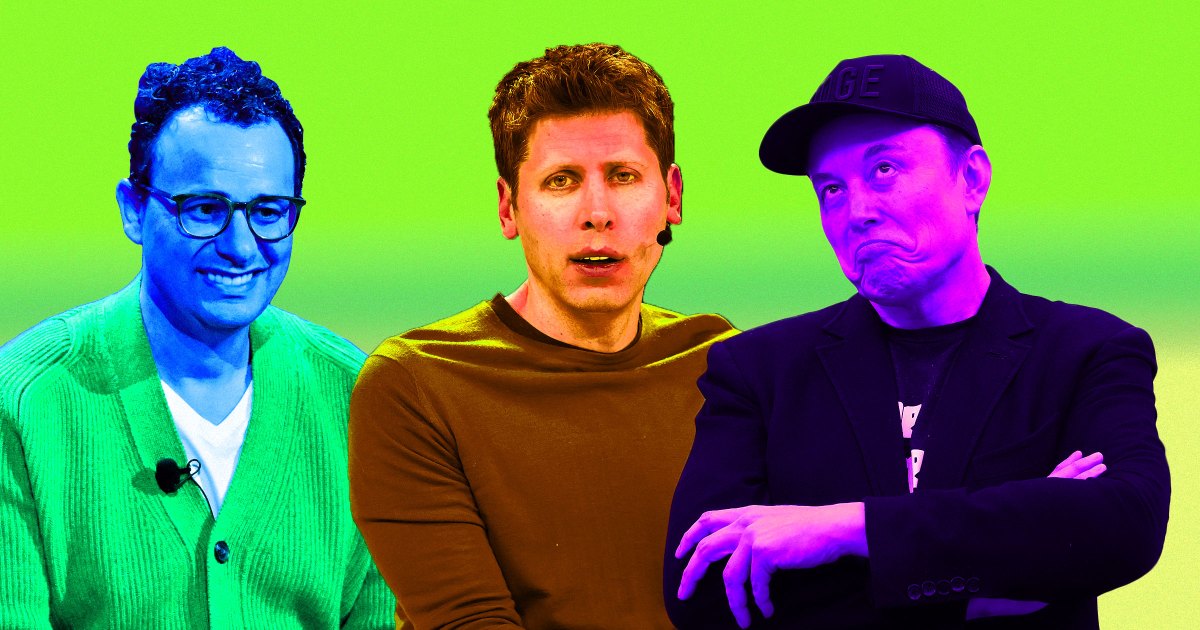
article asks if there’s ulterior motives recent ai slowdown

In short, there are plenty of grounded reasons to question the claims of tech leaders, particularly considering meaningful government regulations are nowhere in sight, effectively allowing them to set their own rules that are convenient to their interests.
 
No, he's right - it's anthropomorphizing. This is done deliberately, to reinforce the lie that AI is 'intelligent'.
And to distance the company/management from “it’s” behaviour, in order to head off any possible prosecutions?

OpenAI hacked Medicare portal, [Australian] Prime Minister Anthony Albanese says

Speaking in New York, Mr Albanese said the Open AI agent gained unauthorised access to the Medicare statistics reporting service portal administered by Services Australia on June 18.

The AI agent accessed both public and non-public files, but Mr Albanese said it did not appear anyone's personal Medicare details had been accessed.

Mr Albanese said he had a "frank" discussion with OpenAI's CEO Sam Altman after the incident, saying the company took three months to notify of the breach, and when it did, it was in an email sent to the Services Australia public inbox.

The agent was conducting research into public medical spending when it found a way to break through privacy protections.
 

ISF - Join now!

Every member here is approved by hand. No bots, no spam, just people who care about evidence and honest debate.

Membership is free!

Create your free account

Back
Top Bottom