
-
Security incident: ISF was recently accessed by intruders. Please change your password, and change it anywhere else you used it. Read more
You are using an out of date browser. It may not display this or other websites correctly.
You should upgrade or use an alternative browser.
You should upgrade or use an alternative browser.
A scientific fact/tidbit you recently learned that you thought was interesting
- Thread starter bigred
- Start date

Yes, that's how I sometimes continue the discussion once a smart kid realizes that we breathe out most of the weight we lose.Conversely, when a plant grows it get most of that additional mass from the CO2 in the air, plus a bit from rain. It only gets a few nutrients from the soil.
Poets say science takes away from the beauty of the stars ... But, if you understand something about how it works, isn't it amazing, awe-inspiring to look at a huge tree and know that it pretty much grew out of air.
Wudang
BOFH

Yes. I sometimes ask people why they think that being educated about assonance or the development of perspective in art increases one’s appreciation of art but understanding something about fusion and Rayleigh scattering in the atmosphere doesn’t.Yes, that's how I sometimes continue the discussion once a smart kid realizes that we breathe out most of the weight we lose.
Poets say science takes away from the beauty of the stars ... But, if you understand something about how it works, isn't it amazing, awe-inspiring to look at a huge tree and know that it pretty much grew out of air.
My bay tree is a remarkable bio weapon. Not only do its fallen leaves turn hard and cut off light to plants growing near the tree but as they decay they release a growth inhibitor to prevent other plants flourishing.
The Great Zaganza
Maledictorian

- Joined
- Aug 14, 2016
- Messages
- 32,553
Mice do not hibernate - but there is a way to trigger a hibernation state in them.
In this hibernation, neural activity is greatly reduced, and synapse connections are broken.
Surprisingly, this does not affect memory retention, suggesting that we have to rethink how many connections are actually needed for retention.
it's a very interesting new animal model for studying memory.
In this hibernation, neural activity is greatly reduced, and synapse connections are broken.
Surprisingly, this does not affect memory retention, suggesting that we have to rethink how many connections are actually needed for retention.
it's a very interesting new animal model for studying memory.

I think they get much more from soil than that. If not, soil wouldn't be so important to plants.Conversely, when a plant grows it get most of that additional mass from the CO2 in the air, plus a bit from rain. It only gets a few nutrients from the soil.

On a similar theme I ask students where does the oxygen go to be used that we breathe in. Virtually the only use of molecular oxygen is by the mitochondria for energy generation (I think this is Chris Halkides area of speciality) producing high energy phosphate bonds. Mitochondria are evolutionarily intracellular bacteria. So the lungs, heart, blood vessels, blood have all evolved to provide a population of (now symbiotic) bacteria with oxygen. Similarly the chloroplasts that enable plants to photosynthesise and convert atmospheric carbon dioxide in to sugars (releasing oxygen as a (toxic) waste product), are evolutionarily intracellular photosynthetic bacteria. So leaves, and stalks and roots and phloem and xylem have just evolved to allow those bacteria to get more light, and get water, and be protected for dessication etc.
Science can really put you in your place.
Science can really put you in your place.
I have only one thing to say to you;I think they get much more from soil than that. If not, soil wouldn't be so important to plants.
Epiphytes
The Great Zaganza
Maledictorian
- Joined
- Aug 14, 2016
- Messages
- 32,553
hydroponics
Most of the root work in wild plants is done by mycorrhizal fungi. The fungi hugely extend the surface are of the root system and provide nutrients to the plant roots including transporting water in exchange for sugarThere are bacteria that live near/in the roots of some plants, especially legumes, that can bind the nitrogen from the atmosphere.
Plants alone can't
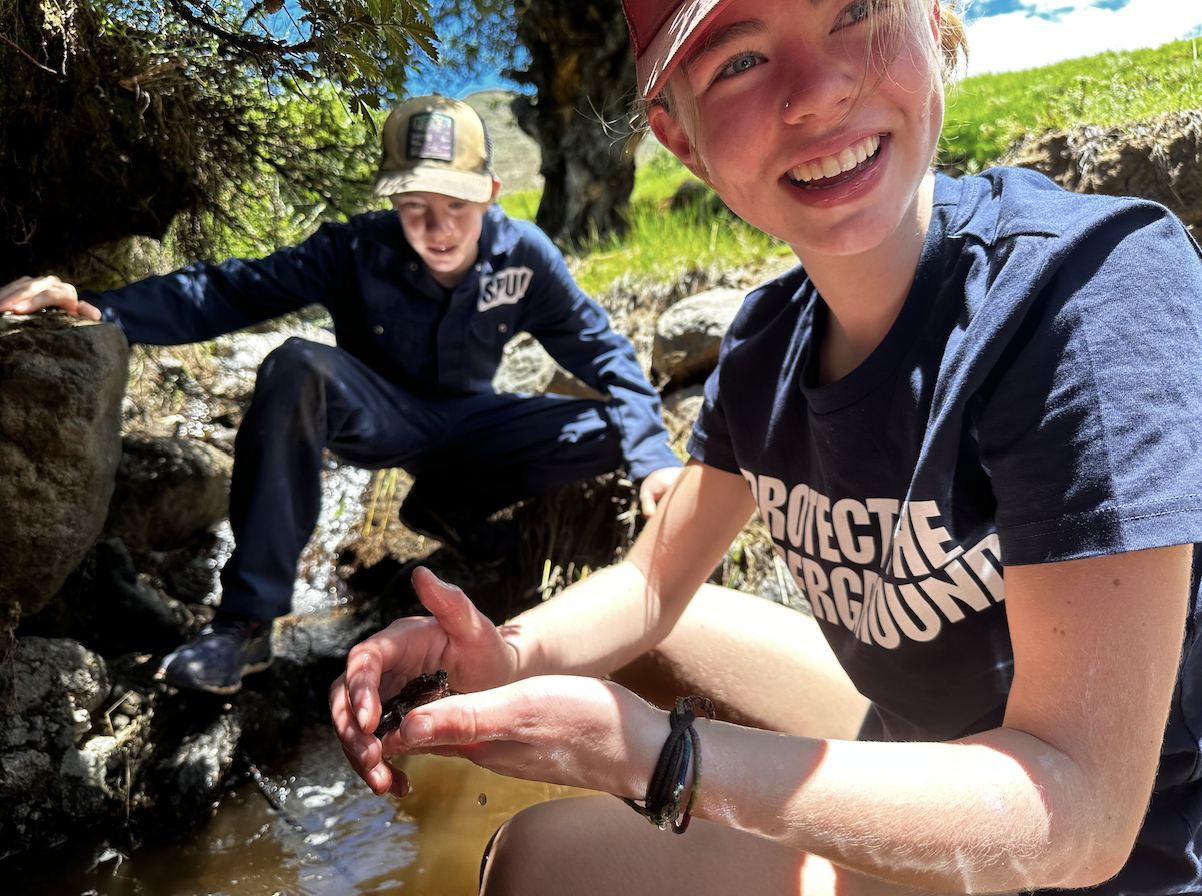
Top 10 Mycorrhizal Cool Facts
List of ten amazing ecosystem services mycorrhizal fungi provide
 www.spun.earth
Thank God. I'd hate to think there's more of that coming.I have only one thing to say to you;
There are plants that grow without soil.I think they get much more from soil than that. If not, soil wouldn't be so important to plants.
Gawdzilla Sama
TImeToSweepTheLeg

Been very hot here for a few weeks. One of the cousins excitedly reported that Lake Michigan might catch fire in this weather.
We didn't shoot him.
For some reason.
We didn't shoot him.
For some reason.
The Great Zaganza
Maledictorian
- Joined
- Aug 14, 2016
- Messages
- 32,553
Indeed - plants communicate via pheromones and through chemical interactions in their roots - sometimes mediated by mycelia networks.
They can also exchange nutrients this way.
But a single plant can grow perfectly fine in a hydroponic gel with sufficient nutrients CO2, water and light.
They can also exchange nutrients this way.
But a single plant can grow perfectly fine in a hydroponic gel with sufficient nutrients CO2, water and light.
Helen
Implicitly explicit

Prototaxites may not have been be a fungus, and may actually have belonged to a completely unknown, now extinct, biological kingdom.

 en.wikipedia.org
Prototaxites - Wikipedia
Last edited:
Pixel42
Schrödinger's cat

Yes. I sometimes ask people why they think that being educated about assonance or the development of perspective in art increases one’s appreciation of art but understanding something about fusion and Rayleigh scattering in the atmosphere doesn’t.
Richard Feynman said it best.
Never said otherwise.There are plants that grow without soil.
Blue Mountain
Resident Skeptical Hobbit

The 'ballista spider' builds a trap to catapult unsuspecting prey into its web [cbc.ca]
It's Australian, of course.
It's Australian, of course.
CBC said:The newly discovered Australian arachnid weaves a silk-snare trap to throw ants more than 4 metres per second
A recently discovered spider species in Australia’s tropical rainforests has stunned researchers with a hunting technique that launches prey through the air using a spring-loaded silk trap.
A study, published this week in the journal Current Biology, describes how the tiny arachnid builds a cone-shaped snare to catapult green tree ants into its web, earning it the nickname “ballista spider,” a nod to the ancient Roman weaponry used to launch heavy projectiles.

a_unique_person
Director of Hatcheries and Conditioning

In the dinosaur days these spiders were was big as a car.The 'ballista spider' builds a trap to catapult unsuspecting prey into its web [cbc.ca]
It's Australian, of course.
Jim_MDP
Penultimate Amazing

I was going to put this Moreparz short about the Ballista in the newly resurrected Hey Trebuchet thread  , but here's just as well
As always, his vids are EXTREMELY NSFW due to a typically filthy Ozzy mouth... so consider yourself ◊◊◊◊◊◊◊ warned.
, but here's just as well As always, his vids are EXTREMELY NSFW due to a typically filthy Ozzy mouth... so consider yourself ◊◊◊◊◊◊◊ warned.