Background
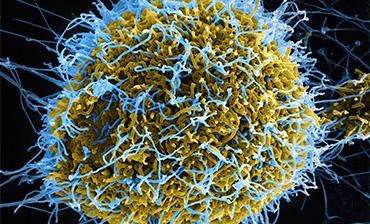
Ebola disease (EBOD) is a severe disease caused by orthoebolaviruses, members of the filoviridae family, which occurs in humans and other primates. The disease was identified in 1976, in almost simultaneous outbreaks in Zaire (now the Democratic Republic of the Congo (DRC)) and Sudan (now South Sudan).
Between 1979 and 1994, no human cases or outbreaks were detected. However, since 1994, outbreaks have been recognised with increasing frequency.
Until 2014, outbreaks of EBOD were primarily reported from remote villages close to tropical rainforests in Central and West Africa. Most confirmed cases were reported from the DRC, Gabon, the Republic of the Congo, Sudan and Uganda. In 2014, an EBOD outbreak was reported for the first time in West Africa, involving Guinea, Liberia and Sierra Leone. During this outbreak, which was ongoing between 2014 and 2016, there was intense transmission in urban areas, resulting in over 28,000 reported cases. Multiple countries including Italy, Mali, Nigeria, Senegal, Spain, the UK and the US reported imported EBOD cases associated with this outbreak.
Four species of orthoebolavirus are known to cause disease in humans:
- Ebola virus disease (EVD): caused by Ebola (Zaire) virus (orthoebolavirus zairense, EBOV)
- Sudan virus disease (SVD): caused by Sudan virus (orthoebolavirus sudanense, SUDV)
- Bundibugyo virus disease (BVD): caused by Bundibugyo virus (orthoebolavirus bundibugyoense, BDBV)
- Tai Forest (formerly Ivory Coast) virus (orthoebolavirus taiense, TAFV)
Reston virus (orthoebolavirus restonense, RESTV), was first detected in 1989 in Reston, Virginia (US), in a colony of monkeys imported from the Philippines. It had caused severe illness outbreaks in non-human primates linked to imported animals. Several research workers became infected with the virus during these outbreaks but did not become ill. In 2008, RESTV was isolated from sick pigs in the Philippines. Several animal facility workers developed antibodies, but none reported any symptoms.
A sixth species of Ebola virus was discovered in bats in Sierra Leone in 2018 and named Bombali virus (orthoebolavirus bombaliense, BOMV). It is not yet known if this species is pathogenic to humans.