• Security incident: ISF was recently accessed by intruders. Please change your password, and change it anywhere else you used it. Read more

Should the F-35 be scrapped?

Nitpick: The F-35 is indeed an "air superiority fighter". It's not a dogfighter, true. But that's because dogfighting is a waste of energy and an unnecessary risk, if you have other options. Which modern air forces do. It's a multirole fighter, which is the natural evolution and apotheosis of fighter aircraft.
 
let's put it another way:
Presumably, the US has a limit on the amount of money it can spend. military spending should maximize utility. Historically, the US has always been incredibly strong when it comes to air power, but it is lacking in many other areas.
So probably it would a lot more sense to sprend the taxpayer money than focus on where the US is in no danger of falling behind.
First of all, keep in mind that the f35 isn't really that expensive. Yeah, you do occasionally hear of the >$trillion dollar cost, but that is for the entire fleet, and will replace the F16, F18, possibly the A10. (If you added the costs of each of those planes you would get a pretty hefty price tag too) Early copies of the f35 were expensive but as production rates have increased costs have come down (as economies of scale kick in). In fact having a single air frame MIGHT save money as the military does not have to stock spares and train pilots for multiple planes. (At least that is the plan. We will have to see if it works out).

Secondly where exactly do you think the US military is falling behind? They probably have the best logistics (including airlift capabilities), it's Abrams tanks are possibly the best in the world (and we have heard of the military mothballing tanks right off the assembly line so it's not like they are running short), and it has one of the only babies capable of "blue water" activities.

Now it is true that Russia and China have researched things like hypersonic missiles. But I don't think the lack of interest in things like that is due to lack of funds. I think they looked at the technology and thought "it's not practical due to drawbacks".
 
As for Drones, defence is lagging behind at the moment but it always does when a new threat emerges. It will catch up soon enough.
 
As for Drones, defence is lagging behind at the moment but it always does when a new threat emerges. It will catch up soon enough.
Ukraine has certainly used drones successfully against Russia. But the US is not Russia... It's military budget is higher, weapons are (usually) more advanced.

I don't remember any case where a US facility was attacked by large drone swarms, but if it happened I suspect they would probably use something like the phalanx to deal with them.
 
The US military is weird. Sometimes they appear to be light-years ahead of everyone else. Other times, they appear to be woefully inept and behind the times. So either key military bases are already equipped to jam out autonomous drone swarms, or the first such attack will catch them totally by surprise.
 
First of all, keep in mind that the f35 isn't really that expensive. Yeah, you do occasionally hear of the >$trillion dollar cost, but that is for the entire fleet, and will replace the F16, F18, possibly the A10. (If you added the costs of each of those planes you would get a pretty hefty price tag too) Early copies of the f35 were expensive but as production rates have increased costs have come down (as economies of scale kick in). In fact having a single air frame MIGHT save money as the military does not have to stock spares and train pilots for multiple planes. (At least that is the plan. We will have to see if it works out).

Across the three versions, cominality of parts is about 20-25%...
 
The US military is weird. Sometimes they appear to be light-years ahead of everyone else. Other times, they appear to be woefully inept and behind the times. So either key military bases are already equipped to jam out autonomous drone swarms, or the first such attack will catch them totally by surprise.
For now, I think its safe to assume the US is woefully unprepared but I hope DARPA is furiously at work preparing.
 
First of all, keep in mind that the f35 isn't really that expensive. Yeah, you do occasionally hear of the >$trillion dollar cost, but that is for the entire fleet
More to the point, a hefty chunk of that is development costs, and now that it's already developed, those costs are gone. Scrapping the F-35 now can't recoup them. The question now isn't total program costs, but the cost to operate existing planes and to buy new planes vs the capabilities that the F-35 provides, weighed against alternative fighter plane purchases.
 
First of all, keep in mind that the f35 isn't really that expensive. Yeah, you do occasionally hear of the >$trillion dollar cost, but that is for the entire fleet, and will replace the F16, F18, possibly the A10. (If you added the costs of each of those planes you would get a pretty hefty price tag too) Early copies of the f35 were expensive but as production rates have increased costs have come down (as economies of scale kick in). In fact having a single air frame MIGHT save money as the military does not have to stock spares and train pilots for multiple planes. (At least that is the plan. We will have to see if it works out).
Across the three versions, cominality of parts is about 20-25%...
Yes, I have heard figures like the '20-25% commonality' between the variations (which falls far short of the 80% commonality they were originally hoping for.)

However, I have never seen any sort of analysis regarding what they are considering 'common' (based on counting specific parts parts or costs? how its counted if something is counted on 2 variants but not 3), or anything regarding failure/replacement rates.

For example, I believe all 3 variants use the same F135 engine... is that considered "one part"? But the engine itself is composed of hundreds of parts on its own, so should it be considered a collection of parts that add to the commonality? And since the engine is a part that probably needs to get replaced more often than others on the plane, having IT be common across all 3 variations probably means more than things like gun pods that might differ on the various versions but probably don't need replacement through the life of the aircraft.
 
Ukraine has certainly used drones successfully against Russia. But the US is not Russia... It's military budget is higher, weapons are (usually) more advanced.

I don't remember any case where a US facility was attacked by large drone swarms, but if it happened I suspect they would probably use something like the phalanx to deal with them.
Strange as it may seem, stateside military bases don't really have defensive gun emplacements set up.
 
Whatever the answer, it's still a metric ass-ton more parts commonality than...

... F-16 for the USAF
... F/A-18 for the USN
... AV-8B for the USMC
Not to mention the F-18a/c/d hornets that the USMC uses, which are different than the F-18e/f Superhornets which form the backbone of the US Navy aviation fleet.
 
More to the point, a hefty chunk of that is development costs, and now that it's already developed, those costs are gone. Scrapping the F-35 now can't recoup them. The question now isn't total program costs, but the cost to operate existing planes and to buy new planes vs the capabilities that the F-35 provides, weighed against alternative fighter plane purchases.
I gather Britain put in about 10% of those development costs. Plus of course export sales are expected to account for roughly half the production, and they'll be buying parts and support for a long time.
 
A bit of Necromancy but, has the recent use of the F-35 over Iran changed any opinions on the aircraft?
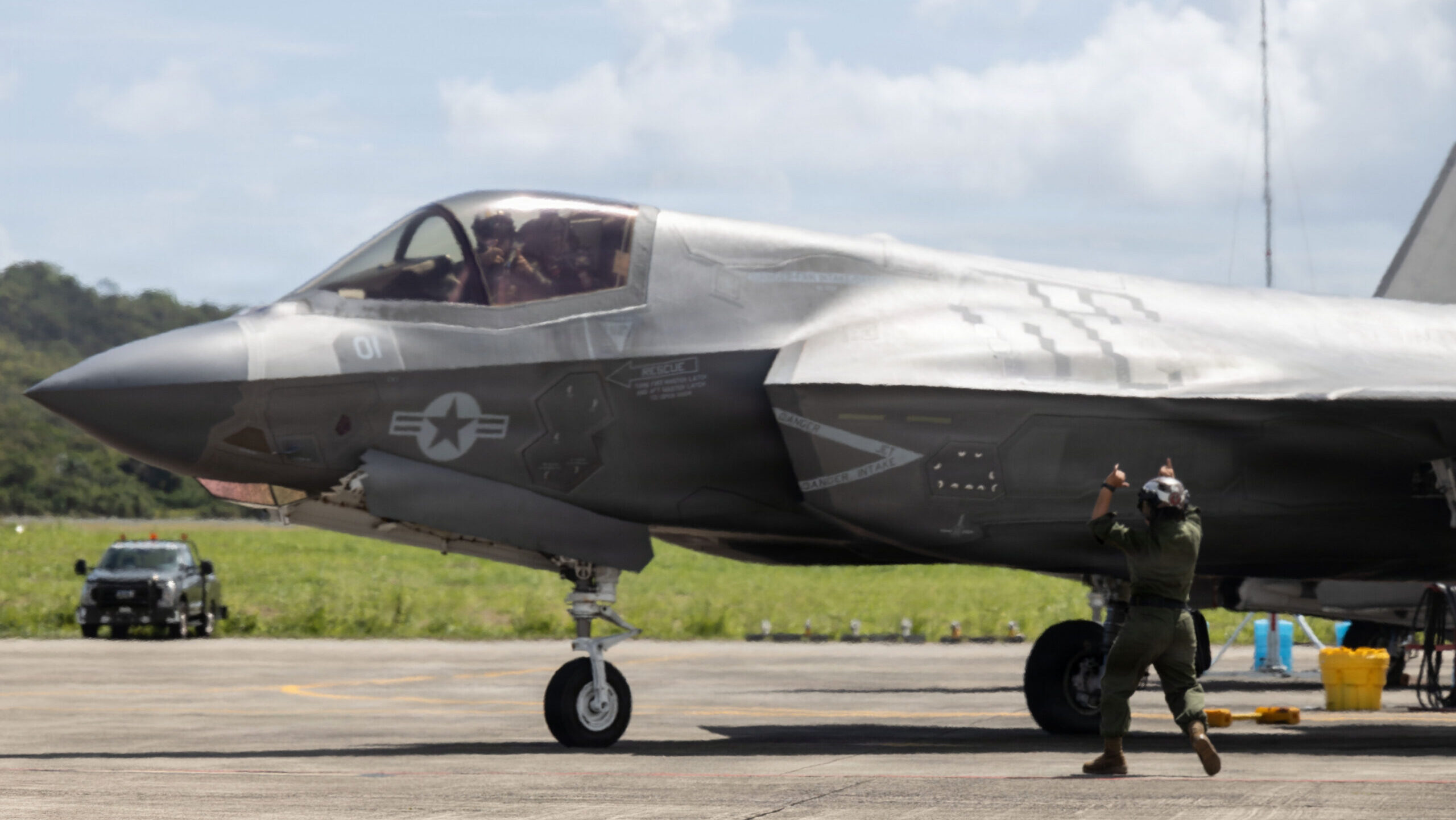
Didn't know this hilarious thread existed. The F-35 is the F-22's little smartass sister. It brings so much to the table now, even before all the add-on toys in development for it's use. All the F-35 pilots love it, and want to be in it in a combat zone. Out at Nellis the thing is a beast during Red Flag. And she can indeed dog-fight. The real issue is it's hard to dog-fight when you can't find the F-35, just ask the Iranians.

Yes, it's expensive. That's the US Navy and the USAF's fault. Apparently we learned nothing from the F-4 Phantom' Swiss Army Knife of the sky theory. On the other hand, thanks to the F-35C we have pocket aircraft carriers again, and the Japanese navy has another Akagi. The F-35 is delivering proof of concept.
 
Looks like new US F-35s are getting a similar radar to the first tranche of Tornado F2s. Which those familiar withnBritish mid cold war radar names would recognise as "Blue Circle"
 
Looks like new US F-35s are getting a similar radar to the first tranche of Tornado F2s. Which those familiar withnBritish mid cold war radar names would recognise as "Blue Circle"
 

ISF - Join now!

Every member here is approved by hand. No bots, no spam, just people who care about evidence and honest debate.

Membership is free!

Create your free account

Back
Top Bottom